Pandemic or not, 2021 was a chaotic year for the church and its leaders. Before we get back to 2022, let's reflect back on 2021 and the positive influences we as the church and its leaders have gone through. Joining Jeff in this broadcast is Tom Pounder/TCD Sidekick, along…
All right, hey, welcome to the Church Digital Podcast. We're gonna have a fun episode here. Um, we—hey, congratulations, you all survived Christmas. I know it was close, it was tight, it was nervous. Some of you were really freaking out, but uh, hey, ministry in the Christmas season is hard.
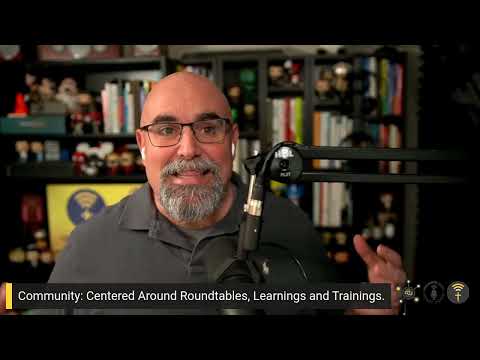
And it's stressful, and it's unfortunately one of these seasons we talked about seasons and margins and boundaries and stuff like that in the podcast last week. Last week's podcast was a little heavy, you know, coming into the Christmas season, a lot of stress with that. But hey, we just wanted to have a little more fun in the season, so we are doing the 2021 Podcast Awards. And by "we," I mean the Church Digital Podcast Network. Now, what's interesting is most of you out there like, "What are you talking about, a podcast network?" So yeah, hey, by the way, 2022, just in a matter of weeks, we are starting up a podcast network, and we're going to be rolling out, you know, you are getting an inside scoop here because we are rolling out a bunch of changes with the Church Digital and are really starting to look at aggressively platforming more speakers, more content, uh, more resources to help churches like yours understand how to manage a digital, and the great thing is it's more than just me because I have my nuances, I have the things that I'm looking for, and I work for some churches. But here's an inside scoop: I don't work for everybody. Like, some of the stuff that I talk about, the aggressiveness of the approach, it's not for every church. And so rather than just serving the small group, the niche group that's wanting to be more experimental and aggressive, we're really moving into the season of wanting to embrace more of helping a whole lot of different churches, where regardless of where they are, what they're looking for, and so we're going to get to the podcast awards. We're going to get there in a little bit. The best of '21, I'm kind of excited where we're going, but I want to take a moment here. Let's introduce just some of the team. Some of the team wasn't able to make it today, but some of the team here with where we're going. And so first off, we've got Tom Pounder, TCD Sidekick. This guy's been doing digital ministry for uh, maybe—actually, Tom, you have been doing it longer than me, like, for a church. So congratulations, Grandpa. You're the guy. Do you want to maybe talk a little bit, share a little bit about who you are?
Yeah, I'm Tom Pounder. I'm in Northern Virginia, which is just outside of Washington DC, about 25 minutes, but with traffic it's actually probably like an hour or more. So, but um, yeah, is it everything like an hour in around there?
Yeah, it's a little crazy. Now that we just heard a stat though, that traffic is down 65 percent from 2019, so even though it's, you know, it's improving, it's still kind of insane at times. It took a global pandemic to get there. Thank you, COVID. Like, that just is—is there anything COVID is the gift that just keeps on giving? That, thank you for that. That's beautiful. You know what's great about that is it still takes an hour. That's right. All the construction that's going on, that happens all the time. Uh, I've been doing ministry since 1997.
Uh, student ministry is my background. Uh, and I started doing online ministry around 2014, 2015. Um, and when we wanted to start doing uh, online ministry, we were given some cameras and given the HD 500 uh, from Exponential, uh, and they let us use it, and so we started doing it. And so they nominated me because I was the student minister and they said, "Oh, you're on social media, you could easily pick this up," which I had no idea how to do. So um, yeah, so I've been doing that. It's been fun, it's been awesome. I like the blog, I like to podcast, and you can find all my stuff at thechurch.digital. Uh, I love doing that stuff and just kind of writing about digital stuff and how it applies into our practical ministry experiences. I love that. And so Tom's podcast is TCD Sidekick. It publishes on Wednesdays, still going right now and rolling through. Uh, love that. Hey, let's get to the next one. I'm excited about all these guys, but uh, Andy Mage is coming on, and Andy, I've known for—we were trying to figure it out pre-COVID, maybe two and a half, three years—connected with him uh, through an online Bible study I was leading with some other digital pastors back pre-COVID. Uh, man, Andy, tell us a little bit uh, about you, your ministry, and what you're looking to do here uh, with the podcast moving forward in '22.
Yeah, uh, I'm Andy Mage. I am a digital pastor uh, for Bay Hope Church down in Tampa, Florida. Uh, but more than that, I'm looking to expand the kingdom digitally because there's such a large ministry field out there right now, and there's a lot of people that need to feel the love of Jesus in the online sphere. And so that's what we're here to do. And uh, yeah, like Jeff said, we connected through a Bible study that I think back to those years and think, "Oh man, what if we would have known what we know now? We would have been way further ahead right now. Uh, we would have been doing a whole lot more. We were so young then, Jeff." Uh, my beard was—you commented at a meeting yesterday that my beard was starting to get gray, and I, while I took umbrage at that, I went home and looked in the mirror and went, "Yeah, you're getting older." Uh, yeah, yeah, it really is that's true. Um, but yeah, I'm excited to be part of the network here, to be with these guys and to everyone else that we're going to be uh, kind of kicking it with. Um, I'm looking at starting something new uh, with the Church Digital Podcast or the Church Digital Podcast Network, excuse me, and it it kind of has to deal a little bit on the more production side, but not so much as cameras and cables and all that other stuff. Instead, the idea that when we communicate, we're communicating through this kind of glass eyeball that I'm pointing at, and if you're listening to this on audio, I just pointed at the camera. Uh, that there are usually thousands of people on the other side of that camera, but realistically you're only trying to reach one person. And so I want to start a podcast called Breaking the Fifth Wall, and it's really sort of a teaching time for pastors and leaders and group leaders and um, people that are going to be on camera in the digital kingdom sphere that we're looking to really minister to. And that's designed around communication. It's designed around how to actually talk to people when there's not an actual person there, when I have to look at a screen to talk to other people. It is a skill, and it's one of those skills that I think a lot of pastors that I've seen have not mastered. And so I want to help them. I want to help the greater community out there really start to utilize their communication skills because let's face it, a lot of these pastors are used to speaking to big groups of people, and they're used to presenting themselves and standing in such a way and blocking in such a way, and that doesn't work when all I have is a, you know, a three by four screen or a 16 by nine screen that I'm at home or in a studio somewhere. And so Breaking the Fifth Wall is designed to really help people through that journey and help them really start to communicate and use their gifts the way God intended them to be used.
Love that. Content is going to be so important moving forward, and understanding how to communicate to that. Like, when you said 4-3, I'm not going to lie, I cringed a little bit inside with uh, with that resolution. But I hear you, I feel you. You know, not everybody's doing the super wide that I'm looking at right now, and so I'm—it's cool, we're good. Hey, so Chesley Lundy's next up, and I'm excited about this. We've been uh, I spent some time just recently with Chesley out in Kansas City, hanging out with Rob Wagner and some of the things we're working on on the digital church network. More on that later, you know, kind of like the T stuff and roll it out slowly. But hey, Chesley, maybe talk here a little bit about what you're going to focus on, your ministry story, of course, but what you're focusing on in '22 uh, through the network.
Yeah, some of you that have listened to the Church Digital Podcast know that I'm a church planter, digital church planter with King City, and uh, we are starting a podcast in 2022 called Church Disrupted. Clayton Christensen with the Harvard Business Institute talks about disruption of prevailing models of industry, and I believe we are probably in the third biggest disruption the church has ever faced. And so what that means is what got us here won't help us succeed in the future. And so we need new uh, new strategies, new vision. And so I want to take industry leaders from other industries that I've already been in the digital uh, the digital playing field for a little while with community building with uh, infrastructure, and talk to them and get new insights that we can begin to translate into the church world so that way we can be successful in the new era of church, which I believe is going to be our finest hour.
By the way, I love surrounding myself with smart people and then listening to them. And even just listening to Chesley describe the Church Disrupted podcast that's coming soon, yeah, I feel smarter, and I'm looking forward to hearing that voice and seeing that out there. Another smart guy uh, is going to be Garrett Tilghy, and I listen to him quite a bit when it comes to the live production and some of the work Garrett's been been a friend for years and it's been working even in this COVID season. He's been doing a lot of work with the Church Digital. First off, he's the editor of all of the podcasts and assembles these together weekly, and so he does a great job with that. Side note: if you're ever looking for somebody, Garrett and his team does an incredible job at assembling podcasts. And so if you're looking for that, I can connect you, would be happy to do that. But he also is running TCD, the Church Digital Production. We've been running a production company on the side. It started as a side hustle, and it's now—it's a very—it's still a side hustle, but it's a very significant side hustle. And so Garrett and I are actually now partners uh, in this business and running that out. And so congratulations, Garrett. Um, you know, love having you as a partner. Like, I mean, that's a big deal. So hey, but Garrett, talk to me a little bit uh, man, your ministry story and what you're looking to do in '22.
Yeah, uh, my name is Garrett. As Jeff said, I um, I usually like to stay behind the scenes, so that's why this is the first time you see me on the screens. Um, I like being in the behind the camera of the Church Digital Podcast. But uh, Jeff's encouragement led me to step out from behind the back of the camera to step in and be able to come and talk a little bit about what I do and then also where we're gonna go in 2022.
So I'm on staff at a church down in Miami, Florida. I oversee the production for our local and global campuses, including streaming at a multi-site church. And uh, as we look towards 2022, not only the production company that Jeff mentioned that I work alongside him with, but also uh, something that he's been encouraging me on is he said, "Hey, you know, you've learned a lot in COVID. You've learned a lot with the side hustle. As we look towards helping churches find their voice online, um, why don't you talk about it?" And so that's something that we're going to look to do in 2022 is start looking to talk about and help other churches through the TCD Production Podcast. And so whether it's a starter level, whether it's coaching through of, "Hey, Christmas is a tough season for production, including all the events, all the services, everything going on, and you have your family at home," and
So talking through what all of that looks like as we look in search 2022, it's not only the gear which we will be talking about here, but also then the heart behind it and what you experience as you go through those busy seasons and letting people know that they're not alone. Love it.
Yeah, there's mental health is definitely a hot topic right now with the great resignation that's rolling into through 21 heading into 22. We talked about that last week on the podcast and there's going to be more content creators and blogs and podcasts and streams. Like with the church digital, we're really wanting to kind of open this up and really become a force within the church just to even acknowledge what some of these things are and how digital can help and how digital is a different beast that needs to operate in a different way. And so look for more, including these voices, coming very soon at 22. You'll hear about that more in the weeks to come. But hey, we're going to shift gears and let's start to have some fun here.
So here's what I did. I asked these guys, "Hey, what are the podcasts? What are the things that you've listened to in 21? What are the most impactful either episodes or shows? Christian, church, not church business, fun stuff. What is the thing that has impacted you in 2021?" I've got a list of some. I don't know how many we'll get to here in the time, but we'd love to kind of dialogue through here and present some awards because, hey, we got to present some awards. I don't know that you know they'll actually get an award, but at least they get like verbal recognition and a pat on the back.
So number one here to kick this off, and most likely Andy, this is going to be you. This is your, you're kicking off the show right here. Most likely to listen to at 2x speed: The Dan LeBatard Show with Stu Gotz. Andy, talk to me. Why? Why is this? Why 2x speed? Why do you like this guy?
Okay, so let me explain real quick. I do a number of other podcasts throughout. I do a podcast for our church. I do a podcast for another company that I work with called The Alter Live Show. And typically my delivery is a little bit faster. And so I have to continually tell myself, "Slow down, slow down, slow down." Well, this year in 2021, it was a banner year for me. I upped my podcast listening speed to 1.5x for everything. And so in the slow down, slow down, slow down, I'm always trying to speed up, speed up, speed up because I'm trying to get through as much information as possible because I think I'm a smarter gentleman than I actually am. And so I figure, "Oh, I got to be erudite and listen to my podcast at 1.5x."
Well, The Dan LeBatard Show is, first of all, it's a sports podcast, not a Christian podcast. Fully sports. They're based out of Miami, so you guys down in Miami can fist pump along with them if you need to. Dan LeBatard's been around for a thousand years doing podcasts along with this guy Stu Gotz, who's just the most despicable human being in the world. But they create some of the best content in the world. But the problem is that they create so much content and they talk so slow sometimes, and so it fights all of the slow down, slow down, slow down for me. And so when I'm out working out or running or whatever, I want to get through all their content because I want to hear everything they have to say, but I don't have the time. So what do you do? You flip on Overcast, you turn to the 2x, everything feels a little bit speed up, your brain turns into mush for about the first three weeks while you're doing this, and then all of a sudden it starts to make sense and you start to adapt and everything starts to sound normal.
And so now that I'm listening to us talk here, I'm realizing like, "Man, we're talking real, real slow. Maybe we need to speed up a little bit." The Dan LeBatard Show has led me to listen to everything in my life at 2x speed, and I could not be more thankful to him.
And any other fans, by the way, before I segue, any other fans of LeBatard just in the room?
Yeah, it's a guilty pleasure. I love Stu Gotz so much. He is despicable. He is the worst human being in the world. He really is, and he plays that character so well.
Yes, he does. And so I was doing insurance a few years ago and ended up in Miami during spring break. So I literally slept in my car for a week and a half, and that's how I made it through was Dan LeBatard, Stu Gotz on ESPN.
So yeah, you know, I actually, I cannot listen to the LeBatard Show anymore. I had to take it. I'd remove it from my Overcast account. And this is an honest-to-God truth. Don't laugh at me, but you'll laugh at me. I have a medical condition. It's actually a severe medical condition. It's called laughter-induced syncope. When I laugh so hard, I actually stop breathing and I pass out. Like, I have fallen. I've been sitting in this chair. I have passed out. I have fallen. I have hit my head. I have had a concussion in the middle of an online Bible study. True story. Going, maybe this is maybe three years ago, pre-COVID. And so like, when I listen to the LeBatard Show, the chances of me laughing so hard I pass out increases at such a high level. Almost passed out while driving on the turnpike. And it's like, I don't think I can do this anymore. I can't. I cannot listen to this guy because it's so funny. I just, I can't. I'll die. Literally die.
Can you sue them for that if you crash your car because you're laughing at their podcast? Can you sue them? Is that how that works?
Are you telling me I could have a chunk of LeBatard empire?
Like, I'm not telling anything because we're recording this and that red light is on. You need to consult your lawyer.
Yeah, however, there might be something there for you. That'll be coming up soon.
All right, so we're going to shift gears now. Number two, that was beautiful. Hey, the next one, Tom, this is you. Most likely to be added to Jeff's Overcast account. Did not know this was even a thing until Tom said, "Hey, did you know?" And this is going to be Church Juice. So Tom, share a little bit here. What are you thinking? What do you love about Church Juice?
Well, Church Juice is a kind of a church communications podcast. They focus on social media stuff and communication stuff. And you know, there's a lot of different podcasts out there, church podcasts, and one of my biggest pet peeves is consistency. Like, you start things and you go gangbusters and you're like, "Great," and then you don't do anything for like months at a time. And so with Church Juice, they've been fairly consistent throughout the year, which has been great. And they just offer short, like 30-minute episodes where they're encouraging you with practical tips on social media or email marketing. And it's hosted by, like, one of the co-hosts is my friend, and I, Jeff, you know her as well, Jeanette Yates. She's fantastic. She's from Jacksonville and she works with Texan Church. But they do a great job doing that podcast, encouraging church communicators again with practical tips. So I really enjoy it. Just had a meeting with Jeanette actually, like two days ago, and that was the first time I'd heard of the podcast. Went and just subscribed right then and there while we were talking. It's been awesome so far.
Yeah, Jeanette's a friend. By the way, I just told her on Twitter the other day like, "You've got an open invitation. Anything you ever want to publish on the Church Digital, would love it." Love her voice. And excited for me to check out the podcast. Literally did not know she was doing the last thing podcast that I thought she was doing was the two girls and the whatever that thing was that she had stopped a couple of years ago. Was it Two Church Girls or something like that?
Right, yeah, yeah, yeah, yeah. Okay, good, cool.
Hey, number three, moving on here. This is so good. The church that all of us want to go work at. Hey, Garrett, this was you. Why don't you talk a little bit about this one?
As I edit the podcast, like I see the titles coming up, and so I saw this when I was like, "Nah, it can't be that easy." And Jeff finally like said, "Hey, so this podcast is going to be about this," and I was like, "All right, tell me more."
And the podcast, the label of it was about Cast Member Church. I was like, "Are you telling me there is a church devoted solely for cast members?" My wife and I are Disney fanatics. We proposed in Disney. We went on our honeymoon in Disney. And we even already took our one-year-old to Disney. Like, we're die-hard Disney fans. And so when I heard about this, I was like, "This is awesome." The fact that there's a church, not a physical building, but there is a church that is designed at reaching cast members who are a unique group of individuals who are fatigued, who work long, crazy hours, and probably no one relates to them unless you have been one of them or are one of them. And so it was just really encouraging as I was sitting there editing the podcast to hear about the team behind the scenes of Cast Member Church and how they just love on a group of people that probably are forgotten a lot of times. They're probably too tired to ever think about going to church. And so instead, they decided to say, "Hey, we're going to create a platform where you can invite and engage people right where you're at and maybe get someone to come and join you that would never walk in the doors of a church."
And so it's completely digital. They engage people at home. And the cool part is it's cast members all around the world. So in case you don't know, there are Disney parks all around the world, and they have people from all of those Disney parks in their group. And that was just mind-blowing. It was exciting to hear about what they're doing to engage this niche group. It's a small group. It's not, they know this is not going to be the church that's going to have millions of people in it. But they set off on a mission and said, "Look, digitally we can engage a small group of people. It's not open to everyone. It's open to people who have that unique background, have that unique ability to relate with each other and be able to say, 'I know you're tired too. Let's talk.'" And just that one-on-one discipleship of being able to relate to people, being able to pour into people one-on-one and not just speak from a platform and listen in an audience, that method of discipleship is going to be a lot more successful in a group of people that are probably too exhausted, will probably fall asleep in a one-hour church service in the building. And so it's just really exciting to hear about it, and I loved every minute of that podcast.
By the way, if they're looking for a digital pastor, I'll throw my name in the hat. There's a bunch of people. If they launch a physical representation of it and they need a production guy, I was like, "Hey, we used to joke about opening a multi-site campus at Disney World," and it just went. When I literally stumbled across Stephen Barr and was like, "Man, you're actually doing this. Like, this isn't a joke. Like, this isn't like, this is your thing." It's an incredible podcast. We'll link to it in the show notes. As I'm literally wearing a Mickey Mouse shirt on the screen, you know, hats off to the creativity with him and that. But hey, let's move on. Number four, we're gonna spend a minute on this one. Podcast that made me question my early faith years. Hey, Andy, we're gonna have a long conversation here, but why don't you get us started? Everybody in Christendom, I felt like, listened to The Rise and Fall of Mars Hill from Christianity Today. And I know for me, I got saved right around the time that Mark Driscoll was really blowing up, really in the early 2000s. And I don't know about you guys, but I was...
Was impacted by Mars Hill not only by Driscoll and his preaching but by the music. I was, I got into ministry as a worship pastor. I was a worship pastor for twelve years. Mars Hill worship was doing so many crazy things. One of them, my favorite, the band I got saved to is this band called Thrice and the lead singer was Dustin Kensrue. And Dustin Kensrue, yeah, he was a worship leader for, and so there was this weird confluence of things. And so I'm listening to this podcast and going, "How did we let this happen? How as Christians in the West did we let some of this happen?" And I sat back and I started to think about the times that I had been out listening to Mark Driscoll on a podcast and going, that formed my early, and I don't know about the rest of you guys and I want to hear input, but that formed a lot of my early faith years. And it made me really, I have journal pages full this year after listening to those podcasts and going, "Man, do I need to, do I need to rethink X, Y, and Z about what I had been formed on?"
I was a college student in 2007 and it was, I was doing a project for the emerging church movement. And so Rob Bell, Doug Pagitt, Brian McLaren, and then this dude named Mark Driscoll. And there's the first time I heard verse-by-verse Bible teaching in my life. I grew up Word of Faith Pentecostal. Don't hold that against me. So I was floored. I was floored. And then a couple years later in the military, I got stationed out in Tacoma, Washington, about forty minutes away from the Ballard campus. So I ended up, you know, traveling there every weekend, got hooked up in a small group, I went to church there for a year. Um, actually, we're, I was flying into Kansas City, Missouri this weekend and finished the last episode called "Aftermath" and it wrecked me, man. I now live in Glendale, Arizona, about fifteen miles away from Mark's new church. Um, and weird thing, um, the cell of his church building is going to fund my church plant. So, uh, interesting tidbit how it's come full circle. But I got my call to church planting sitting in Marshall Ballard. Like, um, I am where I'm at a lot of because a lot of the good reasons that I'm in ministry is because of Mars Hill. And yet, um, dude, I asked the same question. I'm looking inside me going, "Am I egotistical? Am I narcissistic? What do I need to do to get that out of me? Because I don't want to be that type of leader." And I'm afraid as you grow platforms like this, uh, the danger of digital church is I think you're going to start seeing a lot of them be influencers and they're going to gain notoriety. And I'm worried about that. I know that's one of the inherent dangers of what we do. And so I'm asking God, "How do you just dig out that egotistical narcissism in my heart so that way when I come across the people they don't think I'm an a-hole and I don't end up ruining the faith of so many people?" Some of them, my friends that went to church there, were not, were on staff there.
Well, and I almost wonder, you said something about the influencers. I would say that that's already been happening for years and we've just been masking it with other things. And so I'm hoping, and I know that Christianity Today, I don't, I don't think they were trying to do like a rip-roaring exposé, but instead we're trying to smooth out some of the future of the kingdom by looking in the past. And so I almost feel like the influencer culture that has been taking over everything, shoe brands on to churches, is something that they're looking at and going, "We don't want rock star pastors. We don't want that. We instead want kind of what we're trying to do here with the Church Digital of let's plant actual kingdom-minded, kingdom-minded humble folk all across the world that actually want to reach people for Jesus and not want to platform themselves and make sure that their books get sold and by whatever means necessary and that their Twitter accounts get mentioned and yada yada."
This hits home. I didn't listen to the podcast, um, and so I wasn't really informed about Mars Hill growing up or anything like that. But I will just say what you guys are talking about, the church influencer kind of market and the fact that we all have to have a side hustle that um we're known for and we publicize that. I like, I know church leaders now who are getting paid by church to do this job but are yet doing something completely different as a side hustle and making money. And I think that's a dangerous line that we're walking right now and we have to be careful. Um, our online presence has, we have a lot of opportunity to make a huge impact for the kingdom, not for the kingdom of Tom, but the kingdom of God, you know? So I love this discussion.
I should probably listen to that podcast. It's gonna take you a little bit. The first five or six episodes are only about an hour long and then it's a grind. And it's a two hour, two plus hour. I mean, you turn it to one point five X and just let it rip. But uh, it turns into a grind because there's a lot of stuff. Once they start to, it's almost like it starts very, very ten thousand feet and pulls back to thirty thousand feet as it gives you all the little details. And I'm getting chills thinking about it. But there's some things that were said that I came home. I would go out running and I'd listen to it in the morning and I'd come back and I'd come over to my wife and I'd give her a hug and I would just tell her like, "Hey, if I have ever made you feel like you are less than a human being, like you are less than a partner in this marriage, et cetera, et cetera, please let me know right now for the good of my own faith, for the good of my own testimony right now." And you know, by and large she would say, "No, of course." You joke and say, "Yes, you're making me whatever." But by and large it was not. But still there's that, there's that thing inside of us that's as leaders we want to go, "Oh man, am I being a servant leader or am I being a Mark Driscoll adjacent leader?"
Yeah, I, to be honest, I'm one of those. I'm one of those guys just like Tom was talking about. I haven't listened to it, um, honestly for me it was a trigger. Like I got maybe halfway through the first episode and I'm like, "I don't need this in my life," you know? I'm not Mark Driscoll, but I've lived that story. I didn't work at Mars Hill, but that's been my past experience. And so for me it started, just opened up the can of worms and I was like, "Hey, you know what? The rest of Christian subculture can enjoy this podcast. Hopefully it's helpful. Um, but I don't, I don't need that experience in my life."
No, I have heard somebody told me this, and I don't, Rob Wagner, now we were actually talking about it, uh, oh, did you see that name drop? Rob Wagner, Casey Underground, that was nice. Do we need a bell every time it happens? Sweetie, okay. Um, he's like, "Jeff, it didn't have the answers. Like they never turned the corner and proposed solutions. They just reported the problem." I'm curious with love, y'all's take. Is that a good thing or a bad thing?
We were having a conversation on, um, I do a podcast called the Weekday with my brother that we put out with our church. And we were having a conversation about it on that podcast and we came to that same conclusion of it never gave answers. But that's okay because I think in the big scheme of things, history books don't give answers either. But knowing history allows us to see what not to do in certain circumstances. And so I think if we are able to form our own opinions and our own ways forward, that's better than having a company or a magazine or a brand dictate, "This is how you need to do church going forward."
Yeah, I would agree with that, Andy. I would agree with that very much. Uh, I think the concern with trying to give answers with something like this, um, is you'll inevitably give the wrong one. And um, I, the world is built, Tom, you just mentioned the fact that we've got this, you know, we're getting paid to do church but you know most of us have to have a side gig to pay the bills. And there's a real uh possibility that we gain more notoriety in our side gig than we do doing the stuff that we do. Do we stop doing the kingdom building over here? No, we just, I think in the influencer model I don't think it's going away. Um, I think that's how throughout human history that has been how people interact with each other. They put some people on pedestals. It's not uh, it's not immoral. I think it's amoral. I think what becomes immoral is the person's heart and their inclination towards uh thinking they're all that a bag of chips, you know? And so um, I would love to see people um intentionally hitch themselves to something less than on purpose so that they can raise the platform of that thing while their platform is being risen. Um, I mean shoot, Rob is one of those guys. Like Rob used to be a mega church pastor and what he's doing with micro church, um, it's intentionally this way because we don't want to move into that space. So even as his star is rising in evangelicalism, like it's all pointing towards Jesus and what he can do through the lives of others. And if you are going to have a platform, I would say that's what we should be doing.
Yeah, I think oftentimes we've, we, the church in 2021, at least here in the West, or maybe 2022 is different, but I think we've lost sight of Christ. We're designing systems that are fully operational on their own and they're not even leaving, they're not leaving room for the Holy Spirit. They're, we're designing a system so that the Holy Spirit is no longer responsible, was no longer necessary. And that that can be a scary thing. Um, I mean if you really stop and think about it, yeah, it's powerful. Yes, it's incredible. Yes, it's impressive. Uh, but I don't know that it's biblical. And so that's some of the challenge. And thank you, Christianity Today, it's Christianity Today, right? Yeah, Christianity Today for putting the energy into doing something like that. I know that was a beast and it was controversial and either you loved it or you hated it. And they had a lot of good press with it. They had a lot of bad press uh with it. But but hopefully once again, you know, the history books will speak of what happened and hopefully that is on record. Um, not against Mars Hill, but against all of us. The plank in all of our eye is nothing compared to the spec um that's in in one. And so you know, thanks for doing that. Uh, maybe one day I'll listen to it when I'm in the middle of therapy and we can use that as the springboard to a much deeper conversation.
Hey, so let's get back into it. That was maybe the success of 2021, um, at least in um, you know, podcast Christian realms. Let's talk about one of the failures, the biggest swing and a miss of all 2021 podcasting: Clubhouse. That's right, Clubhouse. Uh, Tom, actually, you know, Chesley, Chesley, why don't you talk a little bit about this one?
Yeah, so pod, uh, I love podcasting and I thought Clubhouse was gonna blow up and I was on there every other day and I'm like, "Dudes, you gotta check this out." I love the idea of you had to know somebody to get there. I think it's probably because of my nostalgia with Facebook and how that happened. Uh, my little sister, uh, was the one that introduced me to it because she did some attorney work for them. And I'm like, "This is amazing." So I got to go on pretty early. Um, and then it just didn't take off. And probably because guys like me got too busy to be on there and then trying to search through relevant conversations uh for yourself and it's just like, "I don't got the time," you know? And some of these people's opinion, they probably shouldn't have one. Me included, me included. You know, and uh, I think Clubhouse had a good idea, but I don't think...
It was helpful in the overall term of how do we use this as a church leader. Um, other than building my own platform, and then you had Twitter and Facebook and all these other guys coming, "Hey, we can beat you," and their platforms overtook Clubhouse pretty quickly. And I think, "Well, we're like, yes, this is the future," and it wasn't. We didn't get that right.
Well, it was the future, but they just didn't capitalize on it. Like, they couldn't figure out how to get the audience, and just Twitter just jumped them, and Facebook, you know, just rolled out their audio. I like an audio conversation. I think it's a powerful tool, but they just couldn't corner the market, and they let some other people in. And let's just be honest, it took them forever to get Android on. Like, I don't really, I don't know programming. I don't know what's going on, but when you only have a sector of the industry and you're having to exclude a major portion of mobile users, like, of course, yeah, that just was the door wide open. I have no idea what took so long, but I think it would be a completely different conversation if Android actually was able to come in.
Tom, you've had some success, right, with Twitter? Was Twitter Spaces what does that look like for you now?
Well, I'm reevaluating some things on Twitter Spaces, but I will second the Clubhouse. Clubhouse is a great idea. I think just the simple fact that social networks, already established networks like Twitter and now Facebook, are really building into it. I think, you know, everyone I see on Twitter now jokes, "Hey, remember when we did Clubhouse?" and everyone just kind of laughs. It's kind of funny to see that. But with Twitter Spaces, I think there's some real cool opportunities there, again with, um, you could do a digital Bible study, a simple Bible study you could do on there. You could do a discussion group about stuff that's happening online and with online ministry. And the way Twitter is updating it pretty regularly, so they've really kind of figured out ways to schedule stuff. They figured out ways that people can pay for some things as well on it. So I think Twitter Spaces provides a cool opportunity. I think 2022 will be a really big year for Twitter Spaces as more and more people start doing. I start seeing it now on Twitter at the very top. I start seeing it more and more often on my Twitter feed.
Has anybody tried the Facebook one yet? It's in beta on my account. I'm just curious. I haven't had a chance to kick the tires on it.
Yeah, it's in beta. It was really laggy when I open it up.
Well, I mean, no, Meta's got a bunch of money. I'm sure they'll throw something at it, you know, to get that cleaned up. I was thinking it fits with the Twitter's framework, so like Twitter's framework makes complete sense for what they're doing with Twitter Spaces. So I think it'll take off there because it's just aligned with who they are as a brand and an organization. So that's pretty cool. Unlike Periscope. Pour one out, man. Pour one out for Periscope. Rest in power.
All right, moving on. Um, most likely to inspire Tom Pounder to kill someone. Uh, this is a fun one. This one hits close to home, Tom. You want to share a little bit about this one?
Well, it's not to kill someone. It's to solve a crime or solve a mystery, you know? I mean, I don't want to kill it.
Oh, okay. Listen, I'm really like going all the way back to Cereal, season one of Cereal. I really got hooked on the true crime podcast and these unsolved cases or questionable cases. So I'm really into that kind of stuff. And one I discovered, it started in 2019, but it wrapped up actually, no, it started in 2020, wrapped up last year, well, this year in 2021. And it's called "Your Own Backyard," and it was a guy, just an average Joe. He wasn't even a podcaster or anything like that, but he just started looking into the disappearance of Kristen Smart. And Kristen Smart disappeared one night after a party in 1996, right around that was my junior year in college. And so she was kind of right around my age, and I remember the attention it got nationwide. Um, she just disappeared. And this guy just started digging into it a little bit more. It was a kind of a cold case, even though they said it was never a cold case. It really was. Um, they weren't really making any progress. This guy solved it. I mean, this guy solved the disappearance, and he got the police and everybody. They arrested two people who were always known to have been the people that everyone always suspected them to be, but the police had a bunch of different missteps and errors and some prosecution stuff and everything like that. But I mean, they were able to arrest the guys, and the guys are in trial. They'll be on trial this year for her murder. And it was fascinating. It was a completely fascinating. And so I just, I like when I binged all the episodes I missed, and then I started listening to it regularly. It was awesome.
I have a confession to make though. You were the guy?
No, I'm a serial killer though, so I try to down a bowl of Reese's Puffs once a week.
So yeah, waiting for the punch line.
I feel a lot smarter now.
Yeah, well done, Tom. Did you watch "Only Murders"?
No, okay. "Only Murders in the Building." I think it was on, oh, oh yeah, yeah. Oh no, no, no, I did. I did watch that. I know it's not a podcast, but Steve Martin, Martin Short. Come on, the two best comics ever.
Oh, they were really funny. They were really funny. That was a great thing.
Do y'all, does anybody else like get into the true crime kind of podcast stuff? I was big into Serial season one, season two, maybe. And I just, I like, I've tried to listen to some of this other stuff. I can't get into it. You know, my wife likes that stuff, and then she has nightmares, and she thinks somebody's going to come into the house and break in. I'm like, "Quit listening and watching. Like, come on."
Yeah, so I don't know if anybody else struggles with that in our house like we do. In our house, but hey, yeah, that's my wife too. She could, she feels like she could be a private eye, and I don't know that that's how that works. But she'll listen to those and watch the whole thing, and yeah, I think you gotta go to school for that, darling.
All right, well, Tom, don't kill anybody, okay? 2022, like, no, no, serial killer Tom running around DC. It'll take you an hour to get anywhere. It takes an hour to get away. Don't do it, okay? Don't be that guy.
To I want to solve this series, not kill people.
The FBI is going to get a hold of this podcast, and Tom's going on a watch list. I guarantee it in '22.
Like, it's a thing. All right, um, hey, moving on. Here we go. The smartest guy to ever appear on a TCD podcast that isn't named Ed Stetzer. Uh, Garrett, this is you, right? What are you thinking?
One of the podcasts that I really liked was one about video gamers. So I'm a video gamer myself. Um, I've got a community of guys that we play video games. We sync up. We probably have a group of twenty of us that are all in a text thread, and we'll just check out like, "Hey, anyone on tonight?" And so like, I'm all in on the video game side, and so is my wife actually. My wife grew up playing Legend of Zelda, so like, OG, like, video games, like, nerd, nerd video games. And I make fun of her that she may be more nerdy than I am. But so we're a video game family. And so when I heard this podcast talking about how there is someone that decided to create a church just for video gamers, like, literally goes out into video game lobbies to church people, to bring the gospel, to talk people through, to counsel, to do all these things in lobbies where, if you play video games, you know church isn't usually what's talked about in those lobbies. Those lobbies are usually a lot more toxic. And so like, to hear about someone that wanted to step into that toxic realm and say, "You know what, I'm going to redeem this toxic realm, and I'm going to use it to be able to bring some good," and that was really encouraging.
A lot of times video gamers use video games as an outlet because it's not a space they don't feel like they have another comfortable space. And so a lot of times video gamers are also introverts, meaning they're not naturally going to bring up anything that they're either struggling with, something they're going through. And so hearing this, just it was really encouraging because it was someone that was reaching out to, once again, a niche group of people, is an intentional group of people. This isn't going to reach everyone, but a group of people that probably often are forgotten about or often aren't intentionally sought after because they're not going to seek someone. They're not going to seek someone to say, "Hey, I want to come to your church," or "Hey, I'm struggling with this. Would you talk to me about it?" Um, but they'll talk in the video game lobby. And so hearing about Jade's actions and what he does and part of what, like, he does daily was really encouraging. It was exciting for me as a video gamer, as a follower of Christ. Like, it was pretty cool to hear how those two merged. And so that was really, really exciting for me.
Yeah, the metaverse and some of the ministry that's happening in that space, video games, virtual reality. I mean, that's crazy to see the number of people right now that are being those missionaries. Like, like, Jade is, you know, I can think of Pastor Susie's done a lot in that space. Pastor J. Poe, you know, and when you're in the metaverse, you got cool nicknames. Uh, you know, like, I haven't gotten to that level yet, but I mean, guys that are literally, we just did a podcast conversation with a guy named Stewart who's like twenty-two, and he's like, "Yeah, I go into VR Chat, which is like the cesspool of the metaverse. It's like AOL chat rooms in the nineties. It's estimated that forty to fifty percent of people are having, you know, virtual sex in VR Chat at any given time in private rooms," and he's going in there to do ministry. Literally walking into the metaverse red room district. And guys like Jade who's been championing this idea for years, really setting that up. And if you've ever, if you've ever met him, if you ever had a conversation, a dude's twenty-something. I mean, I can never actually get him to tell me how old he is. I think I would guesstimate probably around twenty-six.
Yeah, he just turned twenty-six.
Twenty-six, okay, yeah. And it's, uh, like the stuff that comes out of his mouth, like in the way that he sees the world, in his worldview and his perspective, it's like, "Man, dude, you're really, you see the world different than everybody else." And that doesn't make him wrong. That just makes him further ahead because the stuff that he's talking about in the world that he's seeing is the world that we're going to, we, the rest of us, we just haven't figured it out yet. And so love having him involved in that. And yes, Garrett, Silji did not understand the assignment. He pulled a December podcast, so we'll leave it in. But at the heart of this, you know, I, well, frankly, you know, we got to say Jake's name on the podcast. I'm embarrassed. I am embarrassed that we did not have Jade on the podcast in twenty-one. Like, that, when that came to surface, Garrett, I was shocked. I, you know, I've had him speak at a number of cohorts, worked with him in other areas, and maybe that's the excuse. I was just, you know, working with him in physical space, and I never thought about doing it on the podcast. But Jay, if you're listening out there, thanks for like being the rock star, the humble rock star that you are right now, and keep championing the things that you're doing.
Well, hey, and that's going to get us to the last one.
And with the Church Digital podcast within 2021, we've had a phenomenal guest list of people coming along—the Dave Fergusons, the Peyton Jones, Jared and Ann Roth, Matt Engle, Jason Morris, Jeff Hook, Rob Wagner, Ray De Armas. I kind of feel like we need to pour one out for Ray that he wasn't able to join us, and so proud of what he's doing through the medical technician. And I just actually, I spent like almost half an hour with him yesterday on the phone just kind of catching up with where he is in life.
The Greg Atkinsons, the Pastor Susies, Justin Murph, Matt Anderson, Mindy Caliguire, Jay Crandall—like there's been a ridiculous amount of smart people, a lot of wisdom that's come through this podcast in 2021. But for me, really, the award for the podcast that still keeps me up at night, that I still can't get this out of my head, is Sam George. And it's episode 120. We'll include all these links in the show notes. I know Chesley, you know, he and I have talked about this Sam George conversation several times. Dude is a missiologist, and he's from India, and it has his—once again, his worldview and the research and understanding that he still understands at a global level is ridiculous.
And it was funny. I had an introductory conversation with him. It was meant to be just like, "Hey, how you doing? Would love to talk with you some more about some things at a global level." And I just, on my Zoom—all my Zoom calls are automatically recorded. I don't know the real reason, just kind of always just had it default to record. And I had basically an hour-long conversation with this guy. It was supposed to be 15 minutes, and instead of like the introductory stuff, he just dove in, and it was like we were drinking from the fire hydrant, trying to understand the potential of what digital can be in the global realm.
And it was funny. I—and the thing, this is the part that keeps me up at night. Like, I was—he's like, "What do you do, Jeff?" And I started talking about my digital, I started talking about digital-only church planting, some of the things that we were doing. This is like early 2021, maybe March or April. And he says at some point, later on, he's like, "Hey, Jeff, all that stuff that you're doing with digital, it's too small. You, you are a drop in the ocean of what digital can be. You need to think much bigger."
And I honestly got—I was like, "Wait, wait, what? Like, no, no, do you not know everything that I'm doing?" But it's like, "You're just scratching the surface of what can be." And so honestly, for you all out there that are listening, remember and realize with me that the stuff that we are doing now is just scratching the surface of what digital can be. And seeing things like Zuckerberg's Meta announcement, seeing things like the churches that are being successful in this digital and meta space, the movement of what's happening globally where people in Iran are literally being discipled and are bringing others to Christ via WhatsApp—they're doing evangelism training via WhatsApp because in Iran, digital's all they have, and they're seeing borderline revival happening as a result.
We haven't figured this out here in the West, in America, and there's opportunities for us to learn so much in the months and years ahead. And so, man, I just want that to be the challenge of 2022: like, there's an opportunity for us to turn the corner, to learn something in this season that we haven't done before. It takes a little bit of humility, takes a little bit of releasing control, and those are two things that are very hard for the church. If you can fall back on that Mars Hill conversation we had earlier as evidence of that. But at the heart, we have to—in order to allow the Spirit to have the ability to control this thing and to right the ship.
So, hey, I know Chesley, you know, I did—you have any thoughts or comments on that Sam George? You remember much from that?
Yeah, I do. And you know, you like threw me out a couple books that I read in the next two days because of it. But just thinking about his conversations about the third culture and how there's a third culture wave getting ready to emerge—has already started, I think it's going to crest in the next 10 years. Basically, what that means is there are a lot of kids that have multicultural expressions that they were born into, and out of that, they relate to the world a very different way than those of us that are first culture, which is just, "I'm Anglo, I'm American, I'm a male. Like, that's what I know."
I think if you look at the way the digital world has operated in the last 10 years, especially with my kids, there's going to be this new—and it is already emerging—this new culture emerging where you're going to see cultural streams intersect in a way that they've never intersected before. I can see, like, we're seeing an emergence of Asian cultures becoming more predominant. I think that's going to continue. Obviously, the last two years for America has brought out some need for racial reconciliation, and we're going to continue to see that. So that conversation in and of itself that Sam began to talk about was very helpful.
But the other piece of it is the ecclesia and diaspora, and how this is the first time in human history where we can be gathered and scattered simultaneously. Like, the implications of that is huge. I think when I look back at how Paul operated, I think Paul wouldn't have sat here and debated theology. He would have jumped in with everything he's got to go reach people that need Jesus that would never step foot in an institution because he understood what it was to be the ecclesia in a space, an enemy territory, and he understood the mission that called us to go and make disciples of all nations.
And so I'm really excited about that. I think Sam hit it right on the head there.
Yeah, it's that—it's the here in America, like, we really understand the ecclesia. We really are passionate about the gathering. Don't abandon the gathering. Hebrews 10:25 or somewhere around there, you know? I just, I have that verse quoted at me. It almost feels like weekly as a reason to not do digital. But what's fascinating is the diaspora, the breaking of that gathering, the spreading of it. This is actually where God moves, and this is the challenge of digital.
Is to break into spread. Now, diaspora in itself alone is not good. The diaspora needs to break the ecclesia in order to create new ecclesias. We need the separation of the current gathering to create more gatherings, and through that break, we're allowing God to move through us as we're walking, literally as we're going, and in creating those new ecclesia, those new environments around. And so this is where I think digital really has an opportunity to fit in, to allow the diasporic movements digitally to allow a recreation of new ecclesias digitally, physically and digitally.
And this may be a radical mindset, which is honestly a lot of the stuff that we want to work with on the Digital Church Network, which is a whole other conversation for another day. But I will say this: 2022 is going to be an exciting year towards the digital church. We are leaning in through the Church Digital. We are exploring new things to the Digital Church Network, and there's other stuff that you know I'm not even able to talk about right now. It's just so impactful of what's happening on the road ahead.
So, hey, listen, you're going to see these guys through the Church Digital, through content. You're going to hear them on podcasts and YouTube and all sorts of awesome stuff. But we are excited to serve churches like yours and help your church understand digital, understand fidget, understand multiplication, understand content, understand influencer, understand production, understand the basics of this stuff from top to bottom. And not even get to the mental health and some of the other things that we're hitting with some people that aren't in this room.
So it's going to be an exciting season. But we're going to wrap some of this audio, some of these content, some of these channels have been heavily influential in our 2021, and those of you who are out there, thank you for that, by the way. We will include all the links in the show notes for all of these podcast episodes or to subscribe to the podcast. So if you heard something you'd like, go ahead and check that out.
But we are going to wrap it up. 2021 has been a phenomenal year, even in the midst of a global pandemic. We survived, we figured it out, we did it, and we made it to this point. 2022 may be messy again. Who knows what Omicron? And I want to be pessimistic, but there's a lot of scary things out there in the world today. The consistent thing is Christ. And as much as sometimes, even getting back to the conversation about Mars Hill, even as we get distracted and we try to design systems that operate without the need of God and without dependence on the Holy Spirit, maybe just maybe it's time for us to find ways to be more flexible, to be more open, to be more transparent, to be more teachable, to be more shapeable, to allow us—and that I hope is the challenge for you here in 2022.
We are going to open up. Like we've said, we're going to do a whole bunch of content aimed at nuances, at helping churches like yours understand some of the challenges of digital, whether it's from a content perspective, a discipleship perspective, a church planting perspective, from a leadership perspective, from even a mental health perspective, from gear to actually shaping one's soul in digital space and discipling and prayerfully pastoring people. This is the heart of the Church Digital in 2022 and beyond.
So for the crowd that is literally joining me in this call—from Tom, from Andy, from Chesley, from Garrett—I want to tell you, this is Jeff with the Church Digital. Have a happy New Year, and we're going to see you on the flip side in 2022.
Y'all have a good one.