GET YOUR CHURCH SIGNED UP FOR HE GETS US, AND GET 12 MONTHS FOR FREE... http://thechurch.digital/hegetsus One of the largest Christian Technology Companies in America, GLOO has been helping churches figure out how to better use data. Recently, GLOO has focused on a national…
I mean when I heard the problem statement for the very first time when I was brought into you know thinking about how we how we're going to bring a powerful message to the marketplace that can help shape culture for Christ and turn you know the tide from so many people walking away or people not even considering when you hear that problem statement you know it's it's just a big problem statement and but honestly a lot of Christians in Christianity and churches have contributed to the problem.
Welcome to the Church Digital podcast. Through this podcast we'll talk about the technological innovations within the church but more than tech itself we'll address deeper questions. Is disciple making possible digitally? How should we approach the digital mission field? Can a biblically grounded church operate in digital space? Oh and where does the metaverse fit into all this? Whether you're a big or small church, an established church or a startup church plant, the Church Digital's goal is to help churches like yours learn to be a multiplying church digitally and physically. Our heart is that churches like yours will discover a newfound focus on disciple making that will revolutionize your church. And now here's your host, Jeff Reed.
Hey everybody, welcome to the Church Digital podcast. You know every week I say I'm excited about the episodes that are coming up and the guests, but this is going to be a phenomenal conversation and I don't want to oversell this. I really think this is the best opportunity for any given church today to reach a new person, to reach a different type of person. So if you're digital church, you church online, you digital church planner, maybe even some of you metaverse guys as you're listening to this, I think there's an opportunity for you today to start to reach a different type of person. And oh by the way, through the Church Digital digital church network it's free. So do me a favor, I'm not overselling this, this is not hyper verbally, I don't, that's probably not the right word type or whatever the word is, I'm not overselling this. Listen to this conversation and let's take part of jumping in here with what Glue is doing.
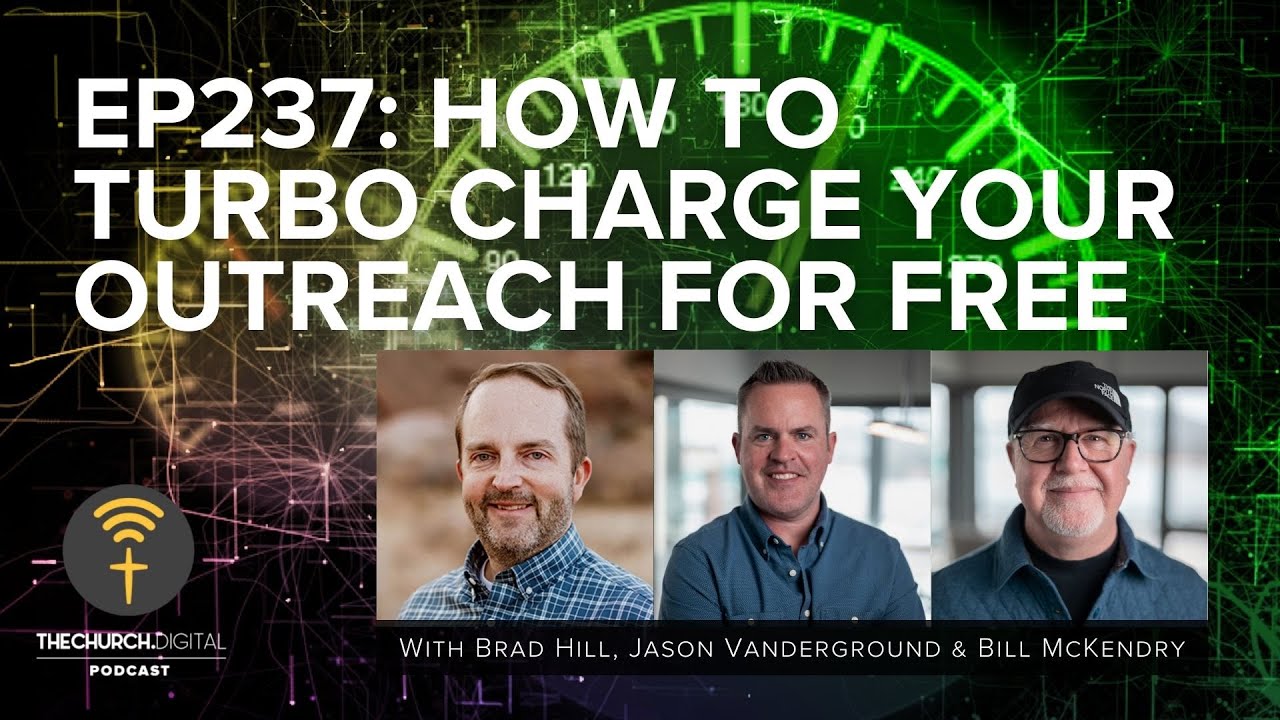
So by the way, I just let the cat out of the bag. We've got some of our friends from Glue jumping on the podcast here. And so let me open up first off and introduce Brad Ill to the conversation. Brad is Chief Solutions Officer for Glue. That sounds very important, Brad.
Hey Jeff, good to be with you. Yeah, it just means that I get to look at problems all day, I guess is what that means. And we genuinely do look at what's going on with our churches and how we can help them get value out of the platform. So a lot of those with partnerships, which is a big part of it, gets us. So you know, our other illustrious guests here today are really close partners of ours and we're just trying to figure out how to translate the great work they're doing to the world of the pastor. That's beautiful.
And so we're going to be digging into a campaign that Glue has been running that's called He Gets Us. Now He Gets Us has been running for a while and some of you churches out there may actually be utilizing it right now in some capacity. And I, uh, Brad, I don't know if they've been let out of the bag or maybe I'm doing, maybe I'm not even supposed to say this, but there's a Super Bowl ad coming and just an immense exposure opportunity to get connected to different people, people that don't come to church buildings are happening in real time. And some of the genius behind this, some of the brains behind this is Jason Vander Vander Ground, excuse me, and Bill McKendree here from Haven Creative, the creative agency that's kind of created this idea of He Gets Us. So Jason, Bill, thanks for jumping on the podcast as well.
Great to be here. Thank you. Thanks Jeff.
So listen, I wanted to start the conversation even just digging more into like He Gets Us and where the creative ideas come from. And so maybe let's just do this, Bill, to get us started here into the conversation. Say, could you maybe describe a little bit of what He Gets Us is, how it's operating?
Yeah, it's initially started out as a campaign. We see it now becoming a movement quite honestly, and we're enjoying watching that unfold. But it did start out as a campaign and it started out with a realization that something is happening in our culture and people are walking away from the church or not even considering the church like they had in the past. One of the things that was driving this initiative was the realization of you know, how is the church being characterized and how is Christianity being characterized in today's culture? And the problem statement that we started this whole campaign with was the idea of how did the greatest love story in Jesus become known as a hate group? You know, and when we share that problem statement with people, you know, whether it's a church or a minister or a donor or whoever it is that's related to this and can see what's going on in our culture, that really hurts, right?
I mean, when I heard the problem statement for the very first time when I was brought into you know thinking about how we're going to bring a powerful message to the marketplace that can help shape culture for Christ and turn you know the tide from so many people walking away or people not even considering, when you hear that problem statement you know it's just a big problem statement. And quite honestly, a lot of Christians in Christianity and churches have contributed to the problem. But the beautiful thing is when we did our research, and we'll get a little bit more into that I know, but you know, the beautiful thing is like when we actually talk to people in the marketplace, even people who would consider themselves to be very skeptical of Christians and Christianity, they haven't given up on Jesus yet. And so the brand of Jesus actually, the good news is the brand of Jesus is actually in very good shape. So what are we going to do to be able to shape this culture for Christ and be able to bring people back into consideration and walking back toward his story? And that is we've decided from the beginning, after we saw all the research, what is it that we need to do? We need to focus on Jesus.
Yeah, I love that. And the audience that's listening in here, so often we talk about the idea of people that are becoming de-churched. They're not really mad at God. They're not holding anger towards the Trinity. They're upset at people. They're upset at situations within the building. And oftentimes it's the flesh, it's the skin part that is keeping people separated from God, from the church. And so it's like how do we re-engage in that? And so Jason, as you've been doing this work, from a practical standpoint, what is He Gets Us? How is it operating?
Yeah, and I think just coming right out of your last point there, you know, we as Jesus followers, you know, as Christians, we're trying to follow the example of somebody who was perfect and none of us do that perfectly. And you know, the unfortunate thing is a lot of times people who are just spiritually open and kind of skeptical, they see that. They see that in all of us. And so you know, the number one thing that they want to avoid in Christians and Christianity and mature is that hypocriticalness, that we say one thing and do another. And we've all been there, you know? The other is the judgmentalism, that these people and these behaviors are okay and these people and these behaviors are not okay. And some of those are scriptural, some of those we've actually contrived on our own as human beings. I think the other areas really the discrimination. And so one of the ways that we're operationalizing around that is the campaign is making bold overtures to a lot of times people who have not seen Christianity as being for them.
And one of the insights that we love the most is somebody shared with us. She said, and she's been very much a skeptic her whole life, but she said you know, I've always understood when people were kind of approaching me about Christianity and trying to explain it to me that what they really wanted was for me to become one of them. And what I'm starting to see now through this He Gets Us campaign, you're telling me he was one of you? And that's a fundamentally different proposition for people who are spiritually open than what they're used to presenting.
So a lot of what we're doing, the way we kind of operationalize is we just study the life of Jesus and we study the life of the American people. Now we're in research all the time. We treat them as missionaries. We treat a people group. And so we want to understand them, we want to understand their language, their ways, their framework, everything about them, and then design a message around appealing to them. And so that's a lot of what's helped He Gets Us connect so well with people who are just spiritually open.
And I love this. And you may, audience out there, you may have seen some of these He Gets Us campaigns that are out there. I, you know, I feel I've seen commercials online, I've seen lots of social media graphics. I don't even know if this was official He Gets Us, and I know the idea is decentralized a lot, but I was actually walking around in Spatial VR and there was somebody who created a He Gets Us world. And they were just, it was that He Gets Us logo. I clicked on it, walked in, and they were just having like random conversations, talking about Jesus, just very relational, conversational. And the room was, I mean, had maybe twenty, thirty people in it when I walked in. So like the idea of, was that official? Have you done anything in virtual reality? Like I don't want to go off too far on that, but not yet. But that sounds like a cool place to hang out there. You go. Somebody out there is doing virtual reality He Gets Us and they didn't even know about it. So that's awesome.
But so it's this idea of the campaign where I think that there's an incredible opportunity for us as churches to engage with a different type of person and typically comes into our building. And so you know, before we go too far into this, what were some, from a creative standpoint, you all are creative people, we talk creative things on here. Well, maybe what were some of the bad ideas? What were some of the maybe bad ideas? What was on the cutting room floor? What got chopped? What was the, uh, that's not quite good enough? Were there maybe some other bylines or some things that you all were working on?
So the idea is that you know, we approached this like no other Christian effort has ever been approached before in the sense that we created an air attack, you know, an air support to a Christian ecosystem. And one thing that we're not, we want to make sure that we're not doing is we're trying, we're not trying to recreate the Christian ecosystem. There's plenty of places for people to go to however they exit before they even get there. So He Gets Us as a giant on-ramp for the Christian ecosystem for people to explore where their resources that best fit them right. And so when we were considering this also we said if this is going to be a monumental effort unlike anything that had been done before, we're going to approach this much like the big brands approach things. We're actually going to have multiple people and multiple agencies give us ideas and consider them all right. We're going to do our research and our homework and understand the target audience and how to message to them right before we even go to market. And many
Of the ideas, so we had five national agencies, creative shops pitched this and we went through it all and he gets us with something that rose to the top, right? But one thing that we decided to leave on, you know, quite honestly, the quality of the work was so good it was very difficult. We actually looked through 15 different campaigns before we decided on who he gets us, and I can't say that any of them were bad. There was nothing bad, right? It was just one seemed to rise to the top. But a lot of things that we need to leave on the chopping block or on the editing floor, quite honestly, is the hard work of threading the needle of not being political, for example, and threading that needle and making sure that we're presenting something that allows people to have an on-ramp, which is about raising the respect and relevancy of Jesus. We're not advertising the gospel, right? We're advertising what Jesus said, what he stood for, what he stood against, and it's an entry point for people to say that seems to be a worthy example to follow. I really like what Jesus has to say. Then they can begin the exploration to learn more, right? And we're going to continue to feed them and give them information, but ultimately our job is to feed them to the Christian ecosystem so that they can find an off-ramp that works for them.
And so that off-ramp within the Christian ecosystem, the way that I'm interpreting that, that's the churches. The campaign exists in social media and things to hand off to get people connected to church, right? And it could even be just a Christian friend, right? Perfect. Somebody you know, chances are it's probably going to be a Christian friend more than anything else, and something that they can, a connection point to them where I just need to talk to somebody about this. I want to explore. We give that, we give people a lot of opportunities to respond on our website and they can chat, they can text, they can, you know, have somebody pray for them. But the number one thing that people want to do is read more, right? And so these people are exploring, they're looking, and they're not finding answers either in the secular world or in the secular narrative. You know, as a result, they're heartbroken. They maybe don't have as much hope as they wish they had, and as a result, they are looking for answers. And what we want them to know is that Jesus has answers, and he has answers that they really like a lot and will really be helpful to them in their perspective and in their life.
That's beautiful. By the way, Bill, I'm going to have you start the right copy for the church digital because when you say that an explorer is looking for a friend online to connect with to for them to have Jesus shared, you just described exactly the motives and the drive behind a lot of these digital churches, these churches that are operating only in digital space or the metaverse churches that we're working with, churches that are driven, that understand truly what digital discipleship can be in the relational community aspects of it. And to be honest, that's why I'm so excited. I'll shut up in a second, guys. I talk a lot. In a media-saturated world, right, people are given all kinds of options, but today people use and they understand they understand the digital world is the place that they can explore and they can explore safely and they can create a beginning of a relationship. That's exactly right. That's why the digital church and digital outreach is so critical today because it's just a very comfortable place for most people to begin their exploration process.
That's so great, and this is why I'm so excited about this conversation because the campaign has worked great on social media and they're getting ready to up it. It's going to get ramped up with, I'm not making this up, right? There's a Super Bowl commercial you guys are working on for with this campaign. That's the plan. Awesome. And so there's now an opportunity for digital churches to get connected to a whole different type of person, to get connected with these people through a social media commercial, through a social media campaign, through a Super Bowl commercial, and to meet people digitally, which, oh, by the way, you all are really good at because that's what you do. And so this is what I got to sit down with Randy and some friends, including I'm like, hey, this, we gotta figure out how to make this work. And so there's literally we're gonna keep going into the podcast, but there's literally they're giving away 12-month scholarship for the He Gets Us, all the fees, everything is covered. Hey, digital church planner, we understand you're bivocational. We understand you're working on a shoestring budget and Glue here is giving away everything for free. So the access to the campaign, the access to the system, to receive these explorers that are looking for help, it's literally no cost to you. You just get the follow-up on the people, build relationships, get them connected to God, and hopefully get them connected into your church or a physical church if that's what they're looking for.
Here's what you need to do if you're interested in this. There's two ways to sign up. You can text 855-631-4850. All this will be in the show notes. You can click over to that, check out the YouTube descriptions. Text 855-631-4850 and you're going to enter in the phrase He Gets Us. Or go check out thechurch.digital slash He Gets Us. You'll be able to get the code, you'll enter into the system, you'll get all the discounts, everything's gonna be free, 12 months plus other things that Glue is incredible with are going to be included in that. I don't need to, I could sell Glue all day long, but the fact that they're gonna send you people to get connected into your church digitally so that you can work with them digitally into your discipleship process, into your relational communities, whatever you've got, man, I seriously I cannot think of a better opportunity for you here.
By the way, Brad, like how are churches responding to this? What are churches typically seeing? What are some stories? What are you seeing?
Yeah, well, you know, Jeff, Glue first became aware of this project maybe a year and a half ago, a little more than that, and when we saw what was shaping up here, you know, some of what you just heard Bill and Jason describe, we saw a little bit of what you just said, which is that this is, my words would be, this is a gigantic gift to the church. Um, like the church really has not had this type of air cover before. Um, and you know, pastors are out there working hard, they're grinding it out, they're trying different ways to reach people. Um, this project, I mean, Bill used the words earlier, this is softening grounds in a way that you know we just haven't had available to us. And even if it was out there, cost prohibitive, you know, we don't have the marketing savvy that these large world-class brands typically get to access. So to think as a church leader that you've got a giant campaign about something as central as Jesus that's fully funded, that is an on-ramp that's really directing then people to surf, and you know, Jeff, we would look at this as not so much like a lead magnet. It's not just people who we can get into our churches, although that is part of it. But um, these people that see the ads, like you talk about Super Bowl, but already there's been just an incredible presence on many, many live sporting events. If you want to talk about soccer, Major League Baseball, we've been out doing tailgate tours and college football this fall. Um, and then you know, major television shows, digital billboards, Times Square, and people see these messages, right? And then what do they do? They go to work. Uh, they hang out with friends. They live their lives. Um, they aren't necessarily coming to our churches. And what I often tell pastors is okay, the people that you're shepherding in your church, whether it be physical, digital, or hybrid or both, the people in your church go to work. They go to carpool. They go to their places too. And what we're finding is those spiritually open but maybe skeptical people will say, hey, Jeff, you're kind of a like a religious guy, right? Like, did you see that Jesus commercial on the game last night? What do you think about that? Like, do you believe that stuff? And I'm not, this isn't hypothetical, right? I mean, these conversations are actually spinning up now daily. And so my message to the pastor is how might you want to prepare your people to respond in that moment? They don't have to go knock on doors. They don't have to necessarily put themselves out there in a way that feels uncomfortable. Uh, the campaign is doing that for us. It's building a bridge really toward those of us that are already kind of on the journey with Jesus. Um, your job kind of to decide is how do you want to equip your people? And to me, it's a beautiful expression of in many ways what the church should be doing, which is preparing our folks to go out and live this out in their social media corners, at work, at school, et cetera. Um, and so we, the campaign, uh, Bill mentioned earlier, has really two big simple goals. The first he mentioned is how do we raise the respect and relevance of Jesus in our culture? Uh, we think the campaign is doing a beautiful job of that and will continue to do so. But the second goal talks about how do we call up Jesus followers? How do we call up Christians to best reflect authentically that radical love of Jesus in their circles of influence? So wherever that is, if it's physical, digital, whatever, um, and that, so you talk about Glue, like everything that we're assembling, empowering for these churches is really to put in the hands of you as a church leader so that you can help us accomplish that second goal that we think you want to do too. We think you want to call up all the people that are following you to reflect Jesus. So that's that describes in a nutshell all the tools, content, resources, communications capabilities that we're putting in your hands. It's so you can do that.
So you're not even, you're seeing normal people engage in this and sign up for stuff like even beyond church organizations. Like has this gotten down to like at a people level, someone signing up for this?
Yeah, in fact, you know, to give you a real example, so I personally went on the road last weekend. I was like, this tailgate tour sounds pretty cool. I'm gonna see what this is all about. So I got on a plane and went to one of these games. I won't say which team because I don't want to alienate people on the other side of the conference, but we've been out at a lot of the big games. Let's just say. And um, the two top comments that we get when we're out there on the street, we have a booth, we're handing out towels for example at a football context. We have a towel that says Jesus left it all on the field. It's a white towel. And so we give that to fans on both sides of the game. We're like, hey, take this in the game, wave this around during the game, right? The two questions we get the most, um, how can I support what you guys are doing? I think this is incredible. And how can I donate? Those are the two responses we get. And on the second, right now we're not accepting individual donations. So it's, you know, it's like, thank you, but we're not, this isn't why we're doing this. But on the first, yeah, we have individuals that are just excited to leverage this. Um, and yeah, churches are that way as well. But um, we're busy working hard right now figuring out how can we say yes to all these people, give them a tool, give them social graphics to share, give them a shirt or a hat that
They can wear because people are really excited and in some cases even proud of what's going on here. Yeah, and that's that's an incredible idea. Like I just even mentally hadn't gotten there myself. But we we talk a lot about missional imagination and about, you know, you can imagine—well, shoot, I had a conversation earlier today with Andre. Andre runs a digital church called Barbecue Assemblies of God. So you can start to see some of the imaginative ideas that are coming into digital and better. I want to go to that church, dude. Seriously, he was he was talking to me about something he does. Um, he does tailgate parties where he cooks out, he shares Jesus, he connects it digitally to something like—he's doing some really—right, what do you tell me? He says he's got ten locations, ten mobile applications scattered around where people are watching services online regularly, uh, gathering together, even doing physical small groups scattered across the country. And he's been doing it less than five months. I think he said he started the church in May 2122.
Whole other conversation. I was gonna say that's that's key. Is so I think one of the things that that's really great about this campaign is we've put it into the market and we're forcing people to respond, right? And so I tell people all the time, we could spend the next ten years trying to get the market ready for this campaign and they still probably wouldn't be ready. Instead, what we're doing is we're putting pressure on the market and we're going to market with this campaign. However, we're also telling anybody who says, "How can I relate to this? How can I—what can I do with this?"—we always say we just want to be a tool in your tool belt, you know? And I love the idea that you said, you know, two people's imaginations to their to their current ministry—what can what can we do to help you? And we're developing tools all the time and we're developing content all the time. But it's really more about not us really forcing us on them. It's about them saying, "How can I use this? How can I leverage this?" And we're trusting the people and their imaginations and their capabilities to say, "I can align with this in this way and this is how I'm going to use it." And so we—that's why it's like when Brad says we're not even taking donations. I mean, most people are pretty blown away. It's like, "Really?" And it's like, "No, we're not, you know? We we have funding behind this and we want to put pressure on the marketplace to respond. But at the same time, we want to give the marketplace plenty of content and information to respond with." Even the the guy—whoever it was—I don't even know who it was who was doing the virtual reality expression that I walked into—I mean, that that's that's taking a resource and applying imagination to it and doing something incredible with it, you know? And we talk a lot about creating in digital and metaverse uh the evangelism. I'm actually writing a book on this that's where that's getting published in January. I'm co-authoring a book. But the idea is shared experiences. Like, if you want to connect to people who want to build relationships digitally or virtual reality, there's some level of shared experience that you have that you need to have with the person to get credibility and the opportunity to use this. He Gets Us as a launching pad as a first step to creating a shared experience or create the shared experience. And then when you're comfortable taking the next step, bringing in the He Gets Us idea into a conversation—this is this is just beautiful. And I love this resource and I love how open-handed you've been with this. Like, and I'm going to swing the heavy hammer here: if you're a digital pastor, if you're a metaverse guy, if you're in doing even a digital volunteer—like, there's opportunities to utilize this information, these graphics, um, the the information, the people that get fed to you, the leads, the explorers. These are people that need connection. They need community. And and oftentimes—and I'm I'm just going to make up this example, but I'm sure it's one of of thousands if not more—oftentimes where these people are coming from, there's not a physical church in the database. Like, if Brad, am I am I okay saying that? Where you don't have U.S. full exposure of of churches and so it's hard to get people connected into a physical church. Am I right?
Yeah, spot on, Jeff. In fact, I mean, there are already thousands of churches involved. But as you as you stated, you know, we can't cover every last mile, every last zip code at that local level. So one of the things we've really worked hard is to is to look for churches—and I think a lot of them are probably in your your audience base—who can truly do ministry from from a digital context. You know, we're not just talking about streaming, but um, you know, internally we'll call them "remote ready" or or a church that really has done the work and and put the thought and planning into: if I get somebody five states away or two time zones away from me who is interested in just connecting with someone, they have questions about Jesus or they want to just process together, you know, is your church the kind of environment that would welcome that? Even if it means they may or may not attend, even if it means they may or may not engage in your community. Now, of course, all of us would hope for that sort of outcome down the road. But as as Bill said, like, the campaign provides an on-ramp. What we want to do is have kind of our catcher's mitts out, ready to just engage. But also respect the fact that He Gets Us is really encouraging folks to explore at their own pace. So how can we be there just to provide like a friendly next step, a connection? Like, "Yeah, I'm on the journey too." Uh, we—one of the things we do at Glue is we provide support for the live chat that comes in through the campaign. And so we get to see front row seat to people on all ends of the spectrum who uh believe it, don't believe it, want to question it, want to argue it. And we support that. You know, some people are like, "Why don't you turn off the comments on YouTube?" And it's like, "Well, actually, the point is we want to—we want to see people processing. We want the conversation. We welcome that." So we're we're looking for churches, by the way, who are you know excited to do that and are prepared and maybe have a volunteer base that can step into that with comfort. That's that's that's beautiful. And this is why I mean, what what Brad was just saying—this is why I believe that digital churches and churches that understand—we use the term "digital discipleship" here all the time, the relational connection—um, this is why I think this campaign is going to be so successful in the digital environment because we are capable of of connecting with people on the other side of the country. You're already doing it. Uh, the physical church—I mean, I hate to say it this way, but the building's a lid for what the potential can be. And oftentimes we don't have enough buildings in enough cities to do this effectively. It was it was to go—even going back to the Billy Graham—I had this conversation with a bunch of Liberty professors earlier this week. That was the challenge of the Billy Graham Crusades. Billy Graham would come in, get a whole bunch of people saved, and it's like, "Okay, where are the churches to do follow-up?" And oftentimes there weren't enough churches to do the local physical follow-up, you know, back in Billy's ages, back in the seventies, eighties, and nineties. Well, because of digital, because of the work that you all are doing in expanding digital discipleship to make it scalable and reachable, this campaign is designed—specific—they don't realize it yet—the potential of what's here. But it's designed to help churches like yours get connected to new people. And the effectiveness of us to lean in to utilize the skill set that we already have to reach these, to disciple these, to encourage these, to build the relationships with these people—I truly believe it's going to be phenomenal. So you're so tell me this, Bill. Uh, Jason, one of you—we're we're talking a lot here about um, you're doing some physical stuff, you're doing answer, you're doing sounds like you're doing some sports, um, possible Super Bowl like—where where is this campaign going beyond this? Like, is there is there a next step? What's where where are you going? What's what's the forecast of where this thing's heading?
Yeah, so um, you know, the the campaign is He Gets Us is in all the big cultural moments. And so I mean every Sunday, you know, during NFL games. And we have partnerships with four major league baseball teams—the Pirates, the Cardinals, the White Sox, the Rangers. You know, we're super excited because the NBA and the NHL season to start, you know, so basically whatever you're watching, wherever you're going, prime time TV, digital—you know, like Brad was saying, it's it's very present and people are seeing it. It's about 108 million people that are already familiar with the campaign. But I think one of the things that's most important for your audience to understand is some of the underlying insights because these are things that anybody can apply as they work to have conversations with people who are spiritually open. You don't have to use the He Gets Us ads to do this, but it's important to know what the obstacles are, the barriers for somebody who is spiritually open but has a lot of skepticism about Christianity. And the number one thing is they have a deep-seated instinct to not want to hear from Christians. And so I created my own analogy, which is just, you know, imagine your favorite shopping experience—whatever that is—and then imagine a really annoying salesperson who keeps asking you to look at things you're not interested in, keeps redirecting you away from areas that you want to go, just interrupts a lot. And and unfortunately, that's a lot of times what somebody who's kind of spiritually open experiences when when we try to intervene in their faith journey. So we have to tread, I think, really lightly. I think there's there's a humble approach here to say, "What's your path? What's your story? What language are you comfortable with? What things do you understand? What are you interested in? Like, I'm here to serve you, um, not the other way around." And then I think another thing that's really key for them to understand is that, you know, if you trying to like defend or promote Christianity or all the good things that the church does, just doesn't work at all with this audience. And um, they're also um, they really struggle with the divinity of Jesus. And so we've made a conscious effort to respect them and the thing that they're interested in is the humanity of Jesus. And he was fully human. And so we say, "Great, if that's the conversation you're open to having, let's talk about that." Then. And so all of these common experiences—like, hey, you know, have you ever faced criticism? Or are you—do you ever see injustice in the world around you? Do you do you ever feel judged or see people around you being judged? Um, do you just want to have fun sometimes and enjoy family? Guess what? Jesus. All of those things. And so I think that is focusing there um is is really what people can be applying in their ministry. And so anything that they can do to convey through the message: Jesus is for everybody. You know, Christians are not gatekeepers. Did you—you don't have to go through me to get Jesus. That's why he came in the first place, so you could get access to him directly. Um, you know, seeing just the positiveness of his teachings and going, "Even if I'm not a Christian, like, what Jesus laid down—that's just a good way to live. Like, it's hard to go wrong doing things the way that he did things." And so there is this familiarity. People people actually know more about Jesus and know more about the Bible a lot of times what we give them credit for. And they're
Interested in learning more, but it has to be on their own terms. And so that's why, you know, going all the way back to what Bill mentioned, um, one of the things that they really enjoy doing the most—actually the thing they do the most on our website than anything else—is subscribe to Bible reading plans. And so I think as you think about digital ministry, where there's something about the anonymity of being able to consume content on your own without having to have somebody on the other end—like texting is great, chatting is great, we do all those things—but the number one thing people are doing is I just want to sign up and just read it for myself. And so how do you facilitate self-exploration and then be there, I like Brad's, you know, when they're ready, but it's all on their terms. It's not on our terms anymore.
Yeah, but I love that you're empowering them. You're respecting them as an individual. You're giving them the authority, the permission to control their own spirituality and to seek it on their own. Um, that by the way, Jason, what you just said, that's the heart of every digital and metaverse pastor I know. Like the ability to give it to them—I mean, that's how the church multiplies. That's how the church gets into disciple-making multiplication by giving it to them and not being the gatekeeper of it. And so very, very excited that an organization like Glue is putting the emphasis, is running with this, and seeing it happen in real time.
I'm just curious, and I don't want to be about numbers. Do we have any idea what kind of reach? I don't want to make it about the Super Bowl. I'm sorry, I'm keeping back to Super Bowl, but February 12th is right around the corner, and I'm excited to see he gets us right alongside Apple Music's halftime show starring Rihanna, February 12th. So tell me, do you have any idea what the reach is with the ad? Like, what are they predicting? Um, what's the potential here?
Well, even just already, the campaign launched this spring. We launched it around March Madness, the NCAA basketball tournaments, through Easter, and then right through the summer. So already the campaign has had over three billion impressions. 3.7 impressions? Yeah, three billion. And is that targeted and focused in the US only? Right, yes. Yep. Wow. Yeah, and then there's about—there's almost—well, there's about 340 million views now on YouTube, and then like I mentioned just a second ago, 108 million people are aware of this campaign.
So your audience, this is a campaign that people are seeing, and those numbers are only going to go up as we go through the fall and then like you said through the NFL playoffs and then, you know, all the way through the big game. And then, and we're just getting started. So this is just, you know, we're about six, seven months into launching this thing, and so it's brand new. And so the great thing is it's kind of like the weather. You can always use it to start a conversation no matter where you are. It's a common experience that's essentially what he gets us has created—it's something that everybody will be seeing and everybody will be experiencing. And so it's just a no-brainer start to a conversation. And so, you know, just know what the weather is in other parts of the country, and you have a guaranteed conversation starter. If you know the ads, if you're familiar with some of the concepts, you'll be able to use that as a lead-in. And then as people say, "I'm interested. I saw this. It made me uncomfortable. It raised a question," you're there to go, "Great, I would love to talk with you and answer your questions."
The Super Bowl, though, you're right, is a really unique format in the sense that our unique platform, and it's sense that, you know, the numbers are, you know, predicted at 112 million people will watch the Super Bowl. Well over 50 percent of America watches the Super Bowl, and you know, it's essentially a national holiday, right? Uh, we—I've done I've done stuff in the Super Bowl before. I know we've got people on our team that have done stuff in the Super Bowl before. We know what the impact is like, right? But we also, we also know that, you know, from even surveys that we've done, national surveys, you know, that have appeared and written up in the New York Times and stuff like that, 65 percent of the people who watch the Super Bowl watched it for the ads as much as the game. So it's a very unique platform from that standpoint because, you know, you not only have 112 million people, which is just, you know, on a cost per thousand basis—people always talk about the cost of running an ad in the Super Bowl—but the reality is on a cost per thousand basis, it may be one of the most efficient TV buys period, right? But then you have all these people who pay attention to the ads and are waiting for the ads, and especially if you think about women, for example, the number even goes higher for why they're watching the Super Bowl. But the Super Bowl also has an aspect to it where people talk about it after the game, right? What do they see? And you know, it's just something that you, because you do experience it, you know, in a group setting most of the time, you know, and you have this shared experience, you know, it's something that people talk about for years. I mean, uh, you know, I was in business with a guy who did a Super Bowl ad like in the early 90s that they still rank as one of the top Super Bowl ads, and I can bring it up to people who are barely—I don't even think we're born then—and I say, "Have you ever seen the ad with Michael Jordan and Larry Bird? Nothing but net. Any? They challenge each other for a Big Mac." And I know college students that weren't even born then, they go, "Yeah, I've seen that ad." That's because it ran during the Super Bowl, and my partner actually did it.
That's awesome. It's such an incredible opportunity. And once again, um, Glue is graciously offering a 12-month scholarship to this for any digital metaverse church, any physical church that is using this coupon code, this access to get in. You can go to you can text 855-631-4850—855-631-4850—type in the code "he gets us" in the text and send it, or go to thechurch.digital slash he gets us. Either way, uh, you follow the instructions that go there, then get you into the system. You should see the cost disappear. They are so motivated to get churches that can handle at a national level and digital churches, metaverse churches, physical churches understanding digital discipleship. My people, you are the solution here. So let's sign up. Let's join in the he gets us campaign and be active trying to reach a different type of person.
Hey, we gotta land a plane. Go ahead, Brad.
Yeah, no, just as we close those out, I wanted to, um, number one, a statement Bill made about really making he gets us a tool in the tool belt of the church leader. Um, that demonstrates also there's a degree of, I think, humility throughout this project, and I just want to give credit where credit's due. Like, you've said a lot of nice things about Glue, but you know, Glue is just one of the partners in this project. We didn't create this campaign, but we've fully, like, steered our ship behind it. And if I can borrow, like, StoryBrand language, our hope is that this project and then Glue kind of maybe being a bridge from he gets us down to you as the pastor is going to help you as the church become the hero and the guide to your people. Um, and so this is all possible. The reason we can offer it for free is because of donors. So actually, we've heard from donors that are saying, "We want churches to win, and we want Jesus followers to be the hero here." So, um, everything from the sermon guides and the content you're going to find there—and we didn't talk a lot about this, Jeff—but there's free texting that every church here can have that has a real cost, and it's paid for. So these donors have basically put it out in front of you. So we're thrilled to just be there a little bit as a vessel to get you guys connected to what is happening. And I could listen to Bill and Jason all day talk about the research and the creative process. It's really just a breathtaking opportunity that we all have.
Yeah, definitely excited to see what's going to come of it. We packed a lot into this podcast, and gentlemen, I want to thank you for the time. Jason, Bill, Brad, thank you for jumping on here. Once again, uh, to sign up for he gets us and to take advantage of the scholarship, it's 855-631-4850. You can text "he gets us" to that number or thechurch.digital slash he gets us. All that information and more is in the show notes or in the YouTube, uh, whatever the word is there, a description. Why can't I come up with that word? It's been a long day. Hey, but we're gonna land a plane for Brad, for Jason, for Bill. This is Jeff at the Church Digital, Digital Church Network, and a whole bunch of other fun stuff. Thanks for jumping on the podcast here. We'll see you next time on the show. You have a good day.


