What if the future of church looks radically different? This is a call to arms for digital missionaries to step out and take the gospel into online spaces where traditional church outreach hasn’t gone. This means meeting people on platforms like Discord, Youtube, and even…
Welcome to the Church Digital podcast. Through this podcast, we'll talk about the technological innovations within the church, but more than tech for tech's sake, we'll address deeper questions. Is discipleship making possible digitally? How should we approach the digital mission field? Can a biblically grounded church operate in digital space? And where does the metaverse and artificial intelligence fit into all of this? Whether you're a big or small church, the Church Digital's goal is to help churches like yours learn to be a multiplying church digitally and physically. And now here's your host, Jeff Reed.
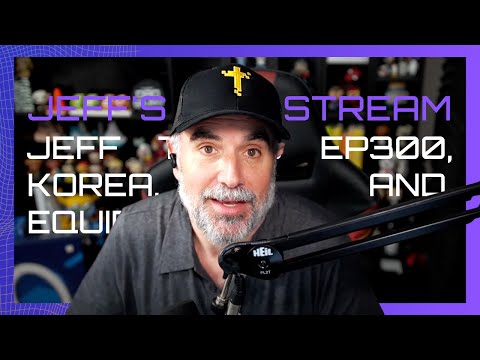
Hey, it's episode—I'm just going to start over, y'all. Sorry to be you. Hopefully I'll be a little more streamlined this time. Hey, episode 320 of the Church Digital podcast. This is the last podcast episode recording for the year 2024. It's been a great year. We are taking—we're going to take a little break on the podcast. We've got a lot of changes coming up in 2025. Now, if you know me, it's like, "Dear God, Jeff, more changes?" Yes, more changes. And it's a lot. It's a lot of fun right now, seeing a team that gets excited and can run and is excited about some of the paths that we're on and even partnering with other people that want to come on board with this. And so there's a lot of fun right now.
2024 has been a great year for us. You know, we've made some changes in leadership along the way. January 1st, 2024, Bernie Meley was in the leader position of the Church Digital in 2023, as you may recall. I took a break, really from leadership, had stepped back from the Church Digital and a couple of my other fractional leadership jobs, and basically took a sabbatical of sorts in 2023, and Bernie stepped in to lead the organization. And he and Andy did a great job maintaining the org in my absence and really keeping the seat warm for me to come back. In 2024, we did come back, and it's been a sprint of sorts ever since.
You know, bringing on probably the best acquisition I've ever done in the history of ever—at least the most impact—was bringing on Barbara Carrero into the Church Digital fold here in 2024 in January, which was an awesome pickup. Communications and connections from a strategic standpoint. Barbara is revolutionary, you know, and really she's—I respect when people push back on me, you know, because I know I'm a type A guy. I'm kind of a—I'm not a bully. I used to be a bully, but you know, I can railroad a situation through if I gun my head, if I had to. And when somebody pushes—this is the secret to Jeffrey—when somebody pushes back on me, oh, I listen. Because they're impassioned enough about the idea to like stand up to me and be like, "Hey, yo, Jeff, you're missing it here." And Barbara has done that several times, and you know what? When she's done it, she's been right. And so that falls away for me.
Picking Barbara up and bringing her into the Church Digital, her and the Word Revolution team, really set us off for an incredible adventure for 2024. Seeing what Laton's doing in the relationships, connecting. Andy, the stuff that he's been doing with asynchronous. You got to realize in 2024, we launched a new website. We launched into Discord and we launched into WhatsApp, both in 2024. We were not in either of these communities. We were in that community we do not speak of—Mighty Networks. That, you know, Mighty Networks may not have been that good for us, but that being said, the move into Discord has been, from an engagement standpoint, phenomenal. And WhatsApp, believe it or not, has been like six weeks—like it's brand spanking new—and so we're already seeing success on those platforms moving forward. And so we're really excited about the road of 2024.
And I haven't even gotten to the secret of J-Mo, but hey, that's 2024. And with this podcast, as we're wrapping up the year of 2024, this is not really a celebration for 2024 as much as it is five things—five things that you can expect from the Church Digital in 2025. Where is the Church Digital going in 2025? What a great question.
Now, you all are the streamers. You're the podcast listeners. You're the people that are taking the time to watch me ramble on for an hour or so. So good for you. But the flip side of that is, yeah, I've known to say some things before they should be public. And Barbara is always wanting to say, "Jeff, you don't want to say that yet." And it's like, "Yeah, I really, I really, I really do." And so look, I'm looking at my little list here, my little notepad on the Apple app, and I've got five things. Now, three of them may be like a bomb drop, like a mic drop here. Like, there may be a surprise when we're saying some of this. So this is either going to be a really awesome, "Oh my gosh, I can't believe Jeff, you know, the Church Digital, I can't believe they're doing this," or maybe I don't know. We'll see what happens. We'll see how the spirit leads. We'll see what mood that I'm in here as we're getting further along. But hey, here we go. Five things to expect from the Church Digital in 2025. Let's go.
Number one—we're just getting into it. Number one, we're going to expect YouTube to crash on me. No, well, yes, you can probably expect YouTube to crash on me because it's been undo that. But no, seriously, that was the throwaway number one. The Church Digital is going global. And we're actually on the road of that right now. Like, so funny, I was sitting down with a friend this morning for breakfast, and he's like, "You know, is there anybody else from that Lassan conference?" Lassan conference? Congress? Yeah, okay. If the Lassan conference wasn't enough, if the Church Digital being exposed as a digital missionary sending agency to five thousand global leaders in Seoul, South Korea, and another, you know, fifteen thousand, twenty thousand, twenty-one thousand watching online—yes, there is a huge opportunity to see the Church Digital getting exposed and getting light and getting these ideas out into other continents, other regions, other people groups, empowering people with the ability to reach, engage, and disciple people in digital space. Oh my gosh, that is such a beautiful opportunity.
Now, I'm going to be honest with you. We're already doing it, and you don't even realize it. And so this is probably leak number one. In some of my Discord friends, I'm sorry, but we've been running a beta behind your back. So I said J-Mo earlier, and some of the stuff that he's been doing—well, this is the stuff he's been doing. You know, Jason, earlier this year in 2024, he was working to develop a digital discipleship process because as a church planting organization, we needed our own discipleship program to help disciple potential planters. That was the plan.
Well, as we really were going through the material and as we were talking to planters and digital missionaries and normies, they didn't need a discipleship program. I can remember I was talking to the head of Navigators in Nigeria—I think it was Nigeria. It was an African country, by the way. Navigators has an incredible discipleship process. Their discipleship process is better than anything we could come up with on our own. And he was talking to me, not about like being discipled—shoot, he could teach me a thing or two about being discipled. What he was looking for was coaching centered around and help to be a digital missionary. He wanted me to empower the Church Digital to empower his team to be digital missionaries. And really, he became the kind of the paramount example for us of, "We're getting it. We're getting it wrong."
Like, we're trying to help people plant churches, but a lot of the people that are coming to us aren't planters. We're trying to disciple people that don't need to be discipled. Now, discipleship is hugely important. It's part of it. But really, they're not looking for just exclusive discipleship. They're looking for equipping. And that can be like spiritual equipping, or that can be technical equipping, or that can be strategic, tactical equipping. And so we really started wrestling with the idea of theological, technical, and tactical. Well, this is what it looks like to equip theologically, technically, or tactically toward that.
And so I challenged J: "Hey, dude, I want you to create an equipping digital missionaries course cohort. We need to strategically equip digital missionaries. If we are pivoting to a digital missionary model, which we decided to do, then our paradigm is to equip them." Remember the framework for the Church Digital? We're connecting with digital missionaries. Or people, we're inviting them into communities. Within those communities, we invite them to become digital missionaries. We show them the opportunity of what's involved with that, and then we equip them to be digital missionaries. And that's really what the cohort is—the front door.
And my man J, he did it. Now, I could actually show you the first draft of his equipping digital missionary course because I think the dude's head exploded on a Google doc. Like, it was just—I think the technical term is "logia," like word explosion on a Google document. Everything that was in this guy's head—which, if you know Jason, incredibly smart, J-Mo's probably the smartest guy I know in digital church space—and he put it all on that Google doc, and it was convoluted. It was disorganized. It was shambled, but it was beautiful. If you've ever watched Russell Crowe in "A Beautiful Mind," when that dude gets on a chalkboard and starts to map out the world or mathematical equations or whatever, that's what this Google doc was.
And so it took me a couple days to sit down and map it out, but we did. We created an equipping digital missionaries course, and we said, "Hey, we're going to beta this. We're going to beta this to like, you know, six people. Keep it small, keep it simple. Let's do one beta in 2024. Just we get our feet under us. We get some experience with it, and then we're going to roll this thing out publicly in a big way."
And something really interesting happened. We went to Seoul, and we started talking face to face with missionaries, and it was interesting. We weren't going to talk about the course, and I did it. The first person I talked with, I talked about the cohort, equipping digital missionaries. And the second person I talked with, I talked about—I said equipping digital missionaries, and then he caught on and he started talking about it. And oh my gosh, all we did at this congress was talk about equipping digital missionaries. And there was so much interest in doing this.
And Jason looks over at me a couple days in. He says, "Hey, you know that quiet beta? Yeah, that quiet beta of like six is not going to be a quiet beta of six." It's like, "Oh, yeah, yeah, we're there's no way we're getting that quiet beta."
And that quiet beta is launching, you know, we've had almost seventy people at this point register to learn how to be a digital missionary through the Church Digital. Seventy people across six continents. And that's the beta. Like, literally, it's multiple people groups. And the beautiful thing is, like, the people that are wanting to do this, they're wanting to contextualize it in their own language, in their own
To reach their own people groups, to reach the areas, uh, people from India and Southeast Asia, people from Oceania and the Pacific region, people from the Middle East, people from Africa. Uh, I told, I told Yopee, I was like, "My gosh, we've got like seven or eight people that are just from Nigeria," that that's in, in, um, you know, Yopee Simon, we had so many people. I was like, "Hey dude, I, you know, I need you to step up and and teach this course. This course doesn't even exist yet." That's cool. We'll get you the material in enough time for you to see it. We're still developing it, but like, it's we need you to teach this. And they're, they're, they're doing it, man. They stepped up. We're, we're we're offering um equipping digital missionaries. Actually, I don't even know how many cohorts we're offering. We're doing two in Americas, okay? Um, the third is going to be uh a uh Africa. The fourth is going to be Europe. The fifth is going to be the Middle East. And um, the Middle East and India, I think that's it. And then there is eventually will be a six. We'll launch into Luia in January of '25. It's crazy. Like, it's, it's been it's been beautiful to see these ideas of digital mission work go globally and to see global people get excited about the potential of reaching, engaging, and discipling people in digital space. You know, all the, all the friction that we see in America, and and I just smile because, you know, I know the US Church. I, I told my friend today at breakfast, I was like, "Yeah, I, I don't have as much credibility here, even in my own backyard in Miami, as I do globally." Um, there's, there's a lot more respect for what I'm doing outside of the US, and that's sad. It's frustrating, but at the end, it's rewarding because, you know, I finally found the audience that's receptive towards this. And uh, man, it's going to be so great when we get uh 70 digital missionaries in, empower them, and mobilize them in in a global space. So stay tuned for that.
Five things to expect. Number one: equipping digital missionaries is going to, the cohort is going to take the church digital global. Now, um, hey, I'm interested in more information on equipping digital missionaries. Check out our website, the church.digital/EDM. That's where there's some information on the course overall, as well as in our, in its beta form, as well as a form you can sign up for. The form is, these cohorts are closed. I hate to do that to you. They are closed. We are not taking any anybody else on, um, unless you can write a five-figure check. At what point I may reconsider doing a special invitation for you. I'm not kidding. But we're not going to bring anybody else in, uh, in into into these cohorts. Um, but if you fill out the form, we'll get you on the waiting list. We will be ramping up and doing these in January, and and we're going to, we're going to see this, the the idea of equipping digital missionaries flourish moving forward. So be a part of that. Check out the church.digital/EDM. EDM is short for equipping digital missionaries, and not, which I always hear in my head anytime I say EDM, to be honest, I hear that in my head all day long, whether or not I'm talking about equipping digital missionaries or just life. All right, all right, moving on.
Number one, the church digital is going global. Number two, uh, the church digital is going accountable. Um, as in in our going into a digital missionary sending agency, we're also pivoting into a nonprofit model, uh, which puts me, uh, the founder and currently president of the church digital, uh, in a in a position of of accountability where basically now I have a group of people who I have said have permission to fire me. Like, I have a board of directors over me and and over the organization. Um, and to be honest, that has been some of the most, I think the word is cathartic, uh, that has been so freeing and very welcome from a from an organizational from a leadership standpoint. Like, I have loved the fact that I have a board of directors now, and they are excited about the potential. They're on board with what we're doing. Um, I have a high level of trust with the who we have now, and we're even, I've got five people, uh, men and women that are that are coming on board with us, uh, and there's another, there's another group that we're going to be on boarding probably within the next three or four months as well. Like, we want to see the board grow, international, grow global. Um, towards that, we've got, it's mostly a US. I say that it's, it's an international crowd, but they're, they're US-based. They're mostly here in Miami, uh, with the the board at this point. But the board holds me accountable. Like, "Hey, Jeff, where are we with this? You said you were going to work on this. Where, what happened? What's," and I'm not kidding, they are contractually in our bylaws. They have the ability to fire me, which means we got to do stuff. Like, this isn't just a a a sit around and talk about it. This is not waxing philosophic on digital ministry or or waxing even, you know, theological. Um, we are not a a digital mission advocacy group. We're a sending agency. We've got to be sending people out to do digital missions well. How are we equipping? How are we sending? How are we connecting? What's the community look like? Our funnels got to be operating at all all four levels for us to be effective. And um, is it, where does it need to improve? Where does it need to tighten? But more than that, what I'm finding by having a board is, "Hey, Jeff, do you know who this person is? You should really connect with them. They'd be a great relationship for you to have. Hey, Jeff, have you met this person? Uh, this is a potential donor who, you know, I've been talking with them, and they love the idea about what you're doing." Um, like, the the positive payoff has far outweighed the negative payoff, the negative connotation surrounding having a board. I, it's funny. I was actually very negative towards the idea of a board. I'll be honest. Like, I, I just, I, I like, I don't want, I don't want the board telling me what to do. And it's still early, but at this point, the board's not telling me what to do. The board is giving me, um, they're holding me accountable to what I want to do. It's it's almost like, "Hey, Jeff, well, how do you see things going? Okay, let's do that. How can we help?" Um, and then, "Is it working or is it not working? And and what do we need to do to fix it?"
Um, you know, it's funny. There was the first time I ever launched this. Is going to be a weird story, sorry. The first time I launched a multi-site campus, this is this way back, this is like '06, and uh, we were launching it in Homestead, Florida, off of Christ Fellowship Miami, very early in the multi-site process, and it was a set up and tear down, okay? And um, it was, it was, it was a a school um cafeteria. Like, it was basically we converted a school cafeteria. So was was like, take, you know, we had this 1,100-person worship center in in Palmetto Bay, Florida, beautiful facility, image screens, like, you know, state-of-the-class, state-of-the-art technology in 2006. So people were used to going to church in that building, plush seats, and instead we take them down to a, you know, piece of garbage school cafeteria where elementary kids eat food, um, with horrible acoustics and a 10-foot roof and 150-foot-long, 30-foot-wide. Like, it was a nightmare to engage in, and that's the worship environment. And and there were people that loved it because it was missional and creating something new, and then there were people that hated it because they were consuming it and, cons, they were looking at not a submission opportunity but consuming. And uh, the product they were consuming in in the Homestead campus was not as good because the facility wasn't as good. And I just, I remember I would get people chewing my ear off, um, you know, from a consumeristic perspective. "Well, it's better here. Why? What? How can we make this better? How can we do this? How can we do this?" And um, you know, this is the problem. And it was funny. I, I, I, I said at the time, as one person was was chewing my ear off in particular at the setup and down, uh, I was loading the trailer. Literally, I, I had to drive in a trailer every day, every Sunday, worth of hundreds of thousands, tens of thousands of dollars worth of gear, and and just put it into a trailer and drive it back and forth an hour between campuses. And and uh, anyway, at the end of it, I was, as I was doing this, I looked at this person and was like, "Hey, if you really want to complain and have it mean anything to me, complain while loading the trailer." And um, it was funny. The person did not, they were actually offended, and I actually got yelled at by uh, by a pastor by for um, offending the person and not, you know, accusing them. But the the reality was rude or not, um, complaints mean a lot more when you got, you know, some shoulder grease involved in it, when you got dirt underneath your fingernails.
And um, I am looking forward to having a board, to having people, um, that are going to get dirt under the fingernails. Leadership means more from people that have dirt underneath their fingernails. And so I would challenge a lot of you as you're looking at '25, "Who can you involve in those conversations? Who? And who can you invite to get dirt under their fingernails?" Dirt's weird with digital ministry, but you know what I'm saying. Who can you involve in this process, um, that can make your ideas better? Like, I so often when I, I talk with digital missionaries and digital planters, like, that's the thing. I, I've, I've, I've said this dozens of times, hundreds of times, probably, um, "If you can't, if you can't get some, you know, to come with you on this journey, then how are you going to ever convince a stranger to join you in that journey?" Like, the people you know are going to be far more loyal to you. Um, build on that and and listen to them as they're figuring out because they, they have a unique perspective. Accountability, company, uh, is is a great thing to look forward to. And and we're going to be getting into this in uh, in in '25.
Number three: Partnerships and projects. Five things the church digital, uh, five things to expect from the church digital in '25. Partnerships and projects. Let's call that number three. Maybe that's 3A and and 3B. Uh, oh my gosh, and this is some of the stuff even building off of Lazon and after Lazon, um, so many conversations, um, involving uh, global organizations at this point. Um, some of the people that we have coming into this equipping digital missionaries cohort, uh, at a global level, is very exciting. You know, we're kind of like the new kid on the block a little bit, where it's the first time in that space, and so a lot of these areas, everybody knows everybody. And, "Oh, what's this guy working on? What, what are they offering? And how does it fit in?" And so we've got some, some key partnerships that are under uh, development, let's say at this point. And so we're gonna be really excited, uh, when some of this stuff comes out. And I can't, I probably can't leak anything here. I really want to. I really, really want to. But this, a lot of the partnerships is maybe a little too soon.
Um, now, some of the projects we're working on, um, we're working on on a a research project with Lazon talking about the effectiveness of digital community for discipleship, evangelism, and discipleship. And that's um, that's beautiful. We're talking with um, uh, man, if you guys have not met Aesh yet, and Nes hangs out with us in um, YouTube and Discord, I believe. I see him more in YouTube. I'm sorry, Discord and uh, WhatsApp. But I see him more in WhatsApp. Uh, but he's been coming on and helping us do some research work. Um, and he's actually is going to be helping us get started in India as well, um, working alongside some of the team in India. That's just one of the projects we're working on and partnering with some of the global organizations, uh, to create best practices, uh, and not only best practices, but uh, stats and stories, uh, quantitative and qualitative research for how uh, community is effective for uh, discipleship and evangelism in digital space. And the beauty is that wasn't my
idea like this was a group from Lazon that sat around that was on one, two, three, four—four continents I think, maybe five. Uh, five continents, sure we can count that guy, five continents. And they come up with the idea of this and um, oh it's so exciting. Some of the stuff that's happening there, there's some other projects we're talking to different organizations about coming on board. I'm going to get into one of the projects here in a little bit, not quite time yet. But um, when I look at 2025, I see opportunities, man. 2025 is um, COVID is over—asterisk—it's still a thing, but in America we're trying to go back to the way that it was. What's interesting is there's hundreds of countries around the world that aren't going back to the way that it was. They're recognizing, hey, there's some shifts, things are different here, and how we were operating pre-COVID is different. Um, and they're adapting to a different strategy. And with the church digital, I've always said we need to go with the goers. I was just talking about this with Craig Whitney on the podcast a couple weeks ago. We want to go with the goers. We want to do it doers. Um, this is not sit around and wait. This is uh, be active um in going. And you know, if the US church wants to go to the buildings, okay, um, there's still things they need to learn. But the church digital aspect, we will be focused through the church digital on helping the church, on helping digital missionaries be effective. And if there's some US-based digital church missionaries, awesome, we're going to go with them and help them. Some of them you are watching the stream right now. Um, however, if there's some that are outside of that, that are global, that want to be encouraged, it's beautiful. I've talked about this. There's actually the US-based missionary that we have been working with and the international-based missionary that we're discovering—they're two different personas. Forgive me if I've said this before. I don't think I've said this on the stream. The um, United States persona, the people we've met, were the people that understood digital ministry. They had some awareness of technology. It was more of like a digital marketer or a gamer, somebody that knew how the process worked, but did not and wanted to do things with that knowledge for Christ. But when they would talk with their US church or their US pastor, they did not give permission to the idea. Like they would not uh, embrace the idea. Therefore frustrating the digital, the US digital missionary. I mean, I've had hundreds of those conversations. That's the persona. And and a lot of those people are in our Discord. Which, what we do for years, it was validation. Hey, your idea is not bad. That's a great idea. Yeah, I mean, so some of their concerns can be answered here. You're doing that, just be uh, you know, recognize that. And hey, you know what, you probably should talk to so and so. They're doing something similar to you. Maybe you two could work together. Would you like me—oh, you want me to introduce? Okay, yeah, let's let me introduce you to them. That was the US persona. Globally, the persona is not a digital person that wants to do missions work globally. It's missionaries that want to do digital. People that already have a calling to be a missionary, but are now understanding, if I can adopt and understand how to utilize digital, I can extend my reach. I can connect with that village that's in the rural area where they have cell phones. I can go beyond the physical reach of my car or my bicycle. I can multiply the ideas beyond what I as a person am capable of doing. Like, it's not use my giftings for Christ. It's I've been called to do this. I need to learn new skill set. And it's really interesting to see how those personas kind of combats—not the right word—but how we can consistently message to both of those personas. How we have um, the one that's a digital savvy and one that's a mission savvy personnel. Not even just talking US and global mindset. Like, there's a lot of bifurcated different categories when you look at those two next to each other. And so that's what, as some of the opportunities that we've got with the church digital, trying to reach a bifurcated mindset. So number three, a lot of our partnerships and projects we've got coming up, stay tuned on that. It's a big deal. Um, as we continue to take these ideas global. Number four, five things to expect from the church digital in 2025. Number four, it's go—ah, and do two things here. Expect a lot of YouTube and expect a lot of WhatsApp. Um, I've said this before. We talk about YouTube. Let's talk about WhatsApp first. I said this before. Um, WhatsApp will be the platform of choice for the church digital. Um, I believe that um, wholeheartedly. I love Discord and I wish Discord was more viable internationally. Uh, unfortunately it's not. Um, Discord is a very um, bandwidth heavy platform, and a lot of our international friends really struggle to engage with um, with Discord. Oh my gosh, from a from a just from a strictly like operational standpoint, I wish that was not the case. I, from a feature standpoint, the ability to stream into a Discord room or uh, to be able to like the Discord stage or to do an online call with a dozen people in a Discord room with the tic-tac-toe grid, the Brady Bunch grid, the Discord platform is so powerful. It is so rich. It is so everything that I would ever want in an asynchronous platform. It is perfect, except for the fact that it's a bandwidth hog. And somebody that's running 4G in a you know, third world country struggles to engage in that platform. And we can't ignore the person that's trying to engage in the third world country. And so I can either have the uh, feature heavy platform that doesn't work internationally, or we can choose the platform that already has two billion with a B, two billion people internationally active using it. Literally 25% of the world's population has this already installed on their cell phones. WhatsApp. Um, guys, we didn't think long about that. WhatsApp is the platform of choice. And so all of our leadership conversations are already happening on WhatsApp. We've got subgroups that are running entirely on WhatsApp. And so we're going to continue to build out WhatsApp. We'll continue to build out Discord. And Discord right now, I mean, we're close to 500. Like, I'd love to get to Discord 500 by the end of the year, and I think that's reasonable. So Discord's at 500. WhatsApp's, I want to say, probably 100, 150, maybe. I haven't looked at that number recently. But there's viability um in Discord that's not going away. And you know, and as far as we're concerned, I'm concerned, like I think we've run both those communities simultaneously. We're not, we're not sun-setting Discord. Far from it. Like, let's let it thrive on what it is. Um, but when you look at the US potential and the global potential and the success that we're seeing globally and the hunger that we're seeing globally, WhatsApp is going to um, thrive for us in a big way. I literally, I joke about it. It's gasoline on a flame, man. It's going to explode any minute now. And so uh, that's that's the heart of this thing, man, is that asynchronous is gonna—and that's exactly what you want. Asynchronous solves that mid-funnel problem where you're connecting with a lot of people. But in order to get them in a community, uh, in order to really get to the bottom of the funnel, you need to utilize community to get them down. And so for us, WhatsApp was the perfect mid-funnel solution to get missionaries to our equipping digital missionary course. Like, once when we're all done with this, I'll share some of the stats and numbers of where we are. Um, but it was ridiculous how well WhatsApp performed for us and helping us get people plugged into the equipping digital missionary course that we're offering right around the corner. So WhatsApp, two billion people globally. That's one of our things to expect in 2025. The other thing that I said for number four was YouTube. And if there's a dark horse in this game for us, it's YouTube. Now, first off, YouTube, you know, second largest search engine on the planet. Um, YouTube, you know, Shorts, YouTube. Um, we want to we want to hack, we want to own, we want to take over. The church digital wants to take over YouTube. By the way, if you're not following us, please, the church digital—no, it's youtube.com/thechurchdigital. Subscribe. Be nice. We've got almost a thousand subscribers at this point. Barbara told me the other day it was her goal to get to a thousand subscribers by the end of the year. She's developed a pretty rich strategy uh for how to do that, and excited to see that come through fruition. Um, YouTube's where we meet the next generation of digital people. Well, it's already how we're meeting them now. Um, people, I mean, I can't tell you how many times I've heard the story where people will uh, go to their pastor, ask for permission to do something, the pastor says no, they go on Google to try to find somebody else that's doing it, and then they find some YouTube video of me talking about something about it. And then all of a sudden they're in our community. They're in our Discord. They're in our WhatsApp. They're talking face to face. They're watching a stream. And next thing you know, they're in an EDM course, the equipping digital missionary course. Literally, that's one, two, three, four of the people that are in EDM. That's their story. Uh, it's close to 10%, 6%. Um, and so there's some vibe. I'm sure many more have been affected by YouTube as well. But YouTube is the way for us to connect in the future. YouTube right now, the algorithms are favoring YouTube. The search engines are favoring right now. It's interesting. Digital missionary. Um, if you Google digital missionary, we, the church digital, we should be ranking number two organically, all organically. Uh, right now you'll see I believe a blog that I wrote on what is a digital missionary. Uh, I believe that's ranking second. And then on some of our YouTube videos, I think we're ranking two and three and so one and two too. Um, and so like, it's the algorithms are really favoring YouTube content for whatever the reason. So um, we're gonna we're gonna own YouTube. But the dark horse, the thing that I was talking with Andy about today, the thing that I cannot wait for, and I think it's coming in February, YouTube's coming out with an asynchronous community. If you Google uh, YouTube a new community, they announced it back in uh, September, actually when we were in Lazon, uh, maybe early October when the actual announcement came out. But they, YouTube's got an official blog where they talk about it. They are coming out with an asynchronous community. In my opinion, I think YouTube's going after Twitch and Discord. YouTube is getting more um, views obviously than Twitch. Um, you know, Twitch is another uh, technologically heavy, bandwidth heavy platform. A lot of our international users really can't use Twitch. Um, like, there's one situation of a guy I know in the Middle East that was trying to watch this stream—not this stream, but a stream like this on Twitch—wasn't working. And so he clicked over and actually started watching it on YouTube, and then everything was fine. And so like, from a bandwidth perspective, YouTube uh, is much lighter than that. And so the reach of what it's doing. But YouTube has always been community light. Yes, there's some community features. Yes, it's kind of behind.
You know, it's you got to get to a certain level to get there, but in the grand scheme of things, it's not real community. It's like Facebook 1.0 is more community than what YouTube is. YouTube's much more about content than community, and they've come out and said that. And they've started giving some details that YouTube's coming out with asynchronous community. And when YouTube's asynchronous community comes out, if it's any good, if I were a digital church and I had one platform that could be my content and my community, unless I was doing specifically for gamers, I would choose YouTube over Discord if it was apples to apples comparison. If it was, I don't know, a lesser apples to tomatoes, like it's if it was at least in the ballpark, oh my gosh, the solidity of YouTube and what it means for other platforms through algorithms. Yeah, I would move that way. And so be on the watch out for YouTube. A lot of you that are doing ministry in this space, there's opportunities to capitalize on what YouTube is doing, and the little bit that you're investing now is going to pay off dividends down the road as this expands out.
Like, it was funny. I actually, I say this, I'm not going to tell you the number, but I own Apple stock. When I was, I'm trying to put a number on this, twenty-two. I graduated twenty-one. When I was twenty-one years old, in the year, what would I have been? Ninety-nine. In the year nineteen ninety-nine, pre-pre-Y2K, I bought ten shares of Apple stock. Now let me date what that meant. Apple stock nineteen ninety-nine. Steve Jobs is not CEO of Apple. He had been excommunicated. He was not. He was trying to do whatever he was doing with a corporation called NeXT. He was running a small little startup nobody had heard of at the time called Pixar. He was doing a bunch of other stuff. Pixar actually spun off of Lucas, Lucas's deal. Then Steve Jobs bought it from George Lucas. You could really get into this. The Pixar story is crazy. But Steve Jobs was not around the best technology. This is way before iPhone. This is way before iPad. This is before Apple Watch. This is like, um, iMacs were like the triangle that would sit with the CRT monitor. These were, oh well man, those are crazy man. Don't don't sell on Apple. Um, Phantom just put in that Berkshire Hathaway is selling, seeking a lot of, uh, selling a lot of their Apple holdings. No, don't sell an Apple. Apple's got legs and they got what nobody else has is cash right now. Everybody's broke except for Apple. But dude, they were selling like Bondi Blue iMacs and they just expanded into Indigo Blue and Candy Apple Red, and like that was, and Apple shares were at like eight, ten dollars. And you know, I just, I was out of college. I didn't have much money. My mom's like, oh, here's whatever, like buy some stock, just almost as an experiment. And so I did. I bought, bought, bought a bunch of Apple. And then like a year later, Apple came out with the iPod, which was a revolutionary idea. And then I can't even tell you how many splits, how many whatever, but I looked up the other day how much stock I have in Apple right now. I'm not, I'm not retiring off of Apple yet. I'm nowhere in the realities. I'm nowhere near that at this point. But dang, I wish I invested more than like a hundred dollars in the Apple at the time. It was funny. I bought like ten stocks, to be honest. I bought Intel. Um, I bought some other tech companies. It was, um, by far Apple was the best investment. Some others I did not perform as well as my Apple friends did. But that's the, I have no idea why I was telling that story.
Uh, I went to Macworld in San Francisco in the year two thousand. I got my charcoal iMac, a DV, fifteen gigs, a few months later. Yeah, tall skinny key. Anytime I tell old grandpa story, T-Skin has to has to up me. Whitebeard would have to up me as well if he were around. So it's funny like the two of them just, it's I feel like I was in a call the other day. Tall Skinny Key, we sign a call the other day with you and Whitebeard. That was the two of you guys were in the room together. I want to say, right? Oh my gosh, that was like if I could be in a room with two of those guys, um, I would just be a fly on the wall just listening to their stories. Um, that'd be a lot of fun.
Don't sleep on YouTube. Um, and if you all are not considering WhatsApp, you should be considering WhatsApp that moving forward, uh, for some of the opportunities, especially in global space. All right, hey Melanie, we're picking up. All right, five things to expect in twenty-five. Number one, church digital is going global. Number two, um, hey, we're getting some accountability, um, towards that, bringing on a board, involving more and more people to hold us accountable, and and really the best way to hold us accountable is to get some dirt under your fingernails and uh and join us in our work. Um, look and see where God is moving and join us in his work. Henry Blackaby. Number three, we've got a huge number of partnerships and projects we're negotiating through now. Stay tuned. Number four, uh, YouTube and WhatsApp. Um, there's going to be a lot more YouTube and there's going to be a lot more WhatsApp coming soon to the church digital as we move these ideas globally. And number five for the church digital, um, this is the one. This is the one that I'm like, I, I, this is the big one. And so, um, I have, I have like, um, little birdie angels and demons on me right now. The, um, the birdie, the angel is, uh, is Whitebeard. Don't say it, Jeff. Don't say it. Barbara is the other birdie next to Whitebeard. Don't say it, Jeff. Don't say it. And the other one is me saying, oh, say it, Jeff. Say it. Say it. Like, I, I'm my worst enemy on on this stuff.
The reality is, yeah, flat cap with the sticker. It's beautiful. Hey, look, the reality is is that, well, I've said this before, you know, Barbara comes on the church digital and, uh, and you know, when we started the church digital, it was, um, I was trying to be everything for everyone. And the only way to make everyone happy is to sell ice cream, which is ironic. Um, there's some story centered around that, but that's that's what my, uh, executive pastor and friend used to always tell me. If you want to make everyone happy, Jeff, sell ice cream. And so, um, we found Barbara helped us focus down to this digital missionary rate. And and as we and as we focus down the digital missionary, well, our open rates, unlike our, is an example, our open rates on our email skyrocketed. Like, we've been much more successful with engagement now that we we fine-tuned down the digital missionary. At the same time, a complimentary statistic, our unsubscription rates have gone through the roof. So like, we are, uh, we're a lower, um, we're a higher open rate and a higher we're not interested anymore rate as well simultaneously because we really had two different audiences that we were reaching at the same time.
The church digital pre-Barbara twenty-three, we had digital missionaries and digital planters and we had physical church doing digital ministry. And twenty-four has been really about aiming and creating that digital missionary framework, connect, community, equipping, mobilization, and helping get that aimed at the digital missionaries through the church digital. And it's been very effective. Like, I am not complaining here. Like, the year twenty-four has been really good, uh, towards, uh, connecting with people, getting them invited into community, building relationships, establishing trust, um, even to the point of equipping them to be a digital missionary now through EDM. And and what we'll soon find is mobilization. We'll get more mobilization next year. But the, um, like the framework is is in process for our digital missionary friends. And so we, the church digital, we're in beta with it. But you know, we can see how the sausage is made. And like, we're going to run that playbook for, uh, our digital missionaries. But we've got this whole other sector, this whole other audience group, this whole other section of people with the church digital that are that are hungry, that are looking for something. And and it's these, these physical church ministry people that are doing digital ministry. It's the digital pastors and that are that are doing ministry in a physical space where the lead pastor doesn't understand what they do. Where, um, you know, budget is limited, volunteering is is, um, difficult to ascertain sometimes. And and, um, uh, vision fluctuates because there's not a clear priority in what they're what they're doing. Like, there's still an opportunity to do it, to help a physical church understand how to utilize digital well. But it's not through the church digital because the church digital needs to stay focused on digital missionary work. You can't make everybody happy. But we've got digital missionaries as its focus. But there's this opportunity. And welcome to the quandary of me for the past six months because it's like we're having success with one arm, but I'm alienating a completely other arm, completely other group here. So what do we do? What do we do? What do we do? Okay, so we did something. And I'm not going to tell you what it is. You're gonna have to wait. Now, I may come back. We may do some streams. We may make some announcements during the Christmas break. Um, you may see me early January and say, hey, everything changed. But no, I really do. We we've got a solid plan in place.
Here's the deal. What I would tell you, you know, I talk a lot about the digital framework. The people we connect with physically or digitally, we want to invite them into a digital community. And within that digital community, we build relationships. We establish trust. Evangelism works best even in community, but through that community, we start to equip them through discipleship. And but ultimately equip them to the goal of accomplishing something. Whether that's for the, um, for our digital missionary work, that's it's mobilizing, that mobilizing, sending people out on the journey. For a physical church, know that you know, bottom funnel may look different. It may be like how to, um, how to incorporate or how to integrate digital into their strategy better. But the framework of connecting to community to equipping to whatever, like that is a very solid framework. And if you can clone that, if you can copy and paste that, it's almost like, oh man, I can almost run a completely separate version of the same playbook but aim that at a different audience and have the same successes by running an established, proven, successful framework just in a different context.
It's the goal of, is it better to be a million person church or one hundred thousand churches of ten? I would always say one hundred thousand churches of ten because you can get an established framework, copy and paste it, that can give you a different context. And so so I would almost invite you to even look at your own ministry and how you are, um, connecting, how you're communicating, how you're, uh, how you're connecting, how what what a community looks like, how using that community for a purpose of equipping or discipleship or and then through those, through the relationships that are developed through the equipping, what's what's the endgame at the bottom of the funnel? How are we using the community for to solve the mid-funnel problem to get to whatever the bottom is?
We're gonna have some fun in twenty-five. Whether you're a digital missionary, whether you're physical church doing digital mission, miss physical church doing digital ministry, uh, twenty-five is going to be a great kingdom year. Um, that being said, Jesus is come, going to come back, uh, you know, in the next forty-eight hours to save America from the election? No, I'm kidding. Not really though. Um, you know, it's funny. We were even talking about this just a, this is a, this is the post-edit.
Scene in the church digital, we were, we were talking about, um, you know, we've, we've actually worked very hard to not be political in this, in this US season, uh, of, of, of that. And, um, and guys, in the grand scheme of things, I am not a politically minded person. Like, I don't, I don't, I don't put much stock in that. Um, but I do know in Romans that, uh, all leadership was installed by God. So either that was a contextualized comment at the time and is not relevant to where we are today, or the electoral college process in the United States operates outside of the purview of God, or God's in control and whatever is going to happen will happen.
I tell you what, I know how I know how I would want to look at that situation as a Christian anyway: be praying for your country, country, even if you're overseas. We'll be praying. I say that, that was negative, that was bad. I'm sorry, I didn't mean it that way. But regardless, America or not, like, be praying for your country's leadership.
Um, I've told this story. My daughter came up to me. This is Sever. My daughter's 16 now. I don't think she would remember this story, but she came up to me when she was, um, she was probably eight. Like, it's been, it's been a minute since this story. We were living in Austin at the time, and she says to me, now you got to realize my daughter's is sophomore in college. She's taking co, she's taking college level sophomore in high school. My daughter is a sophomore in high school. She's taking college level calculus in as a sophomore in high school. Um, she's valid. She will be valedictorian of her school as long as she doesn't like do something stupid, her crash. Um, but she's incredibly smart and gifted, not like me, very much like her mother. And, but my daughter comes up to me when she's eight years old and she says, "Daddy, when I grow up I want to be the president of the United States." And I did a very undaddy like thing. I laughed in her face and said, "Oh God, I hope not." That was my knee-jerk reaction.
Um, and, and so she looked at me, you know, perplexed, like, you know, an eight-year-old girl would at her father who just laughed at her. And, and I was like, "Well, sweetie, um, that's a really hard job. Um, and, and, and I think you can do it, but there's so much stress and, and there's no way to succeed at that job anymore."
Um, our leaders need to be prayed for regardless of, of who's in what seat or, or who's in what power or who has what ahead of them or behind them or what amendment was voted on or who's in what chair. Um, huh, you know what, who was it? It was Elijah and the Kings, the prophet who's like, "You don't need a prophet, you need God. But you want, you, you don't need a king, you need a, you, you need to, you need God. But since you don't want to listen to God, fine, here's your King Saul."
Um, all right, you want a king? Take your pick. Get out there and vote and pray for whoever God installs as president or whatever your position is globally. Samuel, I'm hearing it. Samuel, who did, who did I say? I think I said Samuel. Yeah, I'll pretend I am not. I'm not the Old Testament scholar. But a lot of my, um, disdain is too strong of a word. I said Elijah. I'm sorry, you're right. Um, a lot of my disdain for politics is centered around that. Is, um, I just, we deserve a God. We don't deserve a king. And, and so much of our world is now wrapped up in our kings. We should be more focused on our God.
And on that note, I think we are going to wrap up episode 320 of the Church Digital podcast and therefore I'll podcast for 2024. Your keeping score at home: five tips, five things to expect from the Church Digital in 2025. Hey, baby, we going global. Hey, we, we are getting accountability, and with that accountability, somebody's going to one day fire me, which is awesome. I cannot wait for that day. But ultimately, if you want to, if you want to be, be accountable, pick up and get some dirt under your nails and help me load the trailer. Um, there's a lot of partnerships and there's a lot of projects we've got coming up through the Church Digital that are very exciting at a global scale. YouTube and WhatsApp. If you're buying stock at home, invest in those two. Yes, okay, as long as Meta, Facebook, does not screw up WhatsApp, it's going to take over the world. Hopefully it don't do anything stupid. And number five: physical church is doing hybrid. Stay tuned, more coming very soon.
And with that, we're going to land the plane. I have been Jeff with the Church Digital. Enjoy 2024. If you're American, eat some turkey. Around the world, celebrate Christmas. Uh, love on some family, and, uh, stay tuned. I'll be doing some more streams. I'll be hanging out in the communities and open offices like normal, but the podcast we're done for the year. And look for, uh, coming back in 2025 for everybody in the room: tall skinny kiwi, whoever else has been hanging out with us, flat cap, ukulele, starli, uh, Phantom, just scrolling through the list here real quick. I think that was it. Leon was here for a while. Thanks for being a part of this. For everybody else, thanks for being a part of 24 with us. We'll see you in 25. Y'all have a good one.