How do digital missionaries get funded? Can full-time digital ministry be sustainable, or is it something on the side? Many digital missionaries are called to reach people in gaming, VR, Discord and s…
Jeff Reed sits down with John Crawford from Reliant to tackle one of digital ministry's most uncomfortable questions: how do you actually get funded? They trace missionary support-raising from the Levites through Paul's tent-making to today's Discord lobbies, unpack the real difference between bivocational and co-vocational ministry, and map out a practical storytelling framework for inviting partners. Whether you're serving in gaming, VR, or social platforms, this episode gives you a theological foundation and a concrete next step.
Welcome to the Church Digital podcast. Through this podcast we'll talk about the technological innovations within the church, but more than tech for tech's sake, we'll address deeper questions. Is discipleship making possible digitally? How should we approach the digital mission field? Can a biblically grounded church operate in digital space? And where does the metaverse and artificial intelligence fit into all of this? Whether you're a big or small church, the Church Digital's goal is to help churches like yours learn to be a multiplayer church digitally and physically. And now here's your host, Jeff Reed.
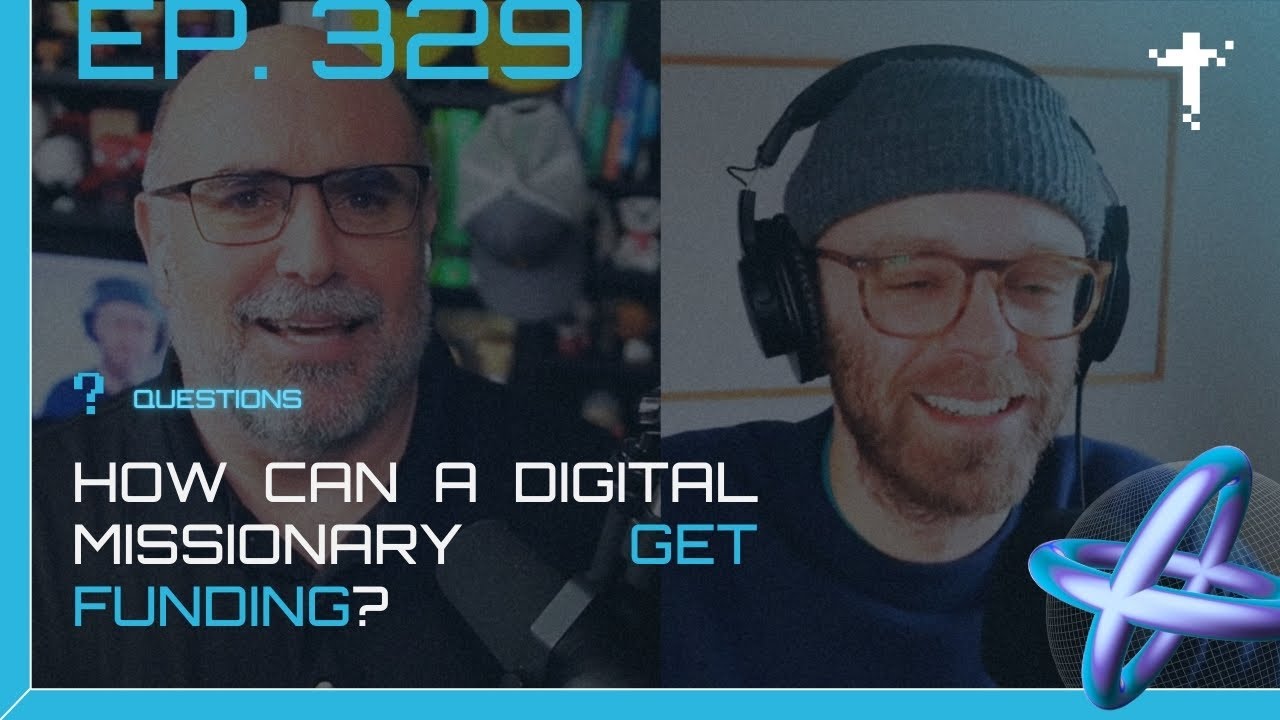
All right, hey everybody. Welcome to the Church Digital podcast. I think you can hear me. We're doing a live stream here, episode 329. I hope things are going well in your circles. We've got a great show coming up here. We've got John Crawford from Reliant, a friend and a ministry partner, coming in to talk about how digital missionaries can get funded, how you can get funded, what does it look like to raise funds, and how can the Church Digital help. And so we're going to get into that conversation here in a little bit.
Now I'm already coughing and I don't have a cough button hooked up, but we've got our good friend Steve Reid opening up the conversation here in chat. If you're here, I hope you're feeling better. If you're like me, going to urgent care means it's pretty bad. I was in urgent care actually last night. I have had a cough for, I think, this is day ten, day eleven. I had a vacation and then I had a road trip a couple weeks ago, and came off of that road trip. I was in Dallas where it was like literally negative degrees. It was when I got into Dallas it was five to negative ten Fahrenheit. And I have just been kind of walled as a result, just constantly coughing. And so I still don't have meds in me. They said, "Hey, Jeff, you've got bronchitis," but at least it wasn't pneumonia. And so I'll get my meds here in a little bit. The pharmacy's working on it right now. But if you see me pop in, you hear me like crunching on cough drops, I've been eating like fifty of these a day. You don't really care. I just thought I'd share with you. But I do want to say that rumors of my demise are greatly exaggerated at this point. What doesn't kill me will only make me stronger.
And so Connor, lot, hey, how you doing, man? It's Connor. I feel like it's been a minute since we've talked. Hope things are going well for you. But here with the Church Digital, I want to bring on John just in a minute. But hey, let me dig into this a little bit. We are doing a digital missionary conference, man, right around the corner. It's coming up April second over at, and so we're doing a one-day completely online conference. It's going to be on two stages. We're going to be doing a digital broadcast stage on our platform, Alter Live, our good friends over at Alter Live. If you know them, great. If not, doesn't matter. And then we're also doing in virtual reality in Spatial. And so it's going to be a free conference all day, eleven to five roughly, on Tuesday the April second. And so for more information, we've got ten speakers. I'm currently lining up more. Jason Morris had this great idea for a speaker. I am not allowed to tell you who it is at this point. I'm hoping we can work out the details by Thursday. And so I'm doing a stream on Thursday. We're going to roll out more information on the conference. So you can check it out. I'm going to stream Mondays and Thursdays, leaking, you know how I like to leak information. We're going to leak information on Mondays and Thursdays for the conference. And so for more information, at least what we are publicly allowed to say at this point, go swing over to the website missionary.digital. You've likely been blown up on email. You've seen it all over our socials. You're seeing it in the communities, missionary.digital.
We're connecting a thousand digital missionaries from literally around the globe. And by the way, I do want to publicly say this so that it's understood: all the speakers, all the content, everything that's going to happen at the conference, it's only for registered. Like, we're not going to roll this out on demand afterwards. We're not going to turn it into YouTube content. Like, if you want to know what's said at the conference, you've got to register. And by the way, registration is free. And so you can do that over at missionary.digital. And so hey, check out the website. We're going to get more into that in the days to come. April second is like less than thirty days away, I think is what popped up on my calendar the other day, and it kind of gave me chest pains a little bit because we ain't ready, but we are getting very close to it. I hope as we're heading into that, but hey, let me do this. Let me go ahead and bring on my friend John Crawford into the conversation. So John, you there? There you are, my friend. How's it going?
Yep, hey, good. How are you doing?
Good, other than the urgent care. Ask you, you know, whatever. They want me to like wear the masks to like get the things in and the inhalers and the little pills that the pearls that help you not cough. And they got all that junk in my system. And so coming soon we'll get there when we get there.
Yes, it's good. Yeah, we have all the asthma and allergies in our house, so I'm familiar with all those tools.
Yes, yeah, yeah. I've been down that road. Ironically, my wife was in urgent care for a completely separate set of issues Friday. She's been having a lot of back pain, which was my story like six months ago, where I just had brutal back pain for a couple months. And John, how old are you? You look younger, but maybe that's deceiving. Like, where are you on the grand scheme?
Just the beauty deceives. No, I'm coming up on thirty-five, so I'll hit thirty-five here in this month, just a few weeks.
Man, listen, I don't know about you. Well, you don't know. You haven't discovered it. In my thirties, when I was your age, I was running half marathons, man. I was like, you know, running a hundred miles a month. I was probably the best health I was ever in when I was thirty-five, thirty-seven. And yeah, definitely. Go ahead, no, go for it. Tell me.
I was going to say mid-thirties is definitely that age where I'm starting to notice and feel the things, right? Like there are differences. I don't recover the same, but I am running half marathons and had a long run this weekend. And like, okay, it's harder to fight through that knee pain, but I can still. And so I'm trying to soak that up. The more that I got here and I was afraid of here, now I'm here and I'm doing okay. And I'm looking ahead and it's like, I don't know. We'll see. We'll see how good.
Yeah, this is a true story. I promise you. I am at the mall at Wellington Green, and it is the month I turn forty. I have my kids. We're actually driving from Miami up to go up to vacation up in, up on the east coast of Florida, up at the beach. And so we stop off at the mall at Wellington Green. I used to own a business there at the mall. I was showing the kids where I used to own the business and did the work there at the mall. And my son and I in the parking lot decide we're going to race to the car. My son is probably five years old. And so we're in the parking lot. There's no traffic around. Nobody's going to die. And so he and I just take off running. I'm like maybe a couple weeks away from turning forty. And he decides that, as all five-year-olds are, that he has to beat Daddy. And so he got a good lead on me because he was quick out of the gates. I think he jumped on two instead of three. And as I was catching up with him, you know, the size that I am but still mobile, he decides he's going to cut into my lane. And I tripped over him. I fell on my knees. That moment, my son cutting me off in the parking lot at mall at Wellington Green, was the moment that my body self-destructed and everything went downhill from there. Literally, teeth started falling out of my mouth. My eyes, I started going blind. Like, hair, whatever hair I had left, just decided to run away. Like, it just, the moment you turn forty, my friend, it all goes down. So get ready for that. Like, you just survive. Jesus died at thirty-three. Congratulations, you made it past that. You're thirty-five now. It's just all downhill from here. So sorry to do that.
Hey, it's all right. I'm, you know, I'm working on it. I've been contemplating, you know, here's the keep going in that. I've been contemplating death lately. We're coming into Lent, and we're coming into all the things, and I'm like, I, yeah, I'm processing it. It's good.
Contemplating death. Okay, so on a brighter note, John. Oh man, we got really dark in a hurry. Hey, Troy, how's it going? Yeah, Troy. Troy's like twelve. But Troy's eighteen. I'm sorry, Troy. I didn't mean to offend you. Troy is an eighteen-year-old high school kid, was my point. And so we, let's not be any more morbid for the rest of this. You're Troy. Go back to school, Troy. There is no reason for you to be streaming me right now instead of watching the stream. Get your butt back in class. It's that simple, bro. You graduate like in six months, three months, two months. You can watch me all day long. I don't care, but right now, class. Do that. Don't make me mad at you, Troy.
Hey, listen, John. I'm sorry. Yeah, John. Um, what we want to talk about, the whole thing we're doing a season here on questions. Like, what are the questions we as digital missionaries hear? And to be honest, one of the questions that I hear a lot, that I hear a lot of us struggling with, is funding. How do we get funded? We have a passion to do this ministry, and the ministry takes time, and we're seeing fruit from it, but funding isn't necessarily there. And so I remember at Leon, we were as leadership wrestling with this. And there was a season where like, man, I'm going to have to like create this massive organizational shift with the Church Digital. We're going to have to do like all this accounting work and start to open this up where people can fundraise. And Leon's like, "You ever heard of Reliant, Jeff?" I think this guy John does that. And so that was music to my ears because I love the fact that I don't have to do that. So John, kick us off here a little bit. Maybe tell us a little bit about yourself and a little bit about Reliant. What exactly does Reliant do?
Yeah, absolutely. So I myself, I live in Indianapolis and moved here to plant a church and to plant a missional-oriented church, right? To plant a movement of being a person of God into a place where it was unfamiliar, unknown, you know, especially in kind of urban context, dechurched, and those sorts of places. And so moved here years ago with my family. Have three kids. We live here in Indianapolis and continue to do that. I continue to live missionally in the place that I am. And what that looks like, and I get to do that while also working with this organization called Reliant that has helped, that helped me plant a church when I had an idea, a thing that God was doing that looked maybe non-traditional, which we can get into that whole conversation about what means traditional or not traditional, but non-traditional or a different sort of a thing. Reliant was able to help support me in the fact of teaching me how to raise my support as well as then handling all the kind of back-end administrative details of handling those funds, making payroll happen, all those sorts of things, which as you can imagine, the kind of person that's like, I just want to go be in coffee shops and sit on the front porch with people who are far.
From God and be present to them. Go be in a space and be present to people. How to do payroll is not the top of my strengths, and so having somebody that was coming alongside able to help me with those things, do that. Not that you can't be really good at payroll and sitting on the porch with people, to be clear. But wasn't the kind of thing that I was wanting to spend my day doing. And so that's what Reliant does. We come in and we help folks who have a mission, and we come and help support them by training and coaching on how to raise that support, as well as then handling all the operational drag, as I like to say, of what it means to be a nonprofit. The operational drag of what it means to be receiving funding and not have the government come after you, to be able to have a retirement account and health insurance and all that sort of stuff. That is all really good and beneficial, but if you have to maintain it and run it on your own, it's really overwhelming and not the kind of thing that we want our partners having to do. We want our partners being able to focus on the ministry that they're doing. And so we take care of that. So that's what we do. That's how I got into Reliant, what that looks like. And so then with Reliant now I get to go out and hang out with folks like Jeff and Leighton Flatcap, you know, and all these others, and just see, hey, what's going on in this space? How can we potentially be a part of that and help? And just see new partnerships and ultimately make more ministry happen.
So yeah, you know, I love this because, you know, so often with digital missionaries, like there's—I don't mean this rudely, but like we're not really an administrative group. Like if you look as a general rule, like people that like streaming or people that like creating graphics on social media, or even like writers, often we lean into more artistic or relational, very relational, very, you know, high relational type people. We're not administrative. And so the opportunity, you know, never mind the fundraising, but even like managing the back office and having to deal with, like, you know, a lot of the reporting and some of the stuff, like there's a really exciting opportunity to come alongside an organization who can handle some of the difficulties.
But you know, before we jumped on here, John, you and I were talking about, you know, the pivot between physical churches doing digital ministry and now really like the audience we're really focusing on is digital missionaries. And you know, like a physical church, we're doing EDM right now, equipping digital missionaries. I'm leading a cohort, and there's probably, I would say, probably ten different churches that are going through out of the forty or fifty people that are going through EDM. And so there's this exploration of physical churches trying to figure out what digital missionary work could look like. But the physical pastors that are doing digital ministry in the space, like they've most likely got funding covered as a result of the church. People give money to the church, and the church has a budget where they break all that up. And you know, the online pastor gets a salary payment from that.
Well, in digital missionary space, we don't have that luxury. And so actually, I just this morning was on a call with a guy in India who was struggling with how to fundraise and how to start to have some of those conversations. I'm actually talking with a guy tomorrow who's in Pakistan who's struggling in some of those situations. And so there's this idea of missionary fundraising. And to be honest, John, like this was a foreign concept to me up until maybe a couple years ago. What is like missionary fundraising? What does this even look like? Can you walk me through a little bit here?
Yeah, absolutely. So I mean, missionary fundraising, especially in this context, right, is pretty old in the sense of like in the Christian tradition. In the Christian tradition of saying, hey, here's a group of the people of God that have a set aside calling or a set aside mission that is different, that is different from the day-to-day way of being the people of God in some ways. That is different than how we. And one of the first places that we look at that is the Levites, right? And so then we take the Levites and we start to look at some pretty—that's a lot of where we get a lot of the images of priesthood, a lot of the basis for priesthood, not just images of the basis for priesthood. We get a lot of this sort of thing. But really what we begin seeing is the people of God saying, hey, there's goodness in the world and there's a lot of things that we do in our common life together. We work jobs and we shepherd and we do these things. But there is something about these people set aside for a task of what it means to be the people of God witnessing among who we are and going and being a witness and doing those things.
And the Levites, not as much an example of that particularly, right? But then we start to see missionaries throughout the New Testament. You have the person of Paul who is writing New Testament letters and asking for funding for the things that he's going to do. And I think one of the things that we often talk about with Paul is we talk about Paul as tentmaker. But even in Paul's ministry is a move more and more towards this funding from the people of God to keep doing the work that God is doing. This is the way Paul is saying, I'm set aside, I'm moving towards this thing, and what that looks like. And that has then continued to be a trend in the people of God towards, hey, these people are going to take the gospel to, go and be witness to the presence of Christ in a place. And that has been missionaries for a long time.
And then when we talk about now missionary fundraising within the digital context, as you and I know, and we start to see some of the church catching up to that idea, but when we say there's a lobby of a game, there's a lobby, there's a chat or Discord to be, and there's these things, like these are spaces where God is present and at work. We can go join into and be present and be that person that God is calling into that space to go. And so then missionary fundraising, right, this is just kind of a thing around who are people that are set aside? What does that look like? How's that then play out here?
And so that somebody's going to do digital missions in whatever capacity that is. As we know, I think there was somebody on a stream that I had with y'all, probably a month or two back, that talked about that idea between IRL and the idea of IRL and online as not different. Like there's not real life. No, digital is the place we're being. It is the things that things are happening in, right? Sure, you're not tangibly touching the person in front of you, but it is life. This is living here. And so then go be a missionary there. And so then missionary fundraising is to say, hey, people of God, and sometimes not people of God, here's this thing that I feel called to. Here's the need in this space. And you start to look at books of the New Testament that are, some ways, parts of them at least at a minimum, are fundraising support letters saying, here's the need for the gospel in this place. Here's the need for the good news of Jesus in this place. Here's the answer to that need, which I think is me going and being a person of Christ here, going and being in this space. Will you be a part of that? And inviting people into that. You're not saying, hey, will you—it's not begging for money. It's not saying, hey, will you please do this thing so that, you know, I can have cushy things and all that. It's like, no, it's like, hey, God is doing something. Will you join me in that? Be a part of this with me as a partner. And so that's what missionary fundraising is, in a long, rambly way, is inviting somebody into what God is doing, just like we always have been as the people of God. Now we're just talking about it digitally.
Yeah, I mean, it's this beautiful opportunity to invite people to partner with you, to be part of what you're doing in ministry. And so, you know, I tell you, for me, often times people don't understand what it is that we're doing with the church digital and, you know, with gamers and streamers and TikTokers. And so, you know, it's beautiful with me. Anytime I have a conversation, even with honestly the most ardent against the idea of digital church people, after about ten minutes of conversation with them, kind of working through some of their issues, helping them recognize that the idea of digital relationships, you know, a micro view of digital as opposed to like a macro, like it's a whisper, not a megaphone type of deal, you've heard me out this conversation. But people are open to the idea. And often times I hear the words, oh, I've thought of it that way. And really, instead of recognizing that people are pushing off against you taking the time to dialogue with them and inviting them to partner with you, to maybe start to even fund some of the stuff that you're doing, you know, I know that there's through the church digital, we feel this where it takes time to build that relationship, to share the stories, to show the stats. But people are open and receptive to the idea of partnering with that.
And so, like, um, John, what are some basic practices or ideas of like developing that relationships with partners, partnering with people, developing relationships with individuals to get them to the place of—like that doesn't happen overnight. I can't tell you how many times people have told me historically, Jeff, it takes time. Jeff, it takes time. Jeff, it takes time. I get it. But what are some things that we can do to start that road, to build relationships with people so they can start to help fund us?
Yeah, absolutely. I mean, I think there's a ton of things within that, but I think a few things that stick out to me as always, when we talk about this, is people give to people. When we talk about this sort of support raising, this sort of raising funds as a missionary, people give to people. And so part of what I mean by that is two different things. They want to know you. Who are you in this ministry? And the need of that ministry. What does that look like? They people—it makes a difference when you connect with them personally. And so the idea of, especially in the digital world, right, we're used to this. We're used to the idea of like, hey, we can put something out there and we know the potential of millions of people that will see it. But the reality is that we also know that engagement into retention into all that stuff is very, very, very, very low typically. And what people really want is beginning to connect with the person. It's having that message. It's having that call with them. It's doing that sort of stuff. Fostering relationships with people and having that relationship sort of one-on-one, that they get to know you as well as they have relationship with you. And that makes a big difference.
I think that's one of the core big pieces of starting that is kind of having some intentionality in that relationship because people give to people. And it takes time. All relationships take intentionality, right? Any relationship that we have, we think we have this idea of kind of the best friendships are just these magical things that happen all a sudden and come. But even then it takes time. You take time to invest in intentionality. And so then as we build these relationships with people that want to become partners in the work.
that God is doing taking time to let them know you and to build a relationship that's one first step I think that really matters instead of assuming well if I just put enough stuff out there people will pay attention and at some point maybe maybe but towards this sort of style building relationships over time with people that can support you in the long run I think it's really beneficial so that's just one I can keep going or we can reflect there for a second if we want give me one more give me give me one more more idea yeah absolutely so I think another is that basic of what I just named essentially of there's a kind of flow in when we share with people about what we're doing and there's kind of a basic framework and it's just storytelling it's just a storytelling framework but you kind of introduce yourself let them get to know who you are you express the need and it's helpful if you give a story of the need give an example of somebody you met in a server somebody that you are having conversation with that regular who's always hitting the stream share a story that represents that need with permissions obviously or change names you know do those things but and then the answer to the need and sharing very clearly the ultimate answer to that need is the good news of Jesus Christ but then how is this thing that you're doing the ministry that you're doing answering that need that is there for this person and this story and so then you can play that out a few times giving more about the details of here are your partners in that what are the things you're doing what are some stories that you've seen be really beneficial and then you just kind of give a bit of just like and this is why again story need answer to the need and then hey I would love to invite you to partner and then you invite them to partner with you and there's levels of partnership that you can talk about and different things and lots of conversations we can have there but the main thing to name is explicitly inviting a person to partner with you specifically and sometimes the temptation is like well if you'd like to think about partnering that would be cool and hopefully you can't hear me over this background music and that makes the whole point that you're being really timid and like all the things instead of hey you've heard the need you heard the answer to the need here are the things that God is doing and you know if I just like kind of roleplay it for a second yeah it's like and Jeff part of what that means in order for me to continue to do this is I need partners I need partners in this ministry to come along and pray with me to connect me with other people that might want to hear more about this ministry as well as to partner financially and then I would share more about the financial piece here's that here's how this goes and so Jeff my question is would you be willing to partner with me at seventy five dollars a month and you give the explicit invitation now you might give a range or you might say hey there's different levels but kind of the explicit invitation into partnership with a person that you have relationship with that you've been building relationship with is beneficial because otherwise they don't know they don't know what to do you know the example I like to use a lot is like what do you tip a what do you tip an Uber driver what do you tip a DoorDash delivery person I we don't have a norm for this yet I know that I should tip probably fifteen twenty percent out a restaurant but like is this that I ordered carry out is this the same thing and when it's unknown for us we all go into this like I don't know what to do and so you're just handing somebody the Square Terminal options to say hey here are some options of ways that people can partner so yeah and and with that let's it's big asks right and and there there's a a book on that I know I've read historically as I started getting more exposed into this I'm blanking big ask the big ask the author the god that's it the auth on yeah I'm bad I I I should I should have looked that up in advance we'll we'll put it in the show notes at some point um hey chat GPT figure that out for us and and we'll get that uh at some point but it's it's um by the way as as a former Uber driver um tip your Uber driver who's who's you know in general that's a good thing and then especially when they're delivering food like I I would not I I gave up delivering food because I was making like two dollars for like an hour of work because I had to get out of the car to go get the food then I had to deliver the food over and you know there's no money in that uh that's a that's a whole other conversation but actually it'll segue into this it's amazing how this works out my my focus keeps going out on me because I'm I'm very emotionally connected to you right now and so my my focus does not like it I've I've got to stop um I'm standing as opposed to sitting cuz my my legs were like you just need to stand up and so I'm much more energetic uh today hey um so Uber you know I mean there were seasons where I had to do that I'll just be honest where you know I I am um you know tent maker um bivocational is is a phrase we use a lot cocation uh and I've been publicly saying this the church digital has not paid me a penny in five six years at this point like money that goes into the organization goes in into into leadership into organizational costs and you know I'm happy to to dialogue and work through anybody on this but like we're not we're not making money as an organization at a negative even and so historically I've carried a a lot of that responsibility just to to keep the the lights on so to speak not bragging um I'm also unemployed my contract is actually ending next month so I'm feeling this at a very level because I'm actually I I need to either find another bivocational approach or I I need to lean holistically more more into this um let talk to us a little bit here because the idea of bivocational as a you know getting a a job uh DoorDash Starbucks um doing something anything cocation figuring out how money you know your job can actually be part of your ministry fundraising like are are there pros and cons to these different uh approaches yeah absolutely right I think there're I mean there's pros and cons to everything uh Steve Shadrach there it is there you go um so the uh yeah I think there's pros and cons and so the phrase that I use a lot that we use a lot at Reliant is uh finding funding that matches your mission and so a lot of times instead of saying well I need to shift the mission of the thing I need to change the thing because the funding just isn't working what does that look like and what our hope is is that we then present one option that when folks have a mission that could use being support based that they can keep going with that mission and not have to change the mission based on uh what the you know one of the options you gave earlier is the idea of hey yeah there's a lot of people that they have like church budgets even those church budgets are shrinking those church budgets are changing as you have you know a book that just came out a few years ago and I'm going to forget the author's name again if anybody in the chat wants to help us with that but called the Great Dechurching showing the decline of how many people are leaving or how how much smaller some of traditional churches getting and what that looks like and so even that funding is changing and so all that to say pros and cons of those different models and what that looks like I think the thing that I almost begin every conversation that I have with anybody in it's like what's the mission what is the thing that you're on about to use an Allen H phrase like what is the thing that you're wanting to do and how what does funding look like within that and so then for a lot of people cocation is a really great mission it's what works really well for me and my family in this season I find you know what I'm doing as ministry at my work with Reliant but I work full time with Reliant getting to meet people and help them step into ministry and do lots of things across while also then being a part of a local church and a neighborhood of people we have uh it's just just counting it with my wife the other day but we have nine units of folks that live in the same one square mile neighborhood that are doing life here wow in mission and the cocation thing works really well for that I work during the day but I work remotely and have flexibility when I need to go get groceries for a neighbor do those things you know so like that works really well for us for some people but the con to that is when uh you know my priest ask like hey can you preach on this day I'm like I can't I'm traveling for work that week before and I'm doing this other thing like I i' say no to some ministry opportunities that I really would love to be a part of because of the cocation of myself and somebody may go no I I want to be able to spend more time doing that thing I may want to spend more time doing that you know I think about the digital space a lot and how some of the hours in the digital space is often off hours which can be hard for a family it can be hard if you're like hey my kids are home from school during this time and all that and you're exhausted because you were working a full time job and now you're trying to stream or now you're trying to go be in a lobby when things are full on the Eastern Seaboard like you're doing that sort of thing uh sometimes maybe raising support is an answer to that and that shifts your work hours to the evening yes you're not present with your kids but you're able to be with them during the day or maybe you're homeschooling them and getting more time with them and doing some of that and working those hours and even it gives you some flexibility and options that some sort of cocation might not and a million other ways to do it and a million other things but there's pros and cons ultimately it comes back to in my mind funding that matches the mission what is the thing that God is calling you into how do you what does that look like and then let's get some funding that matches that well yeah it's it's it's interesting the the the relationship between cocation bivocational you're I don't know like John I heard somebody describe the difference between bivocational and cocation this way and so I resonate with it and then I tell people this and they're like I've never heard that so I don't know if I'm just making stuff up which I'm I'm known to do on occasion too all the time okay but like bivocational is like your nine to five is nothing to do with ministry you're just you that's what you're doing you're delivering food on on Uber and and as as a result you're able to do ministry after hours or off the clock yeah cocation is tends to be like I I have a friend who's running a a micro church out of a bar and he's also the operations director at the bar that he's running the micro church out of like he's he's managed to figure out how to like do ministry and have somebody else pay him to do the ministry like that's a sweet gig if you can figure that out but there's um it's kind of that that tension you know it's interesting I look at I look at scripture um and like this is this is a i this is not a gotcha moment but this is the gotcha moment for me and so like John I'm gonna let you off the hook if you're like wow never never never thought of that right um and maybe I'm I'm misinterpreting all of this but like Paul um Paul was a tent maker Paul was a a church planter a church networker he you know he was constantly moving he was was constantly in jail I mean let's set that aside Paul was was going from place to place I'm sorry I can't be with you in person I'm sending this this letter written on paper which was modern technology and I'm sending it via Timothy on the Roman roads which was new technology and so
Paul 100% would have been a digital missionary like we see him engaging with a lot of this new technology, you know, even historically. But he was a tentmaker, and then it was funny as I was prepping for this—I was doing some like, uh, for this interview I ran across this Bible verse, 1 Corinthians 9:14. In the same way, the Lord has commanded that those who preach the gospel should receive their living from the gospel. And so Paul was a tentmaker, but Paul says to the Corinthians, "Hey, pay the people who are preaching the gospel." And now like we're in this tension. You've said it. We're even like churches are having to adjust and are moving more towards different funding models. Nonprofit donations in the church space is even not what it used to be. And so as a result, you know, I believe you're going to see more of a swing towards more bivocational, tentmaker type approaches. What are we supposed to do with all this? Like it feels like, you know, it's hard for me. I'm killing myself over here. Funding isn't what it used to be. Some of our digital missionaries are putting in crazy amounts of time. But you know, as more digital missionaries get into the space—I was just having a conversation the other day with, uh, do you know Susie? Have you ever hung out with Pastor Susie? You know, yeah, we've been around each other. I'd say we're getting to know each other over the years slowly. He's a great guy. You should totally get you connected with him at a deeper level. But even Susie was saying, "I've been on calls with this team some and chatted about different things. Amanda and Pastor over there with them." And totally, Susie was saying, "He's like, yeah, ten years ago we were the only thing in gaming space, and so the money was coming in like crazy because anybody who was thinking crazy was given to us. And now there's so many other things—which by the way, it's still not enough—but you know, there's more crazies in the pool than it used to be, and so the amounts kind of getting bled down a little bit." What, how do we reconcile this idea of full salary? What I'm reading here—"should receive their living from the gospel"—like, is that take into account that the tentmaker, the bivocational, should we be looking for something different?
Yeah, I mean, I think again, for that, right? And this is where Paul kept figuring out the mission as he went. He's figuring it out. I think sometimes because it's scripture, we're all like, "That dude knew exactly what he was doing and his five-year plan went according to plan and this is great." And it's like, no, he got shipwrecked and he figured out what do I do with that. He got imprisoned over here and had to figure that out. This church didn't give what they thought they were going to give, and he writes a letter and it's scripture. And it's like, "Hey, what are you guys doing?" You know, these sorts of things are happening, and he's figuring it out. And so I think that's the answer a lot of times for people is like, let's figure it out and let's figure out what it means for this person. And I think the way of support raising is a way of, you know, having your living and sustaining coming from the gospel because it is a matter of you're inviting people to partner with you and what that looks like. But then there is this certain amount of time economic model that's actually really short. And as far as the history of the church, there's this model of, "Great, everybody tithes and that paid the retirement, healthcare, and pension for a few staff to go and do a thing." And all that, like, so it's a fairly limited model that we, it's normal. And you know, there's all sorts of conversations we can get into of leaking into free market capitalism and church and like all these things. I could have all sorts of conversations about that. It's not today. That sounds like an incredibly boring conversation. I just want to say that's not what I'd be interested in long term. Like, five minutes maybe. But go ahead, please.
Yeah, yeah, yeah, no, it's great. I, man, I can talk about that stuff for days. But the living from the gospel, as well as like, "Hey, things are changing. They are changing, and everything's changing." And so then I think that's the place that we find ourselves in is a curiosity, just like Paul. And going, "Okay, the Roman government capacities, this, this is changing. Who we are as a people and what's accepted as not—what do we do with this thing?" And we're saying, "Okay, great, what does it mean to be faithful to the things that God is present to?" Right? This is what Paul's doing. He goes and he lands, and it's the classic statue of the unknown God. He shows up and he says, "I trust God is present and at work here, and now I'm going to pay attention to see what's going on and then respond to what it means for the church to be here. What does that look like?" And I'm going to write to these people over here and do these things. And he did make tents, but then he also asked for funds. And he, some ways, his tentmaking changed day to day based on the thing and what was happening. And so for those that are ready and called to live like Paul, well, that's going to change every three months. For others, you may go, "Hey, I see this piece of what Paul did, which was raising support, and I can do that." Or, "I see a piece of what he did, and that was a tentmaker, and I bring that all back to," uh, "I bring that all back to again, matching funding that matches your mission and what that looks like and how that plays out." And I think we can discern that and have better stories and better examples from other people that are doing those different things and what that looks like. But then I think just really asking yourself, like, "Hey, asking yourself and praying, okay, God, what is it you have for me here? What is it that you have for me to do, and what are the methods in which I can fund that?"
Yeah, there is a, um, it's funny and a completely unrelated conversation. I was having a conversation with one of our leaders, uh, this afternoon around lunch, just before this, maybe 11 o'clock Eastern. And, um, and she was sharing—I want to say I left it open on my screen, but I think I closed the browser. I'm pretty sure it was Jeremiah 1. Um, you know, and it's the scripture where Jeremiah is saying, "But I'm a boy." Um, and I think it's like Jeremiah 1:6. "But I am just a boy." Um, no, that's what it was. It was Jeremiah 1:2 and 3, where God's like, "You know, I knit you, I formed you, I created you." Jeremiah 1:6, Jeremiah's like, "But I'm a boy. I don't, I don't, I don't know." And, um, in Jeremiah 1:18, God is putting the words in Jeremiah's mouth, and he's like, "You are not silenced, and so I can speak through you." You know, and for me, honestly, it was this perfectly timed, uh, for where I am in my life, but also where I am in this conversation with you. Where it was like the idea of, "Hey, you know, we don't have it figured out yet. Paul didn't have it figured out. What do you mean, Paul? You know, was kind of wrestling with some of these things. He, Paul's like one of the founding fathers of the church. He's supposed to know what's going on, and it's okay that he didn't."
Yes. And as we're in the midst of this as well, you know, I have been wrestling with the fact that, um, you know, I'll just be transparent in this. I can't do this. And the way that me saying I cannot do this, that brokenness is not giving up. It's me shutting up long enough to allow God to enter in the conversation, for God to put his words into it, you know? Um, that was the leader, uh, was actually challenging me. You know, um, Psalms 46:10. Um, you know, the abiding is something that as an organization, I am, if you know me, I'm a type A person. I am like driven out to Wazoo. And it's this idea of in the Psalms of like ceasing striving, uh, of ceasing in that and allowing God to move as opposed to you moving for him. And it's this really interesting, um, personal thing that I'm wrestling with is how to let God move in the finances versus me working real hard. I'll just be transparent. Versus me working real hard to make it happen, you know? John, I know you've been like a planter. You've gone down this road, and somebody who's doing like mission fundraising, working for an organization like Reliant. How do you see that brokenness? How do you see ceasing striving? How do you see, "I am but a boy," and allowing God to speak? Like, do you have any stories or any examples, either in your ministry or others, of how you've seen God move through that?
Yeah, I mean, absolutely. I think that there's so many things, right? And then especially one of the things I love about the church digital is like a lot of our talking and conversation has been from a very particular American context today. But like, that's not everybody that Church Digital is involved with, and that plays itself out in like so many different ways and so much nuance and all those things. Here, but I think towards that brokenness and that striving, we as the American church have gotten really comfortable because there has in some way felt like abundance for a long time, and the normality, and like these things. But then when it comes to the idea of, "Okay, hey, we're talking about something unique or things are changing, there's trends that are changing," it's easier to then go, "Okay, well, here's the American mentality of pull yourself up by your bootstraps and just work harder and hustle and like do these sorts of things." As this invitation, now there is this sense of, you know, somebody has the phrase, "Work like it depends on you, pray like it depends on God." And so this, there's some tension in all of this, right? No real specific answer. But one of the stories that really sticks out to me was I was in a season of when you're raising support. A lot of times you have that initial season, you're having a season of trying to raise that initial support, and then you're maintaining relationships and doing, but then you may take a month or two to bring on new partners, meet with some new folks, remet with people, raise a bit more, you know, that sort of a thing. And I was in one of those seasons. I was weeks away from a baby coming along and was just feeling this pressure. And one of the best ways that I can clear my head is just to go for a run. And so I go and I go for a run, and all that like anxiety and stress is like pent up and it's coming out by me running way too fast. I was just going way too hard. And I'm like going, and I remember the neighborhood where I'm at, the street corner that I'm at, and I'm running and I'm just gasping and gasping for air, which is not the kind of running I like doing. That's not fun for me. Like, I'm a slow runner, nice and easy. Uh, and I remember I felt it as invitation. I felt it as God going like, "You know, you can't do this on your own, right? Like, you can't just keep trying harder and harder. Like, I'm with you. Will you trust me? Will you be with me? Will you depend upon me?" And that's my like moment of going like, "No, I can't. If I just keep doing it, if I do the right thing and I make the right things happen and just keep working harder, it's going to work out, right? Like, this is this story that we believe." But then I think there's an invitation from God in this dependence. And just like Jeremiah, just like the people of God, just like, to go, "Hey, I'm coming and bringing my..."
Dependence to you God and what that looks like to bring that to Christ as the body of Christ and the people of God and coming this dependence and this open-handedness to go hey I need you I can't just keep trying too hard because else I'm going to just be gasping and out of breath and it this doesn't work and so I think that's the story from my own life that I had that moment of remembering and realizing and then you know I'm sure the next day at some point I was stressed and anxious and making sure that I made enough phone calls that next day like and it's just this constant reminder that's needed the reminder that I have uh right now I'm I'm one of those people that's a little careful with kids on the internet but like uh it's this picture of my son and uh you know that you saw the back of but is I was about to say that's really unique no go yeah yeah yeah know my son's a very unique looking uh set of lines no it's just the back of uh that but it's that reminder that's sitting here that's like hey I life isn't about just striving and doing all the things and like this isn't what God's inviting us into like part of the goodness God's inviting me into is like my relationship with my son my relationship with God my relationship with these things and that reminder and that dependence upon that while also all the it's tension it's all tension but as you say that that's the things that come immediately to mind for me and how we do that is we open our hands and yeah say okay God I I give this to you and to the people of God who are the body of Christ I give this to you help me discern this discern this with me what do I do here you know and that's stuff Jeff that you and I I've talked about with y'all in the church digital it just takes discernment that's why you have a team and a board and okay hey let's pray together let's see what is God doing here and what is this look like what does the future of this look like um yeah yeah it's that I mean I've had the mentality historically um pray hard work harder you know which you alluding to earlier and um um you know coming around to the to the brokenness of I I can't I can't do this but God and um and and allowing him to to move in that I and that that's been like that's just that's a hard position for me to be in um like I I've at least I've I've never really this past six months has has put me in that in that unique spot and um I I learn constantly from it um I go through seasons of I I can do this I can't do this I maybe I don't maybe I don't I don't want to do this what is God telling me through this um you know and you know I I just I I'm I'm constantly I'm just maybe saying a little bit more here but I I I find I find myself saying like things like I don't but I don't want to slow down but maybe I need to or maybe God's God's telling me in this season too or you know let's you bring on more people and and I've tried intentionally to to to bring more more people into the system for for different vantage points and and views and like we're I'm I'm just being here on the stream like we're we're very um open-handed with this because I I never wanted this thing to be jeffrey.com and because I always felt like there was something better than Jeff Reed.com and that I wanted it to be more about God doing something and and and even through the through the church digital and beyond even through the seasons like we've just we've really um been challenged towards um being broken in recent months and allowing God to to do what God's going to do with it um so if I'm a if I'm a missionary out there you know somebody that's working with the the church digital what would what would it even like look I mean we've kind of been talking all all over the map here and and brokenness and and fundraising and and um and allowing God to do what he's going to do but what would a uh what would a relationship with Reliant look like how how how do you all come alongside missionaries and and and help them maybe start to to work through some of these things yeah absolutely it's a good question uh real quick to answer Steve in the chat he's asking what uh bedong means and it's just uh hard to read cursive it's just belong uh but I get it asked enough that I need to probably take it down and put something else there I did ask him that in in one of our first meetings too I was like what in the world is bong but uh that was what your church right or was when something church the name of our church plant when we first moved to the city yeah I was belong and so um anyways uh I think towards yeah and I think and to tie it in with the brokenness that you're naming in the space of just like yeah who are we and what do we do and how do we respond when God's calling us to this thing and I think that's one of the spaces that we hope to meet at Reliant to go like hey when you're at that space to go I don't know God I I just have to kind of trust in what does that look like and then we also see a faithful piece of scripture is going and then asking God for the things that we want like hey I don't know but I'm asking for this and I'm putting that out to the people of God into the church community to say here's the things I think I need what does this look like and so then that's the space where Reliant comes along and so you could reach out anybody could reach out to me uh check out our website most things that you would find to reach to somebody about potentially working with a reliant are going to get to me on our website um but essentially what it's going to look like is just a conversation to say hey uh what is it that God is doing with you in you through you and all that sort of stuff we just want to come and help support you in that say our mission is your mission we want to support your mission so that you can keep focusing on your mission but then if you are wanting to be train and coach and within that brokenness that we're talking about within that space come in invite other people to partner with you in the thing that you are doing to partner with you in the thing that God is doing not you are doing right it's the thing that somehow some combination of the both end of that um and that's what we can do you can come and uh we would basically kick off some partnership conversations and what that looks like then we would be be able to train and coach you on how to raise that support you would take a season of time to raise that support to go and meet with people and individuals to live out the things that we're talking about here and invite them in just like Paul did just like Jesus was support-based in his ministry that's going out and saying hey we will you be a part of this thing that God is doing and inviting people in and then you have this sustainable group of partners we call it ministry team development you're not begging for funds you're not doing those things you're building a team of people to partner with you in thing that God is doing and you would go and do that and then you go and continue doing ministry by doing the thing that God has called you to and you have a team around you to do and now you have a sustainable kind of base of partners that can help sustain you for the work that's ahead so that you can be uh you know sustained uh what is it first Corinthians um but it's Paul saying like hey go and like I'm being sustained in Christ through Christ for the work that God is calling in you can be sustained this is one of ways that we can do that is be sustained by having partners around you to help do that and Reliant being the partner that helps kind of take care of all the things that are the administrative you know hard parts that you know we talked about the idea of like that not being us and that what that looks like and thankfully for you all I'm not on those teams at Reliant you don't want me on those teams uh but I would say even for those people that are really good at it it may not be still the thing they want to be spending their time on you know it may not like yeah you're great at it but is that the thing that you want to spend your time on hey no then great we can come alongside and help with that so I think that's kind of the next episode looks like partnership looks like training and coaching then it looks like you being equipped to go and do the thing that God is calling you to do yeah one of the one of the benefits of of um being part of uh the church digital network being one of the benefits of completing EDM equipping digital missionaries with us here with the church digital is uh a partnership with Reliant and we've got digital missionaries that are are currently we've got some that have gone through the process and some that are currently going through the process here in us and and globally uh you know and using the Reliant ecosystem toward towards fundraising I know they uh they provide um coach some coaching they provide um you know the uh the ability to do the online transactions to process the to to manage you know all all the accounting of that all the the tax stuff like it's it's very uh hands off and um it's something to be honest it'd be the type of thing I would have really loved to have had access to maybe five or six years ago I I I I was and part of you know part of my story if you know I was I was sick for um a number of years where basically I had diabetic neuropathy it's funny I'm standing right now where I actually have no feeling beneath my calves and so like it's I'm kind of like surprised I haven't like tipped over at this point yay for me but the uh the the the larger picture was I I didn't I didn't have health insurance and so you know the ability to get health insurance through Reliant the ability to set up you know retirement through Reliant and and and some of these things like that's that's one of the opportunities that Reliant allows to to missionaries that that are part of it and and so you know what I wanted to do for the church digital is to say I I I want people to have health insurance even if they don't have it because of what their work is doing or or what my situation I was my wife was a part-time employee working full-time hours for a for a ministry and so we we didn't have health insurance um you know for us or and and the kids had some like state level thing which didn't really cover much except for accidents and so like we didn't have that and and and I vowed I didn't want to have others to be put in that same situation as I did now with a lot of the health issues that that I'm with as as a results and so having a partner like Reliant to kind of help offer some of the the benefits within the the network is is is a major opportunity and so I um would love to connect you uh with John uh moving forward and so like if you're interested in this if you're watching this on YouTube or questions in general hit me up directly find me in in uh in Discord or in uh in WhatsApp and and I'm happy to get you connected to uh to to John and uh and the team over there as they're processing how to help support digital missionaries here in in the US and beyond and so I don't John go ahead go talk to me and I just was gonna say I think I would uh you know agree for those I know you guys have had a few people go through EDM cohorts and uh what that looks like already but if you're somebody on here that hasn't and you're I think it's a huge amazing resource that the church digital is putting out and I think will give the framework for the ways that Reliant helps right because you're getting this overall framework for digital missions and the ways that that can happen and all that sort of stuff.
Of stuff and so if you're here and listening and you're like, "Oh man, I think I'm interested. I think I have some ideas." Cannot recommend 12 out of 10 would recommend to all my friends the course that Digital and the things that they put together because it helps give that framework towards that.
That Reliant is just a piece of that. We want to serve. We want to serve, you know, Jeff. Those stories and those are the stories for me that motivate me more and more every day because I'm like, "We, it doesn't have to be this way. How can we get out there and let people know it doesn't have to be this way?" Um, but it's all within that framework that you're talking about. And so for folks that haven't, I would just so highly recommend that because, yeah, once you have that framework and you kind of are in that framework, then you can, you know, understand some of the options and the choices and all the nuances that we talked about today. But then yes, if you're ready to explore and you've done that, I'm excited to chat with whoever.
Yeah, and that plug would have nothing to do with the fact that you were one of the videos that we show in EDM, would it?
I mean, I'm in there, but it is more the idea of I'm like, "Hey, but that's a framework to understand Reliant, understand framework." I appreciate, yeah, no, no, very good. And so yeah, thank you, thank you for that, John. Thanks for jumping on on the stream here. Episode 329: What does it look like for a digital missionary? How can a digital missionary raise funds? And so Reliant has an incredible opportunity and a resource for any the church digital missionary, any missionary to connect with. And so John, as we're wrapping up here, any closing thoughts on your side?
No, just grateful. Grateful for the work that you guys are doing and continuing to, uh, for all those that would be folks that are heading into the church digital, and it is still, uh, not understood in some ways, in so many ways, and those sorts of things and why you would do it. Just an encouragement to go like, "Hey, you are doing the work that the people of God have been doing in lots of ways." And you know, I know the statistics are just at the top of my head, but I just recently was working, chatting with somebody who has statistics about how many people are online and the amount of time we're spending online. They're not spending time in churches. They're spending time in these spaces that we know to be real places of connection. And so as you continue to find yourself encouraged and burdened towards caring for people, just know that I see it and it is good, and it's good work that you're doing. And just grateful for, thank you for saying yes to God and being present to the places that God is already at work in those lives and then being in those lobbies, being in those servers, being in those spaces. Just thank you for the work you're doing.
Yeah, all of you who are listening, no, it's, um, I mean, sometimes it does feel like thankless work. And, uh, sometimes, you know, when I, I know the tension when you know the bills aren't getting paid or the, you know, the check from the invoice is late coming in and you're not, you're dealing with that tension. And, uh, you know, you've got the spouse with the kids with the field trip and the that, and you know, I just, it's hard. And it can be a thankless job. And so know that we're praying for the missionaries in that space. And, you know, one of the things that I believe with the church digital is that we want to normalize the idea of digital missions work. You know, I don't, I don't, I'm not naive enough to think that, you know, we're going to be exclusive on this forever. Um, but I do believe that we've got an opportunity to really expose the idea at a large scale and try to create resources for the next generation to come along. And, um, relationships with, uh, with John and Reliant solve one of the major problems that comes up with digital missionaries, especially considering funding. And so questions on that, hit me up. Let's get you connected to John and we'll go from there. But we're going to wrap up episode 329, and I'm kind of impressed that I never coughed on air. I had to mute a couple times, almost lost it there at the end, but I was able to pull it together, I think. John saw me kind of lean off screen a little bit, new to kind of stretch, keep it going a little bit. Keep that was good. But for, uh, for John, this is, uh, Jeff with the church dig. From John with Reliant, this is Jeff with the church digital. Thanks for jumping on on the pod, and we'll see you next time on the stream. Y'all have a good one. Peace.