⌕
··
In one year we had like a hundred people. There's a church that had twelve people worship, right? That grew to a hundred people by just like expanding out and starting church for people where they actually were at a time that worked for them in a place that worked for them around something they actually like to do, like eat barbecue.
··
Welcome to the Church Digital podcast. Through this podcast we'll talk about the technological innovations within the church, but more than tech itself, we'll address deeper questions. Is disciple making possible digitally? How should we approach the digital mission field? Can a biblically grounded church operate in digital space? And where does the metaverse fit into all this? Whether you're a big or small church, an established church or a startup church plant, the Church Digital's goal is to help churches like yours learn to be a multiplying church digitally and physically. Our heart is that churches like yours will discover a newfound focus on disciple making that will revolutionize your church. And now here's your host, Jeff Reed.
··
All right, hey, welcome to the Church Digital podcast. It's Jeff Reed here once again. Um, great being here doing this podcast. Hey, listen, uh, you know, I don't put a lot of commercials up here at the beginning of this stuff, but if you've not checked out, you digital pastor, you digital planter, you innovator, you person who's doing digital ministry and is probably frustrated because they feel like no one on their staff understands them, yeah, I'm talking to you. Hey, you should check out Digital Church Network. You should come be part of the family, the fam that we've developed. We've got an online community set up to help people like you, men and women, boys and girls like you, the twenty-year-old that has a crazy idea but cannot convince church leadership to listen to that. Yeah, come hang out with us. Let's talk, let's encourage you, and help you figure out how to navigate through this. It's a free online community. It's literally at digitalchurch.network slash join fam. Digitalchurch.network slash join, j-o-i-n, fam, f-a-m. Hey, you know what, we'll put the link in the show notes, and uh, that was a forty-five second commercial and we're gonna call it done.
··
You know, it's interesting. We were talking off air. I get a lot of, um, I get a lot of requests. I get a lot of calls. I talk to a lot of churches, and, um, you know, the quest one, there's several questions that I get that I don't really have a good answer to. And so honestly, like the question that, which is when I saw your book was coming out, Fresh Expressions on Rural Churches, I'm like, whoa, Michael, the guy who deals with fresh expressions, the guy that understands digital and metaverse, he's writing a book on that. I want to talk to him about what digital looks like in rural because I get people asking me and I don't have a solid answer. And so like that's the heart where I want to go with this podcast, but maybe even just to kick it off here, why don't you talk a little bit about you, introduce yourself to the audience here at the podcast, talk about the book, why you wrote it, kind of with the heart behind that, and, uh, you know, give us the life update.
··
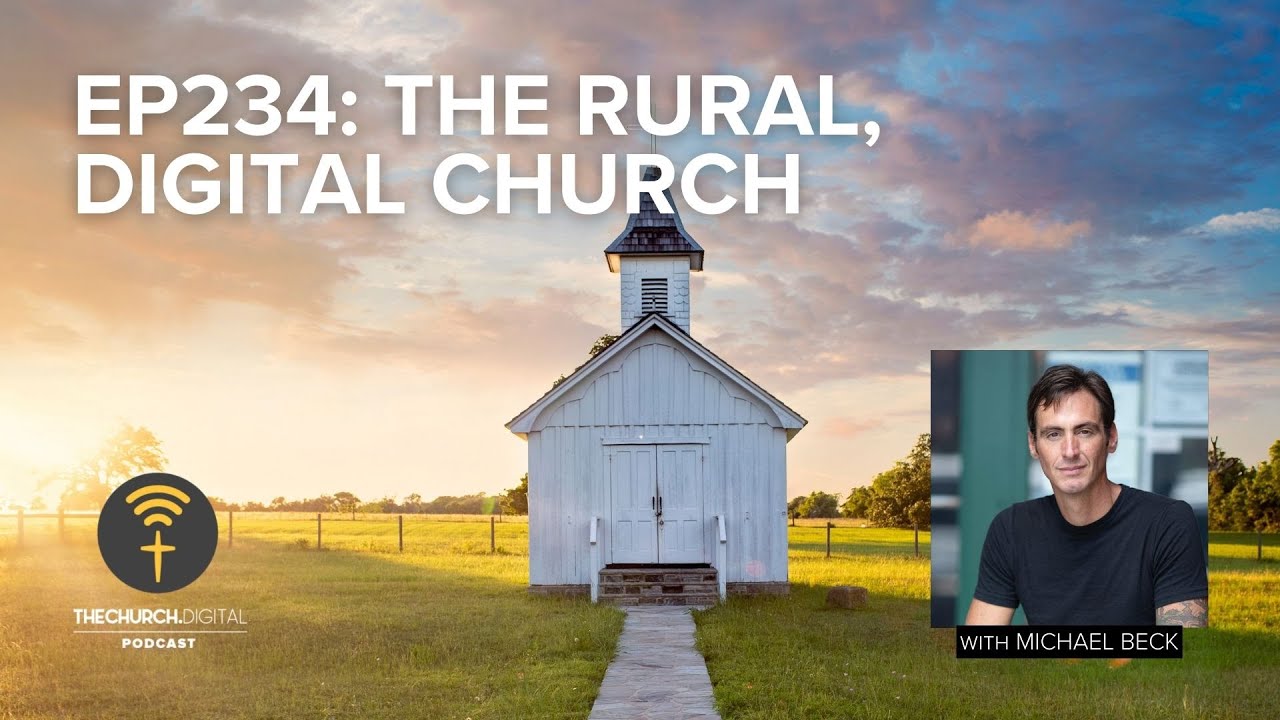
Sure. So, um, I'm a United Methodist clergy person and I've served, uh, rural congregations in my home ministry. Um, the first church I was sent to was La Colusa, Florida, which, um, if you ever read Marjorie Kinnan Rawlings' The Yearling, she wrote that book in a cabin or in that area around Lochloosa there, middle of nowhere, no post office, no Walmart, no nothing. Uh, twelve people in the congregation, little white, um, kind of idyllic, um, congregation, uh, building out in the middle of a swamp area. Um, and, and so, um, I've served several rural congregations since then up until my current place, and always just saw the Holy Spirit do amazing, creative, uh, ministry in those areas. Uh, and many times that included like a digital component. Um, and I, if I could just say quickly about fresh expressions then, like maybe back into the rural piece of it, um, fresh expressions is about being church with people that don't go to church. Uh, connecting with people that, you know, we use those terms, nones, no religious affiliation, dones, uh, those ones, bad Christians happen to good people, people who've been harmed by the church. Um, and so we're realizing, you know, a vast majority of population is not going to come to an inherited congregation on a Sunday morning, no matter how good you do it, no matter how good the coffee is or the worship band or whatever. Um, and so we're kind of going out and creating these new Christian communities in the daily spaces, rhythms, uh, where people do life.
··
And so rural spaces actually, um, just just a quick little, like, biblical piece on this, but, um, God's, uh, saving activity, whenever God launches something big, he always starts in the wilderness. Uh, like he sent Abraham out into the wilderness, right? He called Moses in the burning bush in the wilderness to go back, uh, to Egypt, right? Jesus was a rural person. He grew up in a little Nazareth, a little hole in the wall town, um, that was in the middle of nowhere, right? Um, and, and it's there that kind of the ministry, and then in Galilee, uh, that most of his ministry took place. So God does big things in the wilderness. Um, and in the United States context, um, the rural church has been one of the few, like, permanent stakeholders in rural communities. Um, the, the, the United States, um, these kind of crazy missionaries, you know, Methodists, Baptists, these, uh, really kind of, um, subversive, uh, uh, uh, kinds of church, uh, planters were just, um, going all over the place, leaving this new constellation of new Christian communities. And, and like Methodists specifically and many others, um, they actually had a rural strategy. Like, uh, Francis Asbury said, I want to channel resources from the circumference to the edge. And so he was going around doing these camp meetings and going in rural spaces and just kind of cultivating these new Christian communities all over the place, very much like what what we kind of do with with fresh expressions of church. Um, and so the rural church really has, um, a, a place that can bring vitality, uh, to rural spaces in an amazing way. Um, so the rural congregation has assets. And I think a lot of people, they, they talk about rural church like it's just like a demotion, or if your pastor who gets into a rural church, you're like, you didn't do something right, or maybe you're fresh out of seminary or a retired person, usually. Um, and, and so the rural church feels like it's this, like, thorn bush in the foot of progress and it gets dismissed and forgotten. But God is doing incredible, amazing things in rural context all over the world. And so the book we wanted to highlight those stories, um, and, and show a diversity across the country of people doing really cool and innovative ministry in rural spaces and kind of provided theology and like a framework for how to go about doing it. Um, and just on the, on the internet piece real quick on the forms of church that can take, like the other thing is we stereotype rural and we think, oh, rural all looks like this. We have this image of Earl, whatever, back country people or whatever. Um, actually, rural communities are incredibly diverse. And so if you know one rural community, you know one rural community. Um, like Metamora, Ohio is a very different kind of rural than Wildwood, Florida, uh, or or where Jeff went, Muddin', uh, in Ocala, right? Those are very different kind of rurals, and they have, um, you know, very different ecosystems that support life. And one of the things that the rural church can do is create like a place economy that that has a kingdom vision of like God's shalom, uh, wellness to the wholeness of a place. Um, and so rural church can be the place where people of different political perspective, it's the one place like they come together each week. The rural church can have the one, like, third place in the community. It's really the only kind of community center sometimes for miles where people can come together to do rituals and kind of things like that. So there's really so many assets. And on the, on the digital piece, it can be churches that are doing like phone, uh, I've seen rural congregations do a really creative things with like a phone, uh, ministry. Like they're joining and having worship by phone. I've seen rural churches that expand their ministry like, uh, massively, like across whole regions by doing really creative things online. And, and doing what usually big churches can't do, which can tend to be like more kind of the big show and the worship band and all those things, and it's, it's more generic in that sense. But rurals can, uh, rural congregations can really do creative and, and intimate, like, talk to people experiencing isolation and create things specifically for people in online spaces that could be more challenging for for bigger churches. But yeah, sorry, that's a lot.
··
No, no, no, we don't, we don't talk a lot about numbers. Let me ask this, and so like, I'm asking, I'm going to ask this question on numbers just to maybe get, and stereotypes, not a right word, but just to get a grasp on like definitively what a rural church is or or how it is. And yes, everything's different. There's a lot of contextualization, I'm sure. But you know, I hear looking at U.S. stats that only eight percent of people in America that attend church attend a church over a thousand people. And so it's by far it's smaller. I, you know, pre-COVID, I think, this, the average church in America was seventy-eight or eighty-two people, last time I actually saw a formal stat on that. Um, like when we say rural, rural, if I can say the word correctly, you know, it seems to me like that would be like a smaller, you know, a lot of times urban, we look at church plants like I'm at a church plant, we've got one hundred twenty, one hundred fifty, and so it's a much more intimate, relational community gathering. Um, are these words that adequately describe the rural experience as well? Intimate, smaller, relational? Like, are these the winds of a rural church?
··
Yeah, I think so. And the vast majority of congregations, you know, like you said, it's a very small percent of the population that actually is in these really, you know, mega-sized churches. The vast majority of congregations are smaller, mid-sized, and a lot of them rural. Like I was sharing, Francis Asbury with his whole strategy, um, they were, they were barnstorming in the backcountry, man. They were, they were like the urban centers had more emphasis on educated clergy and like buildings and such. And, um, these more like insurgent forms of Christianity that were spreading all over world spaces were smaller, more intimate. But where, where they planted churches, kind of like community sprung up around the churches. So like if you ever been through a rural space, you see like five, like there's nothing out there, but there's five churches, maybe. Um, and that's because that they were kind of just spreading that all over the place. So those are everywhere. They're all over the United States.
··
Those rural congregations, it would, it would seem to me there's an opportunity, and maybe this is just me being too aggressive, and so I'm willing to be told shut up, Jeff. Um, like a church network, um, like a multiplication of of churches, like I think they're maybe centralization is too strong and we need to, you know, decentralize and, and focus more on contextualization. But is there, is there like rural networks of of churches? Do they collaborate and work together on this? Is anybody trying that?
··
They are. You know, I just think of, uh, the North Central District in Florida, and there's a rural church network there where the idea is let's, let's connect and resource each other. And you know, one of the things you lifted up about the challenge of the world context can be internet, right? And it can be super expensive and not available. One of the really creative things I've seen churches do, and I'm...
··
Thinking of like Jessica Taylor who's doing this RV Church Network, which is like literally living in RV incarnationally in RV communities and RV and lots more young people, middle-aged people are doing this now. Um, and she's using like a Starlink satellite um and and and using providing internet and I've seen rural congregation do this like create a space where people can actually access internet and people can come like even just sit in the parking lot and go on internet because it it can be harder in some rural contexts. Not all of them, some of them have just Wi-Fi is just fine, but but um but so yeah, providing that and seeing the rural church as a way to like allow uh access online and facilitate that in the community can actually be a way to kind of create your have your church become like a hub. Yeah, I mean what an interesting context of a hub. Um, you know, it's it's I'm trying to I'm trying to think who I was talking with but there's uh I think it was one or two denominations probably over the past year uh that was really interested in exploring digital because they were wanting to. It's it's interesting like you're you're you're phrasing the internet's hard to get like that wasn't a picture that was painted to me but there were there were several that were wanting several denominations were wanting to explore digital expressions of church in rural um even like micro site expressions or micro locations where a centralized church would broadcast the services online into homes in the neighboring towns and areas and use the online broadcast as a way to even get a footprint to start to get a a foothold uh within within the towns or cities. Um, how much of an issue is internet in in rural? I know that's a very broad statement like um contextualization but uh you know I know shoot I live in Miami, Florida. I'm down here in the suburbs and my internet's garbage uh so I I think everywhere is like is there um is there no access is it just limited access with only one provider um would a digital expression um you know how do you overcome maybe some of those challenges uh with uh internet?
··
Yeah, so I personally have never had a challenge with internet in any of the rural churches that I've served. It's always been just as shoddy as it is in the city um but I have heard stories and I do a lot of trainings with pastors and stuff trying to help them think about this fresh expressions idea and how to do it from their local context so um that can you know maybe that's just a uh like a way to say you know we don't really want to do this but I have heard of places that have had challenges with internet access. I think that there's new technologies like satellite accessible internet and these things that are readily available that really kind of you can essentially I think have internet in essentially any space but I think maybe it is harder to access or maybe it's the cost that's the challenge like it can be 150 or something for a church to add internet services and so they see that as a kind of a barrier um uh and and you know those are real challenges that we have to deal with but I love your idea about how we're seeing churches use internet and online and and create and expand their their reach um in into places like we got rural congregations that have way more people in their online communities and participating in digital forms of church than they have in their like Sunday morning 11 a.m. gathering. So you can think of this as like a blended ecology of four different forms of church, the inherited on-site and the online forms kind of all living together and it really gives a rural church a way to expand massively uh their their ministries culturally within rural. Is there is there an acceptance of technology? Is there is it is there a fear of technology? Is it um irrelevance like um you know I mean social media maybe Facebook uh metaverse virtual reality you know some of the bleeding edge stuff like kind of what's the what's the temperature check for for technology in general generally speaking you know throughout throughout some of these rural and in smaller communities?
··
Yeah, you know that's a really contextually uh specific answer like if you're up in Ohio where there's lots of communities that um they're still doing like you know horse-drawn buggies and stuff and and choosing that kind of a way of like the anabaptist kind of way of being charged um but I think generally overall my experience and I can't speak for everybody but there's been a more of a resistance to utilizing technology in inherited rural congregations then you might find in an urban space um like and it may just be like the tradition. One of the beautiful things about rural churches is they carry tradition and story for a whole community right and they sing it and they dance it and they enact it in their worship and it's one of the ways that they hold on to like values history story and that's really important but some of that can also create like some resistance to oh this online this pastor is talking about doing this online thing with a headset what's going on here so I have heard some of that you know in the churches that I serve but I think it's also maybe more of a generational thing because the churches that in United Methodism tend older chronologically mature um so that could be part of that too. You know, I'm actually going to ask this question a different way because like you you also run Living Room Church VR like you've done virtual reality ministry um do you have you win that context have you interacted with anybody from from like small town America rural spaces uh like I'm even wondering what what the headset exposure is in some of these like even with the kids you know at the gamer level or the the user level what what's been your exposure in that?
··
That's a really really good question. I mean that that's hard because Avatar it's hard to really figure out who it is and where they are and I I was just curious if you maybe you had a story or something that popped up.
··
Yeah, you know now that I think about it because we open every Living Room Church uh gathering with the avatars kind of go around and share where they're from and um I mean it it mostly is people in cities um I'd have to do a little more research thinking about that but yeah I I don't know that's um I might I might have to start I might have to start asking that question a little more often like what's the what's the adoption rate uh for for some of this technology in in rural space is is it um transferring over there anyway conversation for another day so like what is and we can keep talking tech with digital would love to but like when you wrote this book fresh expressions in in digital like what are examples of of fresh I just I love fresh expressions unique expressions like we've been on a kick the past couple months uh here at the church digital uh featuring unique expressions of church um bar churches um you know gamer churches biker churches like it's been and so rural is going to be unique but I'm just kind of curious what's a what's a fresh expression in a rural context what is that look like?
··
Yeah, so a couple examples um like in La Colusa where we we had 12 people in worship our first Sunday and uh literally uh the population of like Colusa like 50 people like the whole the whole uh Colusa so we started connecting with the the next town up Hawthorne, Florida and there's a diner there it was like kind of a hub for the community people were coming from all over to the diner on Sundays. We started connecting with the diner's host servers and waitresses and waiters and just making those relationships and and one day I popped the question I was like hey uh why don't y'all ever come to church you know we build this relationship over time and they're like um because we're here taking care of you Christians on Sundays dummy we couldn't come to church if we wanted to right so we said well what if we created a church for you like where would it meet what would it look like um so we started this little fresh expression in the diner's diner around barbecue and um uh good good good Southern barbecue and sharing a Jesus story and having a time of prayer and uh just really started connecting that community and and by in one year we had like a hundred people. There's a church that had 12 people worship right that grew to 100 people by just like expanding out and starting church for people where they actually were at a time that worked for them in a place that worked for them around something they actually like to do like eat barbecue um and so I think of the the diversity of of rural fresh expressions we've seen like Tyler Cleberger in Metamora, Ohio and he he had black mold in his in his existing church and so it was the gift of desperation right and the church had to close and so they started having these barn parties um and just meeting in a barn and having conversation about Jesus and prayer and the congregation started to grow through the barn parties and then they built a building that's essentially a barn but it's like a cool looking like modern barn but so they have a farmer's market in there they have a couple times a week where they people get to come in and sell their stuff in there they have uh beer nights and food and somebody cooks and the community comes in has all these meals they also like do farming and and raising you know crops and all those things so you know they're really like owning the rural space and and turning the church into like a center of the community um and I just uh you know I could go on like uh I know a pastor doing uh equine therapy in a rural space where they have lots of horses and uh her name's Stacy Spence and um they've actually started a church around horses and equine therapy and and doing that together um and you know I've seen churches in fishing holes uh in rural spaces and churches in um you know around uh hunting uh we're a group of people that like to hunt get together and have a time of prayer in scripture and then they go hunt you know it's it's pretty much as diverse as a rural place can be these expressions of church are kind of springing up out of that diversity.
··
What's the what's the contextualization between I mean I'm sure it's a huge jump between um you know a urban church rural uh you know a mega church and and maybe some of these more smaller contexts but even like city to city um you know Northeast rural U.S. you know New England rural versus Miami rural versus you know I don't know Oregon rural um like what what types of things are we looking what nuances contextualizations are we going to see through some of these changes?
··
Yeah, I mean the diversity that you just described is is incredible um it could be you know rural can be a farming community um that that life really rotates centers around production of crops right a rural space can be like a lake community like La Colusa where the local fishing industry is kind of the the key uh to the economy it can be um you know like in Wildwood it was once a kind of a hub for a railroad and so a little kind of town sprung up around the railroad and then the railroad moved and uh the the economic uh situation kind of depressed for a while and people had to find new and creative ways to make a living and um the the every rural space can have such diversity it's and also I mean that there's a racial diversity in rural context people assume that there's just maybe one race of people that are that there's a real diversity there as well of um different races and uh how rural communities look in that and the different kind of economies that arise out of that so yeah contextualization I think is the key of like understanding um I love this word uh terroir. So like um terroir it's it's uh if you taste a coffee or or like a chocolate um
··
When you taste wine, it has a terroir, somewhere-ness. The word literally translates to some awareness. It's French. And all these kind of environmental factors that come together like produce a grape or a coffee bean or a chocolate. You can taste that, right? You can taste the contextuality.
··
And I think one of the really cool things about rural ministry is understanding the terroir, the some-awareness, kind of the flavor of a community, and helping church kind of spring up contextually, organically out of that. I think that's a key rather than just trying to plant, you know, the McDonald's version of the church that looks the same in every context. The buildings the same, worship's the same. But really helping the alert, being a learner and a student of your place, and helping church spring out in a way that's faithful to that place and it's faithful to the people who inhabit that place.
··
So interesting. Is there any consistency? Is there a centralized thread as we're talking about all of these decentralized or contextualized environments? What's the same? I think the consistent thing is like the feeling that rural people have of being forgotten, neglected, unimportant. And that creates a kind of a culture of resistance, right? And I think that there's a similar kind of mindset in many rural places. And I want to just make a huge universal statement about all rural places, but that you know, there's a tendency for the world and all the centers of power to be urban, and urban centers of learning and all those things. And so rural people can feel forgotten. And I try to work with that like subversive spirit in a rural context, and the way that rural people hold on to their faith and values in community and belonging. And sometimes you don't find that so much in urban places, but rural people really value togetherness. And I don't want to like idealize it. It has all its own challenges and stuff, and depending on these different stereotypes that you get, it's like, oh, every rural place is, you know, people smoking crystal meth and, you know, struggling with drug addiction, or, you know, backwards people. But I find highly spiritual, highly educated, highly just sensitive people who love God inhabit rural places, and they're really a gift. I think rural places are a gift to the world, maybe to remind us to slow down a little bit, take Sabbath, connect with the God of the wilderness, you know, go get lost somewhere.
··
That's interesting. Is that the what's the biggest issue facing the rural church today? I mean, urban, you know, there's political mess there's, there's racial tensions. Like, are we seeing kind of the typical mess that we would see in urban centers? Are we seeing that in rural? Are they dealing with a completely different set of problems? Are they trying to get everybody back to the building and nobody's going back to the building? Like, what's the thing that's keeping the rural pastor up at night?
··
Great question. And I think the greatest challenge in rural communities is kind of a lack of imagination. And sometimes those beautiful things that are so important, like carrying on those traditions and having a really kind of predetermined idea about what church can be and how it can happen and what's supposed to happen in it, can also be a limitation. And there's like an imaginative gridlock that takes place where if we have this really tight definition of what church is, when it can happen, where it can happen, and we don't have an imagination of, you know, a Tyler Cleberger who says, let's just have barn parties and that could be church, right? Or, you know, a Stacy Spence who says, well, there's a lot of horses out here and horse therapy. Why don't we create churches around that?
··
So rural decline and the loss of members is I think more pronounced in rural. So like if you have a congregation of twenty people, you know, I think the statistics that came out like one in three people returned from COVID or whatever pandemic, there's some really hard statistics out there. That's a lot for a rural congregation. Like just a couple people missing, right? Can really change it. So that's a huge challenge, isn't it? That decline. We get stuck in maintenance and we just kind of keep doing the same stuff rather than an imagination for, oh, what if we went out and reimagined what church can be in this rural place and reimagine ways to connect with each other and share the gospel and be in a relationship together? I think that's actually the greatest challenge. It's not that the resources aren't there, that the people aren't there, the assets aren't there in a rural community. It's the biggest challenge is like catching a new imagination for what the church can be.
··
Is it, you know, what I find in digital, I mean, it's interesting. You, one of your books you wrote, missional imagination. Like that's one of your phrases, right?
··
Yeah, okay. It's actually we're doing a podcast soon with Patrick, who's the global director of New Thing Network, and he uses the phrase visual imagination too. I'm not choosing which one of you said it first, and if neither of you trademarked it, then I will and then I'll own the word and you all can, you know, take it from me. But you know, and so like I just I've heard that missional imagination phrase and it's really been resonating with me. Like I've even started to bake it in, and I did a talk on YouTube talking about, you know, missional imagination, tying it into asynchronous communities. Conversation for another day. But what I want to get with this is that when I started having conversations with digital planters or people that were interested, like the first two hundred people I had conversations with, there was no like nobody was doing this. And the first two hundred people I basically had to give them permission to do what they had in their head because nobody in their life was giving them permission. The pastor of the church they went to thought it was heresy. The denomination didn't care one bit. Even their spouse and their friends, just because they had never seen that idea happen, really weren't supportive of it because there was no paradigm there, was no model, there was nobody who was actually doing it. And now, you know, now there's a couple hundred successful digital churches or at least churches that follow somewhat of a biblical footprint. Now when somebody calls me up and says, hey, you know, I've got this crazy idea, oh yeah, hey, some actually, I know a friend of mine that's doing something similar to that. Let me introduce you. And so it's a little more accepted. They may still need permission, but I'm curious like, are there people that have ideas and just don't know where to go to execute them? Are there dreams and just that's where the dreams go to die? Is it there's, you know, without vision people perish, and so there's no vision to do something different. Like what's your take on that?
··
Yeah, and you know, Jeff, you've been on the front end of like the digital church movement, you know, from the beginning, so you've seen this all kind of transform and spring up. But I would say like the biggest disappointment for me has been like my inherited folks. They just were not connecting with our digital stuff at all, really. And we created this amazing online campus, fourteen hundred people we were connecting with people all over the country, joining new people into it. But what I was hearing from my inherited church folks, and again, you know, this was generational too, and there's all kind of things, it's not just rural, it's generational, it's cultural, but they just weren't connecting. Like I was in a digital space. Like when I'm with my homies in digital, digital, like we're having church, we're going deep, I feel the Holy Spirit, I'm feeling like God is present and Lord of the metaverse, you know. And those relationships are deep and they're real. And just my inherited church folks were like, it's just not it. It's just not real for us. It's just not church for us. Just like we're excited you're doing it. We're not trying to stop it, but we're not really like, can you get us back in the building and get the hymnals out?
··
And so I had to learn like to balance this kind of like caring for them, nurturing them, because they've given their prayers, presence, gift, service, witness to the church, right? But not letting that confine all the possibilities with digitality and cultivating church in the metaverse. So I just kind of got a small team of people and we just started experimenting and doing it. But I think pastors can really get stuck in that like, oh, it's not connecting with my people. So what's the, you know, and then I hate to say this even, but people just have such a limited view of online church. Like anybody I talk to online church, they're like, yeah, I'm doing online church, and what they're really talking about is they're streaming their worship services.
··
Yeah, yeah. And I'm like, okay, you know, maybe a new form of digital colonialism there. Like we're streaming into a place we've not been invited, speaking a language we only speak, and we need to stream worship, and there's a proper time and place and all that. And I think it's more probably for people that are already part of the church than like a missional thing. But that's not online church, right? There's so much more to what online church is. Online church is relationships and discipleship and worship and spending time together in digitality. And so that's another barrier I think that's there. But you know, that's hard when you love something and you put a lot of energy into it and it just feels like your inherited congregation is not really connecting with it.
··
I feel it's funny. Like I've had this conversation with several other digital planters and metaverse guys and gals. Almost I feel like we need a new word. You know, I think church, and it is, forgive me if I sound sacrilegious, I'm not at all trying to be sacrilegious in this moment, but the word church almost has so much extra-biblical, outside of what scripture is, complications attached to it at this point in twenty twenty-two. I'm not sure we can really resurrect that word to at least here in America to align it to what we wanted it to be. You know, and so it's really been the struggle. And it's interesting, even church online, digital. I had the honor, I'm not going to drop names, I'm actually trying to get him to a podcast with me, but there's another nationally published author that has written a very well-known book, and on our meeting with them, and I want to get them on the podcast because the dude hates digital. Like in this very popular Christian book, he is very outspoken on how he hates social media, toxic culture, and just rattles off on all this stuff. And I have this honor, I have the pleasure of meeting him. He's a very relational-focused guy. And the honor of meeting them on a Friday night, shook his hand and said, hey, I'm a digital guy. And he gives me the side eye like immediately. And I was like, no, no, no, I actually agree with everything you said in your book. When I say digital, I'm actually more like the relational stuff that you talk about. I'm more of a micro-church in digital space than I am.
··
I am what you are now assuming of me in digital, and that just opened up, you know, for him as a complete separate conversation because he just had this negative connotation because dude hates Facebook. And let's be honest, who among us does not hate? We all hate Facebook. It's like the, um, it's like the lesser of evils. It's like you got to use it to do the ministry, but at the same time you're, you know, you're skeptical. And so like there's not, he's not lying. He's not, none of this is wrong, but there's just an opportunity to do some different stuff with it.
··
And, uh, you know, I could see in rural context I could see that being a battle you have to constantly because of some of the relationships with some of the smaller churches, um, with smaller churches and more relational contexts, just constantly I would imagine battling that battle.
··
Yeah, yeah. And, and I mean there's a lot there that's so true, the toxicity of all that. And like people think about content creation as online church and all of that. And I think you and I are talking about, we're having a whole different conversation that I believe digitality, like distance contact, um, across, you know, through flows, um, create a new kind of space. Um, like just like a city creates a space and it facilitates relationship and you bump into people, the online space that we inhabit kind of is its own place where relationships can form and community can form. And, um, trying to help have people get away from this, you know, just online as, you know, content production and streaming stuff and all that, um, it's really, really hard and challenging.
··
I would, I'll be honest, I go to, like I said, I go to a church plant where 125 people at this point, probably been open. I mean, we haven't even hit a one year anniversary yet in Miami. Miami's where church plants go to die traditionally, but love, love my church. We're not streaming our church services online, you know. Um, yeah, I actually, I had heard I've heard a couple people say this, but I told my pastor I was like, if you really express, if you really respect the live environment, don't put it online. Um, like respect what you're doing enough to not cheapen it by putting it online. Do something else online.
··
And, um, and that has really, that's resonated within our within our church and we're, you know, we're trying to figure out what that other thing is. And, and, and regularly having conversations about how to adjust that. And, um, but it's, you know, I know the resources of a rural church, you know, are nothing compared to a mega, omega urban church, which is, you know, where most of my background's from. Uh, and so the little resources that you have, and you know, it's funny, you actually said, Michael, you were like, hey, yeah, just, uh, I mean, you got to broadcast a church service. And in my mind I'm like, do you really? Do you really have to? Like, is it possible to not broadcast the church service? If I don't, but do something else, not the church service, with that resource and that time? Because whatever the other thing is, I gotta believe it's going to be more effective for the kingdom or could be more effective for the kingdom than that broadcasting of that church service would be.
··
Your digital imperialism. I'm gonna borrow that too. Like that, that, I'll follow that away. That was that was good. That was so good. I'm 100 percent in agreement. That's why we don't stream our worship services on our on our Sunday morning gatherings because you can't actually be present with two groups of people in two different spaces at one time. It's neurochemically, physically, in every other way impossible. So we create online church for online people and online spaces, and we create on-site church for on-site people. And I love what you said about honoring and giving your full presence to the people in whichever space you're in, right?
··
And I'm just trying to be cautious when I talk about this because I know there's so many people that are just bought into the streaming their online services kind of thing. But, and, and I think it's got its place and I'm sure God uses it in the kingdom and all of that. But you know, we don't do it because exactly what you just said, like it's a very intimate thing that's happening in online worship community, and there's a very intimate thing that's happened in the on-site community. That, you know, um, honoring that and being present with the people, I think is what the Lord calls us to do, you know?
··
I, I think the first guy that I heard say that was Erwin McManus. So let me give him credit. Um, if you, if you respect your, uh, your live experience so much, don't broadcast. Don't cheapen it by broadcasting it online. Um, and that's, I mean, that's that's powerful. And so, but you got to do something else. That's it. It's not an excuse to become a Luddite and like just ignore all of technology. Nobody's saying that.
··
It was funny. I was actually, I was writing, I was, I'm just finishing, I'll say this on the podcast, it's publishing soon. I was just wrapping up a book that I'm writing for Leadership Network on virtual reality. And, um, if you ever read my writing, especially through Leadership Network, I'm very sarcastic and, uh, kind of like jaded. And, and, and I'm constantly asking them if it's too much and they love it. And it seems like, you know, readers like it.
··
And, uh, and so actually, and you'll appreciate this, hope Michael, I was, I was trying to talk about, um, like technology phobic people. And I didn't want to use the Luddite reference because that was like too much. And so I, I totally like was writing this thing based on Quakers. And I was taking a shot at Quakers. And then I was like, but wait, are Quakers the ones that don't like technology? And actually Googled it, and Quakers are fine with technology. So I don't, I then I couldn't really find the group. And I felt bad for like mocking people in that space that were technology phobic. And so I ended up scratching the whole chapter.
··
But, um, you know, the heart of this is, is that I think there's, you know, I'm learning here, there's an opportunity to, to support, um, rural with a different mindset. And I think there's, you know, just given the percentages of people, uh, in America that are in rural environments and small church environments, there's listeners, there's audience out there. Um, you know, what I'm hearing is, you know, maybe they've been stuck in the way that it is, or, or maybe they've got leaders that are stuck, um, in the way that it is.
··
Let's, let's get back to that as, as we're landing the plane here. Somebody's wanting to do something different in a rural environment. Maybe it's, it's chances are it's a volunteer. It's not a staff person. Staff's not buying it. Staff doesn't have vision for this. Senior pastor, leadership decision maker, whoever, not interested. Elder board, um, what advice would you give them?
··
Uh, you're gonna get me in trouble here, but, uh, I, I would, I love doing that by the way. I would say, you know, just do it. Nobody can stop you from planting online churches, right? And it's always great when we have the support of an inherited congregation. And you know, that we, it would be ideal if it could happen that way. But if you can get a small team of people together who have a passion for this, that want to build community and share the gospel, and, and, um, digitality, you know, nobody can really stop you. You know, and I'm, you know, in a denomination that's very institutional and very all of that, but, but, um, lay people are doing this. You know, it releases the priesthood of all believers. Like a tech device makes every single person a missionary. Um, and, and we can use that to the glory of God in powerful ways. And when the system is, you know, against that or whatever, or trying to dampen that, you just have to be faithful to what God's calling you to do and, and press forward.
··
Michael Beck, uh, the Fresh Expressions of Rural Church, when's that, when's that actually publishing? When's that coming out?
··
Like next week, I think, like August 15th.
··
Yeah, boom, right around the corner. So it will, by the time it hits the streets, it will be out. Um, my birthday is August 18th. So if anybody wants to, no, I've already, I'm August 13th. When's your birthday?
··
August 13th.
··
13th? No kidding? Is when did Elvis die? Was it the 15th or the 13th? You know, I don't know. For some reason that has always stuck in my head that my birthday is right around because Elvis died in '77, and I was born in '77. That makes me 45. How old are you? How are you going to be?
··
Um, I'll be turning 42.
··
Be our kid. You have, you have, I have more gray on me than you. I like, I want to call you out publicly. If you're watching on YouTube, you can obviously see that he also has more hair and more tattoos. And let's, he's just a more man than I am. Um, but that's, yeah, you're only a couple, I'm a couple years behind you.
··
Young whippersnapper. Oh man, this conversation just got awkward. And, uh, and so we're, we're gonna land the plane. Uh, hey, there's a link in the show notes for Fresh Expressions of Rural Church. Check that out. Um, Michael, imagination, uh, you know, we talked about that. I'll throw that, that is that on Amazon or is that an ebook? The Missional Imagination book?
··
Yeah, so I didn't write a book on that. I just used that term and everything that I do, and I talked about it. I thought you wrote a book on it.
··
Uh, I mean, I've weaved it into every, every all my eight books in some way, but not that title.
··
Yeah, probably on my writing schedule. I don't have freedom until 2025, but I may actually write that one. I'm really intrigued by that. But hey, listen, if, if you're not familiar with Michael Beck, check them out on YouTube or on, um, on Amazon. We'll put all the links in the show notes, uh, plus to his website. Solid stuff. And if you're looking at Fresh Expressions, really unique expressions of church, Michael's one of the strongest voices here in America in that. And so check it out.
··
Michael, thanks for doing this. Thanks for being on. And, um, uh, listen, we will certainly see you again. So for Michael, this is Jeff with the Church Digital, Digital Church Network, and a whole bunch of other stuff. Thanks for jumping on the podcast, and we'll see you next time on the show. You have a good day.
Auto-generated from audio, lightly cleaned for reading. · Watch the full episode →
