⌕
··
I had a senior level executive from Exxon come to our church and he had led in Virginia at a great church, a massive ministry. And he comes to our place and he's like, "Hey, I'd love to lead here. I mean, his leadership skills are off the chart. I mean, he's leading one of the biggest corporations in America and he loves the local church and he's led there. But I'm like, I would love for you to lead here too." He's like, "What do I need to do?" I'm like, "You need to go sit under other leadership that we've already approved and that we trust. And we want to see how you live together in our community. Do you become part of this culture? Is this something you really want? Because the worst thing in the world would be that we're going to put our hand on you and our name on you and people are going to trust everything that church product means. The leadership says, and they're going to go to you and three months later you're going to be like, 'Ah, this isn't really for me.'"
··
Welcome to the Church Digital podcast. Through this podcast we'll talk about the technological innovations within the church, but more than that, we'll protect itself. We'll address deeper questions. Is disciple making possible digitally? How should we approach the digital mission field? Can a biblically grounded church operate in digital space? And where does the metaverse fit into all this? Whether you're a big or small church, an established church or a startup church plant, the Church Digital's goal is to help churches like yours learn to be a multiplying church digitally and physically. Our heart is that churches like yours will discover a newfound focus on disciple making that will revolutionize your church. And now here's your host, Jeff Reed.
··
All right, hey, it's episode 250. 250 here at the Church Digital podcast. I can't believe we've done 250 of these conversations. Today talking, not today, but oh my gosh, it's going through the conversation one day. That's another conversation for a different thing. 250 shows talking about digital, talking about better versus church, talking about digital church, digital discipleship. Digital, are we still allowed to say digital in 2023? I kind of got, I kind of got booed off the stage for saying that in '22, so I'm kind of afraid to bring it back in 2023. But man, it's been a great ride here and definitely looking forward to more coming up in digital and in metaverse space. We've got a great show coming up for you right here. Before we get there, I want to talk to you all about He Gets Us. It's an online evangelical option where we're helping connect people with spiritual questions, spiritual explorers who are helping connect these people with churches. It's funny. Tyler's handsome, a friend of mine, as we're doing this recording right now, told me the other day that through He Gets Us at First Capital Christian Church, Church Anywhere has connected with 580 people that were having spiritual questions over the span of maybe, called it, six weeks, a little less than two months. 580 people. Incredible opportunities to get connected with people that are looking for spiritual help. And if you're comfortable with digital discipleship, digital ministry, man, there's incredible opportunity for you to do this. Go and check out the church.digital/secret system. Oh, by the way, it's free. That's a conversation for a different day. But you know what? The volunteer team that you're gonna need to resource all these people, you're gonna need that. He Gets Us, we're going to talk about that right here in this conversation today.
··
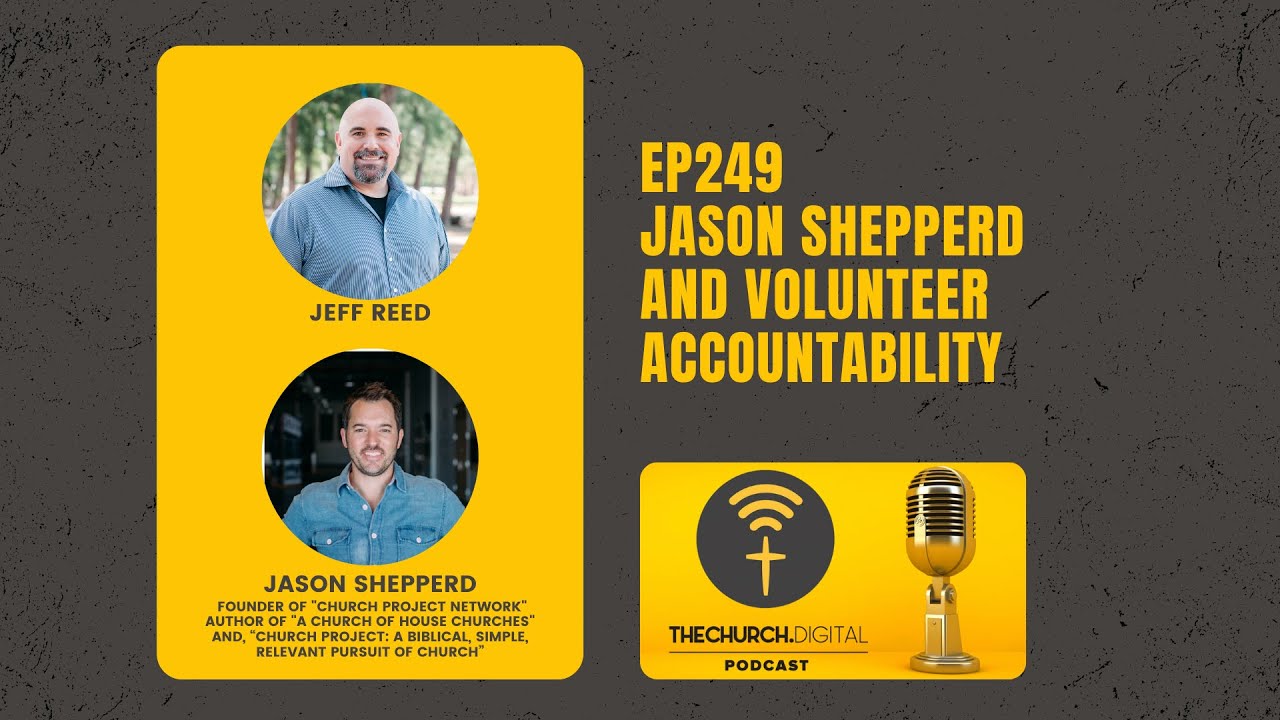
Because coming in, we've got Jason Shepard in the conversation. Jason, thank you for joining us today, man. Honored to be around you, Jeff. Anytime I get to hang out with you is a good time for me. Thank you. Yeah, so Jason, as I recall, was actually on 2021. I think it was one of the last podcasts we did in 2021. We really dove into what is a network, what is a church network, do? And Jason was, I was kind of dual purpose. I don't know if you've realized, but I was kind of like trying to figure out what to do with digital church network, what does it look like? And so I brought Jason in, who runs like a house church network and a church project network, and a man who like just genuinely uses the word network a lot. And I was like, "Hey, what does that even mean? What does that look like?" And so man, I love that conversation we had a year or so ago.
··
Me too. And, uh, looking forward to this one.
··
Yeah, me too, man. I, uh, yeah, no, I remember it. It doesn't feel like it's been a year, but uh, this is a good time, man. Hey, by the way, you, uh, I do a decent amount of these. You do a great job letting conversations happen and not wasting time and getting the best stuff out of a moment. You're really good at that. So thanks for doing a great job at that.
··
Oh man, I appreciate that. And I know you're a man of limited words, and so let's crack the whip and, uh, let's, I'm kidding. It's a lot of fun being on podcasts and doing this, but after 250 of them, I guess you kind of get your rhythm down. And, uh, let's just get into this. So here's what we're talking about today. You know, Jason is running a micro church. Well, I tell you what, Jason, before I talk about what we want to talk about, just maybe set the stage here a little bit for the audience because you're micro, you're doing a house church network, church project network. You're a man of, you know, sometimes I feel like I've got a lot of jobs. I feel like you're one of those guys that's like right there with me, just a lot of responsibilities, hands, and a lot of different things. Maybe just give the audience here just a brief summary of who you are and what drives you.
··
Yeah, cool. Thanks for asking. Yeah, my name is Jason Shepard. I started Church Project in 2010 with an idea of being a decentralized, distributed leadership, diverse community kind of church. We didn't have all of our nomenclature back then for sure. Never experienced this, been a part of it, didn't really know who to learn from, so jumped out of the airplane. Had been working at really good churches by all definitions of church before that and left a really great church, super centralized. And I wanted to be a part of something that was deconstructed, decentralized, distributed leadership. And a lot of that really came from my convictions of studying scripture, church history, the global church. And I couldn't unsee that anymore. So I started Church Project with no people, no place, no money, no name. In fact, Church Friday was the idea I had to get a 501c3 or a bank account or something for somebody to give something. And I thought, "Well, I don't want to come up with a stupid church name." Like, well, there's so many of them. So I'm like, "I just, this is the idea, a church project, and then we'll figure out a name later." And it just sort of stuck. And now I don't really care. I just care about what we do more than what we're called.
··
But Church Project is a church of house churches. And so we are one church made up of many house churches. We're a church of thousands of people with no phone number, no foyer, um, no visible staff available to the city. You can't find my name or any of our staff at our website, on our signs. I mean, it's just really a different approach to what I and many others, most others, have experienced with church. And so we've distributed pastoral leadership to house church pastors. We live in diverse communities that people connect directly into geographically based. And then we're planting other churches who are doing the same. We have Church Projects planted and planting and plans to plant more. People were assessing right now. And then we have House Church Network, which is a network of people who won't be Church Projects. They may differ in name or nomenclature or approach or even aspects of their theology of those central evangelical, whatever as all that means to us, we would align with. But uh, we have church people who want to be churches at house churches all over the nation and other nations that we're meeting with and helping develop that. And we've also started something called Good City, which is our approach to do things in the city well beyond our church. That's been a lot of fun. We're starting a clinic. We're starting co-work space for ministry, supporting professionally non-profit leaders in our city through accountants and attorneys and business development and things like that. So yeah, I got a lot going on, but it's full but not frantic. It feels good.
··
That's great. And so Jason is leading a series of decentralized movements. As we look at what digital church network is, or even what we want to challenge our digital churches and our metaverse churches to become, to be honest, a lot of that decentralized view is what we see being successful in 2022 and I'm assuming beyond. And what's fascinating, you know, in the conversation here, and I was joking with Jason off air, it's like, "Hey, you know, Jason, I'm really not looking for a deep dive from you from a technological standpoint here in the podcast." And, uh, do you have anything you would want to share from it? I'm kidding. I'm not going to do that. Like, he's just, that's not really his voice and his place on that. But what I really want to dig into with the show here is the person, is the volunteer, is the owner of the vision. Because as we're talking about house churches, we're talking about an individual that's responsibility is to open up the house on a Sunday morning, is a person with a nine to five job that's teaching, that's preaching, that's engaging with people relationally. Like, there's in micro church movements, there's a high level of ownership on bi-vocational people, on people with these people are not getting paid to do the ministry. But when we see physical churches, there's oftentimes volunteers. There's a lot of disconnected. There's a lot of, "Man, I need a break. It's a hard season. Let's take a stop." Like, you just don't see that level of ownership. And even as we look at some of the digital churches as they're trying to distribute their vision forwards, I don't know that we found the secret sauce yet. Like, the micro church network this, and so I almost want to dig in here with the podcast, not really like, let's set aside that it's a technological podcast or even the idea of a digital church, and let's just really start to explore maybe this idea of how do we get volunteers, bi-vocational people, how do we get them to buy into the mission and vision of something like a micro church or like a digital church in that context? So, yeah, I mean, let me just ask the question. I'll just throw it out there, Jason. How do you do that? How do you get somebody with a nine to five to open up their house, to make the commitment to teach the sermons? How do you get, because there's a lot of time that gets invested into this, I would imagine. Like, what's the secret?
··
Well, yeah, and beyond that, I mean, our house church pastors are doing weddings and funerals. All benevolence happens through house church. Front line of counseling happens in house church community. It's the primary means of discipleship and community. So yeah, I think there has to be some reason why people want to do this. And we have longevity too. I mean, we have people who have been doing this a really long time. Occasionally people are like, "Hey, I gotta quit. I'm tired. I need a break." But not often. That's not our primary approach from people. It's longevity because they've built something that they want to sustain. They want to see it continue. And so because they've invested so much, they don't want to just back out. And so I think, you know, I'm in a little bit of both worlds. We're in the predominant model, prevailing model, whatever people are saying church, the traditional centralized.
··
Church, we see people in that world and talk to people in that world all the time. And I'm in the micro church world. What I am seeing in the micro church world that people are trying to correct right now, that they feel like is lacking in the micro church world, I think it would translate into the digital church world too, because you're still talking about people. And that is this: there needs to be some centralization that connects the decentralized entities. There has to be some form of centralization. And I think the micro church ideology has swung a little bit, and people then are isolated. Generally, most people are not pioneers, and most people cannot do this on their own for very long. And so there has to be some centrality for direction, for support, for accountability, for encouragement. And so I mean, we're with 250 of our leaders this past Sunday night for a big Christmas thing. We fed them, we gave them gifts, we thanked them. The notes we get back from it, the encouragement they get—they need people to support them. They need direction. They need encouragement. I mean, they're in the trenches. They're doing everything I'm saying they're doing. We don't have any other way for that to happen. They are doing it, but they're supported and they're encouraged.
··
I'll give you an example. I use this sometimes because it's real and it's clear, maybe of units, you know. But this guy came to one of our gatherings, and I met him and I said, "Tell me your story. You know, do you have a God story? Is that part of your life yet or not?" So he told me his God story. And then I'm like, "Would he have a church, a community story of other Christians that you live life with?" And he told me that. I said, "Well, why are you here today?" And he said, "I've been a part of a house church for five years." But I said, "Well, why here now?" And he said, "My house church started to shut down." And I said, "Why?" He said, "The house pastor—we met in the restaurant. It was a restaurant they had. We used that as sort of our little house church, same community for five years. And he said then the guy—excuse me—got cancer, got sick, and had to sell the restaurant and moved to be with his family."
··
I said, "I hate that he got cancer. I'm sorry that you're going through that, and I'm sorry you lost your house church." I said, "Here, let me tell you what would have happened. We would have stepped in and we would have cared for this family. Probably paid the bills at their restaurant, helped them keep their restaurant functioning, helped their family, given them meals. We've done all kinds of things. We would have helped somebody else step up and elevate and be the house church pastor there, or we would have blended them together with another house church while he's going through this healing. We would have had support under and around all of you so that you could continue meeting as a community. We would have helped you. But people are isolated."
··
We talk about mega church pastors putting themselves up as a main person without any other people to help them or hold them accountable. We're also doing that in micro churches. There's nobody holding a micro church pastor accountable. There's nobody supporting them when they're in need. There's nobody saying, "Hey, you gotta take a Sabbath day a week. You gotta rest with your wife." I mean, you're working as an engineer five days a week, and you're doing this two days a week. You're gonna burn out. I mean, so we've done the same thing with micro church that we've done with mega church. And so I think there has to be centrality for accountability, for support, for encouragement, for resourcing, for training. And so I think the main thing is there are people out there who want to do what you're leading them to do, but they're probably not supported well. Also, they don't have the clarity of vision. And so we're giving people a consistent clarity of vision. They know exactly what we're calling them to do, and then we're calling them to accountability with that all the time. We have somebody meeting with that person once a month. We collectively meet with all of them every other month. And so I think the connectivity across micro churches or even digital churches is crucial, and I think it's been overlooked.
··
That's interesting. You said you're talking centralized, and I want to get into what you centralize with it, in some pros and cons in that space. But let's dig into the accountability piece because you centralize the accountability. Which, what you're describing—how does an organization that is not paying a person bring about accountability in that sense, in that structure? How would a micro church network hold a micro church volunteer, micro church pastor, micro church leader accountable? What would that even look like?
··
Well, it's a great question. For us, it's answered really simply. People don't want to do this alone. And so we have accountability based upon our agreements. I mean, we have agreed before anybody on boards. This is what it means to be a church plant, house church, for example. Our overseers made a decision that we asked all of our house churches to do. We rarely make these kind of decisions. It was a period in time over the last couple of years that we felt like all of us need to do this. And so we asked them to do that. All but one of our house church pastors said, "We're going to do that." I found out through our channels that there was a house church pastor who said, "Hey, we're not going to do that. We're gonna go on our own."
··
So I decided myself to call this guy, and I said, "Hey, man, I just want to check in with you." And I said, "Congratulations." And he said, "On what?" So I said, "Congratulations on starting your own, you know, church and your own network of churches." He said, "Well, I'm not doing that." And I said, "Well, you're not doing what you've agreed to do with us. Church plant house churches right now are going to do this. After a lot of consideration and conversations and prayer, we made this decision. You've decided to not do that. So what that tells us is that you're removing yourself from our authority, our accountability, but also our support, our visibility."
··
I mean, this guy had a really strong, enduring, healthy house church, and he knows that a lot of that is because of all that we give them. We give them visibility. We give them support and encouragement. And he doesn't want to be on his own. So really quickly, he said, "You're right. I'm gonna line myself back with you immediately." And I mean, that was three years ago, and he's thriving before and since then. And so people don't want to be alone. I mean, they want the resources of encouragement and oversight. And the cool thing is our centrality offers—when things elevate above you because you're a medical doctor or you're a teacher or you're a fireman, when things elevate above your ability to handle this, we're here to help you. We're gonna—when you ring the bell, we're gonna be there right now and we're gonna step in here and help you.
··
So people don't feel alone. They don't feel overwhelmed. They feel supported and encouraged. They don't want to step out there. Yeah, so they stay. They feel like they stay because we've told them this is what it means to be a church plant, house church, you know, and that stuff. But you're speaking to accountability—it's really a lot of quality control, and that is so important. And it was funny, like as you were talking, I was writing down a question: "What do you do when somebody wants to do something different?" You kind of answered the question right as I was asking it.
··
There's another part of this that's like, you know, it's not a quality control as much as, "Hey, you know, I just need a couple weeks off. I need a break. I need a time out. I need—it's a busy season. Kids' soccer season's coming in, and I need to check out. I got season tickets to watch the Houston Texans." Nobody wants to watch the Houston Texans anymore, you know what I'm saying?
··
Yeah, that's true. I'm in Miami, and this is my year. Maybe we got a couple more weeks to figure that out. I hope so too. But I guess my point is there's, you know, being in Miami—it's very hard for churches because we live in the luxury capital of the world, and there's always something better to do on a weekend. There's always that distraction that pulls away from the churches that do the event on Sunday morning. And so like, I'm just wondering, even at that level, how—I mean, Houston, what you guys are doing in Texas and beyond—like, that still is a popular city, Texans or not. So like, how do you get that relational equity to keep people tapped in? Is it relationships, or are there other things? Like, what does accountability look like, maybe towards that, to keep people tapped in their individual house churches or to keep house leaders connected with us, house church leaders tapped in and focused on the mission?
··
Well, I think, you know, the cool thing that's going to always endure is people need other people. They want other people. They want to be in relationships with other people. We did find—I mean, we drove so hard, pushed so hard for years. I mean, I'm gonna—when I climb Kilimanjaro or Everest, space camp, or when I do these climbs, I don't stop on the hard days. I can't stop. I just go. I lead the same way. And so I almost ran people into the ground for years. I mean, the few paid staff we had, the volunteers, the many that we had—I just wore them out because I felt like, "You're lucky to be a part of this." Almost, I mean, this is a beautiful thing, and we can't stop. There's too much. And it wasn't healthy for me, for our people. We had no rhythms of rest in our systems and schedules. So we've instituted those now for our people. In fact, we enforce it. Our leaders, they have to take breaks a couple of times a year. We ask them to. We have a monthly rhythm for them as well as a couple of annual rhythms. And we've had people that have fought against that. They're like, "We're not tired. We don't want to stop. This is going so great. We're enjoying it." We're like, "No, you have to rest."
··
I mean, we see all. We're on all the communications channels. I mean, we really—we rarely have to step in, rarely have to step in and tell people to align with what we've called them to do because they trust us and they see it. But we've scheduled in rhythms of rest for people, and that includes, "Hey, your house church is not meeting for this month. You just—you're not meeting." I mean, of course, what do people do? They go on vacation together. They go to dinner together. But the normal operations and functions of a house church—even dependence on the pastor—leave them alone for this month. I mean, take a rest. It's increased health. It's increased longevity.
··
Of course, there are seasons where people are sick or where, you know, business escalates and they gotta make a change. But we love that too because we're always working on developing the next house church pastor, the next host, you know, people with hospitality enough to open up their home. And so if forces—sometimes rapid multiplication when people say, "Hey, I gotta take a break for six months or I'm going to work overseas for three months," or whatever happens. Here in Houston, we hear it a lot. It forces rapid multiplication. So we're always in leader development, meaning, "Who are you raising up?" I mean, I don't want to get into, you know, corporate leadership development training language. I'll get into, "Hey, you're Paul. Who's Timothy? Who's Crescens? Who's Titus? Who's, you know, who are these people that you're finding and saying, 'Man, you've been sitting. Now it's time to start leading, start pastoring'?" And so we're always in leader development.
··
Working with the leaders on who you are raising up to deploy and to multiply, and so we create rhythms of rest and then we have somebody ready to go whenever those things inevitably happen. It's beautiful. We've adopted the language apprenticing from New Thing or discipleship partner. You know, they're huge on apprenticing and always having that apprentice, and that's what we're slowly baking into DCN. So maybe talk to me a little bit how do you grow a Timothy to be a Paul? Like, what's the timeframe? What's the process through some of that?
··
Yeah, I mean, you know, Paul told Timothy, you know, all about my life, and it's a life on life for us. I mean, the way that would happen in a house church—let's say a house church pastor sees some guy in his house church that he says, "I think you may be the person to plant another house church out of our house church." So he starts spending time with that person. More than likely, a one-on-one discipleship relationship. We train all of our house church pastors and hundreds and hundreds of other people in our church on how to disciple somebody. I mean, we have it down. We've refined it. It's powerful and it's pure and it's simple. It took years for a guy on our team to refine it. I would help him refine it where I would see problems, but he spent the majority of his time in leadership doing this, and it's just beautiful.
··
So we have that happening in every house church: one-on-one discipleship, men on men, women on women. And the house church pastor is going to be discipling somebody specifically too, all the time—one, two, or three people. And they're going to know that one or two of these people are ready to become a house church pastor. Then we have sort of a pipeline of that. We're going to approve that first. We have an overseer over all the house churches that'll meet with this person and really press into some things with them—theologically, personally. The house church pastor is going to start discipling this person every week. "Talk to me about your marriage, your finances, your health, your parenting. How is Jesus infusing every aspect of your life?" We're going to talk about that. And then we're going to talk about their pastoring.
··
Part of that development is, "Hey, I want you to start discipling somebody else in our house church. I want you to handle this situation for me." And we start letting them step into some of the pastoring in a house church and we see how they do. I mean, but we're already watching them, right? We watch how people listen to them. We watch how they care for other people. We watch how they're just spontaneously stepping into situations and pastoring people. And so it becomes pretty easy to identify who the next person is who's rising to the top, who cares about this. And then we just really get them ready. We get down into acute things of life and doctrine and leadership and pastoring. And we've got people in the pipeline. I mean, I've got, you know, just the Woodlands right here, I think we have twenty-five people in our pipeline that are being prepared to go plant house churches this spring.
··
All right, so let me ask this: like, every person that wants to launch a church or a house church in your context, everybody goes through some sort of an apprenticing process? Like, there's not a skip jail, skip, go straight to go? Like, is it a hundred percent?
··
It has to go through some level of apprenticeship. Absolutely. I mean, I had a senior level executive from Exxon come to our church, and he had led in Virginia at a great church, a massive ministry. And it comes to our place and he's like, "Hey, I would love to lead here." I mean, his leadership skills are off the chart. I mean, he's leading one of the biggest corporations in America, and he loves the local church and he's led there. But I'm like, "I would love for you to lead here too." He's like, "What do I need to do?" I'm like, "You need to go sit under other leadership that we've already approved and that we trust, and we want to see how you live together in our community. Do you become part of this culture? Is this something you really want?" Because the worst thing in the world would be that we're going to put our hand on you and our name on you, and people are going to trust everything that church product means, that leadership says, and they're going to go to you, and three months later you're going to be like, "Ah, this isn't really for me." I'm like, "So I'm going to watch you for a while."
··
I mean, there's a principle of this that Paul told Timothy: don't even let a recent convert get into this leadership situation yet because they can become prideful. I mean, we need to know them and watch them. And so yeah, we're going to do that. There's no way to have accountability. There's no way to have alignment and quality if you do not have some kind of proving period with people. I've seen people just so quickly say, "Hey, go, go, do this." That's great. Myopically, there are aspects of that I really love, right? I'm going to help you plant a church in a day. That's great. But who is this person and how are we helping them?
··
I will say that this—here's what I love about the Apostle Paul. The Apostle Paul did this. There are times he spent three and a half years in Ephesus. Sometimes he spent a year and a half somewhere else. There are times he spent a day. Sometimes he spent a day, and he would—Ralph Moore and I have talked about this—and Paul would spend a day. He would go into a town, stay with somebody overnight, lead them to Jesus, disciple them all night, get up the next morning, get ready to go, and he would say, "You're the two elders of the church," and it said he entrusted them to the leadership of the Spirit. That was his default. That was his primary way. But here's what I say this often: Paul would always follow up in person when he could and proxy when he could not be there. He would send somebody on his behalf, or by pen he would follow up. He was—I mean, he would write to them. We'd do videos for people. We'll do training. And so Paul was anticipating accountability, alignment. I mean, he had entrusted a lot to them, but he held them accountable in person, by proxy. I'm going to send Timothy, Titus, whoever, or by pen he would follow up with them and hold them accountable there as well.
··
And so if there is a quicker, a more rapid deployment of somebody leading a church, but you don't know who they are, I think there's a lot of accountability in that. I think we should make sure we know who we're entrusting to the leadership, and then we have to hold them accountable, especially if we didn't have a long time to train them and prove them. We need to have a lot of accountability in person and proxy or by pen after we send them out.
··
Person, proxy, pen. That's really good. I'll have to remember that. Please quote me. Let's drill into maybe some specifics, more modern. Not that proxy, person, and pen don't make sense in the digital space, but how do we apply this? Like, you just told me a couple minutes ago, "Yeah, we've got twenty-five people in the Woodlands ready to get apprenticed." You've got a network. You've got an infrastructure. You've built it for apprenticing. And so you've got the bench and you've got the coaches that can do it. We always need more coaches, but I'm willing to bet you've got some sort of infrastructure.
··
Yeah, you know, a lot of the people that we're working with in the digital space—one dude, it's a husband and a wife. Maybe there's a third person in the mix. Like, it's grassroots. This is early days. What did apprenticing look like for you all early? Or maybe what have you seen from some other spaces? Because you mean, you talked about fast tracking and kind of growing through this. What advice would you give for somebody that's maybe a lone guy out there trying to build this thing from scratch?
··
Yeah, well, that's a great question. And let me also say I was there too. I mean, I really try—when people come to where we are now, I do everything I can to unravel what we've done and get back to the beginning and say, "We had nothing. I'm not kidding. We had no money. We had no people. We had no place. We had no identity, and we had nobody ahead of us that we could learn from. Nobody in Houston that I was aware of was using—well, nobody anywhere used the phrase 'a church of house churches.' Had no idea who to learn from. I was scared. I was isolated. And I know I had no resources."
··
So I understand, and I have a huge heart for the people who are starting. I think one of the mistakes that people make early on is they let go of values in order to—I mean, core conviction values. They let go of those in order to just get some help or just get some resources, and they lose their identity more quickly than they realize because it's hard to recover that. I mean, early on, the decisions you make are more important than the decisions I make today. I mean, I have a lot. There are a lot of people here who could absorb my worst mistakes. There are people who could. There's a culture created now that's way beyond me. But early on, I would always—I would tell our people, "We are six decisions and six months away from not existing or not being who we are or who we want to be." And so early on, my job, I feel like, was to very clearly communicate who we were.
··
I think I frankly think most people don't have that down yet when they start. So people don't know what to align to. And so I know a lot of—I work with church planters weekly, and most of them, they don't know what to call people to. And I'm not talking about like a slick mission statement, vision statement, pamphlet, whatever. I'm talking about there's no clear opportunity of who are you going to be and what do you want me to do with that? And so I think finding that and clarifying that is one of the biggest things that people need to do.
··
Number one: who are we and what do I want you to do to be a part of it? Most people are just saying, "Hey, just watch me," you know, whether it be online or come sit in a seat sometimes on a Sunday. I say most churches are this: we just want you to come sit in a seat sometimes on a Sunday and sing some songs and listen to a sermon. That's why we want you to do, you know, and give. But we're way beyond that here. If you come here, this is what this means. We clarify that very early on.
··
Secondly, we had core convictions of diverse communities. I mean, it was massive. There was massive resistance to this because nobody was coming from that. Everybody was in homogeneous communities, right? Older people just like me, younger people, black, white, brown, you know, married, unmarried, rich, poor, mature, immature believer. I mean, they were all homogeneous where they came from. And we're diverse. I mean, you may have people different colors of skin, different places in their walk with Jesus or not walk with Jesus, you know, older, younger, married, unmarried. And so that was a core conviction, though, that we weren't going to let go of. So no matter the resistance, or we could have grown more quickly, we could be a lot bigger than we are now if we let go of some of our other values, but we wouldn't be who we are.
··
So clarity and calling, number one, and then core convictions that you don't let go of, number two. Those for me, I think from all the people we work with, are the biggest things. And then the third C—let me say that. Well, thank you. I'm alliterating as we go. Please remind me later what I said. I'm writing it down right now because it's very good. Thank you. I probably should too.
··
Yeah, I mean, you know, clarity and calling, core convictions that you don't let go of. I think I just let go of my last thing. Oh no. So you lose the last C. Come on. Centralization. Here's what people are rebelling against: all forms of centralization to their own demise. And yeah, here I was a science major in college, and so I love the word—or I love the word organic. I love the word systems. It's one.
··
Of my top five favorite S words, stakes and sleep. In other words, I really love—I love the word systems. I love the word organic. There's nothing more organic than our human body, and it has functioning systems based on a centrality, but it's invisible. It's autonomic. You don't even think about our systems.
··
We just want to be healthy, and if we're healthy, our systems will autonomically operate. And most churches are not organic. They are organizations. They're not an organism. They're an organization. The systems keeping the systems going are is the purpose of most churches. If they don't want to admit that, I understand that. I worked in that. I propagated it. Keeping the systems going in most churches, that's what they exist for, and they don't even realize it.
··
For us, a healthy—we've created systems, but they're invisible, behind the scenes. You can't even see them. You don't even see the people who run them. But there have to be some systems that are functioning from a centrality. That's my main role. And the people who work with us—I just left somebody today. I love them very much. They lead a great church. They have four or five times as many people on staff as we do. Most of their stuff is going right inside their walls of their church. They're doing great things. I love it. But that's not what I want to do.
··
So, but they're super-centralized. We have some invisible centralization. And I would say the third C: for any of your people, if you're going to grow, that means you're going to scale, you're going to multiply, you're going to reproduce yourself. You have to have some centrality for alignment, accountability, support, resourcing. Don't hate centrality so much that it keeps you from multiplying. So be resistant enough that you don't become over-centralized and move from an organism to an organization.
··
Okay, I'm gonna—I want to pull that thread, um, right, because this is something I've experienced in some of the organizations, um, some of the things that I've tried to do. We tried to be decentralized, but at the beginning, for me, I couldn't let everybody do whatever they wanted because I needed to get the focus of the DNA in place. So at the beginning of starting a decentralized movement was actually probably some of the strongest times where I actually stood on centralization of saying, "This is the way that we have to do it. Boy, this is the vision of what we're trying to do. This is the sandbox that we can play in." But there's a centrally defined barrier because that's the organizationally what we were doing is—am I, and I'm looking for genuine feedback here—like, is that the right way to do that? Am I trying to be too controlling from a centralized level in infancy? Like, give me some direction.
··
You don't need my direction. I mean, you've done and are doing and we'll be doing some great stuff. And, um, you know, let's answer the question by looking at the alternative. If not, then what are you at all? If there's no clarity—if there's no clarity, then you have no need to be communicating anything. You know, I—there's a guy named Bill Hall out of California. I think he's around eighty. Former basketball player, discipleship. I mean, he got Dietrich Bonhoeffer to Dallas Willard. Dallas Willard disciple. Bill Hall. Bill Hall's disciple—me. Some—this guy's incredible. And I talked to him about the same thing. Jeff, I just said, "Bill, I said, 'I feel like, um, maybe I'm too dogmatic on our ecclesiology, the church of house church. It's like I can't unsee this. I am convinced and convicted about it, right? I mean, this is my world. I have—I am convinced and convicted about these things, and I'm really clear.' And I said, 'Sometimes people accuse me of being too dogmatic or too whatever about it.'" And he said, "Jason, we need more ecclesiological clarity and not less."
··
And so, yeah, if whatever you're leading, it's not clear what it is and what you want other people to do, then you're not leading anything. I mean, everything has some clarity. It has some substance to it, some structure. So I think we're looking for people who they have been looking for this, and we're giving them what they're looking for. I mean, you know this too, Jeff. You experience it all the time. We find people who say, "I've had this in my head for years. I just didn't know how to do it or what to do. I didn't have language around it or I didn't have form around it." And I'm like, "That's great. You don't need to now. We have language for you. We have form for you, and we're inviting you to participate in it."
··
And so, um, we're gonna—I, I guess maybe I'm wrong, but I'm going to keep clarity until the day I'm not here. I mean, I think that's my job is to protect the clarity of who we are and what we're called to do. And not everybody's going to want that. But I'm not trying to get everybody in the world here. I just think, you know—but I'm so crazy, I think everybody—it's not. I say we're not for everybody, but we should be.
··
Let me let me pull that thread because this is a good—this is good here, um, because there is an opportunity to change. There may be a good idea that doesn't generate from you, you know? You were talking about your guy that pivoted and did something, you know? I don't want to get into the weeds on that, but completely out of context, something completely different—hey, congratulations on your launch because you're not anything with—but there is some level of, "Hey, maybe this is a learning opportunity or an experiment that maybe you're learning something and then rolling that out in digital space." You know, there's definitely avenues for that.
··
Yeah, and so what does visual imagination? What does growing—and I'm saying the word evolving—mean that nicely? But evolving into something different? What does that do? You have any examples of that within your context or how would someone healthily grow to challenge the organization to do something different? Like, what would that even look like?
··
Well, there's—it's a great question, and there's a ton of interaction between all of our leadership out there doing leading house churches and the people who oversee it. And so, well, very often have suggestions on different approaches and different ways to affect what we're doing, and we learn from those. And sometimes they work and sometimes they don't. But when somebody wants to take what we're doing and do something altogether different, I mean, we've had people do that. Here's what we have found: we have found people who want to do exactly what we're doing, but they want to do it without any accountability, or they want to do it on their own. And so, you know, we bless them and they go do that. One hundred percent of the time, it hasn't worked well for them.
··
Um, when somebody wants to do something altogether different, uh, we have found, man, let's see how we can help you do that. And, um, but I will say, Jeff, we don't experience that a whole lot because it's super clear what we are and what we're trying to do. So most people are so engaged in trying to make this a healthy thing that they're not trying to think of, "Well, what if we went down here and did this?"
··
Um, and so, like, if people want to start homogeneous communities or something else, I mean, that's great. Go do that. Uh, we support that, and actually our house church structure wants you to be doing that. And so, how can we support you in that? But, um, I also don't apologize that we are not everything to everyone. I mean, we are—this is who we are. Uh, we're real clear on who we are. We want to become healthier and better and stronger. Um, but this is who we are. If you're wanting to do something that's not who we are, we'd like to help you do that or get you connected to somebody who can. But I'm not that great, and I'm not going to live that long to become excellent at a whole lot of things. So I'm gonna—if I try to do what you're doing, it would take me three lifetimes to figure it out. I just can't do it. So we do a lot of partnerships with other people to say, "Hey, look what you're trying to do is awesome. Let's get you connected to people in that world." But I'm not trying to be everything for my city. But we're trying to be something substantial here, and for us, it's fairly targeted.
··
That's fascinating. It's good to know who you are. It's good to know who you're not. And, you know, I love one of the things that we're working on is an ecosystem of partners and that we're collaborating with in digital space to hand off to. And, uh, and so I love the idea of working together and collaborating. It one thing that, you know, I don't mean this rudely, but the established church, prevailing physical, whatever your term is, has often struggled. You're right. But it's one of the things, you know, as I look at the micro church networks, how you all have been learning from each other and working together, uh, digital, some of the opportunities that we're championing through Digital Church Network and metaverse is an incredible opportunity for collaboration.
··
Yeah, but like, it's really exciting to see how we're kind of changing the game here. Hey, this has been an incredible conversation. Uh, Jason Shepard, thank you for jumping on here and really giving us some insight as we're trying to figure out, um, uh, you know, I—it's let me ask last question. I had somebody—I saw I had this conversation with someone, um, maybe it was 2020, maybe it was 2021. Um, I can't even remember who it was right now. I couldn't put a name on it. But I have—I now have the face in my head. He says, "Jeff, never say the word accountability right in front of a church person because, like, a church volunteer, they don't want to be held accountable. They want to be encouraged." See, I'm just curious. Would you agree with that? Like, do you think that church leadership, volunteers, the people you're working with, that the word accountability is a negative word? Or do you say that? Do you adopt that language? I'm just curious your response.
··
We don't actually use the word accountability a whole lot, but it's very obvious that it's ingrained into who we are. I mean, for me, every real relationship has accountability. Um, in our current culture, which isn't going well, people have shot away from clarity because they think it's control, and they don't want to have clarity because they're seen as controlling. Clarity is not control. Clarity is conviction, and clarity is absolutely necessary for anything to take root and grow.
··
So, um, and I think people have shot away from the idea of accountability. But I don't know a good relationship that doesn't have some sense of accountability. Um, from my marriage to in our church, and scripture's replete with accountability, even to overseers and elders. And so, have we shot away from a sense of accountability? We have. Have we overshot that because people have made mistakes in it? We have also done that. And so I frankly think people want and need accountability. We rarely use the word, but we practice it always.
··
So we have accountability based on our agreements together. And, um, our agreements are based—that's what makes us alive. And so we have alignment based on our agreements, and we have accountability based on our agreements. And so, yeah, man, uh, I hope that people are holding people accountable to the clarity they've given them. Otherwise, you don't have anything. By the way, more C words have been said in this podcast and in any other podcast I think that I've done in my life. So thank you for raising the bar on average. I guess thanks a bunch of C's or something. I don't know. I'm kidding. It's been awesome right now. I'm a CI. That's what I made.
··
Yeah, I was, I was at B minus and my kids are like, "Dad's, what branch did you get in school?" I was like, "That's that's an important kids, just just ignore that. Keep, don't ask me that again. Keep, keep doing what you're doing. Take after your mother."
··
Hey, listen, this has been this has been awesome, Jason. As we're landing the plane, any closing thoughts?
··
Well, hey, I would just say, man, thanks so much for what you're doing. I I couldn't do it, but I know the world is is needed. The gospel has to be there. The church has to grow strong in the digital world, and so you're leading it. I'm encouraged. I'm grateful that you're leading the way you are, and um, I hope that you just don't stop and you keep going. Uh, I think you guys are, are, I mean, you're heading into space, right? I mean, it's a frontier that we haven't been in and we don't have any clarity on, and so I think I forged some new ground in some ways, not nearly as much as you and people in the church digital world are. So thanks for leading. I I hope that you keep doing it. We're trying to figure out a way so we can partner with you and others like you, so uh, I'm just grateful.
··
Oh, well, you'll be getting an email from me any day now about some partnership opportunities. Thanks for working on in in this year, but uh, definitely, definitely looking forward to it. But uh, for now we're gonna land the plane. We'll have that conversation, but for for Jason, founder at Church Project Network House Church Network, this is Jeff with Digital Church Network and and the Church Digital Punch, a bunch of networks running around here. Thanks for jumping on the podcast here. We'll see you next time on the show. You all have a good day.
Auto-generated from audio, lightly cleaned for reading. · Watch the full episode →
