⌕
··
When you go beyond that or when you cross that border of an ethical line, just make sure that either you do it intentionally or you got someone saying, "But how you've crossed that and why are you crossing it?"
··
Welcome to the Church Digital Podcast. Through this podcast, we'll talk about the technological innovations within the church, but more than tech for tech's sake, we'll address deeper questions. Is discipleship making possible digitally? How should we approach the digital mission field? Can a biblically grounded church operate in digital space? And where does the metaverse and artificial intelligence fit into all of this? Whether you're a big or small church, the Church Digital's goal is to help churches like yours learn to be a multiplying church digitally and physically. And now here's your host, Jeff Reed.
··
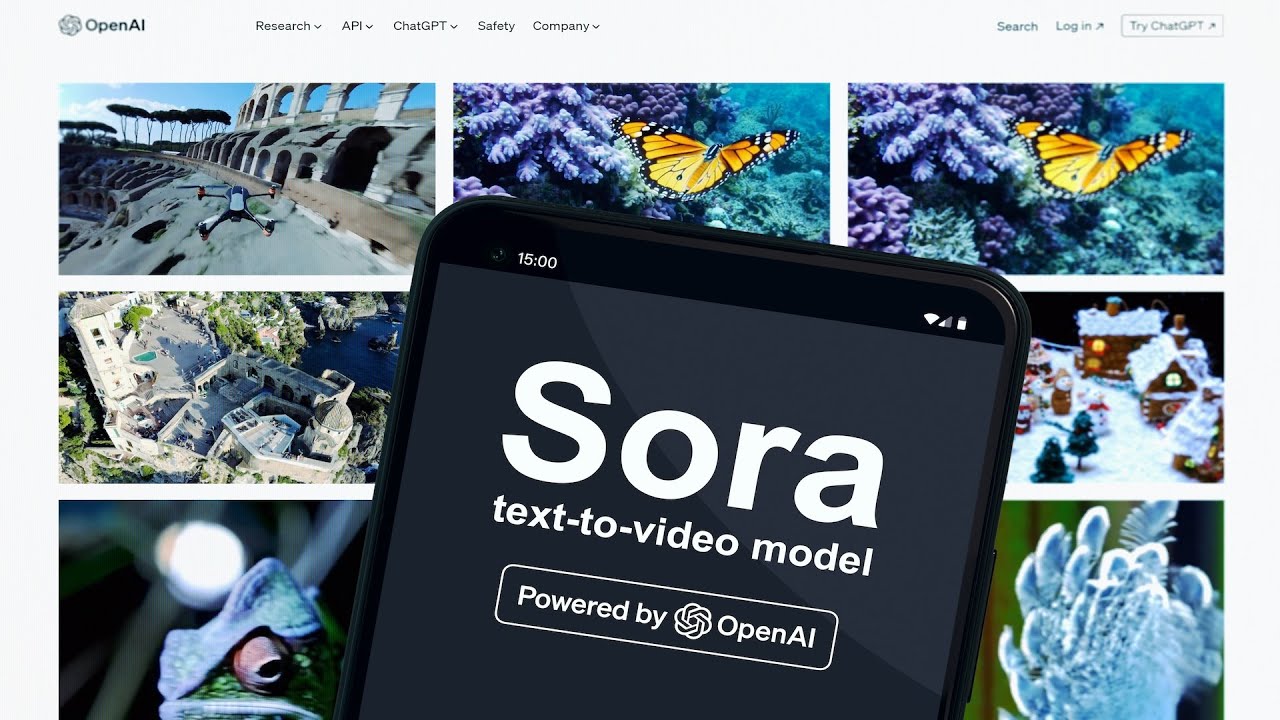
Episode 285 of the Church Digital Podcast. Jeff here, founder of the Church Digital. Love having this conversation with you. Glad you all are here. Oh, I forgot my best part. The Church Digital Podcast powered by Riverside. How could I forget Riverside up here at the top? Hey, we're talking artificial intelligence. We'll have Quinton McGrath coming up here in a little bit talking about ethics of AI, and it's going to be a great conversation. But Riverside, oh my gosh, every time I turn around, I don't know that this is true, but literally every time I log onto the Riverside platform to do some work here on the Church Digital Podcast, I feel like they're rolling out some new feature, or maybe I'm just discovering it now as I'm digging into it more at a personal level. But oh my gosh, between the clips that it's creating, the social snapshots, the transcripts, the takeaways, the topics, chapters, now artificial intelligence is so baked into this Riverside platform, and it is so helpful into what I'm trying to do and what people like you, churches like you, are trying to do with your podcasts. Oh my goodness, and your YouTube videos. You need to be checking out Riverside. Do me a favor right now. The church.digital/Riverside. Pause this, come back to Quinton McGrath and AI ethics of Sora. We'll get there. Pause it, open up a new window, pull over the car, take out your phone, open up the web browser, the church.digital/Riverside, check out that website and learn more about how Riverside can help your church do incredible stuff with video. Okay, so let's get into this podcast now. You've already done that. You paused the video. You came back in. We're going to talk now about this on the podcast and in the video talking about the ethics surrounding text to video and Sora. So you know, Open AI, the inventors of ChatGPT and the people that made all this noise going back October 2022, November 2022 and beyond, um, hey, guess what? They're rolling out this new technology. It's only getting to certain people, but this new technology isn't just text. It's not even just text to photo. It's now text to video, where we now, you, we can create minute-long video clips simply based off of text. And, you know, things like deepfakes are suddenly becoming much more of a reality. Um, what are the ethics surrounding this? As a church, do we like this idea or are we petrified? I'll be honest, I'm terrified at this upfront, and so I maybe I need to relax a little bit. But hey, let me at least be the guy to ask some questions. And so who am I going to talk to about that? I'm bringing in my Quinton McGrath. Quinton is, he's got an interesting career in corporate, but has also done a lot of studies recently involving artificial intelligence and ethics and risk assessment, risk management. So if I want to talk and he also works with micro churches in the Tampa Bay, Florida area, and so if I want to talk with a guy about ethics of artificial intelligence and get a church perspective, well, Quinton's the guy. I want to talk to, and so I emailed Quinton recently, was like, "Hey, let's jump on. Let's talk about Sora, this new technology that Open AI released or is releasing, and how we, the church, should be thinking about this." And so here's the conversation, and I got to tell you, I'm a little surprised walking away from this. Quinton's take, but hey, let me introduce to you Quinton and really the conversation that I'm calling here: Sora, the ethics of Sora and text to video AI.
··
Okay, everybody, here you go.
··
Well, thanks, Jeff, and great to be with you again. This is just fantastic. A bit of background on myself, so I was with Deloitte for many years, 24 years. I actually hate to admit that, 24 years. I was with Deloitte as an organization. In fact, I was involved in a number of other organizations in South Africa before that. So there was a large part of my career I was lucky to be able to retire from them in January 2022. While I was actually busy with my doctoral studies, I spent a couple of years in my doctoral studies focused on AI ethics and risk management in that context, really understanding how we can apply AI in the world. And you can imagine, now over the last two years, I was blessed with the opportunity of really understanding that and finding that and being guided to that at the time, because it really has changed and it's become such a fundamental thing in businesses, in fact in all walks of life, in churches, in academia, just in how do we think about AI, how do we think about ethics, and how do we think about risks? And so what I'm doing as of the last two years or so, I've really moved into kind of the give-back part of my career, and I'm involved a lot in mentoring. I'm involved as an adjunct professor at the University of South Florida where I got my doctorate, and I'm also involved on a number of advisory councils and boards, really trying to figure out how do we put together AI, generative AI specifically, in business, and how do we take advantage of it? And then very recently, I joined the AI and Faith as a research fellow, and so I'm working with that group as well, which is a group that is not only Christian faith but literally all faiths and AI and the impact of all faiths, AI in all faiths. And so that's become a fun little exercise as well to understand just the thinking of the spirituality of what we're doing in this space.
··
That's beautiful. And so you can imagine, audience, like if I wanted to get into a conversation surrounding ethics of artificial intelligence and Sora and text to video and some of that, my gosh, like Quinton is an incredible voice in that. And you know, even doing studies in background with Deloitte, and so I'm really looking forward to this. So hey, let's do this. Let's just dive in. Um, so we're talking about Sora. I tell you, why don't we do this? Like, just maybe set up, because I don't know that I fully understand this. So you know, text to video, Sora, I believe Open AI is releasing this or has released this in limited capacity now. Like, what are we talking about here as we're talking about Sora or text to video?
··
Yeah, you know, and a lot of times when I heard text to video, it was like, "Haven't we got this type of thing already? Haven't we got a number of situations?" And in fact, I for a long time have a whole string of text and I said, "Right, put a video on it and create a video." And so you know, most people said, "Oh, we've had text to video for a long time." But this is different. This is really different because essentially what Open AI have done is they've taken the same approach to prompting and said, "Right, now use that prompt we used to create pictures, we used to create text, we used to get it to answer things. Now literally has taken the same approach and converted it into an up to one-minute video clip." Now the video clip is rich, it's high quality. You can guide it to really be a very rich environment. You can kind of set the environment as you would use in the prompt in any other place. So you know, one of the ones that we often see kind of on the front page of Open AI's announcement is a Japanese scene, and there's a Japanese woman walking down in a wet street, you know, evening setting, light, rights, reflection of the street, and literally walking down the street in a very natural way, no jittering, no stopping, literally a whole smooth—excuse me, AI. Thank you very much, Siri. That was beautiful. Apple's technology is not quite up to par yet. So literally, what you've seen, you've seen this woman walk down the street in Japan in the evening in Japan, seen the reflection, and her natural moves, and eventually it comes and she looks directly into where the camera would be, but there's no camera. There's no reflection on the glasses. She's wearing glasses, and it's just the whole cycle. It's so smooth. And then they got a whole lot of other examples of just a literal prompt, a couple of sentences, a prompt to creating these magnificent videos, literally of, you know, short videos that can be used. There's no sound associated with them at this stage, but you can see the richness of the environment and literally if you go to Open AI Sora and you can see all the examples that they've put up there. And I'm really excited about it because I think it gives a whole lot of creativity openings, just like we've had in terms of, "I want to create something. I don't want to start with a blank sheet of paper." But this whole process of actually getting up, getting something in place and setting it up and moving forward with a lot of really high quality results right from the start.
··
Have you, because I, this is technically released technology right now, but they're only releasing it to certain people as they're kind of testing it out. Like, what's the current status of it?
··
The current status, as you can understand, is they released it. So there was a blog post, which is what they normally do. Open AI normally does everything new. They released it out in a blog post, and in that blog post they said they are releasing it to the red teaming, and the intention of releasing it to the red team is because you can imagine this is so complex to begin with. They are then releasing it to a small group of people who are going to go through the process of putting guardrails in place. So just like with large language models, you have the big training of the data, and then you have to put some type of guardrails. I call it making the child polite, essentially, you know, putting those guardrails in place to make sure they then say the right things or don't say the wrong things. And so that is the process that they're looking at at this stage. It's going to be a complex process because it's very hard to figure out what's going to be prompted and how it's going to be prompted, and clearly they're going to be levels of misuse of this. But they're trying to put guardrails in place as they have been doing, and Open AI has been trying to do that progressively with all their releases. So that's where they are at this stage, and how long it's going to be in red team, they haven't announced. And I presume their normal style is to open it to a closed group of people and then progressively open it beyond that. But what they have shown at this stage is very, very interesting.
··
So I mean, let's get in here a little bit. The idea of text to video and create a one-minute video clip of a very detailed Japanese woman walking on the street in rain, like artistically, creatively, that's beautiful. It's interesting. Story, my son the other day, my son's 13, and he's actually starting to study videography in school, and so he was creating his first clip of video the other day.
··
And I don't understand why this is what he chose, but he was responsible for creating a three-minute video clip of raining hot dogs where literally like hot dogs were falling from the sky. And so it was just a bunch of video clips that he actually created and we used not Sora because we don't have access to it, but we used other AI to kind of insert raining hot dogs. And once again, like he's a middle schooler, so I don't understand why, but Sora for him would be incredible because I'm sure Sora could make hot dogs rain from the sky. Um, thirteen-year-old voice, whatever. Moving past that, like moving past the creatives, like ethically what concerns are we seeing with this idea of text to video? Like to me it seems like this might be a win, but it also could be a loss. Like what, what, what's the negative as we're looking at this?
··
Yeah, so my context and ethics is always the two sides of the coin. So I do believe that there's an important part of ethics that we often overlook is the good side, so the human flourishing element. Um, and I love to think in context of Shalom, so literally everything that goes with Shalom and the wholeness as one of the critical parts of ethics. And then the other part, as you say, is not doing bad stuff and making sure we don't do bad stuff. So I think if we take a look at from a holistic perspective, there the opportunities for good are definitely there, um, whether it's just being creative or just helping people. In fact, interestingly, on the OpenAI website, they start their first sentence. Let me quote it to you: "We are teaching AI to understand and simulate the physical world in motion with a goal of training models to help people solve problems that require real world interaction." So they're really saying the aim of this thing is to create an environment so you can understand the real world interaction more effectively. So that's on the positive side. But I think if you then start saying, right, now what else opens up? And if I was trying to do bad things, what could I do? And you can imagine this whole space. When you add visual images, the ability to influence people just steps up.
··
We know just out of experience that if we look at something, um, we can keep critical thinking, apply critical thinking to something, but over time if we look at something and we get used to something, we get comfortable with that image, and so we start not applying critical thinking. And so the ability over time for the system or people to use it to create, you know, beautiful images or peaceful images, but at the same time then lean towards nudging someone to go to some place that they wouldn't normally go. And essentially, through the beauty and through the imagery that's been put in, being able to soften a person's resistance to thinking about in detail. So my big worries are the ability to use the visual images to essentially reduce the critical thinking and reduce our logical mind, kind of shifting from left brain logical mind to right brain, which is much more able to accept things without judging them quite harshly. So that to me is the one big, big, big element.
··
The other part, of course, is you've got your fundamental biases that are built into training data. You know, as much as we love to think about it, we might think we're totally unbiased, we're all biased. And so that data that's been used to train has got some implicit biases in it. And we know that those biases are in the training data, and a lot of the guardrails that these large tech companies put in place try and take out some biases, and in some ways also add some additional biases based on their own decisions in terms of what is ethical and what is normal. And so we've got this whole situation where the training data has got some biases in it, and so we may get results coming out that are biased. Now, whether those are boldly biased and visibly biased, like saying all doctors are men, you know, and clearly that's incorrect, being able to then say, right, are there maybe even deeper biases which are less obvious that are going to start pushing us in one or other way? So that whole thing about bias and what's underlying in terms of the bias certainly does worry me.
··
And then just kind of the deeper things where you start looking at deepfakes and people starting to think that this is real. Um, we really have a problem because the quality of things—I'm thinking about gaming, even the quality of the visuals and the sound and the environment—is becoming so real that as humans it's become harder and harder for us to say this is real and this is not real. And so the ability, this now even brings it even closer because the quality is so good that we start to say, oh, that must be real or that could be real or isn't that real, you know? And you can see very quickly the steps that we move towards saying, oh, that has to be real versus otherwise. And so I think those to me are probably the biggest worries. It's the bias, it's the ability to deepfake, it's the ability to actually shift us and nudge us in a direction we don't really want to go, and bringing down the barriers that we normally apply from a logic perspective.
··
Now I know, um, at some level, like there's a maybe filter is the right word—maybe it's actually another stage of bias—but like there is in ChatGPT currently, like there is some level of filter. And when I filter, you know, I mean like I've asked ChatGPT, you know, what's the best religion? I've talked about this in the podcast before. Like, there are four religions. You know, what are the religions that are right? I think that's actually, and it gave me a very filtered kind of "everything is right" and it defined Christianity, Judaism, Hinduism, maybe I forget what the fourth was, but it defined it and it said the strengths of all four and it said that they were all right. And so like, and it just, I got bored one day and decided to ask a whole bunch of stuff of Jasper and ChatGPT and couldn't get anything. And so somewhere in the nebulous sphere, somebody coded that kind of filter or bias to, you know, do that. Um, is it possible to filter or will they be filtering um this? Like, I mean, on the deepfake side, I mean I'm thinking, hey, let's put the president of the United States in a brothel. I'm thinking, hey, let's create the next Scarlet Widow Marvel movie without permission. You know, they just opened up Mickey Mouse where he's now public domain, and so Steamboat Willie you can do. Like, there's all of a sudden we've got this immense potential to do something that arguably, like if we're talking the betterment of mankind, this isn't the betterment of mankind. This is actually violating, you know, ethical principles, moral principles, business principles. Like, this power is way beyond what I feel like almost, you know, my thirteen-year-old son should have access to.
··
Yeah, and I think you're right, and that it goes to that whole bias and consent side of things. Maybe rights and consent is probably a bit better way of putting it. So what do I have the right to do? And in this space, I always encourage people to say not "what can I do" but "what should I do?" Um, and part of what we need to be saying is, what is our ethical framework that we're going to use to say, even though I can do this, I will not do it or I should not do it because I've got certain framings? Now, some of those are built in in terms of guardrails, and yes, I've got no doubt that OpenAI is building in to make sure that there are certain things that are just not displayed, certain things that would be rated, for instance. They're making sure, I presume, that they're going to be putting guardrails in to make sure that that's not displayed. But I think there are certain things that even so we need to be saying in our own personal lives, in our own business lives, in our own spiritual lives, what things do we say is within a framework that we're comfortable with?
··
And one of the things I was actually chatting to someone the other day—they're doing some AI work and helping people just from a dying perspective, really helping people process death—but and they were just saying, right, they will not go past this point. And I was encouraging them to say, right, make sure you're writing that down and have a group of people around you, if you wish, your personal board of directors, who are going to continually hold you responsible for that. And when they, when you go beyond that or when you cross that border of an ethical line, just make sure that either you do it intentionally or you've got someone saying, but hey, you've crossed that and why are you crossing that? And so I really think it is important for us to say, I'm not going to rely on someone else to put the boundaries in place. I'm going to hold to certain ethical frameworks and ethical stances or positions based on what I believe is important.
··
Now, my personal belief system is a Judeo-Christian basis, and so I've got certain ethics based in the Bible that I'll use as a foundation to say, right, this crosses the line or no, I will not go there, or this is good and yes, we should go there, or if we go there we can actually get some advantage, so let's be careful but we won't go further than that. And so the whole ability for us to be very, very careful, very clear on this is the line we are drawing. So that might be in terms of visual images, just knowing how close you're going to go to, you know, beauty and what is beautiful and at what point do you stop and say that's no longer, um, you know, honoring of God or honoring of the individual? And so being very careful on how we look at things. Um, and then the other side, of course, is also when I'm looking at creating something, am I actually trying to convince someone to go a particular way? And I always remember C.S. Lewis, that he used his humor, he used his children's stories as a way of in some ways sliding in the gospel underneath in a children's story. And I think in some ways when we do that, we've got to be intentional about it and say, yes, I am doing that, and then that's for a reason, and then we need to be transparent about why we do it and how we're doing it. So I'm a Christian, I'm using this as a way of displaying my Christian faith, and here's an example, you know, and just being absolutely transparent about that rather than just trying to get it out there and hope people will be moved in that direction, um, almost in an underhand, nefarious type of way.
··
So part of it is, how do we think about? How do we make sure that we ourselves are not taking advantage of the nudging, even if we believe it is for what we believe a good purpose, without being transparent about that?
··
I mean, so really you're suggesting there's two different checks. One, we've got to check ourselves in place to make sure that we, the users of the tool, are using it with ethical considerations. Um, and so, you know, thirteen-year-old son check, you know, at least I keep him in check hopefully as a parent. Um, but the second piece is like, do we trust the people that are drawing the lines? Um, and so, you know, OpenAI is a great example. You know, maybe I trust OpenAI. Um, you know, Google literally, their motto is "Do no harm," and so okay, maybe I trust Google. Maybe I trust Apple, although Siri is horrible. Um, but...
··
It's there's always this other organization that we don't know about or the international company that's weaponizing this. And yeah, weaponizing text to video. Yes, weaponizing text to video. Like, who else is a player in this space? Or are they all just cloning what Sora is and manipulating it for their own? Like, is there one organization that's really drawing the lines? Or are we worried about other people? Am I just like paranoid? Like, what? Who's actually drawing these lines?
··
All organizations are drawing their own lines. So let's be really honest with that. And as you say, some we've got to trust, or we've got used to trusting—maybe a better way of putting it. But even then, I recently did a research and I, in fact, recently published a paper on this whole thing of what is embedded in terms of the ethical frameworks or the ethical positions within the large language models. And I found that one of the large language models was focused much more on a situationist type of approach, which basically saying I'm not going to hold to any firm truth. I'll be able to base it on the situation. I might change. Another large language model was based on an absolutist model, so it's always going down this particular path. And so those are even in what I would call the large—the big tech, the ones that we trust—there's already biases that are built in in terms of how they've actually structured. And then if you go to the essentially the open source and the large language models and those that are beyond what we call the big tech, yes, there's the ability to then either train it with bad data, with some cases poisoned data. In other cases, just do it intentionally because you're trying to drive their particular behavior. You're trying to drive a particular stance. And so part of what we've got to be looking at is understanding and have critical thinking around what is coming out and test and validate that we're comfortable with what is coming out of the AI in terms of its output. Now, be that video output or be that textual output or images, whatever it is. And so that's the important part is to have that critical thinking.
··
Now, when we start looking at this type of capability, so the Sora type capability, the amount of training that went into making this model is very, very expensive. And it's expensive from a load perspective and therefore the cost of electricity, the cost of processes, the cost of the environment to actually make it happen. And so to be able to do this, you have to be a very big organization with lots and lots of money. And we see Altman and others going around the world talking about the amount of dollars they need to actually move this forward, the amount of processes, GPUs that they need to actually make sure that they can train the models. So I think that in some ways, when you look at the power of these types of things, it is only the bigger ones that are really able to do it. Now, yes, over time we get efficiency models and it comes down, the loading on the training and on the use comes down in terms of the power requirements. But at this stage, this type of capability in this high level of quality is really within the gross a very small number of organizations—a handful of organizations in the US but also around the world, including the Far East and others. And so the whole process of who's going to be looking at and how they're going to be using it is going to be important.
··
You know, I know obviously there's tons of privacy concerns as we're getting into this. Now, it's interesting. I, Jeff Reed, I actually have ChatGPT, my name, and Jasper, like, and Jeff Reed as a name. You know, there's been a Jeff Reed that kicked a game-winning Super Bowl field goal for the Steelers. I've won several World Series for the Cincinnati Reds, or at least another Jeff Reed has. I'm actually in jail for doing something with kids that you're not supposed to do with kids. That's another Jeff Reed. So if you Google Jeff Reed, like, there's lots of Jeff Reeds out there. And so you know, I go into AI and ChatGPT and I'm like, tell me a story about Jeff Reed or who's Jeff Reed? And it does. It hasn't got a clue who I am. But you know, friends of mine, even in the digital space, Neil Smith, who's another Christian technologist, he, you know, knows who it is. Jay Kanda, digital pastor over at Saddleback. You know, Quinton McGrath is such a unique name. ChatGPT probably knows who you are better than it would me because Jeff Reed's more common. And so like, it would seem to me I could do a text to video. Sorry, Nils, I'm going to pick on you. I could do a text to video where I'm like, hey, give me a video of Neil Smith and putting him in a weird situation, a deepfake involving Nils. Like, it would be very easy to reproduce because ChatGPT would know who Nils is. Like, am I reading too much into deepfake? Like, is there going to be a permissions level? Should there be a permissions level? What are we looking at here in trying to prevent maybe some personal violations?
··
So one of the things that they have said is they're going to be building into the metadata what they call the C2PA, which is a Coalition for Content Provenance and Authenticity. So the C2PA metadata that really says, just like images that you'll take on cameras, like you say this is taken by a Canon with this lens with this ISO rating, et cetera, and all that information is stored in the metadata of that actual content. And so what OpenAI is saying they're going to be putting that information, they're going to be building that information into the data that's carried along in the video itself. And so you'd then be able to say, literally from here onwards, essentially, if I look at a video, I will be able to go back and say, hang on, but that's created by Sora. So that's what they've committed to. Now, are there going to be people who are going to be trying to jailbreak it? Yes. And are they going to be able to break it? I'm sure they will at some stage with the right amount of power and the right amount of thinking. But that at least gives us the foundation that we're starting to say, right, built in from day one, they're saying we're going to be putting these C2PA controls or metadata into that information, which immediately is going to help it. And by the way, they've also said it in their DALL-E imaging and others. They're going to be going back and doing the same types of things. And this is part of what we're going to have to build in. And it's more of an agreement to build in because clearly if I've got an open source model, I can choose not to do that. But really, the whole process of transparency and saying it's okay to say you used an AI, it's accepted and in fact it's expected that you're going to use AI in some other form. We all do. You know, whether that's Grammarly helping us write an email or getting some ideas from ChatGPT, all of that, all of us are starting to use it. And just the transparency around, of course I'm using AI as a mechanism, and then having some type of marks in all of these things to say, right, this is not a human photograph, but actually it's an image that's been created by, you know, the latest version of image creation AI, image creation. And so that being built in, I think, is going to be really important. And there is some level of agreement that that's going to be built in. And then over time, more and more, we're going to find the signatures within these various capabilities are going to be starting to look similar. And so being able to see that there is, you know, this is AI generated, it is too precise, et cetera. And so those types of things, I think we're going to start seeing being built in naturally.
··
I love that idea of, you know, as a content creator, you know, some of the stuff that I use is, well, I mean, everything that I write is I very rarely use AI at this point for writing because I'm usually thought leadership ahead of AI, honestly, and like it hasn't caught up to the craziness that I'm talking about. But like in photos and things like, I love Adobe Stock. It declares what's AI and what's not. And I've seen that on other services. It's interesting. Like, even that declaration, man, I forget what state, but I was just reading about this where there are states that are now, maybe it was the state level, maybe it was a nation, but talking about automated driving. Like, the Teslas, there's conversation now about there being a blue light above the brake lights on the back of cars. And so when a car is being self-driven or driven by AI or machine or whatever you want to call it, like that blue light comes on. And so whoever is behind needs to know, hey, that car is being driven by a machine. And so the driver knows, okay, let me get in the other lane because I don't trust it. Let me hurry up and get around it. Or I'm completely comfortable with that information and can treat it accordingly. And so you know, as even as a content creator, being able to know, okay, this is machine generated, this is not like, I, the ability for me to use those tools accordingly, like I love that. And so that's interesting. I mean, there's probably still some challenges.
··
Hey, you, it was interesting. And in some of our earlier conversations about the podcast, you sent me some case studies and I kind of flagged one. I was like, oh, I would love to maybe walk through this on a situation, like just to dig in a little bit. And so I'm going to, I'm actually reading from my screen here. If you're watching on YouTube, I'm not looking at you, sorry, because I'm literally reading the story. And so Mrs. Jones, this is I'm assuming this is hypothetical, was created by Gemini in this case, by the way. Oh good, we're so I'm using AI to talk about AI. That's great. Mrs. Jones, a history teacher, utilizes Sora to create personalized historical simulations for her students. One student received a simulation where they witnessed a fictionalized conversation between Abraham Lincoln and Frederick Douglas, discussing the complexities of slavery. While the simulation is engaging and sparks conversation, it later turns out to be historically inaccurate, containing fabricated details, potentially perpetuating harmful stereotypes. Questions arise from this. Should AI-generated education require stricter fact-checking? How do we ensure historical accuracy? Who's responsible for potential biases or misinformation produced by AI? Like, I mean, there's a lot that's in this. But overall, like, even just, you know, your synopsis coming from this, this is an AI-generated story about how AI simulations are questionable. Like, what are we supposed to do with this? How are we supposed to handle this as churches and people in 2024?
··
Yeah, and I've got to the point now the way I use AI is much more in conversation. And so you know, I literally will say, right, let's sit on and have a bit of a discussion, like we're doing now, in terms of areas. And then I intentionally click in a much more critical mindset. So I'm being very critical in terms of what I'm hearing and what I'm seeing and what.
··
It's telling me, and so part of that process is not just to say "please help me with this, give me an answer." It literally is, let's have a debate about this particular situation and what about this aspect? And if I thought about it from that particular aspect, what else should I be thinking about? And then when I get the response from the AI saying, "Right, well does that make sense in this particular context or is that really just a bit of an outlier? Yes, I guess in that situation that may apply, but for this context, that particular aspect doesn't apply." And so a lot of what I'm doing is really this much more rich interaction with a mindset of being critical. You know, it kind of goes back a little bit to the Bereans in Acts, where essentially they were very careful about testing and keeping on going back and validating and testing that what they were hearing was appropriate, was based on scripture. And in the same way, I'm using that same type of thinking: is this based on what I know to be true or what I understand to be true, or is there something that I'm actually seeing now as different? And so that whole application of critical thinking—when you start applying that mindset, if I'm going to use AI to create a story, I've got to recognize that AI is a statistical engine. That's what it is. It's been trained by a whole lot of data, and it literally has picked up, just like we pick up, the relationship between certain things—coffee and hot, you know, those types of examples. We recognize that over time we've seen them occur together so often that we put those two things together. And so when it's creating a story, or when I'm allowing it to be creative and not limiting it to be factual, it's then going to create something that is less likely to be factual. And so I've got to be even more careful and even more critical in terms of what it's producing and saying, "Right, is that factual? Is that not factual?" In fact, go back and test it. And in some cases, I go back and say, "Right now, go back on yourself, AI, and validate. Give me some validation that what you've actually produced is fact correct or is not."
··
So if, for instance, in my classes—and I teach at the University of South Florida—in my classes where I use this, I often go back and say, "Right, here is some information," and I create stories like this around ethical dilemmas, and I then get it to actually test and validate that what is put together makes sense and is actually factually based or has some foundation. It's not totally fictitious in terms of false. Rather, in this concept, and so that really is where we need to start looking at not only ourselves but also testing, and then when we get a response back, even validating that. Because clearly, it can be just as certain about a falsehood or falseness as it is about a truthful statement. And so even then, when you say, "Right, test yourself and come back and prove that you're right. Show me where you got that content or go and look out on the internet and give me some validation of that information," then being very careful that we're actually testing and applying that critical thinking to it as well.
··
And so in those situations—yeah, yeah, in those situations—when I'm using, just going back to Sora, when I'm starting to create visual images, and one of the images, for instance, they've got a drone flying down a river in a Gold Rush town in, I think, Colorado, you know, in that type of situation, one of the questions I'd be asking is, "Okay, so is all that information valid? You know, are there people that are depicted? Is that correct from a bias perspective, or has it actually used a different bias, an incorrect bias?" You know, so those are the types of things that I'd then be even questioning when I started looking at that video being produced by this large vision model. Using the same type of critical thinking, it's this misleading, it's this falseness, it's the fact-checking for truth and the validating. I mean, this, for me anyway—and I consider myself technologically advanced and savvy and a lover of innovation—but you know, a lot of this makes me pause. You know, I've got to be, you know, I'm usually the guy, honestly, that's like, "You know, Life Church, Craig Groeschel, anything short of sin we should be doing for the kingdom," and so, like, you know, part of me wants to lean into how the church can utilize this and take advantage of it. But I ask myself, like, "If Jesus would use Sora, would Paul, in everything aggressive that he's done, would they take advantage of this technology?" Maybe. Maybe the problem is in its infancy. I don't know. And we need to give it time to fully develop beyond that. But honestly, like, this is causing me to pause a little bit on this technology, and I'm saying this on my podcast, which is, you know, public record for me. And part of me is like, "Jeff, take it back," but I really can't. Like, I really—this scares the crap out of me. Like, I don't know. Am I off pace?
··
I think we all need to be very, very careful about what we're looking at because I think the power and, as the AI organizations talk about, we see the emerging capabilities that are appearing as it's learning from a bigger data set and being taught to do different things or being allowed to do different things. The whole process of saying, "Right, if we take a look at this and think about the potential upsides and downsides, we've got to be able to objectively look at it and say, 'How can we use it for good, and how can we make sure that the way we're using it for good is not going to be misused for bad?'" So all of us know that we can stand up and give a great talk, and then someone's going to cut out a small slice and say, "You know, see, Jeff said this," and, "You know, wasn't that so bad of him?" And you know, in the context of the whole story, it was clearly not. And so the whole thing we've got to look at is this is certainly a positive tool, or a tool can be used in a positive way. But then we've got to be aware that it can be misused as well. And even in our use in a good way, it can be taken and it can be misused. And so part of it has been being very circumspect in terms of how do we use it and how quickly we lean into it. At the same time, I'd say if we're not moving into it quickly and experimenting with it within appropriate guardrails and in appropriate closed spaces, I think we'll be losing out. And so part of it is testing and validating and with wise counsel to say, "Right, how do we use it? How do we take advantage of it?" But realistically, if I just sit back and say, "You know, I'm sitting next to the sea and Jesus is giving his talk about the parable of the sower," he was looking around, I presume, and saying, "Oh, there's some grass, you know, passing the grass or onto the stones," you know, and it was visual. People could see right there, and they could immediately experience it. If I could do the same thing with Sora, would that not also be advantageous if that's going to help people to actually understand what Jesus was saying more effectively? So I think, you know, there's that part of it. But then immediately the guardrails come in and say, "Right, so what can be misinterpreted? Know what can be embedded in there that could bias things? Oh, you'd have the wrong type of people there, or you know, or maybe he'll be using the wrong language or the wrong accent, and so all the biases may start coming in and saying, 'Well, you know, that's not really what Jesus was saying because it was said with the wrong tone.'" And all those things start coming into play, and we then have to step back and say, "Right, so how do we take advantage of this in a way that's going to be beneficial without getting ourselves too tightly caught up in saying, 'Well, we don't want to use it because there are so many potential downsides'?" I lean towards—I'd rather use it, be very careful, but I'd rather use it and take advantage of the technology more extensively for the benefit of all, for the growth of all, and then make sure that we've got the appropriate controls around it versus saying, "Let's hold back just in case this might be bad." So, you know, I'm perhaps leaning towards, "Let's use it, be careful, we use circumspect, but use it and lean forward into it."
··
It's interesting, and I'm going to gently put you on the spot here a little bit. We're going to shift from ethics and probably a little more towards opinion, which is interesting where you're going. Like, examples from a—let's even go practical here. Like, what? So Sora gets out of red team and is opened up at some level. It's a $29.95 a month feature set to get this, and anybody can now, within whatever confines, whatever filters, whatever—anybody can create a text-to-video. Like, what are some examples of how the church should, could, would, you know, experiment, utilize, test? Like, do you have any ideas pop to mind or opinions on maybe some early testing grounds for how the church could use this practically?
··
I think the areas that I'd be looking at is how do we create the environment that is friendly and beautiful and accepting. So the first place I'd be looking at is much more, "How do I create an environment where people come in and it is clearly beautiful?" I'll be looking at natural beauty here in terms of mountains and valleys and rivers and so on, and all the things that naturally move us towards a peacefulness. So, you know, thinking about Psalm 23, "He leads me beside quiet waters," you know, and those are the types of things that I'd say, "Right, is this a way of us creating an environment that's going to help people come in, be peaceful, and therefore open themselves up more to God and to be in a place where to meet God in those situations?" So that's one place I'd start first.
··
The other places I think would be when we start saying, "Right, how do we emphasize things without moving people, nudging people incorrectly?" And so this goes back to my whole fear of something visual being much more powerful than something that's just sound or read. And so how can I use it in a good way to be able to show a principle or show a series of images that would just reinforce the thought without overdriving it towards bias and nudging in the wrong direction? And so I think there are ways of just enriching our environment, of how do we show, how do we depict biblical stories, how do we bring those to life? And a lot of that would be around, you know, many of us—and I've certainly helped when I've gone into videos of Israel at a particular time—this is what it would be like, and just help to understand the context of the Bible story. Like we're just talking about Jesus, you know, talking about the sower, you know, and standing on the boat and being, you know, talking into the valley, talking to the people across on the mountainside, and just the picture and understanding what that looked like and what that was.
··
That sounded like what else was happening around there. I think that enriches, enriches the experience and enriches the understanding. And so, so I would move there, but again, you know, this is where we've got to be fairly, fairly careful and and fairly, um, guarded in what we do. And I think some, like The Chosen, have have looked at that and have been very careful in terms of what they were doing in terms of depicting Jesus and depicting the the New Testament, um, world. And I think those types of of of of boundaries we need to look at. But but enriching that and helping people understand it without replacing the Bible, without replacing, creating a new something that people believe in, but really always using it to reinforce scripture, reinforce the the foundations that we have. Uh, so that that's that's where I certainly would would look into it.
··
Well, we've been talking a lot about Sora, text the chat, or Sora text the video, uh, generative AI, ChatGPT. Like it's it's all in that gen AI space, which seems to be um exploding quickly. I mean, you you got your uh, you you started your studies uh, twenty-two, and and it was all over the the place, um, what? Fall? No, um, it started what, November twenty-two, right? Didn't it? Yeah, I I started studying in twenty-twenty, so just just prior to that. But yeah, yeah, yeah. Um, are there, and so let's you know, I've I've asked this question because you know at some point gen AI is is not going to be the only AI category we're looking at, and there'll be others, um, other aspects of artificial intelligence we're going to be diving into. Um, are are there other aspects right now we should be aware of? What's what's next? What are we doing? You know, all this content is is nice, but there there's much more to AI than just the content piece. What else should we be concerned about or looking at ethically concerning AI?
··
So so certainly the the big, the big shiny object right now is large language models, gen of AI, and everything associated with that. But if you look on on the on the periphery of that, we start, we see a crossover into a number of areas. So for instance, things like digital twins, where essentially I create a a digital image of a physical physical object. I'm able to to actually do something in the digital space and then replicate that in the physical space. And that's very powerful. For instance, where I'm looking at an airplane engine and I've got a digital version of the airplane engine, I can manage it. And so those types of things um are happening. But you can very quickly say, right, so hey, let's do a digital twin of a of a human, you know, and start and start actually looking at, okay, so how do we send the skin, or how do we actually start getting inside inside the mind? So that's that's the one area. So digital twinning, very powerful in in in terms of where it is in manufacturing. But then of course, when we start seeing human digital twins, we start then getting to to a different space.
··
Um, I I think the the other aspect that we we've seen happening is the whole, not just generative AI, but adaptive AI. So generative AI is really focused on, I've learned stuff, I'm going to replicate, and based on my learning, I'm going to give you an example. So essentially, I'm continuing based on my learning. Adaptive AI starts moving towards saying, right, how do I create something new that is not necessarily based on anything I've learned, but let me extend what I've learned and look in new spaces? So adaptive AI then become something that is there's a new space. Um, and when you start putting those together, generative AI, adaptive AI, together, you can imagine where things um then become become fairly complex. And so that's relatively new. We starting to see uh some some organizations focusing focusing in that space.
··
And then the the other, you know, everything we do becoming essentially AI embedded, you know, so whether it's where it's the metaverse environment, where it's the gaming environment, and all of those become becoming richer and richer and enhanced by um by the the AI and the gen of AI and the various AI models. I think I think we certainly seeing that. Um, and you know, the the other part is in in AI, you've got essentially large language models, which are self-learning, if you wish, or reinforcement learning. And then there is the other one, which is supervised learning. So if you think of, for instance, a Watson type of environment, where I've given it information, said here has a lot of information, this is you a particular piece of information, and this is how it's labeled. And so there's that that side, which to supervised learning, we've got the unsupervised or reinforcement learning. And when you start putting those two together, they actually become quite a powerful combination in terms of the the generative AI being able to to ask kind of unrelated questions against their factual base um and then being able to essentially have this this combination of of a plane of one or another from a from a a a a taught a a supervised learning and unsupervised learning component.
··
So those those are the types of things um, but but I would say the the space of growth around generative AI is is only going to get larger. So the more and more information that it's fed, the more modes that it's fed it in, so video and audio, uh, et cetera, the more of those modes it plays in. The fact that it moving, and we've of course seen it now, the whole robot side of things, uh, Optimus, et cetera, where essentially you've got the large model or the ability um, this digital brain built into a robot. And I and the robot having a couple more of the sensors, so the feel, the ability to move, uh, so that being then added to it, um, which is then going to be moving from just a textual and the video thing to you know, physical device um and a much more human type device.
··
Okay, are are you literally saying that there's Optimus is putting AI into a robot like that? That's a project? So if you if you look at what Optimus Prime, Transformers, like I'm geeking out over here. No, no, this is Optimus. This is Tesla Optimus, uh, so essentially their robot. So essentially the the large language model capability um is been has been used as a foundation. So if you look at a lot of the earlier robots, were trained on, here was a program, a programmatic thing. So do the step one, step two, step three, step four. The current robots are using the same large language model approach, which is all I want you to do is go and figure out how to make a cup of coffee. There's the house. See you later. Go and figure it out. And literally, through it ability to to perceive and learn and understand, it it knows that it needs to make coffee. So it's going to look for coffee machine. It's going to look for coffee beans. It's going to look for milk, et cetera, and actually create that, make that cup of coffee. And it's going to learn. So it's not trained step by step. So to make a cup of coffee, you go through this door, you go there, you open up that fridge. It literally goes through a process of perceiving and using the large language model to then try and figure out what it needs to do to create create a cup of coffee. And that is what is embedded in the, for instance, the Tesla Optimus. And there a couple of others that are are now starting to have that large language model capability.
··
So literally, is you know, make a cup of coffee or walk into room, what should you do? And the first thing it does, oh, it's untidy, let me tidy the room, um, you know, or hey, there's a fire in the corner, I'm going to try and put the fire art, you know, so that whole process of not predetermining the steps is many years, but actually having the the essentially the digital brain being able to understand the environment, interpret the environment, and take appropriate responses.
··
Yeah, it's it's it's fascinating. I mean, so much, honestly, I could sit here for another hour and and just dig in uh to to what people are working on or what is honestly six months to a year away. I mean, because this thing is tracking so fast that that it's like, oh my gosh, that's it's a decade before? No, forget that. It's going to be tomorrow. Um, where before we're going to have to address and deal with all this. It's interesting. We had um, oh, I just, Aaron Cath, uh, is the he's the chief technical officer for Pushpay. I don't know if you're familiar with Pushpay. It's a a billion dollar Christian tech company was acquired for nine hundred fifty million. I don't, maybe six months, maybe a year ago. But um, uh, and so he was on the podcast and was was talking about some things. And I asked him about AI and his his stance on AI. We just published that podcast maybe a couple weeks ago. But he he he said it was it was really interesting. He he's like, uh, Jeff, you're you know, as a as a church, he's like, you're either using AI or you don't realize you're using AI. But AI is already baked into everything. It's already, you know, you can say you hate it and you're afraid of it, but you're already using it at some level. And um, you know, even Siri interrupting this podcast earlier is a perfect example of you know, AI being AI, um, you know, whether we want it or not, it's lurking uh, paying attention, and and waiting to step in as as it seems uh helpful. Um, you know, I say to my daughter, hey, sweetie, all the time, and Siri always chimes back, what can I do for you? And I'm like, I'm not talking to you, Siri. I'm talking to my daughter. Uh, and so that's um, you know, yet another interruption. But it's it's the reality of where we are, right? And so it's as a church, I think it's understanding um the implications, uh, recognizing the people that are drawing the lines, which I I I love that there are multiple people. And but you know, and then there's it's managing ourselves on how we're using that situation and protecting our legacies where we have to to make sure that we're self-guided and that we're not putting ourselves in in harm's way for for those that that might take advantage of it. Because somebody will. I mean, to to think that everybody's going to control their own garden and manage their own space like it's twenty twenty-four, nobody's going to. Like, that's we can't. We can't expect everybody else to play nice. We've got to protect ourselves. But at the same time, we can't bury our head in the sand and like, as much as I want to with this and and think that everybody's uh that it doesn't exist, because the reality is it does.
··
So listen, Quinton, this has been incredible. Like, I I almost want to bring it back and and talk more about the robotic aspect of of this. But uh, let's let's wait for that to become a little more mainstream or potentially mainstream before we do that. So as we're as we're wrapping up and landing the plane here, uh, man, any closing thoughts on your side?
··
I think really, as you know, I go back to one of my fundamental focus, uh, is where I'm I'm focus on ethics and recognizing ethics got two sides. And really, how do we keep on driving towards the positive aspect? There just so much noise out there of just doomsday and how bad it can be. You and I really believe that as as as Christians, we can be taken advantage of and saying, hey, there's a huge positive bend and driving it. And not being not not being blind to it and really forcing the the big tech companies into the right direction. But really bringing the the Christian voice and the positive voice and the human flourishing voice, the the Shalom voice into into the play and really driving it towards that direction. And just recognize that you know, there are risks, but at the same time, there are huge advantages as well. And those are the ones in my mind that we should be focusing on and really using for for kingdom and use for the kingdom sake.
··
For sure. Well, for a guy that's job is literally risk assessment or his studies has been risk assessment of artificial intelligence, uh, I feel that the risks have been
··
Assessed, and part of me is a little surprised that you're being pro on that. I was actually expecting a little more anti, honestly, just, you know, hindsight being what it was. I was expecting a little more challenge from that. But I feel challenged, and so it's like, all right, let's figure out how to, you know, walk before we run here. And, you know, I tell people all the time: trust but verify. And so I have a feeling, you know, with Sora and moving forward in other spaces, it's going to be a lot of that trust but verify moving forward. And, you know, declare, label, confess—is not the right word, that's negative connotation—but that at least moving forward with that. So I think this is going to be interesting season moving forward. But hey, we're going to land the plane. Thank you, Quinton. Quinton McGrath, thank you very much for jumping here on the podcast and sharing. Anytime I want to talk AI ethics, you're an email away, so I appreciate that. But we're going to land the plane. So for Quinton, this is Jeff with the Church Digital. Thanks for jumping on the podcast. We'll see you next time on the show. Y'all have a good day.
Auto-generated from audio, lightly cleaned for reading. · Watch the full episode →
