⌕
··
You need to have some faith that God can bring you the resources that you need to get the things that you need to go into the highways and byways and propel more to come. You need to be called to digital ministry. Welcome to the Church Digital podcast. Through this podcast we'll talk about the technological innovations within the church, but more than tech for tech itself will address deeper questions. Is disciplemaking possible digitally? How should we approach the digital field? Can a biblically grounded church operate in digital space? And where does the metaverse and artificial intelligence fit into all of this? Whether you're a big or small church, the Church Digital's goal is to help churches like yours learn to be a multiplying church digitally and physically. And now here's your host, Jeff Reed.
··
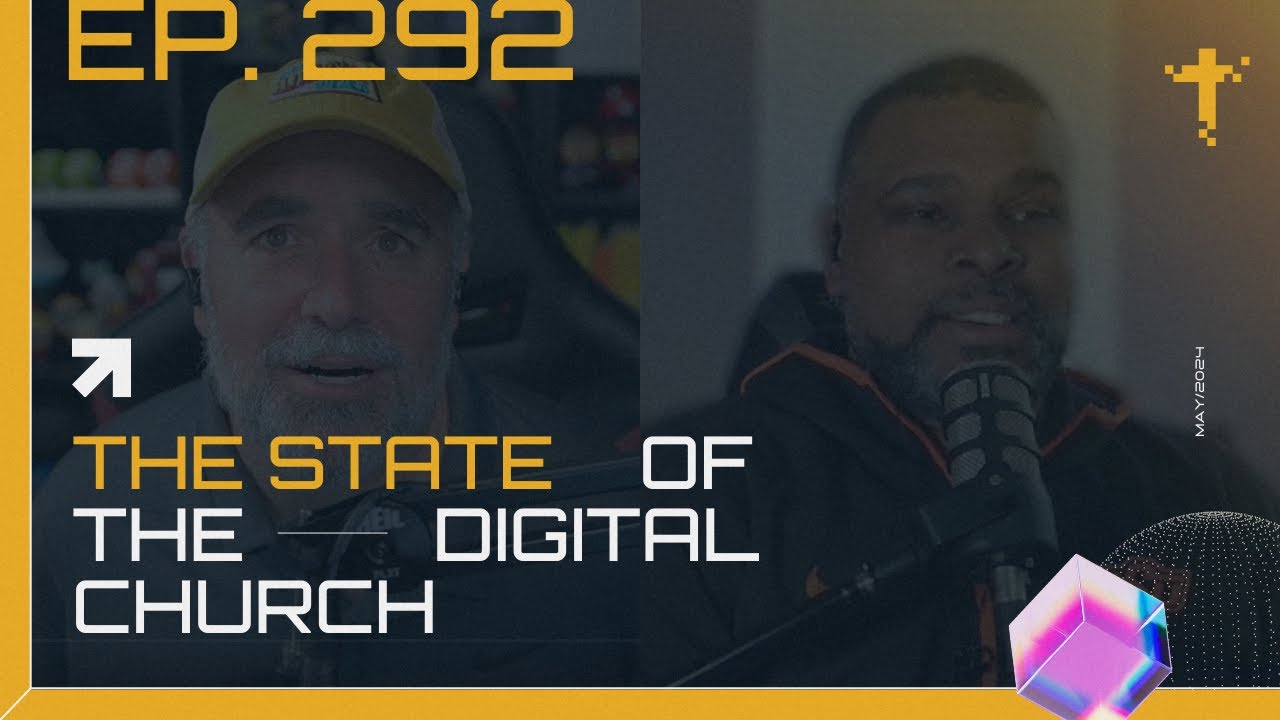
Hey, you know what, it just took us five minutes. First time we've done this publicly and so glad we can get everybody together. We lost a couple people in the process, but we've got Simon is from Germany. He runs Beta Church and actually Simon's running a digital church network that runs in Germany, a network of digital churches without churches, without buildings, and it's resourcing up there. Simon works for—Simon, I'm blanking on the organization. I can never remember which missional organization it is, and so I apologize for that. Whitebeard is like I said, ZZ Top, and so but he lives in Tampa. Alliance, yeah, me Alliance Missions. Whitebeard is probably the most radical within the Church Digital. Some of his ideas, some of the stuff that he's doing is incredible. Man of prayer, really intriguing some of his ideas, and he walks around the Art District in Tampa called Ybor City wearing a monk outfit and giving away water and praying for people like on the street. Incredible stuff. And Melanie does a lot of stuff with digital church, flat caps, one of our leaders as well. And so anyway, it's going to be an interesting conversation here. I'm joined by DK, by the way. Before we get going, DK, what does DK stand for? Am I allowed to know that?
··
Because yeah, man, my first name is actually Derek.
··
Okay, hear me. Yeah, yeah, yeah, you're good. You're good. First name is Derek. My middle name you cannot know, but Derek Hammond is my name. Middle name starts with the K. You're welcome to guess. I'll tell you if you're right or wrong. That could be a conversation for the chat for later. But yeah, DK Hammond. It's easy to go by, and if it's somebody uniquely named Derek in another place, there's very few people named DK, so that's what makes the use of that interesting.
··
Yeah, so you did DK to be like, you know, unique, because there's all sorts of Dereks all over the place?
··
You absolutely. There was a season where I was actually JD for the same reason, because Jeff Reeds are like Derek. I've won Super Bowls. I've won the World Series. I did, you know, unfortunately if you Google me, there's like a Jeff Reed that's done the stuff with kids you're not allowed to do with kids. And so like, you know, trying to find the Jeff Reeds out there, it was very easy to get kind of overwhelmed and lost in the shuffle. But no doubt, DK, man, that's that's smart.
··
So where do you live, DK?
··
Currently a residence here in Dallas, Texas. I'm in the suburb called Glenn Heights. That's where I live, but Dallas is home.
··
Awesome. I didn't put that together either. I was stuck in Dallas in March, man. You'll appreciate this. I was in Allen, Texas speaking at a PushPay residency event. And I, so my flight was supposed to leave Thursday afternoon. I didn't actually leave Dallas until Saturday night. I was literally grounded in Dallas for two extra days because of a thunderstorm coming in that was so bad it literally shut down DFW airport for two days. And when I could finally get off the ground, they flew me to Austin. I was actually stuck in Austin because there was another storm front that blew through that basically cut off the entire seaboard. And so it was nuts. I was literally in a hotel bar working all day Friday and Saturday on my laptop just drinking bottomless Diet Cokes trying to pass the time cheaply because there's like nothing else for me to do.
··
So yeah, indeed. Cool. And so, man, DK, maybe share with us a little. I'm going to feel like I'm going to call you Derek now and slip up here. That's fine. But DK, yeah, tell us a little bit about yourself and your ministry.
··
Yeah, man. I've been well, my ministry is kind of connected in two ways, right? By trade, I'm trained, licensed, ordained pastor minister, and that's been almost seventeen years of that ministry. I worked my way through the ranks of youth ministry, campus pastor, all the things you can think of in church that you can do. I've done it. Drums, treasurer, done that and then some. Years ago, recently, because I've been in a tech space when I wasn't preaching, so tech has always been a part of my life for the bulk of my adult life. And so when I say tech space, we're talking about startups, startup companies. I've been helping startup companies move through the Series A's and Series B's and getting funded, angel investors. They'll bring somebody like me in as their tech guy to kind of help them forge the organization along. So we're talking about major projects across states, company lines, things of that nature and supporting people. And then from there, I've always been in this place where I couldn't find a place in church to use that skill set. I could find a place in the marketplace, but never in my church context. So that made me have to go look elsewhere. And then recently, Nasty City was a church that I was at. I'm working for up as a contractor now, but you know, that was one of the places that I worked at as a contractor or as an employee being their IT and systems manager. And so it gave me an opportunity to kind of converge these two worlds together and use the biblical approach to tech, because there is one, and using the tech approach to ministry, because there should be one. And in most churches, at least that I've encountered, they didn't have a person like that. So it gave me an opportunity to do that. So that's kind of a little bit about me. I'm a husband of one, father of four, and I love my wife. She just had a birthday yesterday. And so that's who I am and how I've gotten here.
··
Awesome. Well, happy birthday to the wife. Happy, was it happy wife, happy life? And so I'm sure she really appreciates the husband of one, you know, to adding complexity to that relationship, maybe not the wisest choice, especially in ministry. But well done.
··
So you know, DK, a lot of our podcast listeners here with TCD podcast will also probably be engaging over with Social Media Church, which DK is over now with Nils and with Aaron Magnuson, right? He's the other voice over there. And so no doubt, you know, Nils has been here on the podcast several times and we've worked with Aaron in the background on some projects and with some other vendors and things. And so definitely excited here to include DK in. And so I've been hanging out with him a little bit here with the live podcast doing on Discord. Exciting to see him start to interact here as we're building out the Discord community, brand new for us. DK, like we're maybe a week in, maybe two weeks. The website we just launched a new website, Notico, yeah, and it was funny. Like the leadership team was like, "Hey, now that we're launching a new website, let's go to Discord." And I was like, "I don't know, let's talk about the timing on that." And I got voted down like severely voted down. Like when everybody else in the room is like, "Discord, Discord, Discord," and I'm the only person saying no, it's like, okay, we're going to Discord. So definitely excited to see that.
··
Okay, hey, so here with this conversation, we want to talk about African-American churches. And so let me be the purple elephant in the room or whatever it is. And if you're watching us on Discord or you know anything about me, I am a bald white man currently wearing a yellow trucker hat with a beard. And you know, I used to have like a decent sized goatee before I decided to clean up my life a little bit. So like, you know, I'm not the guy. I'm not the guy that probably needs to talk about race. I want to be the guy that learned about race. And so I'm very much wanting to position myself as the learner in this conversation. And I almost want to put this disclaimer up at the front that I'm a little afraid to almost have some of these conversations publicly and publicly recorded. We were joking offline about how you know maybe I would say something stupid and then this video would go viral because like I would be the stupid, ignorant white man saying something dumb. And there's a very good chance that's going to happen. Like, and that's not me intentionally doing it. It's just I'm kind of stupid, to be honest. You know, this is my disclaimer. I live in Miami, Florida. Like it's where race is, you know, we're forty percent Hispanic, we're thirty percent white, and we're thirty percent African-American. Like I mean, I've got friends here in Miami that are a mix between all three demographics. Like a white person marries a black Cuban and what are the kids like? It's like race almost doesn't exist anymore. And that's not the norm, especially when we're looking at America. And so while I'm, you know, while I'm like, is race really still a problem in this country? Then you know, I see everything else that's happening in this country and I remember, hey, you know what, Miami is like this unique diamond. Miami, Florida, maybe, you know, some of the—I don't know, I'm not even going to get there. Would be some of the stupid stuff that I could say answering that question. But yeah, Florida definitely is leans a little more race friendly. Let's just call it that way. All right. I at least am looking forward to the conversation here with DK. We're not running from asking some questions. Yes, and we're not running from anything. Let's get to it. I'm not easily offended. If something offends me, I'm going to say, "Hey, man," all right, and we keep going.
··
Awesome. Oh good. All right, hey, so let's get in here. And so I want to open up with this. Like I once again, I told you like I'm very much a—there's a blended society down here in Miami. Like the church that I went to was very mixed. And I heard there would be a speaker brought in, and for the life of me I don't remember who this guy is. I knew the name but it didn't stick with me. And this guy from Chicago came in to speak on race. And he shared this vantage point that really church—like he was for race. He was advocating for the segregation of churches, like having African-American churches, having white churches, having Hispanic churches. That was actually the thing to properly do within churches so that churches can be, so that people can worship in their context, worship within their demographics, worship within their style. Now there's definitely some things within African-American church, like true African-American church, that isn't done by the white church. Hispanic churches have far different styles. And you know, but a lot of what I'm used to seems to be more blended. And actually, you know, my ministry story, we've tried to create blended approaches, although sometimes like it was a—
··
Bunch of white people and you know the token Asian guy that was just like in the neighborhood. Um, I mean I would love your take. Like, is it better for us to be—I'm using the word segregated—that me, be separated? Or is it better to be blended? Like, when you look at physical church and race, what are you more comfortable with?
··
Well, I'll be honest with you. Because I've worked in both contexts and I've served in both contexts, and while I would say African-Americans would love a blended approach, what happens is when they go into said spaces, the spaces aren't safe for them in terms of context. And so they have to find places where they can be free to worship in the style by which they are accustomed to or that feels natural to them and then go there. Now with that being said, there are some people who see it in a very blended format. So it's not to me a one-size-fits-all to answer the question directly. It is: what is your preference? What do you feel led to do? There are some of us who feel led where I need to be in a predominant church or predominant race church, then that's where you want to go. Cool. And sometimes it just happens that way. You don't even—you're not even paying attention to it. It just naturally happens that way. And then other times it is: this is what I need for the sake of my own personal safety. This is what I am used to, and this is what I'm going to choose based upon that.
··
And so I would be honest, like especially in Dallas, we're starting to see the convergence of the multiethnic, multigenerational churches that have the various race makeup within them. But the thin line between that is it is going to lean to its dominant, and it does it unintentionally sometimes, as you mentioned, but it leans to its dominant. And so we always need to be trying to be centered so that we can be inclusive of everyone.
··
So if a person does decide that they want to go to a Black church, cool. Let's honor that. At least they're going to church. If a person says they want to go to a blended church, cool. Let's honor that and then let's move forward. Because I think I feel and I believe that we're probably better together as the Bible has already told us to be. But sometimes we're not safer together. That doesn't make us better.
··
That's interesting. So you're in Texas, Dallas? Yeah. I mean, Dallas is the home of like the Cowboy Church. Absolutely. And I'm not sure if that's Dallas Cowboys or just, you know, cowboys and Indians. Cowboys—can I say Indians? I don't know. But Cowboy Church. Um, like, and so how do you like—is your church African-American? Is it blended? Like, where do you specifically worship? Can I ask?
··
So it's blended, right? And when now you get into the African-Americans, I think you're only talking about one sect of people. Now we have to also include Senegalese and Congolese and African and Tanzanian people that are equally a part of the diaspora that don't necessarily subscribe to the construct of African-American, right? And so you have them included into that. Because on that side of town or north side, they actually are Christians, devout Christians, and they want to go to church. And so they go to church at these places. They may present as African-American, but if you hear their accent, you'll find out very clearly they are not African-American. They are from somewhere else.
··
And just like I've seen white-presenting South Africans—I mean, not South Americans, South Africans—and they are going to African-American churches. And so I've seen the blended, blended experience. And I would love to be a part of that, to be a part of a place that is both safe and inclusive of everyone. The problem is that doesn't happen, not intentionally.
··
And so let me give you a scenario. So when we're talking about inclusive, we're talking about the staff looks like me or resembles parts of me. There are sermons that are directed to my issues, ills, and situations in my community, just like there are sermons directed to your community. So there's an intentionality behind that. And a lot of pastors try to veer away from that because their focus is to try to be more biblical and not communal. And so their messaging shows up their way, okay?
··
So then, you know, who on staff represents you? Uh, can speak to you? Um, you know, maybe. Um, do you like—you know, I know lamenting is a big part of African-American churches. Um, you know, Black gospel choirs, dancing on stage is a big part. Um, like, say more about lamenting. What do you mean?
··
Lamenting? This is good, man. I'm—what do you mean? No, like it's—um, that. Well, maybe I'm speaking out of turn, but the lament, like the lament, the holding to reading scripture together, um, the lamenting, the woes where we've come from, some of the disparity of the historical aspect. Yes. Um, you know, we did a—uh, maybe some of my time at Stadia, but we were very, uh, very big. We spent a lot of time in—co—yeah, actually really getting into the African-American church. Like, what is a church? What do they do? Because basically, um, and we were accused. Stadia was accused of basically trying to make, trying to whitewash everything with the Planters. We were measuring the Planters. We're measuring the effectiveness of these churches through a white lens. Through, hey, are they, you know, can they do a three-song worship set? Can they preach a white sermon? And so like, it was everything. The perception was it was all through that lens.
··
Yeah. And so we had to do like this really deep dive organizationally. What is what does an African-American church look like? What does a Hispanic church look like? What are the characteristics? What are the people looking for? How are they discipled? How is that different than a physical church? And so we really delved into the aspects of it. And this is where, you know, I started to discover things like African-American churches really are not typically aligned much to technology near to the level that churches are, and white churches are years behind, like, you know, culturally where corporations are now.
··
It's interesting. Hispanic churches actually lean more towards technology if they have it available. Um, but a lot of them can't afford it. They want it, but they can't afford it. Whereas African-American churches, you know, it almost felt like pre-COVID. Like they were hands off. They didn't want anything to do with it because like the technology really wasn't—and maybe I'm overstating—but it was more about being in the room, in the event, seeing the choir, hearing them sing, seeing the performance value, seeing the pastor. Like it was much more of a communal event, really, than what even the white church was at the high level that they considered it.
··
Yeah, brother. I think, I think for—I think you the last statement you mentioned, and I love what Whitebeard is saying in the chat: try to find a good Easter movie that is for Black, for a Black church. It doesn't really exist. That's a powerful statement. That's a real stat. Uh, because I hadn't found one myself. But I think the last statement that you mentioned about community, for our people, and I would say, and I'm including anybody that is for justice, for everybody, for our people, it is about community. And we—the understanding for some leaders is digital divide impacts community, and we're absolutely terrified of digital divide. We don't know enough about it. There isn't much information. So shout out to people like Barna Parker who is really doing the work in this area to give us numbers about African-American churches and people. Um, but there's not really, uh, and I even say, um, Barna Group is doing a—they're attempting to do a better job at representing that. So I want to make sure I make that clear too. Um, so just having that information is really, really important.
··
And some pastors, when COVID hit, were really terrified about how to pivot to the next because they were used to people just automatically showing up. It didn't require work. These people would be there every single Sunday. And so now I have to do something different that I'm not prepared for, that I didn't think about, that I don't have the financial resources to gain. I'm kind of stuck. So I do need help here, and I don't know where to start to get the help.
··
So these conversations should have been happening. But I think of African-American churches, I think of the small church that has only fifty to one hundred people in their all-family. They can't afford a Rosie setup, a Rosie setup that's nine hundred bucks, a computer from Mac that's twenty-two thousand dollars, a switcher that's another thousand, and then three cameras that are Canon Reds that's another three or four thousand a piece. That's not—unfortunately they can't afford that. Um, and that's just how the makeup is.
··
Now, here's where partnerships matter, and you can do this and be an ally without trying to bang the actual bell. Hey, do you need help? I see you need help here. Are some resources. Allow me to provide them for you. I don't need nothing from it. You ain't got to post me on social media. That is not required of me. Allow me to just help you get where we are, and then we can move forward.
··
Watch this. As a community, what happens is when you have Anglo-Saxon churches, they move ahead and not try to pull us or other people with them so that we can move ahead in community together. It is always: let me get ahead, let me forge, let me conquer, and then y'all can get it by your bootstraps along the way. And that's not always a good philosophy, but I understand why you do it because you're going to be looking out for your people, whoever the people are in your context, and I respect that solely.
··
So there was a divide line, a digital divide, and it does impact the people who are unfortunately not financially there. And we have to acknowledge that, right? Uh, and I know there are some organizations, I think like a Southern Baptist Convention that help with digital. I know those things exist, but everybody can't get a hold to those resources. And so that puts people behind.
··
Now I'm going to say this: you can stay behind or you can make some adjustments. Facebook allows you to pull up a stream on your phone, turn on your phone, plug it into a wall, and there you have live stream. It won't be perfect. It won't look like everybody else, but it'll be yours. And nobody was willing to forge that line and say, at least let me try it. We were just sitting around waiting to see who would do the next thing better. Try where you are. Start where you are. And God always provides the increase.
··
Yeah, you know, I had a pastor friend. I was actually friends with the executive pastor of an African-American church here in South Florida. Maybe fifteen hundred. Um, was much larger as trunk over time has decreased in size. And uh, the executive pastor wanted me to come in and talk about um online. This is pre-COVID. And uh, and so came in, uh, met with the pastor, walked the facility, talked cast vision for digital. Yeah. And um, you know, I remember the pastor getting really excited. I've told the story several times, but Jeff, I want to see my message preached around the world. He was very specific with this. Jeff, I want to see somebody accept Christ and get baptized because of my sermon in Ethiopia. And uh, I I kind of chuckled about that with him, and I was like, hey, that guy that gets baptized in Ethiopia, what happens after? Uh, he gets baptized. What happens to him? And uh, the pastor looked at me and he's like, I don't know, Jeff. That's that's really not my problem. And um, and it was pre-COVID. I mean, to be honest, like that was that was not that uncommon of a response.
··
Mindset PR Co, but uh I really had this opportunity to sit down with him and cast vision towards digital discipleship and what church can look like more than just uh that that one piece. Um, let me just ask like why does—and and I maybe I'm stereotyping, stereotyping all African-American pastors so forgive me if that's happening here—but it feels like African-American culture struggles to connect with digital community. Like, um, it was interesting pre-COVID, the majority of online viewers of church services on Facebook was African-American women. Like they they would uh view content, but leaning into community and engagement, it feels like African-Americans kind of struggle in that space. Is would you feel that's accurate or do you disagree? And maybe why or why not?
··
I think that's about exposure. Um, okay. I don't feel I don't necessarily feel like that's accurate. I feel like we don't have the digital discipleship programs understood to onramp and off-ramp people from the actual digital experience into our worship experience, right? Or into a church setting or a small group. But you are right, okay? We consume a lot of this digital. We make, to be honest, sometimes we make it cool to be on digital because of the things that we do and how we just make digital move. So that's about exposure to other aspects. Like I did a whole two years where I immersed myself in multiethnic culture to see how it was and is if there was a difference between this one and that one. And let me tell you, it ain't much difference between you and me. But here's a bigger difference, and that is the digital divide, because it impacts the disproportionate race and culture of people more than it impacts the dominant culture. And so we have to be cognizant of that.
··
Now watch this. You're right. The women, they consume this at a high rate and a high clip all the time. And I can tell you, brother, there are a lot of African-American churches running live streams now. Not the whole totality, but a great deal of them are using the live stream. But they don't know much of how to integrate them into their day-to-day walk in terms of creating digital discipleship models. And insert a person like me where I have lived these experiences. I've been a part of those, and I understand how these makeups work in a church setting, whether it be an African-American or a multiethnic. And we are more the same than we are different. Again, as I stated, the divide is what it is. The resources is what it is. But I think this about exposure for you, brother, because there's—I'll give you a church: Willer Avenue Baptist Church, uh, located in Houston, Texas. Uh, is a church that every Sunday, at least when I watched them last, I think they had 26,000 views live. Wow, okay? That's in Houston. Um, there is a church in Florida that I visited. Want to is Family Church. I visited Family Church when I was there for a conference. I enjoyed Family Church. Family Church was cool. They, how they, their makeup is all about community and being a part of the community experience in Florida. And so that was really it. West Palm Beach, as a matter of fact. So that was really cool. Um, and then there I was actually just at that Family Church a couple weeks ago. Keep going.
··
So the, uh, dude, Family Church, cool guy, salute. Um, but another church, um, that's that's really cool. Now you have um you Potter's House is an anomaly, right? It is one that has thousands of people watching, but it is an anomaly and it is a multiethnic experience. And so now you have like Potter's House Fort Worth that people ignore, which is a good friend of mine, Patrick Winfield. They have many people. The One North has many people. Here's another church I'm just using Dallas. Uh, One Community Church, Conway Edwards. He has, he just had 500 people get saved and I think two or 300 get baptized. So this is about exposure more so than it is about underrepresentation.
··
Now to your example of the pastor who wants everything to be blasted across the world, that somebody can get saved in Ethiopia and Kazakhstan and all these other wishful places, let me tell you something. Pastor, you need to curtail your dreams. You are called usually to a local establishment, and God may provide you the digital footprint to be called to a more global one. And usually that digital footprint is created through Facebook ads and YouTube funding. And most of us are not ready to have that conversation. It's interesting we may dig into that here in a little bit.
··
You know, it's it's interesting. Conway Edwards is a friend. I've I've spoken at uh at One Community a lot. And um, um, know like they did an excellent virtual—we actually built their virtual reality salute ministry for them a couple years ago and and several other things along the way. Um, but you know, and they're they're an example of of a hybrid church, a physical church doing digital. And you were talking about how, you know, I say phygital, but that's you know, I get booed for saying that word. It's okay, we can move on. But the but part of this really gets back to um the integration beyond just the broadcast, beyond the content, and getting into day-to-day. Yes. Um, and so you said some things about groups and mentioned some some churches, but would love to maybe get into specifics if you if you were able to share. Like, what would specifically, tangibly, practically, um, what does an integration into an African-American life, uh, Monday through Friday, Monday through Saturday, like any other time the 9:00 a.m. Sunday? What does it look like to integrate uh a a a hybrid physical and digital together? How does how does digital make the physical engagement better?
··
Yeah, yeah, good question, brother. And salute to one of my clients who I'm the communication director for in South Carolina, Spartanburg, uh, that is Mount Mariah. And so we are taking and using social media and digital to our advantage. And I'm going to use them as an example because I know I won't get in trouble and I won't violate any NDAs that I may have signed in the past or current. So that being said, uh, one of the things that we did when I first got there is we made sure that we had a simplistic digital presence. And I'm going to go through my process because I'm a project manager and I just have to go through it. Give you my SPI—simplistic digital presence—that is helpful, it's easy to communicate, everybody can see it. So we had to go through a branding restructuring. We're now about to finish redo the website. And and that I'm gonna come back to that because that's an important piece. The website is for the external use of our visitors. We want the external customers to go directly to the website and integrate themselves there first to get information that'll be pertinent to that community specifically, 'cause what I may for South Carolina, I may not do in Baltimore or LA or Nashville or whatever the case may be. Each one is going to have a different approach. I'm just using them as an example.
··
So we we take that and we we redo the website to make sure that we are from an external standpoint answering all questions on that front landing page of that website, right? And then we're going to use things like the "learn more" button to offer them into next steps: membership, discipleship. This is something that that I'm doing currently. It's not nothing that's old. It's something I'm doing currently. And the website should be up probably tomorrow, I believe. My team is working on it. But we have that: "Hey, join us here. Here's our live page. Here is your next steps. Here is this event. Here is that event." And that's good for an external user in terms of how we integrate them into our process.
··
Now, uh, oh my bad, my, I'm going to switch. I'm not going to switch devices. My cam, my other camera finally came up. I can switch. It's cool. Okay, all right, yeah, go ahead. We can, we got um, so anyway, um, that's uh, it still didn't come on. Let's yeah, in Discord, turn there you go. You all right? Cool. I was struggling looking at the other screen.
··
So um, so that being said, you know, we have the digital process and that front page is gonna really get them on-ramped, off-ramped into um, or what I like to call in the tech world uh, handshakes and handoffs. We want to make sure that they are good for a new member. That's one way. Um, the other way is we want to make sure that the live chat experience is engaging. Sometimes some of us in the African-American space simply turn on our live feed and then that is it. We don't engage the clients that's outside of the live feed because those are potential people that want to join or become a member of that church. So creating an engaging environment that is loving brings people back. The center of the whole thing, right? That's important. Cool.
··
So once we've done that, now we're going to ask that, have I'm gonna get right there, brother. We're going to ask them to say, "Hey, would you like to become a member?" And we're going to have a digital process for those who are in-house and external. And that process is going to route them to something called either Adult Ministry or assimilation. That is the whole target. We're trying to reposition people back into the local church. And if the local church has an online campus pastor, as Whitebeard said, then we're trying to get them fostered in the community.
··
So let now we take a right turn and we say, "Here is our Facebook group," or we say, "Here is our Discord group," and then this going to be our small group. And we're going to build and foster this connection in that manner. So those are a couple of ways in which we are integrating the digital discipleship model.
··
And I think the last and most important way that I'm start, I'm I am going to be really big on coming forward, and that is setting up ways where the pastor doesn't have to repeat himself or herself. And that means we need to create learning models, learning management models, so that people can watch and become members digitally. You can't be really serious about digital if you didn't create a model that exists digitally. And so now if we have an LMS system that is within the website, we can track milestones, we can track progress, and we can track you and give you the information you need. And this can happen for any church, specifically a black one. That's my beat.
··
You just spooked a whole bunch of people by saying "cracking" like 12 PS, but that that aside, no, I I love what you're talking about because I mean ultimately a lot of that is I mean there's there's some old technique there. It's nothing new under the sun, Ecclesiastes. Absolutely. The the heart of this is is there's intentionality. Like, it's we are intentionally going to use this technology for uh for this benefit. And you know, you said several times to drive people to to physical buildings for for that. And um, you know, there's a lot of there a lot of churches that do that now. We we'll get into this a little bit. We work with digital churches, churches without buildings. But um, the the fact is is that there's there's far more opportunities for physical churches to better engage people digitally uh than even the the amount of digital churches that that are out there.
··
And can I say this, Jeff? Can I say this before you, before you there, um, because I would love to see more African-American churches or black and brown people do digital churches and do them well? I think some of them don't have the information or know-how to create that. So I I I believe now in this society we can create that model to exist uh that Jeff and I are speaking about.
··
You know, there was um, TD Jakes, what's The Potter's House, right? That's TD Jakes, Dallas. Uh, his son, I want to say, launched a a digital-only church that was based out of Denver or somewhere in Colorado.
··
You talking about yeah, you talking about One Church. Uh, at first One Church was in LA and it was a physical church. And then their church transitioned because they moved to Dallas. And now they have One Church One Church Denver that is connected to One Church LA, and they do it the digital and...
··
Yeah, oh so they're they're hybrid now. They're physical and digital. Okay, that's right. At some point, I guess when they were launching, they launched digital first, and which, you know, if you're T.D. Jakes' son, I would launch digital first too and build your following digitally and then evolved it physically.
··
Do you know of any African-American churches that are digital only? Like, has anybody kind of hit your radar on that yet?
··
No, I haven't. I haven't met one. I see them here and there, but I haven't done enough research to see if they are.
··
No, no, no, no, no, no, stop right there. Um, at one point, I think they went back to hybrid. Clarence Stokes out of Chicago, he was doing strictly online. Uh, and he had an online ministry for a minute, and then he moved to doing digital, and now Clarence Stokes is a great resource.
··
Um, and so now you can see him positioning himself to do what I'm talking about in terms of creating this model of learning digitally, which allows your church to be anywhere at any time. And they have their tagline is Mars Hill Anywhere. And so that means his church can be anywhere at any time. So if I was thinking of somebody who I believe was doing it or going that direction, Clarence Stokes is definitely that guy.
··
Yeah, um, there are African-Americans. That's interesting. I would love some information on Clarence. Um, there's, uh, we'll offline. Yeah, there. I mean, there are African-Americans that are doing this. Like, do you know Andre Anderson? Um, Barbecue Church, Barbecue of God Connected? Yeah, yeah, yeah, yeah. I mean, like, he's solid and doing all sorts of stuff digitally, but like, he's more excited about barbecue grills than African-American culture or whatever. So like, it's kind of a different vibe, I guess. I would say talking with Andre, that guy's talking about like smoked sausage and all sorts. Like, he's giving. I'm doing a podcast trying to discover what his church is, and he's giving me recipes for like, what he's like, "You're going to come over to my house and we're going to cook this and this and this." And like, over here, just, oh my gosh, yes. I need to get Andre back on just to talk about the food that I'm going to maybe one day.
··
I think for us in terms of creating a digital-only church, here are some components that we have to create. And I believe it could be done, but the components have to be created at some point. You have to figure out how to have the community at large feel like an actual physical church, because in the African-American diaspora, community is a lifeline for us, right? And so you can do digital community, but for us, we like to have that nice good hug from Grandmother that's on the front row to help us go along the way or have a conversation. Or as mentioned, having meals. Food is a huge thing for us that gives us that source of community.
··
So let's say you did church pop-ups, but for the most part your church is digital. And we just do the pop-ups to make sure that biblically we are doing as far as what the Bible says in the Book of Acts, and that is coming together as much as we should, right? And we could still have that approach and still be able to not lose a scent as far as anything else. So I think it could be done. It's just nobody has leaned into that fully. What they have leaned into more so is having that online pastor or a campus pastor to do exactly what I'm mentioning, where we're getting both of the hybrid.
··
So I am watching more African-American churches move to the hybrid model and embrace it because they saw what happened before and they don't want to get caught again like that.
··
Yeah, well, a hybrid is the, I mean, hiring an online campus pastor, a hybrid model like that's the least invasive way to add digital to a physical church, correct?
··
Let's hire a guy. Let's make that his problem. And, um, you know, watch him succeed or fail. And if he fails, we'll find somebody else. But like, it's, I don't have to, you know, really rethink things. It's not going to impact physical. We just put cameras in here, we record, and, you know, somebody pastorally cares for the people that are not in the building. Um, and that's not to discredit. Like, for many, that needs to be the step for today, because we don't want to re-engage. We don't want to rediscover. We don't want to have to re-experience COVID all over again and what it was like to be locked out and caught without some of those issues.
··
Um, there is another lady. I'm say this, Jeff. There is another lady, and she used to do it. I think she still does it. She is a doctor, I think, somewhere in the Midwest. And I'm going to get her name. I'm trying to look it up real quick. But I think the name of her show was like Pink Robe Chronicles, and she would do an actual worship service and experience in her robe, and it would be three or four hundred people there. So I've seen it. I've seen it, yes sir. I've seen it done. And she would, and I want to say I have to get the name and I'll put it in the chat later. But definitely it has been done, even prior to COVID. Definitely has been done. Um, just hasn't been done at a more prevalent. We, it didn't break the algorithm, right? They weren't over there doing something really crazy. They were simply over there preaching to their former people.
··
It's another guy out of Memphis, a brother named Earl. Abyssinia Baptist Church. For the most part, his church is digital. Like, I just saw him preaching on a beach Sunday, right? So there are some doing it, but not at the rate that we would want to see them at some of these major ministries.
··
Yeah, there it is, my man. Got it. Melva Samson. Dr. Melva Samson. She does it, my man. Hey, we got to connect, bro. You all right? Uh, she does it for sure, yeah. Whitebeard, DK, you two should connect. Uh, I'm going to warn you, Whitebeard's a little eclectic. Uh, so like, he's a solid guy. He's becoming a good friend here of the Church Digital. Love that.
··
Um, so answer me this. As we're getting into this, and by the way, if there's any questions, throw them in chat, and towards the end, we'll probably open it up and let you guys even come on. Um, but talk to me about this. Um, are the majority of churches, African-American churches, would you say the majority at this point are comfortable with a hybrid model?
··
It's interesting. Like, uh, Pushpay stats recently. Let me put some grounding into this. Ninety-one percent of churches that Pushpay interviewed are streaming services online. Ninety percent are hybrid. We consider themselves hybrid. Like, nine out of ten churches in America today would consider themselves hybrid. Um, do you think that carries over or something close that carries over in African-American? What do you think the stats are?
··
Yeah, uh, I would bring up Barna Parker's stat that she put up. Um, I don't have it on me. Maybe bring it up in a minute. Uh, but I feel like, oh, you put that on Facebook recently, right?
··
Yeah, yeah, yeah, yeah. Yeah. Dr. Barna Parker. She does the research on African-American churches. She is to me the GOAT when it comes to that information. And I don't mind referencing her because, look, man, she's done the research and the legwork necessary. And here's what she says. Uh, this is on Black Millennial Cafe if you want to look it up. Dr. Barna Parker. Uh, it says this: Forty-one percent of Black church members say they want to continue with virtual church. Digital ministry can't be ignored. Fifty-nine percent of Black church members are only willing to commit to returning to church in a hybrid model.
··
Now, I've seen that Pushpay report, and my fear is that it was probably one-sided. My fear, I'm not sure, and I'm not judging them if it is. I do not know. I don't have a direct connect. Uh, I just feel like they may or may not have gotten it and represented everybody well there. Um, but I know she's attempting to create the narrative to show people, here is what these groups of people desire. And they do desire a church that is a hybrid model. Um, and so if they desire a church that's hybrid model, then we have to pay attention to that. We can't ignore that. We have to set things in place.
··
Here are a couple of things that you want to set in place if you're an African-American church and you're listening to me. First thing is you want to make sure the video quality is aesthetically pleasing. You can no longer risk having these fuzzy pictures and expecting people to stay on your live feed at any time. It's not happening. You want to make sure your sound quality is up to standard, right? Your sound quality is important, just like your video quality is important.
··
And here's the most important thing. Once you get done with the aesthetics and how they look, you want to make sure that your pastor is preaching about something. Now, I know this is going to be risky and it may get me in trouble or cancel, and I'm braced for both of them. Some of these pastors that want to go digital should not go digital. They should close down their digital and just preach to their community church because that's what works for them. Some of these things should not be seen or shown. They should be put behind a paywall or saved later at a different time for other people to experience.
··
So to answer the question, absolutely. Here's what the church is saying: We want to have variety. We want to be able to experience church both in person, and if I'm on vacation, I want to be able to take church wherever I go. And some of these leaders aren't on board with that. They, I had a pastor once say to me, and I love when they start the statement off like this, because it's funny. You know, being a member has its privileges. And so, yeah, you see, we used to joke. I know I do, man. I love it. We used to joke it's like being a church member that won't even get me like a free fry at McDonald's. Like, anyway, that's funny. That's good.
··
Being a member has its privileges. Being a member has its privileges. And one of the privileges should be, you, this is what the pastor said, one of the privileges should be that you should show up to church and you shouldn't do digital. And then his mind changed when he received a check. You get what I'm saying? So now it took a, it took incentivization, if that's a word, today. You were incentivized by the check, and now you're saying, okay, let's offer something for digital because I see that giving is coming. Giving has been there. Maybe if you teach about something, giving would go up. I'm off my soapbox now.
··
Those three things you need. So go ahead and send any hate mail to D at. No, it's all good. Um, that's not even the worst thing that I've said this week. So you're fine, yes sir. Um, that's so good, man. Um, that's awesome. What, um, a couple more questions? Yeah, man. Um, does how do we change and get more adoption, more understanding, yeah, of digital? Like, it's funny. Like, Whitebeard works for an African-American church, you know, others have some connections, um, you know, with within that. Even in our audience, there's going to be people that work at or are connected with African-American churches that may or may not be supporting this. Like, yeah. Um, how, what's some practical things that we can do to kind of pivot here?
··
I've been waiting for this question. So here's what I think. Here are some things that we need to do in no particular order. Number one, we need senior leadership to embrace the change. And the fight is not the people. My conversation and consulting is more so of senior leadership and their fear or the fear of the unknown for them and not knowing or educating themselves about what could be if you would allow it, right?
··
Cool, you need to have some faith that God can bring you the resources that you need to get the things that you need to go into the highways and byways and compel men to come. You need to be called to digital ministry. Some people aren't called to it and they shouldn't do it.
··
If you are not called to it, and if you are called to it, find somebody who's as passionate about it like Whitebeard here and get connected with them so they can help you foster and build that. I think partnership is a huge thing. Partnership is a huge thing for me. And so I do my best that I work for these various churches is that I always set time. This is kind of what my podcast is about. It's kind of what my connection with SMC is about. I'm always setting time to get information that I'm learning and put it out there into the atmosphere because I know there's somebody who is listening that don't have the resources to afford it, but they're thinking about it and they're dreaming about it and I'm having a conversation about it. And this is my communal give back. Every single time I do something for anybody else, I am bringing information for all of us to consume, to move ahead if we so desire.
··
So partnership is important. It's one of the critical pieces. And then I love the church that was in Oregon recently who made a bold declaration that said they weren't called to a live church experience. And we did a recap on that, and I loved his approach after I heard it a couple of times. I loved his approach. We are called, that he said it is Oregon and the kingdom of God that is the in between. And so if you feel like you are called to something more global, then your ministry should reflect. If you are not called, then your ministry should reflect. And that's how we should put it. And we shouldn't demonize people who want a more robust experience from the digital to the physical.
··
Yeah, yeah, it's Erwin McManus. I don't know if you've heard this quote. McManus said this. Yeah, he's like, if you really love the physical church service, like if the one thing you do and how you gauge success is the number of people that are sitting in the pews, like if that's your thing, why would you put that online? It doesn't make any sense to put that online.
··
Yeah, now, you know, I would challenge there's other things you can do online. There's other ways that you can be missional and engage even if you're hyperfocusing on a specific area like Oregon. There's still digital ways to hyperfocus on Oregon. So you want to utilize digital, but that doesn't mean you have to utilize the online church service, the seventy minutes or whatever it is on Sunday morning. And it's so interesting that that's been the conflict. It's like, oh, we got the church service online, we're good. We got the church service online. That's all that we're doing. And it's like, no, no, no. That really, and you're so good at this and so eloquently explaining it. Like the online church service is the start of the conversation. It's not the finish line. There's so much more that needs to happen. Or otherwise we're creating consumers of content, which to your point is not a good thing. That's not where we want to be. We need to move beyond that. So so good.
··
Hey, Melanie's asking a question here. My city is eighty percent white, twenty-two percent Hispanic, and one percent black. Now let's not do the math here and discover that's one hundred three percent. Let's just assume the best. Former sundown town, KKK history. So I'm curious if how digital church can provide a safe experience for that one percent.
··
See, going back to the beginning, we talked a lot about giving that safety, giving that safe experience. Yeah, so she's in a town where one percent African-American. Digitally, how can she support some of that? That sounds like my old city where I'm from is Little Rock, Arkansas. So I hope that's not Springdale or Harrison, but I won't. That's where I'm from. But to answer the question, and again, there's no right or wrong, but if I'm trying to create safety and I'm thinking I already have these people represented, I'm creating safety number one for the people internally, and I'm considering the people externally. So somebody that may look like me is going to be looking for songs that they can hear them, that they can sing with you. Again, African-Americans love the communal experience, right? And so a part of our communal experience is singing together. That's a huge part. And so CCM, unfortunately when it is sung, it is five verses, three vamps that we have to understand and get, and we can't connect to that in most times. And so we have to sit there and look on the screen to try to keep up with and understand that cadence because that is a different feel for us. That's one. So the worship experience needs to be there. The preaching experience needs to be an experience that includes everybody, including the one percent. I love that one percent. That includes that. That means I am sympathetic, understanding, and willing to speak truth to power to what you may experience as the person you are, point blank period.
··
Now, that is a risky conversation for some pastors because you're going to alienate the eighty percent when you attempt to speak to the other congregants that may not look like them, okay? So that leads me to the third point. So now we have to go in and do internal work to make sure that we're doing allyship correctly. And most of the time, that's where people are kind of offboard and they think you're left wing, right wing. It's not about that. If I go into a worship experience, I want to feel God's presence. I don't want to feel your ethnicity. And if I feel your ethnicity more than God's presence, this is not the church for anybody at any point. So that is important. I don't want to feel your politics. I want to feel God's presence. That is important. And so presence is community. It is fellowship. It is singing. It is the preaching experience. It is the safety. I hope that kind of answers a way that we can help foster an environment of safety for the woman.
··
I may do a podcast on that. That's a good topic.
··
Yeah, that's interesting. And it actually kind of challenges even the idea of preferences, right? Like you want to feel God, not preferences, extra-biblical ideology. Like the worship is aligning towards a biblical ideology, preferences that may come into play, which really flies even in the face of, you know, white, black, whatever. Like it's that. You know what, you're pulling the thread of we're asking the wrong questions. It's more about God.
··
Yes, have you, what's a good book like there's on this maybe that to really expose the African-American culture and in Bible and scripture? Like is there there a book you fall back on or encourage some of your friends to read? I have some on my shelf if you allow me to grab them. I think I can grab them real quick.
··
Hold on a second.
··
Yeah, yeah, yeah. Oh, look at that. The camera even panned with plus the iPhone and its tracking. Oh, that was so good, man.
··
Okay, so I'm going to give three. Anytime we're talking about African-Americans, you want to definitely think about this. Howard Thurman, Meditations of the Heart. This is going to be. He's what's called a Christian mystic, but he definitely is going to represent. And you can hear a lot of his sermons on Harvard. He has a listening room on a Harvard Seminary page. Definitely a good read.
··
This is not a good one, but I grabbed it so I feel like I'm going to share it anyway. This is more of a leadership book. It is Leadership in the Age of the Quick Fix. This is one. This is a seminary text that I have. Let me move this down, sorry. Seminary text that I use that's really great for leadership. And then anything with MLK, and let's not do the sanitized MLK. Let's do the real one, please. This is A Testament of Hope, essential writings and speeches of Martin Luther King. And if we take some of those, we can start a conversation.
··
I would say find a good brother or sister who you can just share with. I love my seminary people at Phillips Theological Seminary in Tulsa who I have allies there, and we have conversations like this, and they're willing to do the work here. And I love that you say bring up the reading because it's going to require you to do work. It's not going to be one of those places where you can't. You're going to have to do some work to unearth some things and do away with some things in order to understand.
··
I would even say, man, attend a worship experience. Get that in your spirit. Just go there just to see for yourself what we're talking about. And if you have questions, find somebody that you can say, hey, I know this is requiring thought of you, and I want to apologize up front, but can you help educate me where it's not a problem? And most people will do that.
··
If you're looking at podcasting, because we are podcasters, of course you want to look at my podcast or the SMC podcast. There are other people in the diaspora that you want to definitely look at. Pastor named Larry T. Cruda, pastor of South Carolina, his podcast. There are various people in the work that's willing to help you. Dr. Banna Park, I can't speak enough about her, willing to help you understand. But it is going to require some work on your side. So that's what I would say, bro.
··
Awesome, man. I've loved hanging out with you, doing this, having this conversation. I don't think I said anything too stupid, maybe once or twice, but I don't think we'll go viral for me being an idiot. Hopefully time will tell.
··
But hey, as we're landing the plane here, any closing thoughts?
··
No, man, I appreciate you guys for having me. Please make sure you check out SMC and myself, Neils and Aon over there. Check out my podcast, Drop the Mic Podcast, and I'm talking about various conversations myself. And just continue to pray for us as pray for me as I continue to make an impact digitally and help our people see the God of the grids.
··
Hey, DK, thanks for jumping on here. SMC is Social Media Church. It's a Social Media Church podcast. So we'll put links to DK's stuff and Social Media Church and about and some of these. We'll put them in the show notes and on the podcast and YouTube descriptions and all that stuff. So we'll get the resources out front. But hey, so we're going to wrap up here with the podcast recording. And Discord, we're going to hang out, maybe talk here a little bit. DK still got some time to do that. But thanks for jumping on the show with us today, and we'll catch you next time. You have a good one. Peace.
Auto-generated from audio, lightly cleaned for reading. · Watch the full episode →
