⌕
··
The other thing that I see in a lot of pastors is that they don't like being dad or husband because you don't get the same level of respect or the same level of accolades.
··
Welcome to the Church Digital Podcast. Through this podcast we'll talk about the technological innovations within the church, but more than tech for tech's sake, we'll address deeper questions. Is discipleship making possible digitally? How should we approach the digital mission field? Can a biblically grounded church operate in digital space? And where does the metaverse and artificial intelligence fit into all of this? Whether you're a big or small church, the Church Digital's goal is to help churches like yours learn to be a multiplying church digitally and physically. And now here's your host, Jeff Reed.
··
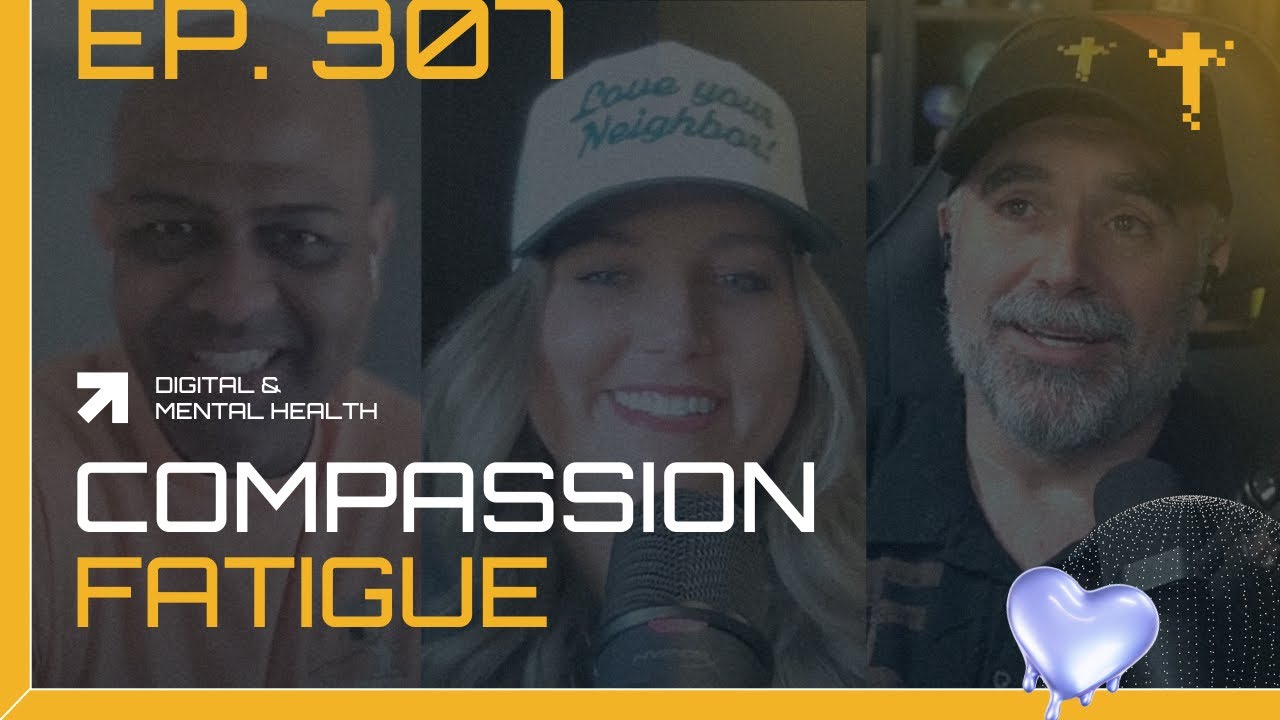
All right, now if technology works as it's supposed to, this is episode 307 of the Church Digital Podcast, and we are not only recording this, we are broadcasting this on Twitch. As a matter of fact, I can confirm that right now we are broadcasting this on Twitch. It's showing up here on my little monitor up here on this side. So hey, Twitchers, that's awkward. You know, normally we're on Discord, and so I can normally say Discorders, and that that's great, but it sounds Discord sounds a little bit like hoarders. But so Twitchers, I don't know if it has that same impact, but we'll pretend and go with it.
··
But we are doing episode 307 here at the Church Digital. We're doing a deep dive into mental health in digital. So what are some of the implications of digital ministry towards mental health? What do we need to be aware of in doing ministry and who we're ministering to in this space? So we've got a really—man, I am—we've got maybe eight episodes scheduled in this season. This one I have a feeling is going to be my favorite, just because I love the people we're talking to here in a little bit.
··
But hey, before we get there, we're doing this on Twitch. Just a quick disclaimer: we've had some tech issues trying to record in Riverside and Discord. And not to say the Church Digital Podcast powered by Riverside—it's not to say that Riverside was failing. Riverside was doing great. Just running those two applications simultaneously ended up being a power suck for some of the guests that were on and were causing some problems. And so I don't want to criticize some of our guests in their technological prowess. Let's just say they weren't investing their money in the right places, like the Mac Studio desktop beast that I have on my desk that, you know, everybody should know about. But I'm rambling.
··
So we're streaming Riverside into Twitch, and so hopefully it goes well. And at the end of the episode, if I'm cursing under my breath, you'll know that it's not—but I'm optimistic where we're going in this season. And you know, yeah, we're doing mental health for a reason because I'm screwed up. And if you don't know that, you know, that's the first right, right, Megan? That's the first step of mental health is recognizing that you're screwed up. And so we'll probably get into that here in a little bit in this episode.
··
But let me bring in Megan into this. Megan Carter is a next steps pastor at—yeah, at—man, I got that right—at First Capital Christian. I said that I said maybe last week that First Capital Christian Church anywhere is one of the top five innovative churches in America. And that actually got like some—not I don't want to say press, but I've had people follow up with me on that who ask what church are you talking about? I'm like, oh my gosh, if you need to, go like go visit, go hang out with their staff. And we were just talking offline. The culture at First Capital is phenomenal, and some of the stuff they're doing is unbelievable.
··
So Megan is really been the brainchild here on the season. So Megan, thanks for jumping on here.
··
Yeah, absolutely. I'm excited.
··
So what, tell us a little bit about your background, you know, into the mental health. Why is this so important to you?
··
Yeah, big thing is I've dealt with it. I've dealt with anxiety and depression. And so growing up in the church, in the church culture, you know, in the early 2000s, it wasn't talked about. So I kind of felt like I was the only one struggling with this. I wasn't a good Christian. As I started to realize that, like, I—it's not all that crazy. Like, a lot of people deal with anxiety and different things. I went to a counselor, talked to them, and then just really started to have a passion to help other people, just because I felt like I was the only one and realized I wasn't. So if I can help other people realize they're not the only one, I'm good.
··
So I started going through training with the AAC through Liberty University, got all that. So now I get to meet with people and coach them on just how to walk through and journey through their healing journey and life and just kind of the chaos that comes around us, especially in this day and age. So getting to do that as a part of my job here at the church is incredible, and I love that. I love getting to share that passion with other people. So that's why I'm so excited about being able to share this and walk through digitally how that looks like as well.
··
Yeah, and so that—thank you, Megan, for sharing that. The topic today, what we're digging into, is compassion fatigue. And so you know, right off the bat, this is going to be an opportunity for some really transparent, introspective self-reflection. And so to get anything out of this conversation, like, let's just take a moment here and be honest with ourselves towards that.
··
And so the man who is best at this on the planet, in my opinion, is John Pile, which is why I'm so glad we got him into this conversation. Coming in, hey John, you want to say hey and introduce yourself?
··
Why hello. I'm John Pile. As Jeff, I appreciate the introduction, but I know a lot about our topic today because I've experienced a lot of our topic today. But I'm the Community Care Pastor at City Church in San Antonio, Texas, and I love Jeff. Call him L Hefe. And Megan is awesome as well.
··
Yeah, there's too many people in life that call me L Hefe, but that's a completely other story towards that. But I am really looking forward to getting into this. And so John, thanks for joining us. Megan, thanks for coming back and helping kind of put this season together.
··
So hey, let's just dig into it. Episode 307, digital and mental health. We're talking compassion fatigue. So what are we thinking here? Megan, kind of take over here and let us get started.
··
Yeah, I mean, I think the best place to start is let's define it. Let's define what compassion fatigue is because I think people are hearing about it more, but we've heard about burnout a lot, right? And so John, would you say that burnout and compassion fatigue are the same thing? Are they different? Let's define that a little bit.
··
Yeah, I would say that they're at the very least blood relatives. They are related. If you took a DNA test from compassion fatigue, it would match the 23andMe with burnout for sure. But especially when you're in a caring profession like pastoring or ministry at any level, they really look almost identical.
··
Yeah, no, I completely agree. I think it's one of those things that you don't realize it's happened until it's already happening to you. And so it's really important to have some things in your life that you can kind of revert to and find out like, oh, am I stressed? Or like, is this leading to a different place? So I think, you know, just talking about your own experience, sharing like how you've seen that in your own life, and just kind of explain that to everyone.
··
Yeah, well, my role as Community Care Pastor includes weddings, funerals, hospital visits, general pastoral care. I help lead our welcome team, our prayer team, marriage ministry, right? And you're starting to hear all of the relational, personal kind of things. And so there have been a number of times—in fact, one just happened recently, right before I went on vacation. I was doing my third or fourth funeral over the last four or five weeks, and they were really stacked up. And I was just at the funeral going, I am done, and I am at a place right now where it is very hard to do this job.
··
And so for me, it was really hard to write the sermon for the funeral. It was really hard to get out of bed the day of the funeral. It was really hard to get dressed in my suit to come to the funeral. It was—it looked like in some ways procrastination. And you know, there have been times when I've experienced compassion fatigue in the past where I was writing the sermon up until a few minutes before the funeral, just because I could not sit down at a desk and type out the words that needed to be typed out. And it wasn't because I didn't feel something. It just wasn't transitioning out. And I just felt like I was empty.
··
And so that's when I realized that my vacation was scheduled perfectly, because I needed to get away. And you know, ministering—and here's the thing: I actually like funerals way more than weddings. Honestly. But that was a sign to me going, oh, I am empty right now, and I don't know that I have what it takes in the tank to do this to the degree that I would like to. That was a realization that I was experiencing some serious compassion fatigue.
··
Yeah, for me, it shows up—you know, I'm a get-it-done guy. People come to me with ideas, and I'm an executor. And so like, that's basically what a lot of my church staffing would be. And like, there are seasons where it's like, don't—don't come to me with more ideas. That's just more work for me. I don't—I don't care. There's nothing about this that I want to do. And I start to distance myself. I start to become more introverted, not wanting to be around people. And not in like a healthy, let me get some distance for introspective, like, just leave me the crap alone, close the door at the office, and try to like exclude myself.
··
And it's funny—like, the more this is for me, like, the more inward I get, almost it feels at that point it's like the more unhealthy I am because I'm just perpetuating the same bitterness, hostility, guilt, frustration. And like, you know, almost it's the season of I'm not good, and I realize it's like I'm not good enough. And so all of a sudden, when I start playing the I'm not good enough game, like, that's a hard game for me to get out of once we get started into this.
··
Yeah, it's one of those things that if you're caring for people at all, whatever way that may be, like, we see it a lot in pastors. And you know, they don't get to be able to take that off. You're always on call for things, right? And for people ministering online, it's the same. You're always on. So when you get to that point and you realize, whether you're sitting across from a person or you're online chatting with a person, and you're like, I physically care, mentally I don't—and that sounds really bad, but like, you get to that point that you realize, oh, I'm just going through the motions. I'm doing the things that I know I need to do.
··
And that's one of the things that through the training I've done, like, they walked through that because they're like, when you're counseling people, when you're coaching people, you're going to—if you don't take care of yourself, then you're going to get there. So as those ministering, as those caring for other people, what are some warning signs? I know you guys talked about a few of them, but what are some other warning signs that people need to just kind of keep on their radar to make sure that they can catch this before it gets too far?
··
Yeah, a big one for me is procrastination. I mentioned that one, right? That just means that my tank is, you know, when it comes to the kind of work, and I should differentiate—I am a bit of a procrastinator generally, and so it's not like every time I procrastinate it means this. But when I procrastinate about work that I'm passionate about and that I love dearly, um, it tells me that my body, I'm not in the right space to be able to engage, to go to the level that I need to go to. Um, so procrastination is one. I think similar to Jeff's point, disengagement from my family. Um, because when you do, especially if you do really any role in ministry, even if it's a technical role, you're dealing with a lot of people, right? And so you are expending a lot of those, for lack of a better term, like compassion points at work, and you don't have any when you come home. And so I'm, me, you know, I'm either disengaging, I'm short with my kids, I'm glued to my phone, yeah, uh, and just not at all engaged. And that's it. It's almost like retreating into a cave, um, even though you're like out there and doing that. So that disengagement, that procrastination, those are big ones.
··
Um, I do think, um, I do think there are, you know, everybody is a little bit different personality-wise, but I do think there are physical connections to compassion fatigue as well. Um, I think there will be, I think you're physically, at least for me, and I, it's hard for me to speak for other people, but I think physically I can feel tension. Uh, for me it's my neck. Like my neck and my shoulders get a whole bunch of tension, and that, that could just be stress, but that is, I'm stressed. If you're in ministry, you're stressed all the time, right? Like that's just the norm. Sunday comes with remarkable regularity, with remarkable regularity you have a Sunday service, but it feels different when I'm experiencing compassion fatigue because I can feel the physical is an outflowing of the tightness and the lack of, the just the lack of empathy that I have.
··
I almost, I want to ask a quick followup question on this, Megan. I was actually sitting, um, having a conversation today, um, with a pastor talking about the, and I'm going to use this softly, gently, this conversation, um, physical ailments in sin, um, physical ailments in struggles. Um, and you know, biblically there's there is a connection there. You know, some of our charismatic pastors are more familiar with that than some of our Southern Baptist pastors, which is, which is fine. Um, like maybe it's not sin, but maybe it's it's doubt, it's struggles, and carrying that that physical weight. John, how how do you kind of feel on on some of that? What what is that? What does that vibe with you?
··
I think there are, we want a big part of what I would say like modern Western theology and thinking has been separating body, mind, emotions, and soul, and we think of these things as separate things. And whether you know it or not, it's kind of built into some of the more hardcore fundamentalist reform kind of movements where it's like, educate the mind, brother, that's what it's all about. And our focus on intelligence and knowledge and gaining knowledge of everything, which is by no means bad, but you, but these are all integrated parts of who we are, and these are all integrated. And so I don't think there's a way you can separate the physical from the spiritual. We're incarnations, we're incarnational beings. Like we exist all of it together. And so to me it would be crazy to say sin doesn't physically affect our bodies. Um, now I would never say it's like the Pharisees being like, okay, who sinned? This person's parents or him, right? Like that's not, that's not what I'm saying. But I will say that I think everything we do affects mental, emotional, physical. And so even if it's not quote unquote a sin thing, right, even if it's just compassion fatigue that we're talking about, your body, to be a fully whole human being as I believe Jesus, you know, wanted us to be and guided us to be, and all of his sermons, whether it's the Sermon on the Mount, whatever it is that he's teaching, he wants us to be integrated. And he wants our physical to match the spiritual and our spiritual to match the physical, right? He doesn't want us to wash the outside of the cup and forsake the inside of the cup. Um, I don't think he's saying don't wash the outside of the cup. I think he's saying think of the inside of the cup as well, and those things flow out of each other, right? From a good tree comes good fruit, from a bad tree comes bad fruit. And so uh, he uses it in a binary of good and bad. I think if we remove it from a binary of good and bad and just say, from an unhealthy tree, from a burnt out tree comes burnt out fruit. From a tree that is in compassion fatigue comes compassion fatigue fruit. And so I think, uh, from you know, whether you're struggling with mental health issues, even mental illness, like again, I don't want to over-spiritualize and say, hey, somebody who's bipolar, oh, that's actually a sin problem, but it is also impossible to separate those things completely because sometimes you need medicine, counseling, and prayer. You don't just need one of those things, right?
··
Totally agree with that. This is beautiful. Go ahead, Megan.
··
Yeah, no, I like you're speaking everything I ever say in my heart, like with people as the whole person. And there's a book that I read recently. It's talking about being tired and how to combat that, but looking at it as, are you tired physically? Are you tired mentally? Are you tired spiritually? Or are you tired emotionally? And sometimes those will pop up as different ways. Like you can be tired emotionally but physically you're showing symptoms and signs. And so really like narrowing that down to find out what's really like going on, like what's deeper behind that, because it's yeah, we get tired of just like you get tired after you're giving and giving and giving and giving, so you need to receive something and you need to be able to find that rest and that peace. And so where specifically is that? And I think even with compassion fatigue it can hit in those different areas as well. So finding which way, and and maybe like going just straight on a vacation wouldn't isn't going to help that. Um, so I would love to walk through some like different ways that you can combat it. Like it's not going to be an end-all be-all. Everybody's not going to be able to like do the same thing. It's not a cookie cutter to just like solve all the issues. But what are some things that people could do if they realize this is going on in their lives?
··
Yeah, Jeff, I think you said the commenter is Whitebeard and he was bringing up, I'm assuming he, sorry, I can't see your picture. Um, oh, he's definitely a he. Yeah, yeah, you're good. Yeah, uh, Whitebeard made me think he, but you know, um, just making sure. Um, it's one you might not be able to take a vacation. I also understand. I come at a pretty privileged role as an associate pastor at a pretty large church where I have backup and there are redundancies so that I can be absent and there are people that don't experience that, especially those who are on the more technical side and maybe a little less public. And so you can't always get away from it. Yeah, and that's the scary, that's sometimes the scary part in my experience of ministry. You're experiencing compassion fatigue, but what if that vacation isn't on the calendar? What if it's not there? And I have a bad habit of running myself to empty and then needing to take a dramatic, maybe not drastic, but dramatic break, right? And it turns into a thing. Um, but what I've been working on is kind of integrating some of these practices and rhythms so that I'm refueling regularly in my actual life, right? Because you can take a vacation, but if you come back to the same stressful thing, you're just going to, it's just a matter of time before you experience compassion fatigue. And so some of the practices is, some of, and to me it's not a one-size-fits-all thing and everybody has different things. The vocabulary we use in our family is what fills your tank? What fills your tank? Is this going to be a tank filler or a tank drainer? And so sometimes I do, I sometimes I'll text my wife, I'm going to do some movie therapy today. I'm either going to go home or I'm going to go to the movies and I'm going to watch a movie alone. That's not a very spiritual thing, quote unquote, right? But that is something that I know will fill my tank and will give me, and it's something just for me. I'm not performing for anybody. I'm not serving anybody. It's a break. And so that is one of the like non-spiritual practices. Um, sometimes I'll play video games with my kids, and I, hey, we're on Twitch. I stink. I am not good, not good at all. I drag down our, our averages are, you know, my kill-death ratio in Call of Duty is horrible. My Fortnite performance stinks. Not good at anything. But my point is just there to help them level up weapons or to help them get the V-bucks that they want for this or to sacrifice so that they can potentially win. It's just it's something that I do for them and we just hang out and it's silly and it's fun and it's not asking anything of me. And so there are spiritual practices, I'm sure we could dive into those. They're really good. Whatever your personal spiritual refueling practices with God are, I would encourage you to continue practicing those. But I just, I look for tank-filling practices. Oh, taking a walk with my wife. That's free. Like, hey, it's a hundred degrees here in Texas, so at ten o'clock it actually cools down, so maybe we take a walk when the kids are in bed. Now I have a kid that's nine and a kid that's about to turn thirteen, so we can leave them in the house. We couldn't do that for a long time, and so that wasn't an avenue available to me at that time. But one has just opened up that I can do that. And so it's these tank-filling practices that I try to build into my everyday life so that I don't build a life that I need to take a vacation from because there's just never enough money to take enough vacations.
··
Let me ask a practical on this, just cuz I'm curious. Um, now you were a digital pastor for a stretch, uh, during COVID, couple years, two and a half years. I was a digital, yeah, I was a digital pastor up until a few months before COVID. Okay, non-digital pastor for a little while, then transition back because we had, geniusly decided, you know what, the world's going away from some of this digital stuff. We don't need a digital pastor. And then COVID happened and we kind of, yeah, we ahead of the curve, buy high, sell low. Buy high, sell low. That's awesome. I didn't realize the pre-art that, that's that's really good. But you know, thank you very much, these devices like, um, they don't go off at five p.m. It's it's the disconnect is is twenty-four seven, three sixty-five. It's always on, especially during COVID. How did you, in some of our digital pastors that are pastoring in digital communities, asynchronous, does stop? So how how did you separate? How did you get that piece, um, that we're talking about here?
··
Yeah, that's a great, it's a fantastic question, and one I really had to ask myself because sometimes your quote unquote best ministry is one a.m., yeah, when when somebody is really, because here, so part of doing marriage ministry as well, your fights don't happen at seven o'clock on Monday when you come in to do the marriage program. They don't happen at eleven thirty on Sunday morning when you walk in church. Your fights happen in the middle of the week. It's the other one hundred sixty-seven hours of the week where all these things are happening. And so it is super important to have the kind of connection that you want to serve people. So I one hundred percent, uh, shout out to my digital pastors out there, having lived that life. And you can always check Facebook stats. You can always be developing strategy for Instagram. You could always be...
··
Be thinking of TikTok ideas that it's a 24/7 thing, and so I would say two things. I'll do a practical living within that flow and a practical trying to help guide people out of that flow. Um, kind of in the flow, I kept as good a boundaries as I could.
··
Like, I didn't charge my phone in my bedroom. Um, I bought an alarm clock. Wow. I bought an alarm clock and was just like, this is what's going to wake me up. Because the excuse I always gave was, well, what if something happens? And it's like, you know what? It's probably going to be okay. Um, and so I would just charge my phone outside in the kitchen or whatever and wake up with an alarm clock. And that kept me from that late night scrolling, the late night kind of getting involved in something. And what I found, um, with social media especially, is that if I wanted to be busy, if I wanted to dive in, I could, but I had more control over it than I thought I did. And this might hurt some digital pastors, and so but I'm just going to say it because I had to live it. I was pretending to be a victim when I was actually the instigator. And I was kind of pretending to be like, oh, I'm a digital pastor, babe. I just have, so I have to take care of this. I have to do this. But what it was really, what I was really trying to feed in me is the need to help people, to feel like I'm a valued human being. And so I had this deep psychological issue of a pathological need to help. And my personality type is, if I have time to chill and I'm not in a healthy place, um, I'm going to seek out a way to help people. I'm gonna see, I'm gonna get involved in my messiest friends' lives. And so what I had to realize that about myself, and I had to ask the question of, does this really need to be done right now? Or can't it really, like, disconnect? And I just had to set some boundaries with some accountability from people that mattered. And I mean, I've had friends contact me and be like, you got to get off Twitter right now, man. Like, it, I can tell it's not helping. Take a break. And that was painful and in some ways brutal. But you know what's crazy? The world didn't fall apart when I woke up with my alarm clock. Everything was okay. Okay, it worked out. You're convincing me. I mean, I'm going to be transparent here. My, I charge my phone two inches away from my head, literally my bed. There's a shelf and right behind my pillow is where my phone charges. I just need to reach back and grab it, which I do often in the middle of the night. I don't sleep well. Um, so I hear you. I can charge it somewhere else. I already have another device that can serve as an alarm that doesn't have a screen that's not going to be the doom scroll in the middle of the night. So that can work. My, the little voice in my head says, but what if? So my question for you is, is there a time where you do grab the phone? Is there, hey, the Holy Spirit is telling you to go grab it and you go check something? Or like, is it for you, is it a, it can wait till 8:00 a.m.? Like, what, what, what is your point of no return kind of on that?
··
Yeah, I, and just so everybody knows and just to keep it real, I moved my phone back into the bedroom once I stopped being a digital pastor. Oh, see, actually, are you, you're copped out? No, I'm kidding. Yeah, no, it actually started when my mom was sick, right? And I was worried that in the middle of the night we'd get the phone call. But I actually played that scenario out, Jeff, of going, what if? And then I thought about all the potential what-ifs and talked with my most logical friends. And there is a one in a hundred thousand chance that somebody needs to see a pastor at 1:34 a.m. There's just not a scenario like, short of a terrorist says, you have to call your pastor or I'm going to shoot your family. Um, like, I mean, because we talked about hospitalization. We talked about, um, oh, somebody goes in the, what about if somebody goes in the hospital? Well, they don't need you there when they get checked into the ER. That is not the best time for a pastoral visit.
··
Yeah, you probably can't even get in.
··
Yeah, yeah, or somebody, you know, somebody's having a mental health crisis in the middle of the night, which does happen, but there are other people. And in my case, as a non-degreed mental health care worker, like, I'm not a mental healthcare worker. I'm a pastor. There's probably someone better for them to talk to. Um, and as hard as it is, I can't be on all the time. Uh, and so they understand that because I've had conversations with people to say, hey, man, I really want to talk to you. I know you're in a crisis right now. I'm having dinner and my family's here. I would love to talk to you after dinner. I'd love to talk to you tomorrow morning. Here's when I'm available. I love you. I care about you. Let's talk. But, and the people that have been the most open to that have been the people in the worst situations because they're like, well, I don't want to interrupt your family time. Like, I want to talk to you when you have time. Um, other people are more manipulators, um, that just want your time because they think they're entitled to it. Um, so the only thing, the, and so the going back to the reason that I moved the phone in the bedroom is that I'm an only child and I would be the only person my mom would call if she had to go, while she was undergoing chemotherapy, if she got sick or had to go to the hospital in the middle of the night. That is the only thing that I could do. It's only my family that's the only thing I have to be there for.
··
Well, I mean, I'm an only child too, but I'm just, I'm making, I'll let you get back in 30 seconds. I will move my phone out of the bedroom. I will, I will do it because my, my, my, my mom's going to call my wife anyway. So like, it'll, it'll, it'll ring over there. Um, but uh, I, I literally, I'm going to do this now. Uh, you know, Discord at 1:00 a.m. actually was a good distraction when I can't sleep, but I'll go find something else or maybe try to go back to sleep. Uh, so John, like, I thank you. That's beautiful. Megan, please go on.
··
Yeah, no, I'm just gonna add to it because I think boundaries are that thing that is so important. And again, that's going to look different for everybody and what stage of life you're in and what your situations are. Um, I know for me, like, I, uh, put the do not disturb on my phone and it has my mom, my dad, my husband, my kids can call me. So like, you can set people so if you're having situations like that, you can have that where their calls or their texts will come through, but other people's won't. Or if there's a specific situation, if you are, you know, dealing with someone who has some pretty mental health struggles, um, and you're their person, you can add that person so that you have that connection. Um, I, you know, there's that phrase like, you can't pour from an empty cup. And I really don't like it because you can, like, you can pour. It's not going to be good. And I think that's where this compassion fatigue comes in is like, you're trying to pour from that empty cup and it's just giving out emptiness. So it's not really helping the person on the other side. Um, but for someone who may see someone else struggling, I know John, you mentioned, you know, your friends kind of called you out, gave you, you know, a little bit of accountability. What are some things that we could do to help other people that maybe we start to see that in? We start to see that maybe they're getting agitated easier or maybe they're, you know, just don't feel like they're in the room when they're in the room? How do we kind of help them and come alongside them?
··
That's a great question. If, if it's somebody that you're not seeing in person, that, because there have been times where people have done it to me, but I've also been a part of, like, if I see somebody post something on Twitter, it's almost always Twitter. Um, if I see them post something that's a little out of character or like out of pocket, I'll send them that text message of being like, hey, man, like, what were you trying to accomplish with this? Or like, what's that all about? It made me want to just check in with you and see if you were all right. Um, and kind of do that. And in person, it's been trying. It, I realized that with my kids especially, and as somebody, you know, we talked a little bit about, um, you know, church, uh, influence and whatnot, but if I want a meeting to not be, you know, people checking their phones and doing whatever, I have to be the one to model that. And so I can't check my phone in meetings if I don't want other people to do it. And so it's the same thing with my kids. I can't complain about them. This is my most, like, Millennial specific complaint, Millennial Gen X complaint, is all these people complaining about how their kids are always on their devices. And I want to be like, well, you want to check your screen time, brother? Like, how long, how much are you on your phone? Like, they're just watching you. Like, it's not, it's like the drugs commercial back in our day, Jeff, where it's like, where did you learn to do this? I learned it from watching you, Dad.
··
Yeah, that's exactly it. And so it starts with you.
··
Yeah, and so if I'm gonna institute time at home when we're not going to be on our phones, I'm the one that starts it and I'm the one that that hold that is held to a higher standard. Yeah, um, same thing with games, same thing with whatever. Um, and then, you know, if you're, if you're seeing somebody in person that is maybe extremely online or not being present, I think it's okay, as long as you have a relationship with that person and you can establish it. If I was establishing it, I would say something like, hey, man, I've noticed that during a lot of these meetings and a lot of things that we're doing on the weekend, you know, during the Sunday service, you're really just kind of checking your phone and it really, I, it really feels disconnected and I miss having you there. Like, I would really love to have your voice and your insight and everything involved in that. Like, how do you feel about that? And they'd usually say, oh, yeah, man, I know, I get it. And then I would sometimes ask permission of like, is it, if I see this, is it okay if I talk to you about it again later? Um, because I also don't want to be the guy that's going, stop, get off your phone, right? Um, because that's not who I am. Uh, and so that, you know, that's the best that I have for that, Megan. I don't know if there's a good way besides modeling it yourself. That's the primary advice.
··
No, I, to put us in a hard spot. Yeah, you got to model it. I'm totally, I remember when my son was, um, my son was three or four, my daughter probably would have been six. We were, we were in, um, in Austin, Texas, and, um, we were out walking around different, a mall, outdoor mall, into different stores. And you know, I've told the story. I used to own a Christian bookstore. And so, um, and I love, I love bookstores. It's ironic for a tech guy, but I just, I really love bookstores. And so I, uh, we were getting ready to walk into a Barnes & Noble, and, and, and I said to my kids, I was like, hey, guys, we're getting ready, we're going to walk into daddy's favorite store. What do you think it is? And, uh, my son said, uh, mobile phone store. Minus one for parent win. Like, that, okay, parent loss. Check. Okay, we're good. Need to maybe set up something better than the mobile phone. Uh, um, but you know, that's, that's what we spend the, I mean, just myself, that's what I spend the most time on. You know, and even if it's playing games or I even took myself off social, but I, I've, I have found that I found other things to fill in the time that you know that I'm not not doing with social. Like, they're freaking addictive machines, and trying to manage that and put up boundaries is hard. I feel that. Melanie, Melanie saying in chat, I use bedtime.
··
Do not disturb at night in Focus mode during the day. You know, Apple iOS has got that built in. I actually started that, um, iOS where like it just, it doesn't do anything, it just routes it to the right inbox and then I can, you know, do it. And then I only have access to certain apps. And if I'm, you know, mean enough to myself in that moment to say this is what I want to limit you to do, like really set your boundaries and hold it. Um, Focus works, but I'm a coward too on some of that stuff. So I was just saying I think it all boils down to like taking care of yourself, um, in whatever way that is. And doing that preventatively can help you from falling into compassion fatigue. And again, like John, you said, like that's going to look different for everybody. Like I have a really good friend who's a licensed mental health counselor, and for her, like taking care of, like herself and having self-care is going out and working on her farm. Like that does not sound fun to me. That does, it sounds like work. That does not sound like relaxing. But that's where she finds her joy, her peace, her rest. And I love that for her. For me, it's going to look completely different. And so I love that, like just to bring that up to show, like give yourself permission to do those things as rest, as a place to bring you back to so that you can care fully for the people who are either across from you or across the screen. And I think that that's a big piece. Um, can you think of any other, like self-care pieces that that you maybe do or you've heard of other people?
··
Yeah, um, I first let me say that I think just like I remember like ten or so years ago a big thing was talking about self-leadership, where it was like how can anybody, how can you lead anybody else if you don't lead yourself well, right? And it was a lot of those things. And I think we can apply the same kind of thing to self-care. How can you care for others if you don't care for yourself? And that caring for yourself, it's the, you know, you got to put the oxygen mask on first before you put it on anybody else. It's that kind of thinking. And so other self-care practices, um, reading a book is a self-care practice. Um, I had to think about rest in a different way because my dad was a blue collar dude. So his rest was abstaining from physical, whatever. He didn't want to get up from the couch. He didn't want to do because his job was very physical and hard. I'm, I, my job is not physical. Like I don't, I'm not out there swinging a hammer. I'm not out there doing those things. And so sometimes my rest is physical. Sometimes doing yard work is rest because I'm turning off my brain. And so I, I kind of had to think through what are the components of a restful activity. And here's what I kind of, it's a little formulaic, but it's at least something to compare to. Of, I'm not creating a product for anybody else. So I'm not writing a blog post. I'm not recording a podcast. That's not rest. Um, I'm not, uh, primarily caring for another person, um, or putting their needs first. And three, I'm switching my ministry brain off. Uh, if you're not in ministry, I'm switching my work brain off. Um, and that, those were kind of some criteria for what it had to be. And that's why the movies were good because I could just for two hours just get a giant thing of popcorn and a giant drink and you know, eat too much popcorn, whatever, but and sit there and turn my brain off. Or it's why sometimes yard work was really helpful or some kind of manual labor that needed to be done or a home project that that actually felt like rest.
··
And one of the hardest parts of ministry is that it never, it's never done. A lot of people have jobs that are done either by times of year if you're a teacher, or by project where it's just like, hey, we finished the project, like it's done, yay. Or you have people that are servers of like, I clock out at eight and that's done and I don't think about it. But ministry is never ending because people are never made right. You're never made right. And so having things that have very clear, um, problems that can be solved and taken care of and finished and done, and I've got myself in trouble a few times trying to fix things that I shouldn't have fixed and caused more problems. And so I couldn't check the box and it was more frustrating. But, uh, kind of figuring out how to define rest for yourself, um, it is a conversation to have because a lot of people don't know how to rest. We don't know what rest looks like. And especially I'm going to say this, especially for like moms, because part of your job as a mom is, it, especially if you work or even if you don't work, you do work and then you come home and you are a mom and have kind of a job at home. And dads have a job at home too, but I found that moms have a harder time disconnecting to do things personally that fill their tank. And they might not know what those things are. Um, you know, for my wife, it's reading a book. When she's reading a book, I know that she's filling her tank. Now, if she's staying up till three a.m. to read, that's probably not a good idea because you still need some sleep. But it's the point. The point is it's a really good book though, John. Come on. I had to finish it. And then I wake up. But then I have less compassion the following day when she's tired. Um, but you know, I hope that answers the question, Megan.
··
No, I, I think that's right on, like nail on the head, because it's so true. And what you said about moms, I mean, I live that. It's feels like you're all the time. And luckily I have a wonderful husband who helps out and helps me. And he's like, you don't have to do it all. And I'm like, but I feel like I do. And so for me, like working out, um, it's not like the most fun thing to do, but it burns that stress hormone, the cortisol in my body, which helps my stress to come down, which helps everything else. So even though I may not want to, like even just go for a walk, like you said earlier, or do something, and staying hydrated, if I don't want to do it and I do it, I feel a lot better afterwards.
··
That's so good. John, you said something about separating work brain and home brain. How do you do that in ministry? I'm, now I, I understand, don't answer like, you know, pastoral calls at one a.m. But you know, I'm, I'm talking Holy Spirit. I'm, I'm talking quiet time. I'm talking representing Christ to your kids. Like, um, how do you manage? I'm, I've never said this before. It's probably not the right phrase, so feel free to pick it apart. Like putting a boundary on God or, or like, how do you, you manage him crossing over these boundaries and, and, and, and not working on on the same clock that you are?
··
Yeah, great question. The thing that, uh, the thing that immediately comes to mind is the idea of why the Trinity is important in that it's God in three persons. And I am John in multiple persons. And when I'm at church, I'm Pastor John. And whether I want to be or not, that is the role that I occupy here. And I'm treated as such. And you know, in a lot of ways, being a pastor at a, you know, at a church is a really sweet gig. Like you get a lot of the, like positive reinforcement of people thanking you and doing things like that. That is not how my family shoots movie. I am dad. I am husband. And the way you treat dad and husband is different than the way you treat pastor. And you know, I don't know if you're a big professional wrestling guy, Jeff, or Megan, but some pastors live the gimmick. They think they're Hulk Hogan at home. They think they're Hulk Hogan in the pulpit. They think they're Hulk Hogan at the grocery store. And when when you go home, you cannot be the persona you are at church because I don't care if you have a five person church or a five hundred thousand person church. When you're on stage or in a role of authority, you have a persona. It's why people want you to visit the hospital and not somebody else. There's a persona that you occupy. Yeah. And I don't think that's even bad. I, I think it's just a natural kind of thing. And so Jeff, I have to not bring Pastor John home. And I have to, I have to like, and thrive. The other thing that I see in a lot of pastors is that they don't like being dad or husband because you don't get the same level of respect or the same level of, I agulation, um, as, oh great sermon, Pastor. Oh man, Pastor, you're so smart. Thank you so much, Pastor. At home, like you got to change diapers and take out the trash and do the stuff that nobody likes. And so you have to allow yourself to transition into these other roles that you have, even though you're the same person. Um, and I'm still the same John. I'm just dad or husband. And work brain turning off that work brain means, okay, I'm leaving Pastor John at the door. So when my kid asks me about a faith issue, I'm not approaching it as a pastor, but approaching it as a father. And as a pastor, I can give someone advice and never see them again. And I can go, well, the correct answer, you know, what, why does God allow suffering? Well, here's the right answer, okay? As a father, you answer it differently because you, because your first thing is probably compassion of going, are like, are you or one of your friends suffering and hurting? Like, what, like, what's, talk to me. What's going on? Yeah, tell me about why you're having this question and just let them explore it. But I've had to learn that telling my kids the right answer or bringing them to church or making them do this is not how they find a relationship with Jesus. Uh, it, it just isn't. They have to find it on their own. And it's hard and difficult and weird. And they don't view me with the same authority that thousands of people on Sunday do. They, they, because they, I'm dad. I burp. And I forgot to take out the, you know, I forgot to call to make the doctor's appointment. And I forgot to pick them up from school. And oh crud, I know that I told you that I was going to get you a lollipop, but I didn't. I forgot to get ice cream in the grocery order. Like I was driving and I was speeding. That's been a big thing because now the Apple thing put, you know, the Google Maps will put your speed, yeah, next to the, and my kids would be like, Dad, are you supposed to be going seventy? It's a fifty-five. And like, stupid accountability. Yeah, I know. It's like, well, look, let me tell, then you have to explain anyway.
··
All that to say, I think stepping out of the Pastor John persona has helped me switch off work brain to. And it, it has also let me be vulnerable at home to not have to have the answers, to allow myself to be served by my wife and allow myself to be served by my kids, allow myself to be fully open and vulnerable, um, instead of a persona. And as hard as that can be, because the agulation and the respect and the kind of pedestal you're put on as a pastor is addicting, it's a hell of a drug, man. It feels so good. I like, I've, I've never done cocaine, but I understand why people do. Um, if it's anything like having somebody recognize you at the grocery store and tell their friend how great you are, um, that's a hell of a drug. But man, you cannot expect that from your family. And you, you have to leave that at the door. And you have to just be who you're, you're most vulnerable with your inner circle. And if you're not married, you're a single person, which shout out to single people, single people are awesome. You have to have an inner circle that you can just be completely vulnerable and honest with that will not believe you're hype, that will not think you're super important, that, or in the opposite, like I know there's probably a a digital pastor out there or a stream a gamer that's trying to win people to Jesus and their own ministry. And they're experiencing the opposite. They're getting no positive feedback. They're getting no, like pats on the back. The people in your inner circle are the ones that'll be there to hype you up even when you have two or zero people on your, you know, your Fall Guys live stream. Like these are going to be the people that hype you up and encourage you when you come home and be like, oh God, why did I leave my job, J, to try.
··
To convince people to follow Jesus online, why this is such a bad like, your inner circle are the people that are going to go because God called you to do that. And so you have to have this inner circle that will not believe the hype or completely leave the hype, right? Like they have to be able to be real with you no matter what's going on. And the wisdom to know which approach to take, you know, you're getting too big in the head so you need some humility, or you're getting beat up, you need to get, you know, inflated a little bit. That's a wise word right there.
··
Really, what all this boils down to is having people around you. That's how we can combat compassion fatigue is to have those people around you that can help you when you're struggling, and then also like putting those preventative boundaries measures in place so that you don't get to that point. We'll have stresses in our life. You know, he said in this world there will be trouble, so we're going to have trouble. We're going to have things that come in our life, but if we have ourselves surrounded by people and we can just put some things in place to take care of ourselves, we'll be able to care for so many more people. And then in turn, just remembering that, you know, if you are doing any type of ministry, like Jesus is the one who changes them. It's not like your job is just to like love on them and care for them, but he's going to do the work and like the Holy Spirit will work through them. So we can kind of take that like hero mentality and put that to the side because it's not us doing it.
··
That's a good word. That's a good word right there, Megan. So cool. All right, well, hey, we're getting close to the hour, so we got to land the plane. Um, John, as we're wrapping up here, any closing thoughts, man?
··
So much respect for people that are out there doing digital ministry. I view my time in digital ministry kind of like people view their time at a fully mobile church plant. Of man, those were the good old days of eating breakfast tacos, drinking coffee at five a.m., and unloading the thing. But I don't want to do it anymore. And I was just as thankful when we had a building, right? And so, not obviously to make light of digital ministry, but it's one of those things that it is an incredible calling, just like church planting is. It's an incredible thing that God is doing. And I just, I want to encourage you. You are amazing to do that, and you are reaching people that people in churches or people in physical churches will never reach. Never, ever, ever, ever. And so I'm thankful and I care about you so much that I really want you to take care of yourselves too. When you see the burnout rate for YouTube influencers and TikTok influencers and other digital media professions, you know that it's not easy and it can be toxic really fast. And so y'all matter a lot. Take care of yourselves, please, because you're doing an important job.
··
Yeah, that's a wise word, John. Like, we at the Church Digital, we're really excited about what we're seeing God doing in digital media spaces, influencers and Twitch and gaming and TikTok. And, um, like, honestly, I just hear so many stories of what God is doing in different spaces. And so we want to come alongside. We're going to be talking more about this in the weeks to come, but we're going to be coming alongside with more resources and more opportunities to equip people like you that are in the field doing digital ministry, you know, whether it's at physical churches or the plant or the missionaries that are out there, the people that call themselves church, the people that don't want to call themselves church because they're reaching people that don't would be turned off by church. The people that we're reaching in these digital metaverse environments are people that are not coming to the church buildings. That I can say definitively. We're not in competition with the building. And so, you know, we want to be that accountability. We want to be that prayer. We want to be that resource, that voice for you all here at the Church Digital. And so we'll have a lot more of that coming soon.
··
Well, guys, this has been a great experiment here on Twitch. We're wrapping up episode three-oh-seven with Megan and John Pile here, talking about compassion fatigue. Hope it was great. We've got another episode coming. Is it Chino? Chino Mage is coming up here in three-oh-eight, my man. Jumped on Twitch just to say in the Twitch room that he does not love Jeff Reed. He loves Megan Carter and John Pile more than Jeff Reed. But we're going to have Chino on next week talking about, Megan, what was the topic that we had? I just blanked on it.
··
I blanked on it too. I blanked on it too. Nobody knows. He knows. Inner critic. Inner critic. I was about to say whatever it was, it was really appropriate for Andy Mage. And so inner critic is going to be what we're getting to next week. And to be fair, Megan and John Pile are amazing. And if you've not listened to "From Text to Testimony," which was the three of them on a podcast together, Andy and those two, they're really good. So yeah, in fairness, the three of them equal or are far better than me. But we're going to wrap up for Megan, for John, for Andy Mage, and for everybody else that's hanging out here with us in Twitch. With us, this is Jeff. Landing the plane. Y'all have a good one, and we'll see you next time here on the TCD Podcast. Talk to you later.
Auto-generated from audio, lightly cleaned for reading. · Watch the full episode →
