⌕
··
But I think that the biggest thing if you can just recognize that like, okay, it is a lie, even though it's really hard to just come out of it, um, that's a first stepping stone.
··
Welcome to the Church Digital podcast. Through this podcast we'll talk about the technological innovations within the church, but more than tech for tech itself, we'll address deeper questions. Is discipleship making possible digitally? How should we approach the digital mission field? Can a biblically grounded church operate in digital space? And where does the metaverse and artificial intelligence fit into all of this? Whether you're a big or small church, the Church Digital's goal is to help churches like yours learn to be a multiplying church digitally and physically. And now here's your host, Jeff Reed.
··
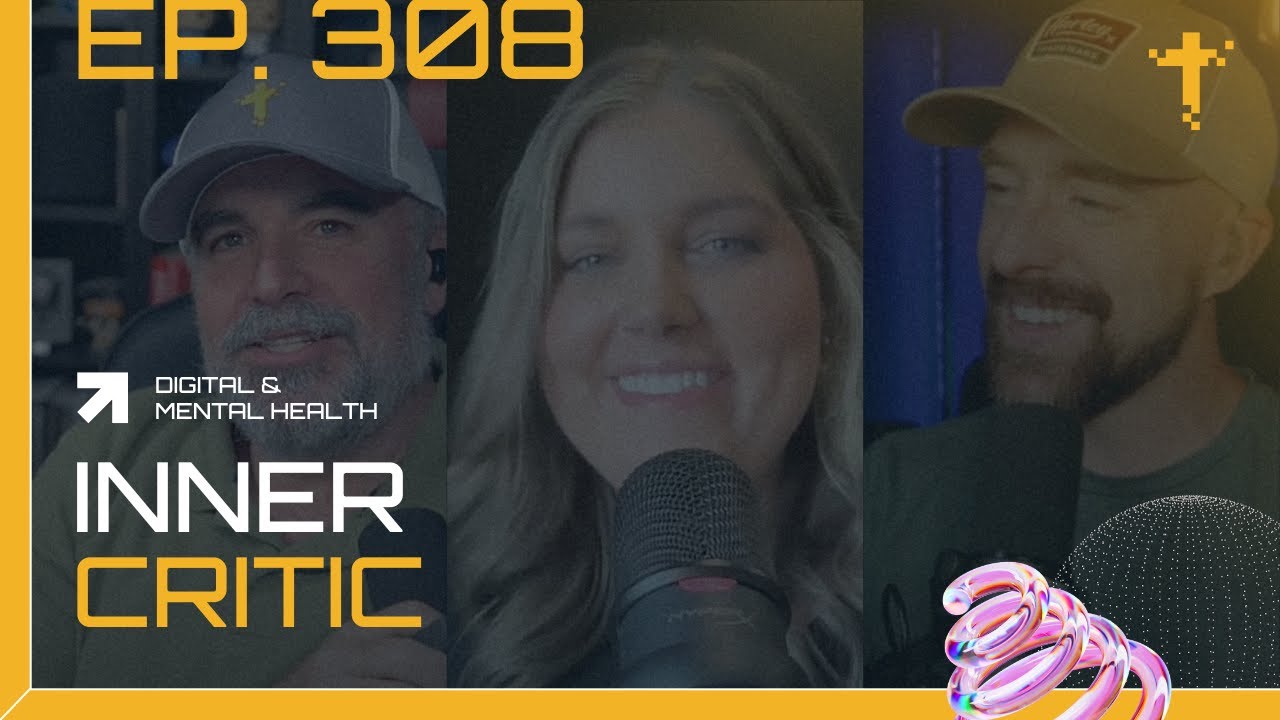
All right, hey, we are broadcasting live on Twitch, so now you're going to see me do a stall here for a minute or two while we're waiting for some people to come in. Uh, welcome to the Church Digital podcast. We've got episode—well, dang, I probably should have looked this up in advance—is it 308? It's 308. Um, you know, it's interesting. The guest is telling me what episode we're doing here on the podcast, and, um, well, he knows better than everybody else. We've got Andy Mage, uh, who has probably edited and produced what, Andy? Maybe 50 of these? Oh, since 37? Or since 271 is the last time I saw, so what is that, 40-ish? Almost 50? Yeah, yeah, almost 50. Almost 50 episodes, almost a year of the Church Digital podcast has been—God bless you, my friends, man. Um, you know, today we're talking about inner critic, and I hate the sound of my voice, and so we, and so, man, I pity anybody who hears my voice on a regular basis. And Andy, um, has done a great job over the years producing, and Meg Carter, uh, is jumping on the show as well. We're doing a season here on the Church Digital podcast focusing on, uh, digital and mental health. Um, you know, what are the mental health implications in digital ministry? How do we prepare ourselves digitally for dealing with people in mental health situations? How do we protect ourselves from being overwhelmed by some of these things? And so, um, you know, anytime I talk mental health, uh, Megan's my go-to, the guru. And so, um, as she's—she's the—she doesn't—her inner critic is giving her right now saying don't, don't, don't say that. Spirit going here, honest to God, somebody who really understands digital ministry as well as, um, you know, expanding into the mental health, uh, situation in that. Um, man, Megan's the go-to. Megan, forget the guest. Andy Mage, uh, we'll get to him in a little bit. Um, you know, tell us a little bit about like your background, your story, and how you ended up going down this mental health road.
··
Yeah, uh, let's see. I was born on a Thursday. No, I'm just kidding. Um, it was dark and cold. How far back is it going to be? A long show, Andy. You may have to cut a bunch. Sorry, over here. Yeah, no. A big part with mental health and my story goes back to my childhood, but growing up I dealt with anxiety. I later on, like in high school, I would say, dealt with depression, feelings, and going through that. And so that was not talked about. One, in our society, our culture, it was not talked about, especially in the church. And so that's a big driving point of why I've done what I've done. I've learned all that I can learn right now, and I'm continuing to grow in that so that I can help other people that feel like me, um, maybe felt like you can't be a good Christian, quote unquote, if you deal with mental health issues. Um, and I think today the inner critic is one that we're going to talk about, and it's something that I don't know a person who doesn't deal with this on some level. Um, and it can take you to a really dark place, and we want to work our ways out of that. And so having people that you can be beside—um, I know for me, having family around, having friends, having a counselor that's walked me through and helped me with this—so yes, I still struggle with the inner critic, um, and dealing with that, but it's a lot better. You have a lot better days than you have bad days. And so that's been like a driving force of learning as much as I can so that I can figure out how our mind works, um, so that I can help other people. And so now getting to sit across from people and counsel them and walk through some of these thoughts, some of these thought processes, has been such a blessing, um, to be able to be like, yeah, I know. I was there. I have been there. I still am there sometimes. And be able to sit that and just relate to people on that level. And I think that's an awesome thing with digital as well. We get to do that and be just real with people.
··
Yeah, you know, it's one of the things I love about working with Megan is she understands the digital ministry context and has, uh, she's with First Capital Christian, Tyler Sanson's church. We spend a lot of time talking about the First Capital and Church Anywhere. The original Church Anywhere—there have been other Church Anywhere that have popped up, thank you, co—but the original, uh, the Church Anywhere. So, uh, but super love what's happened there in the culture. We feel like we'd spend a lot of time talking. I think last week we talked about the culture at that church. And so love, love it, love it. And so, uh, here with the digital mental health season, we did, uh, an overview with DJ Chong, I think week one, and he's doing a lot of speaking on mental health. Week two, we did, um, John Pile. The John Pile—um, my gosh, I could just spend days just listening to that man talk. Um, you know, just like sit back, relax, um, uh, John, just open up a book. I don't—it doesn't matter what it could be—um, read me the preamble to the Constitution. It, let me just soak in everything that would come in. Like, it's just so I just love listening to him. And, uh, he's so, uh, genuine and so wise. Uh, honestly, like I don't know why you are listening to my podcast. He's got this podcast called Better on the Inside, and, um, like, to be honest, it is my go-to podcast right now. Um, I will, uh, and he's in between seasons, I think, um, but if I'm listening to anybody right now, uh, it's it's John Pile's Better on the Inside. So can I—I am blessed if you go listen to his podcast and go tell John I said hello, uh, because he is very wise, uh, in this, in just healthy, you know, I mean, there's—he also understands digital, uh, and doesn't necessarily lean. He talks about digital culture, not more, not as much digital ministry anymore, but just being healthy in this world we call 2024. Man, it's just crazy. And so, um, it's a great place to be. And now we've got week three, Andy May Page coming on. And Andy, uh, operations director of the Church Digital, director of community for the Church Digital, um, is, um, but Andy's operations with the Church Digital and works with Lux. Creative director for Lux? Am I getting that right?
··
Yep, creative pastor.
··
Creative pastor. Uh, hey, so tell us, tell us a little bit. You, some people may not know the full side of Andy Mage. Give us a little background.
··
Yeah, I, uh, like Jeff said, I am the operations guy, the community guy for the Church Digital, also the creative pastor for Lux. I've been a worship pastor for—I was a worship pastor for ten years. I was a digital pastor for five years in brick and mortar churches and, uh, got a crazy call from God to step out and do this whole digital church thing and, uh, started doing that in 2019. Uh, after having been in the worship and tech side for ten years. And then a little thing called the Corona virus 19, uh, COVID-19, happened, and, uh, the entire world kind of turned into digital for a little bit. And so we were well placed. At the church I was at, fell in love with all that, met Jeff actually before COVID, uh, a couple months prior to COVID. He and I started in a Bible study, which was kind of fun together. Um, and then kind of have just been riding the digital wave ever since. Uh, feel really, really called to digital ministry and kind of what, uh, what God is doing throughout the internet, uh, literally to the ends of the world. Uh, and feel super called to be doing what we're doing here today, talking to a bunch of people about mental health, yes, but also about kind of how we can live into these things. And part of what we do with Lux is we're, uh, Lux is a completely online church. Uh, we started—it was a church that was extensively started for gamers, but has turned into something completely different, and it's awesome and wonderful. And we get the chance to do the same thing: reach to the ends of the earth and spread the gospel. So just excited to, uh, able to do that today.
··
Yeah, very cool. If you've not checked out Lux, uh, gaming—Lux digital church, not Lux gaming church—digital church. Uh, certainly check that out. Lux digital church dot com. Um, you know, we talk about Mark a lot on the show, and he's been on as well. Good, good friend towards that. Hey, all right, so Megan, let me get you to set the stage because we're talking about inner critic. Uh, so maybe just even start off and help us by defining what exactly an inner critic—well, we're talking about when we say that.
··
Well, Megan Carter, making my life difficult. You got kicked out, but when you came back on, I thought you were good. Let me see, do you have any—the upper right-hand corner, you are not being recorded, Megan Carter. Jump out and come back in.
··
No, you—she's right. You are not. Oo, that would have been bad. That would have been bad. Hey, everybody on Twitch, we're going to soft shoe for just a minute. This is the fun part. My favorite part of this show right now is the everything is fine in the backdrop of your—right, like right now, it just—nobody can see that on the Riverside thing. So let me see if I can, uh—yeah, I don't think anytime Megan join—yeah, so behind me I have this like pixel thing, and it's just the—it's the everything is fine meme.
··
Megan, Megan's complicating things. All right, but now we're recording. Everything is fine. It's good. Megan, thank you for notifying, letting you know. I saw it, but I thought it was old information. Um, do I need to set the question again?
··
I think I did a good job. You can, uh—how's this fitting? Flat cap, flat cap. Thank you very. Flat cap. Great. With a party of 19, come on in here. Yeah, very cool. Love that. So talk to us, Megan. What, when we say inner critic, what do we mean?
··
Yeah, um, inner critic—inner critic is that voice that's in your head, um, that usually is telling you lies, um, but we like to believe it as truth. And I have a really good friend that she said this once, and it has stuck with me ever since. Our inner critic is actually—it should probably be called our inner bully. Um, when she said that, I was like, yes, that is exactly what I should call it from now on. Because when we say like something, someone's being like a critic, they evaluate, um, something that's happening, right? But typically, those thoughts in our mind aren't just being like healthy evaluations. They become very negative if we let it go down that path. And I think from the very beginning, they're—it's really our inner bully. Our inner critic is trying to tell us like, to protect us. Like, don't do this because you'll get hurt. Don't do this because this person's going to think this about you. We have those thoughts, which, yeah, that could be helpful if we realize, okay, this last part—the because you're going to do—have this—isn't always what's going to happen. And so that's where we have to realize what's true and then what's the lie. But we like, we fall into that lie a lot and believe those things. And if we keep telling ourselves and keep thinking those things, we believe it as like an actual truth. And that's when it becomes a big issue. And I think it's something that especially in this day and age—and I think Andy, you can speak a lot onto this.
··
Of in the digital world that that's something we deal with so much because we deal with comparison of other people we see their best pieces of their life and compare it to our worst and this is when that inner critic I think is the loudest and so I would love to hear from you just maybe an example or something in your own life that you've experienced that because it is something that we all deal with on some level.
··
Yeah, I uh, you're spot on there Megan. Uh, where I think it increases day by day by day uh in our world right now and I think you know we can talk about the evils and dangers of social media and all that but that has a lasting impact um part of the people that we minister to and we get a chance to talk to in Lux particularly and this is one of the reasons that I stepped out of brick and mortar physical ministry uh kind of hybrid ministry and into straight digital ministry was because that comparison game is crippling uh and you know I see it all the time with other people but for me personally and this is going to sound a little weird but um I'm a I'm a I'm a gamer I'm also like a nerd a hardcore nerd but I also have this like really fitness you I'm a marathoner um I used to own a CrossFit gym like all all sorts of stuff there uh and I'm also like really into tech and I can tell when my inner critic is really hammering me um I'm very good at compartmentalizing and when I compartmentalize things I start to evaluate my fitness plans and I start to uh look at tech and those like I can tell in my own journeys there's like a pathway I can follow where I see oh I was I stopped doing the running thing I was doing because I wanted to do this other thing because I thought I could get perfection here uh because my inner critic was beating me up about something and I can go through my journals and I can go through all of my um my quiet time stuff going back in history I always keep that stuff so I can look at it and kind of see my own patterns again nerd data driven heavily heavily idiot nerd tech person and the same thing too when a new piece of tech shows up that usually means my inner critic was hammering me and my wife knows it like she's really good at uh yeah I know the cam looks blurry it's uh part of Riverside it's not it's everything's recording on the other side sorry flat cap just posted in chat hey your cam looks blurry everything's recording at 1080p but the way we're broadcasting the way we're multistreaming so thanks for that flat cap um anyway Megan all that to say it's it's one of those things that shows up in my outflows in really weird and kind of nonsensical ways I think that the weird part like we all have these different moments and I know for me one of the things that may seem weird to a lot of people but it's like you're going through the drive-thru and they hand you your coffee or your drink and they're like enjoy your drink and you're like yeah you too and I'm like I can never go back here because that's that's where my mind goes idiot I'm like nope I can never show my face because they're going to remember that I said something really stupid as I was driving off now is that true no but that's it's kind of a funny way of looking like that's how our inner critic works and sometimes it's a much deeper level than that like obviously that one I can usually let go but it's a deeper level um so it's it's one of those things that it can be really strange and weird um and unexpected whenever they happen and so do you remember or maybe just like a moment that you've talked to somebody else where that an inner critic popped up like unexpectedly.
··
Oh goodness gracious yes um being a worship pastor uh I would have to interface and interact with a lot of people all the time and I remember specifically um so my wife um this is going to be a weird story so just hang on with me here so I was working in New Jersey at a church uh and I ended up getting approached I I never remember applying for the job but uh I got approached by a church in the Atlanta area uh to come be the worship pastor there and so I I essentially was like okay whatever prayed through it went down interviewed did the whole thing that they gave they offered me the job I accepted the job and moved down one of the guys that was on the hiring committee was this guy named Paul uh Paul was like a 60ish year old dude born in Savannah Georgia just Mr. Gentile Southern just nicest dude ever um and I and then his wife Diane who she was mid 60s as well um and so I met them hung out with them for a little bit and after I got off stage I saw this like beautiful woman walk by just like drop dead gorgeous woman and I was like walking up the stairs to the tech booth and I did one of those like where my body kept going but my head turned like I don't know if you know what I mean like your body keeps going but your head turns and you just keep like walking and so I was like calling following her with my eyes and it was like man I need to see who that is but she left and so I walked up to the tech booth whatever a couple days later Paul comes walking into my office with his wife Diane and says hey Paul or hey Andy I want you to meet my daughter I was like oh wow Paul you have a daughter and the woman that pokes her head around the door is that beautiful woman that I had seen and and the first thing the first thing I said was you now now she didn't know what I meant I knew what I meant nobody else knew what I meant Paul and Diane did not know what I meant the the look on their faces is like this idiot we had just hired this idiot uh this guy's the one that's leading us on stage uh and so long story short that woman's now my wife 10 almost 11 years later uh yeah and so my wife uh Paul and Diane hold to the fact that God told them to hire me so that I would marry their daughter Jenna uh but but yeah just me going you like it was her fault like I was the monkey pointing from Family Guy or something that's what that and then and so I went home that night and I was just like you you're a freaking idiot like what are you doing she was gorgeous it's like you had never spoken to a woman in your life and you're just gonna and so I I ended up running a bunch of extra miles that night because I was just ticked at myself okay so let me ask at what point did you tell uh your wife that story how long did did it take oh no she was there uh she so she was coming down the hall under she knew that you you were you were you were staring she felt it yeah uh she and because she had so the way she tells it is that I she saw me walking up the stairs and she was doing kind of the same thing now she had her children with her she had been married she's got kids previous to me and so she had two children you know hand in hand and one walking behind her and so she was she said she was doing the same thing with her eyes and then but she had to like turn her head and so then I did the whole thing and so later the couple days later she came I I guess I don't know what happened like I I could have been a divinely inspired thing who knows but yeah like that was that's how we met and like till this day we tell that story and it's just like yeah I was I was the idiot that said you and she's like yeah I was the idiot that married a 30-year-old with uh that had never been married before and so yeah creeper yeah yeah I'm gonna have to cut this out oh man Megan for me inner critic is um it when I'm when I'm reliving a situation um when I'm when I'm about to do something I I'll relive a situation where I failed at that before or I did something stupid um like I I'll literally or even just like I'll be walking around and um I'll I I was talking about just out loud I'll like moan or I'll grunt I'll say I literally I'll say like dang it or you know for no reason whatsoever and and my my wife looks at me or you know the kids like what's wrong dad I was like nothing just just reliving some incident from 15 years ago that has nothing to do with right now uh but it is just in my head to to make me feel this big and just to to to squash me that that that I I can't do something and so um you know that that's the that's my walking example I don't know that I've got the huge story like like our friend Andy but that's that's what I got I I don't want that story no I've I've got I've got some of those stories but but that's in other context for a different day no I I mean I relate to the stories because I mean we've all been there in different situations right we've all looked at our past and been like man I wish I could have done that differently but then we dwell on it we let it like linger um in a whole let turn it a little bit go to one of I'll share with one of my like times that maybe derailed me um maybe the one of the biggest lies that my inner critic has told me um was you know I was talking before I've dealt with anxiety and that kind of stuff since I was younger and one of my biggest it deals with which I grew up in late 90s early 2000s it was not a great place for a female to grow up when your role models were stick figures basically and um that's what you were trying to live up to when God did not design you to look like that that can be really hard and so that was a huge one for me that I was like well I didn't look like these people that were supposed to look like um I already feel you know you're growing up you feel weird in your body like all these different things so my image like my self-image that I had was really really negative and one of the biggest lies that I believed for a long time um sorry this one's a hard it's hard but it's true and I know that it helps people but um I believe that like God messed up when he made me like he missed something when he was putting me together and I think that a lot of people deal with that and and struggle with that feeling because something feels off something feels wrong being in my childhood growing up and feeling awkward and then feeling like God messed up when he made me um that has been the biggest lie that I had believed for so long it took me until I had people around me it took me until I went to a counselor um for the first time to ever say that and that was about three years ago out loud um so for I don't know 15 20 years of my life it felt like I was uh just holding that in which is not healthy so if you feel that way please talk to somebody um I always throw that in but it's yeah it's one of those things that when you believe your inner critic that lie for so long it's a really hard thing just to like flip the switch and be like oh okay you got it that's that's not true um it it takes some time it it takes takes work on your half like your part to get there um takes people around you but I think that the biggest thing if you can just recognize that like okay it is a lie even though it's really hard to just come out of it um that's a first stepping stone the for me it was like that right there so I I am uh I'm going to bring the enneagram into this which is whatever but I'm an enneagram three uh so I'm a three and a six three's there's a healthy and a whatever it's it's stupid if you've never studied enneagram then don't don't because you're going to get lost but uh the threes are performers threes are uh we like to be in front of people we like to present ourselves and so a healthy three is great a healthy three is uh I think it's great because I'm a three uh but a healthy three is very much um a bolstering presence can really propel a project can be a leader can do all these things an unhealthy three moves to a stressed out six and a stressed out six uh is very much a um uh they listen to the inner critic they're getting beaten down all the time they're trying to constantly work harder and harder and harder to to put the mask on to make sure that people see perfection or else if they see any crumbling then uh they're going to realize that I'm as uh unconfident
··
And um, inferior in my own head as I'm portraying and all those other things. And so, um, I actually back in 2019, there's I've struggled with that for my entire life. Like, I am, I'm a basket case when it comes to all that. Uh, always have been. And I just thought it was like, yeah, that's me. I'm just gonna have to deal with it. It's one of the reasons that I fell into a whole lot of addictive substances like cocaine and marijuana and all sorts of stuff is because, uh, anytime I was high, I didn't have to worry about any of that. It just, I was hanging out with friends. We were all kind of, you know, blasted out of our minds, and I didn't have to think about how bad I actually was.
··
Well, uh, I back in like 2018, 2019, there's this guy. Um, his name's Ryan O'Neal, but he goes by the moniker Sleeping at Last. He's a, um, he's a brilliant musician. Uh, you've, if you've ever listened to Grey's Anatomy or ever watched Grey's Anatomy or any one of those shows, those ABC shows, you've heard some sort of Sleeping at Last song. He, uh, he does all these orchestral things. Anyway, he's also a Christian, um, and he decided back in like 2018 he was going to write this suite based on all nine enneagram numbers, and he put this album out in like 2019. I remember listening to it the first time. I hadn't really been through much counseling at the time. I had, my mom had passed away, and I had started seeing a counselor because of that. And we kind of started getting stuff, and then I got some, I got scared and I ran away, and then just didn't see it.
··
And I specifically remember putting this album on, and it was a week where we had just moved to Florida, um, from Atlanta. I had moved, uh, I had thought I had made the complete wrong choice moving my family down to Tampa, and I was just getting the absolute snot kicked out of me by my inner critic. Hey, you're never gonna, like, what are you doing here at this big mega church? You don't belong here. Uh, you're getting paid to like surf the internet all day. You're an idiot. You're never going to be able to do these things. This is so much, uh, this is so much out of your wheelhouse. You've been a musician. You're not doing any music now, et cetera. Just over and over and over.
··
Listen to this album, and he literally on the song three, and I've got the lyrics pulled up, like, like I'm thinking about getting these like tattooed on the inside of my arm. Uh, the lyrics are, "Maybe I've done enough. As your golden child grew up, maybe this trophy isn't real love. And without, or, or with or without it, I'm good enough. Maybe I've done enough. Finally catching up for the first time, I see an image of my brokenness, utterly worthy of love. Maybe I've done enough." And so it builds and builds and builds and builds and builds. And then at towards the very end, he says, "And finally I see myself unabridged and overwhelmed, a mess of a story I'm ashamed to tell, but I'm slowly learning how to break this spell. And finally I see myself."
··
And I remember, uh, and the song is just beautiful. Oh, it's just like this, like, bone-chilling thing. And I was sitting in the van with my, like, my wife, and I were coming home from Costco. And for whatever reason, I just, this is emblazoned in my head. I was listening to the song. We're at this stoplight. I'm turning left out of Costco, and I am listening, and I am a wreck. Like, I am just like having a breakdown in the middle of the freaking road. And my wife's like, "Do I need to drive? Like, what's going on? Are you dying? Like, are you sick?" Are you all those things? It's like, no, you just, this. And I couldn't even, it was like ugly crying.
··
So finally, we went, got going, and I pulled over into the parking lot of a Publix. And it was the, it was like the first time I had been like super honest with my wife. We had only been like married five or six years at that point. It was the first time I was super honest with her, and I said, like, "Hey, I need help. Like, this is, you have no idea what's going on in my head. I need help." And I got a counselor shortly thereafter, and that dude, I still see him like every, every month. I still see him. It was like every week, and now we're down to once a month.
··
Uh, only telling that story because, like, hey, if you're struggling with that stuff, go talk to somebody, please, because that it will overtake you, and it will ruin your life.
··
It's interesting how the inner critic stuff is, it's all tied around you're not good enough. I mean, like, I mean, obviously we're criticizing ourselves or something within us as being critical of that, but it's that perception. Like, I'm even thinking of stuff in my life and in that. And, um, you know, I mean, I was obsessed with football in high school, and it went back to my, uh, my football coach, my seventh grade year, telling me, "You suck, Reed. You're never going to amount to anything." And, um, and letting that just be the fuel that literally, I mean, I know that guy is actually in jail right now. Uh, but that actually, I'm not at all saying that makes me, you know, bitter and like take that coach. Uh, but I mean, there is there's a little bit of truth in that. It's like that, that becomes the, uh, the inner critic becomes the fuel that drives us at a healthy or unhealthy level, or becomes a thing that cripples us at an unhealthy level. And so how that balance outs is interesting to me.
··
So yeah, I did a survey a couple years ago, I think, with people online, and had three simple questions about the inner critic and just saying, like, you know, how does it affect you? What, like, environmental factors, you know, even play into it? People, those kind of things. And it was anonymous, and I think I had like 23 people respond. And I remember sitting in my office and just crying, like, reading through people's responses and like what they believed about themselves. And I found it really interesting that it seemed like there was almost like two camps of it. You had the camp of, like, it's all inward. So it's like how you feel about yourself, um, what you think like you're capable of, you're worth, all of that. And then the other one was how other people view you. So it's outward. So it's how you're feeling that other people are perceiving you, um, which I thought was really interesting that it kind of fell in one of those areas.
··
Like, diving down deep, is it an inner, like you're feeling this about yourself, or is it something you're feeling about how other people perceive you? Which I think that goes back to your enneagram. Like, yours is very much a perceived where mine, I'm a perfectionist, I'm a one, so it's very much inner.
··
Yeah, so this whole like tech issue is like throwing, there's like inner critic here. Let's throw this into the podcast here.
··
No, but I think it's one of those things that a lot of people want to say that it can be, like, we can just silence it. We can, you know, let go and let God, just, you know, pray about it harder. I hate these phrases, um, but all those things. And I don't know that it can fully be silenced because we're human, right? But what are some things we can do to manage it? Like, what are some things you found maybe in your own life? Because everybody's going to experience it differently and find ways that manage it best in their own life. But what are some things that you've seen that can help you or have helped you in the past that maybe can help somebody else?
··
Yeah, uh, I have I have two big things that I do now. So, uh, I read this book, um, by John Acuff. I don't know if you guys know John Acuff, the Christian guy. He wrote a book, uh, back in maybe 2019, 2020, right around there, right when I was like kind of really getting hammered on this inner critic stuff. And it was a book called Soundtracks, and it's all about the, it's a loose metaphor, but it's all about the soundtracks that are playing in your life. And he said, uh, in there, he's very much like me. He's very much a three. He comes from that very performative, uh, background and has that performative mentality. And he said you need to name your inner critic. And I was like, "What? What do you mean?"
··
Uh, and so I started getting a list together, uh, of anytime the inner critic would say something to me. I had this little, this little journal next to me, and I'd just write down a name, whatever the first name that I heard, um, and so, and then I whittled it down, and I got it down to two names. I got it down to Todd, and I threw Todd away because, like, "Shut up, Todd." Like, that just seemed like a, that seemed like a funny thing to me. Uh, but the other, the other name I chose, we, and this I know we're Christians, uh, but, um, I started calling him Joffrey, as King Joffrey from Game of Thrones.
··
Yeah, uh, because Joffrey was a little crap bag, and, uh, he eventually, spoiler, he dies, thankfully. Uh, but he's a real, real bad person. And so I started calling him Joffrey. And so anytime now, and it's still like, I'm still plagued with it all the time, and I get into really bad seasons. Uh, and, um, I, anytime I'm, you know, medication and stuff like that is all over the place. Like, I, uh, also, by the way, talking to my counselor, I got on medication, which super helped. I'm on a little pill called Lexapro, and let me tell you, that changed a whole lot of things for me. But, um, anytime I feel Joffrey kind of creeping up, it's just like, "Shut up, Joffrey. Go sit in the corner, Joffrey. Uh, go, you know, go ram a dragon's head into a wall, Joffrey." Stuff like that. And I'll tell him to shut up there.
··
So that's number one. Number two, uh, I have carried with me from the first season of Ted Lasso, uh, I have carried the phrase that Ted Lasso runs around with, "Be a goldfish." Uh, I have carried that with me in my back pocket. I know I'm a Christian. I'm a pastor. I'm supposed to have like biblical phrases and stuff, and I do, but those are the, those are the quick ones that come out. Uh, it's the "Be a goldfish." If somebody says something about you, because they're going to, uh, if somebody, like, if you say something and you get that moment where you're like, you know, "Megan, you're doing the whole like, 'Have a good day. You too.'" If you do that thing, like, be a goldfish. You just gotta move on. You just gotta, like, I got too much else to worry about. Uh, I got too much else to be beat up about. I can't be beat up about that. So those are my two.
··
Yeah, that's awesome. I, I love that phrase too.
··
Yeah, be a goldfish. Be a goldfish. Absolutely. That was actually on Who Wants to Be a Millionaire this season. The "Be a goldfish."
··
Yeah, it was one of the, like, you know, under ten, under a thousand dollar questions. Like, "What phrase did Ted Lasso say all the time?" And it was like, "Be a goldfish," and one was like, "Be a leopard," and one was like, "Be a, uh, fruit fly." Fruit fly was hard for a second. I was like, "Fruit fly? No, it's not," because, you know, fruit fly lives for like two seconds and dies. That's not really the point. But go goldfish. Stuck with that. That was good.
··
Huh. I think I'm gonna go biblical because obviously I'm over here. Some somebody's got to redeem this podcast.
··
This is your job.
··
No, I think that those things are so epic to people. And so, but one thing that I always run and filter all my thoughts through, or at least I try to when I can, is the Philippians 4:8-9. Uh, you know, it's "Whatever is true, whatever is noble, um, authentic, compelling, gracious, uh, think upon these things." And I love how the Message says it. It says, "Not the worst, the beautiful. Not the ugly, the praise." And I just, I think that's so cool. And it's like, okay, if I can filter it through that, I start to see, mm, maybe that inner critic isn't so truthful, so honest to what's really happening around me.
··
So I think that's been a big one that I try to filter that through now. If I'm on stage hosting and telling people all these things, my inner critic is having a whole monologue in my voice, and that's really hard at that moment to be like, "Hold, please, let me filter this through." But finding time afterwards and be like, "Okay, that monologue is not, is not true. Is not what, what..."
··
You know, even God says about me—it's not what my husband says about me, it's not what my kids say. And that was one of the exercises that I absolutely hated to do in counseling. My counselor said, "Okay, go home and write on this card: what do you see when you look in a mirror?" And I was like, "Oh no, nope, no, don't do that." But I did it because I'm a rule follower. But then it went on to like, "Well, what does your husband see? What do your kids see? You know, what does God see?" That's what it all boiled down to. And so I think when you can start to see yourself the way God sees you, that can start to change the way your inner critic talks to you or says things about you. So that's been like the biggest game changer. And then obviously, like podcasts and books and all that—finding I love to learn about the brain. So as I continue learning about that, that's helped a lot too.
··
Yeah, of course. All right, so let me ask this question: do you silence the inner critic, or does the inner critic's words no longer have impact? Like, do you ever actually get Joffrey to shut up, or do you just, you know, ignore him and stick him in the corner?
··
I don't think he ever shuts up. And I think that's, at least for me, for my personality style, I never get Joffrey to shut up. I learn how to, again, compartmentalize and put him into a proper corner most of the time. My problem is that it's a very will and energy-based system for me. And when I'm running low—if you're part of our Discord, you see I routinely will post the meme of the dude dumping a whole pot of coffee on his face in the bathtub. Routinely I get like four or five hours of sleep, and I'm very tired most of the time. And so Joffrey most of the time has a field day when that's happening. And so that's when I have to really lean biblical and start to actually go, "Oh yeah, by the way, I am. Think on these things. Think on the true and the good and the wise and the mighty thing." Like, yeah, Joffrey never shuts up though for me. And I don't know, Megan, maybe he does for you, but or whatever your little Todd is called or whatever. But no, he never shuts up for me.
··
I don't know anyone that it completely just silences and shuts off. If you figure it out, please let me know, because I would love to make that happen. But I think it's really just figuring out what is true, what do I believe, what do I kind of use as maybe a warning signal—like, "Hey, I noticed that this is happening and I know where it leads." Things like that. And I think it's hard for me to just let it go, too—just not acknowledge it and be like, "Oh yeah, okay, I'm thinking that, no, just move on with my life." No, because if I don't deal with it, if I don't even just say it out loud or walk through that feeling, the thought, that emotion, and then I don't—it's just going to bottle up and it's going to be pressed down and pressed down and pressed down.
··
I heard this example the other day, and I've used it with so many people, and I was like, "This is perfect." But if you think of like a bottle of soda—so let's say a Coke. Like, you have a bottle of soda. You can see the Coke in there. Each moment in your life, so each thought is like you're shaking the bottle just a little bit. And so you shake it, and like a really big thought that can really disrupt your life—shake it a little bit more—until you get that ring of foam around the top, you know, before you open it. So if you open that right away, it's going to just explode all over, right? It's going to go everywhere and become a complete mess. And I think our inner critic and our emotions can feel like that sometimes. If we just keep pressing them down, it activates them and it brings a pressure. But if we can just give some time and then open it slowly, you have that little like sizzle that comes out. And that's what we kind of have to be able to do with those thoughts—let it sizzle just a little bit, give it some time. And then you're able to like fully process it, and it doesn't become a complete mess over like the worst possible place, because that's what's going to happen if you don't try to deal with it at some point in your life.
··
Quote of the podcast is "Let it sizzle," by the way.
··
Let it sizzle. Yeah, let it let it sizzle. I was trying to do that short. I didn't want to do the whole thing. Yeah, I've used that in counseling, and I'm like, I would bring a bottle in, but I don't want it all over my office.
··
Smart. Yeah, smart. Ants do that. Yeah, I would not be good at all.
··
How often, Megan—I don't know if you can answer this, and I don't want stories, I don't want to violate anything—but I would imagine inner critic is a constant rhythm with people that you're counseling. Like, it seems to be like everything could almost boil back down to that. Am I reading that correctly?
··
Yeah, it becomes sometimes part of our identity, who we are. And sometimes it's easier to not deal with it and process because it's almost like you have that comfort blanket and you just carry it around with you. And like, that's how you don't know what life is like without having that. And that's scary. That can be a very scary thing. And so the thought of walking into something, or you know, walking into counseling, walking into those emotions, those feelings, those thoughts, can become really scary. And so it's a thing that I, again, I don't know a person who doesn't deal with it on some level. And they may not name it that, but it's there for sure.
··
Yeah, you know, I don't think I've ever told the story, but you just saying that was like, "Okay, let me tell this." So 2020, COVID's happening, right? And there was actually—we're going to meet Mindy in a little bit. Mindy Cagu, she's going to be on a future show. Oh, awesome. Mindy, incredible, soulcare.com. She reached out. Now, she's not—she's more spiritual direction than actual counseling, and her organization does more of that type of thing. But she says, "Jeff, you know, you've been doing great work online helping all these churches." We were friends. And she's like, "Why don't we give you, you know, five free sessions through soulcare.com with a counselor? You know, meet online on Zoom and just, you know, do it for free, just to, you know, make sure that you're processing all this well." And we did. I did five sessions. It was actually four sessions, because by the time we got midway through the fourth one, the counselor had backed me up into the corner where it was like, "Okay, if I rip that Band-Aid off, if I address the thing that you want me to address right now, I'm not going to be the person coming out of this that I need to be in COVID, because I just—I was using just my confession hour. I was using my critic as the, you know, fuel guy in my life. And it was like, 'Well, I'm going to do it despite you.' And he was trying to repair that. And honestly, I'm like, 'I don't, I don't need that. I need to be able to work twenty-plus hours a night. I need to almost be unhealthy in the season.' And he made me promise, 'Well, Jeff, you're gonna have to get this addressed.' And okay, yeah, I'll come back. I'll come back. I'll come back. And they would check in every once in a while, you know, for more sessions. You know, would you like to talk some more about this, finish up? No, I'm too busy. No, I'm too busy. No. And I ignored. I ignored coming back. And in many ways, the crap that I went through in '23, the crash that I had three years later, was tied into the fact that I never really addressed the thing that I knew was there. It was lingering. I just ignored it and ignored dealing with it until it became part of this really big mess of crapola that exploded, and that I was forced to deal with kind of in real time, second half of last year.
··
And so, you know, ignoring it seems like for me, ignoring it seemed to be like, "Oh, that's the answer. Let me just get past this and just, you know, stick Todd in the corner. Bad Todd. Todd. Stupid Todd. Shut up, Todd." Oh my gosh. But by doing that, I actually gave Todd more power.
··
It's interesting. And I don't know if you realize this, but I guess early this year, I said to you—I was on a Zoom call with you, and this is—I was on all these meds. My health was not good. Like, every aspect of my life was off-kilter by some degree. And so I grabbed Andy in a meeting, and I was like, "Andy, I just want you to know, like, I just need to tell you, like, I'm depressed right now." And I was like, "I don't—I'm trying to, in my mind, it was like, I'm trying to figure out if it's the medicine, if it's the situation, if it's like, why am I depressed?" Like, I found myself for weeks trying to figure out and to solve this equation on its own, to for me to justify so I could put Todd back in the corner and justify Todd being there. And just even putting words on it and saying, "Hey, Andy, I'm depressed right now." If I'm honest, seventy to eighty percent of the power of depression left in my situation by just telling Andy that. By getting it out there. Now, Andy told me something back, and I don't—I mean, it was nice, it was inspiring, it was pastoral, it was powerful. But it was not seventy to eighty percent of depression's power being removed. Like, Andy's words didn't have those words in that two-second sound bite. It was really—it was just getting it out there, removing the stigma, which removed the power from it, at least in my story. And so I appreciate Andy's helpfulness in that.
··
You're welcome.
··
And then, but more than that, like, don't stick him in the corner. Like, get them out while you can, while you have the power of the situation, instead of giving more power to him.
··
Yeah, or her. Yeah, or yeah, them, that person, that idiot. I will say, the getting rid of—so I've told—I've been pretty open with everybody about this, but I've again, on medication. The medication for me is there's a legitimate—one of the things we figured out during my counseling stuff was that my inner critic, what my addictiveness, my addictive personality, is—it led down some pretty dark roads. And the reason that I'm taking—my dogs are barking right now—the reason that I'm taking Lexapro is because what it does is it actually helps focus those things. It helps focus away the Joffrey and the Todds and actually helps me focus a little bit more on staying, even staying focused, staying with it and together. I first told my counselor, "I don't want this as a crutch." And he said, "No, it's not a crutch. When it's a legit thing," he said, "A lot of times people use medication as crutches, but if you have an addictive personality and you are literally—you had a lot of years with substances inside of you, literally chemicals that were altering your brain, he said medication a lot of times will help you to rewire your brain. And I'm not going to be on it forever, but I do anticipate being on it for a little bit longer. And I will tell you what—like, it's—I can tell the days when I miss one. Not just with depression, all that, but like my critic, the anxiety that comes with Joffrey trying to tell me that I'm an idiot, and then I'm too short and I'm too bald and my beard is too gross and I'm never gonna be fast and I'm never going to be a good pastor and I'm never going to be a good dad. Like, that ramps up considerably.
··
It's amazing all the different opportunities that we have, like through counselors, through medicine, through family, friends, loved ones, like being able to come at this from different angles, because every—
··
person is going to be able to handle it differently and be able to manage their inner critic, their own mental health differently. And for some people, like you said, like medicine is wonderful, and for some people it doesn't work as well. So unfortunately it's a little bit of a trial and error to find what the right thing is. But once you find that, it's so freeing and it gives you so much more to be able to manage. It's one of those things that like for me, I know I will deal with anxiety my entire life. It, I mean, I'm not putting God in a box. He could just say he'll heal it and take it away, but he hasn't. And I'm, it's going to sound weird, I'm kind of grateful he hasn't because yeah, I don't like the times that it's really hard to get through different pieces of life or get through different thoughts that my inner critic tells me. But to be able to get to where I am, I wouldn't be like, I wouldn't have went through all the training. I wouldn't have went through the different programs to learn so that I can in turn help other people if I would have just been healed and like it been taken away. I wouldn't be doing this because I wouldn't have had the passion to be able to help other people. And so that's been just such a driving force to help. And then I think through of like when I'm sitting across from people, I always think of, okay, what would, because I've been in that situation, I've been sitting on the other side of my desk basically, and I'm like, what would I tell my younger self? What would I tell myself? Because that's who I'm sitting across from is myself before I was able to manage this so much better. And I know my biggest one is I want them to know, and I would tell, I wish I could go back and tell my younger self like, you're not alone. You're not the only person dealing with this. Because our inner critic loves to tell us that. Our inner critic loves to say, you're the only one who thinks this way. You're the only one who feels this way. And especially when you're doing ministry or ministry through, you know, digital spaces, you're the only one that's dealing with this because you see all the other things that are happening. Like everybody else is living this wonderful life and has all these things. So that's probably one of the biggest things I wish I could just go back and tell my younger self. But now I get to tell other people that they're not alone. Do you guys think of anything that that you would love to be able to tell your younger self or maybe other people listening who are struggling with this right now?
··
I mean, I would say stop caring. And if I could go back and sit with myself, I would say stop caring. I'm a pastor and so I like to tell stories. One of the stories that I would relate to this is, um, we had a greyhound. I've always loved greyhounds. I think they're like the best dogs. And if you're not from Florida, you might not know what greyhounds go through down here. But they have literal dog tracks where they take greyhounds in. They're born into captivity and then they're essentially given a small concrete cell to live in. And they're let out a couple of times a day to sprint at a thing that looks like a rabbit and they chase them. And then that's what they do for training. And then they go back into that cage and then they sit there. And they're usually, it's pretty bad conditions usually. And then occasionally about once a week they get taken out into the dog park. And then they come from the dog park into the dog track. They get put into these traps. The traps open. There's eight or ten other dogs around them. And then they run at this thing and people bet on them. That's just, that's dog track racing. It's different than horse racing. The horses are treated very well. Dogs are treated very poorly. The thing then that happens when they get like a year or two old is that they're quote unquote past their prime. And so then they go into retirement. And if they aren't, if you don't find a home for the dog, then they're ultimately put down. We had a dog, a greyhound, loved her. She was great. She had some mental issues obviously from being beaten and all those other things, but loved her. She was awesome. One thing that would happen when we had her, however, is that she never, she could never forget how to not chase the thing. And so when she would see, we had to, we had to, you know, dogs, you can usually put on the ten or twelve foot leads. You can put on a six foot lead. They have special leads for greyhounds because they're so fast and so agile and so strong that if they get up, they get up to top speed like that. And so if you give her even a six foot lead, a leash, she'll snap her neck and she'll die. And so she saw the raccoon while we were out walking. She would like want to do the thing. And for so long when we had her, it was I wanted to say, Ella, you need to forget the thing. Like you, you are in such a better place. Like what, why are you, why are you still chasing the thing? Like you have everything you never will need that squirrel. You will never, you, you have a big bed. You've got a home. You've got people that love you. We taught you how to walk up and downstairs because she didn't know how to walk up and downstairs. Like we've taught you all these things. How do you not see that? And always still wanted that squirrel. And I would tell my, I would tell my younger self that same thing. Hey, you need to be like the greyhound and you just need to understand that like that's, that's not the thing that that Joffrey, that's going to chase you down about that one small little thing. Forget about it. Stop caring about it. You don't need that anymore. Forget the squirrel. Forget the squirrel, man. Was it Rocky? Is Rocky the squirrel in Bullwinkle? Rocky, Rocky Raccoon? Rocky a raccoon? Yeah, raccoon. Yep. Mouse, moose, squirrel? No, it is, it is. You're right. It is moose and squirrel. Rocky, it's a raccoon. Rocky is, is, okay, all right. So forget Rocky. Yeah. Get that tattoo. No Rocky. I'm looking at Rocky. He's an idiot. He looks like an idiot. I forgot that. Got that big buck teeth. Yeah, yeah, yeah. That's that's my take on the situation.
··
Nice. Um, yeah, I, I don't have a good story like that. And I living in Florida, I've never been to a dog track. I, I, I seconded everything he just said. But I do, um, I gave too much power to the opinion of, of, um, of Todd, of, um, of Rocky, of, of those around me. Like I, I just, I, I lowered too much of that, um, in, in my, in my over my years. So that's probably some of the weight that I'm, I'm carried or have carried literally for me over the years. But um, and I don't know that I'm better now. I mean, I'm still, I'm still carrying some of that, that baggage. But processing through it. But I, I think I've learned over the years to, um, stick him in the corner a little bit more and, and, um, and discredit them, uh, where necessary. You know, when, when, um, Coach tells me you suck, Reed, you never amount to anything, I, I throw back at him the things that I've done and that I've got kids who love me and, and, and a wife and, um, and a happy marriage and, um, and I love God and you know, the things in my life that that maybe counterbalance what, um, and you know, the coach was more alluding to the fact that you know, I, I was falling off my blocks, uh, being an offensive lineman and, um, you know, saying that to a seventh grader may not be the wisest choice in the history of mankind. But, uh, that being said, you know, I still hear that coach's voice in my head every once in a while. Yeah, it's hard to just completely forget about those type of things. And it made me think of, um, kind of flipping it just a little bit with how we think of a lot of these negative pieces of, you know, we're not good enough, we're not all this. But then I think in the Christian realm, um, we've been told so much to not be prideful, which that can hit. But also like, it's you start to feel guilty for being like, oh, I've done this, I've, I've done this, this and this. And like, yeah, I should be a little bit proud about the, like, yes, keep it like humble. But to do a like actual evaluation of your life of what you've done and being able to say those things. I remember I was sitting, um, with Stacy. We were sitting having dinner and we were talking and I was like, yeah, so cool, like we've got to do all these things with church and the ministries and and all this stuff. And then I sat, my inner critic was going, stop bragging, stop, stop, stop saying those things. And I was like, I literally stopped and I was like, I'm, I'm so sorry. I'm talking about myself so much or, or, you know, I, I feel like I'm bragging. And she's like, no, like these are great accomplishments that you guys are doing. And I was like, yeah, they are. And so there there's a big balance because you can go to extreme in either side. So finding that balance of being able to be proud of what you've done, um, going back just a little bit to my story of where I felt like I was made wrong and and messed up when I was made. And, um, the moment that changed was when I could look in the mirror and I could say, I'm proud of who I'm becoming. And that was the first time I had ever said I was proud like of myself. So being able to look at myself and being like, yeah, I'm proud of who I'm becoming. So it's first off being proud because I know God created me the way he did. And and being proud of the things that I have done. But then of who I'm becoming, it means I'm not where I want to be. Like I have a goal. Like I want to get to a certain place. I want to be able to do certain things. But being able to be content with who I am right now in this moment. And I think that is a big piece that helps silence that inner critic of just that being content with what you have and and who you're around and what you're doing, even if it's not where you want to be, even if it's not like you want to achieve all these different things. You might get there. You can get there. But to be able to be content with where you are is a huge piece. And I mean, we see it in Scripture that we're supposed to be content with where we are.
··
Wow. I was not expecting to go humility route to to land the show. But, um, no, I think that's a good point. It's, it's be, be, be content with that. You know, the, the inner critic, um, almost leans towards pride, right? I mean, that's, that's the, that's the reverse side of that. To be able to say that, that the inner critic is calling attention to what you, you, you, you think you deserve, what you think you want, but you haven't been able to achieve. And being, being content with where you are and how life has gone for you and how God has gifted you. Um, I mean, that brings the peace. I'm, I'm hearing that, that may be where we're looking for.
··
Wow. Yeah. Megan Carter landing the plane. Well, dropping it. Wow. I, I got to tell you that, that I'm literally I'm like, how the garbage are we going to land this show? And she just, she just nailed it. Like that's, that's a nine point seven. Some, some French judge is holding up a sign right now. We just got through the Meg very well played, Megan. Just gold. Yeah. Look at me. And I just gave Todd a sign to hold up to say nine point seven. So even Todd's approving of, of the, I approve of this message. Okay, so good. Um, hey, as we're wrapping up, Andy, uh, any closing thoughts?
··
No, this is great. I mean, obviously just for me, naming the inner critic has been huge. And I just, I encourage you to have a little notepad. Anytime you feel those things and, uh, jot down that person that comes to your head immediately. Is it Karen? Is it Joffrey? Is it Todd? Is it Chad? Is it, you know, some of those names? I, I don't mean to offend if your name is Todd or Karen or Joffrey. Uh, you know, whatever name it is, write it down and then start to put that person in the corner and realize
··
That they are not who you are. That is not who your identity is. Your identity is wrapped up in Christ, not in Todd or Joffrey or Karen. If your name is Karen, I'm sorry. I'm sorry. I, it's in the year 2024. Andy Church Digital. Yes, normally I'm like, actually, that will go through. It's that email address, even though that's not his real email address, that one will work. So you can email him there too. Yeah, yeah. Um, I would, but seriously, Karen's out there, feel free to like change your name. We understand. And so everybody else just deal with it. But Karen, not Todd. This, not Todd. It up, Todd. Yeah, yeah. Come on, shut up, Todd. Actually, I, my church, I know Karen's, I know Todd's, and so all of these Chads, I know Chads, and I'm like internalizing some of my feelings right now. No, I'm kidding. It's just great. Megan, is we're wrapping up. Any closing thoughts?
··
I think my biggest thing is like if you're dealing with any of this, like talk to somebody. Find a safe person. That's literally when I do my podcast, I end every episode: talk to someone. Find someone to talk to. And if you don't have anyone to talk to, like the Church Digital, like any of us would be willing to sit and talk with you. Um, I know I do that online and talk to a lot of people, and just being able to have a safe space to be able to share that, like you said, Jeff, it does take that power away from that thought, that feeling, that you can start to just take a step forward. And so talk to someone is always my go-to.
··
Yeah, as embarrassing, as hard, as difficult, whatever your perceptions are about it, um, putting words on it to someone, um, it can revolutionize you. And it gives you a completely different outlook and weight. There have been several situations in my own life that just putting words on it and giving that information to someone to process it takes the weight off of you. Um, the burden's not there, and uh, you're, it's a completely different outlook on that. So I would encourage as well, Megan, and she's right, the Church Digital, we'd love to help people process through this. So I mean, I'll tell you what, just even to wrap up the show, I'll give you off my cell phone. Text me 484-324-8724. Uh, if it's a US-based, plus one if you're international. 484-324-8724. You can go and text me there, and I would love to either help you myself or get you connected with someone who can help you through that, Megan, or otherwise. Um, and that is, uh, that's not a fake email account. That will work. That actually is my cell phone number. So you can do that. I mean, I guess you can call me, but who calls anymore? Who calls anymore? Like, I, the whole, like, I actually never hear my phone ring. Like, I just don't even know what that means. We need to do a podcast series on this. How is it that children, and we can end, I'm sorry, how is it that children walking around don't know that this thing is for calling? I'm holding up my phone for those listening on audio, and instead just turn on FaceTime and they're just walking around with FaceTime all the time. How is that? Like, they just think it's a FaceTime machine. That's all it is.
··
FaceTime audio is confusing to me.
··
Yes, it is. I, it's like Apple is just flat out breaking the rules of the, of, of, you know, it's like, no, no, no, you talk on the phone. No, you don't. It's cheaper to actually talk on FaceTime audio. Um, like at some point, AT&T just needs to stop offering voice services. I, you know, Andy, I'm glad you brought this up. I fully agree. Kids these days, um, yeah, kids these days. Unbelievable. St. Bear, I know St. Bear was in here. I'm, I'm good. Street Bear. I've always thought it was Sa Bear. Uh, no, it's, it's, it's Sa Bear. It's St. Bear, right? I mean, you can't, you can't tell. I for a year I've been calling this guy St. Bear. So don't tell me I've been, my inner critic just exploded on me, man. Oh my gosh. I looking so stupid right now. I don't even know what this guy's name is. That's all I got, man. It's good to see you. Glad you come on, Mr. Bear. Big Bear. Big Bear. Hey, um, I, you know, are we, is this going to stay in the show, Andy? We going to cut this out? I can do whatever you want, Jeff. I'm your editor, man. I don't know. We'll have, I, I give the power to you. I'm empowering you to handle these situations. So uh, the magic words for Megan and for Andy, this is, I just need those. I, you want you want to do it since you've heard it over fifty times in editing? Yeah. Hello, Anak Kakery. Good to see you. First time chatter, longtime caller, uh, first time listener, whatever. Uh, Flap says stay. So I guess we're going to stay. Hey, uh, we're going to lay in the plane. So for Megan Carter, for Jeffrey, I'm Andy Mage. This is the closing of the Church Digital. We'll talk with you later. I give it a six. I tried, man. I tried. It was rough. Like, you were really good at the beginning, but you kind of figured out.
Auto-generated from audio, lightly cleaned for reading. · Watch the full episode →
