Season Two is upon us. As we’re launching this next season at THECHURCH.DIGITAL, we are telling the story of the innovators, the out of the box thinkers, the crazies… and celebrating what God is doing though them! First on the list, Theo Davis, Digital Pastor at Restore…
We are kicking off season two right here right now. That's right. We did over a hundred and eighty episodes of season one and then just arbitrarily decided to start season two right now. So now there's a little more logic behind that. We'll get into it here in a little bit, but before we get started, hey, listen, I'm going to be traveling the country talking to churches. I'm partnering up with the Exponential Network with some of their regional conferences. They're doing four or five regional conferences here in twenty-one in the fall: Northern California, Southern California, Chicago, Houston, and I am going to be at all of them. I'm doing a pre-conference track on digital church and I want to invite you to be a part of it. Go to exponential.org. If you are anywhere near those areas—Northern California, Southern California, Chicago, or Houston—go to that exponential.org website, register for the conference, and while you're registering, go ahead and sign up for that pre-conference track. Stadia Digital, led by me, would love to have a conversation with you. We'd love to meet you, hang out with you, talk about all the crazy stuff that churches are doing, and help your church learn to thrive, go, and multiply digitally. Physically and digitally, which in itself is a crazy concept. Free COVID, mid-post-COVID, wherever you think we are, we are. That's still a little crazy, maybe. And really, this idea of crazy is really what we want to focus on here, which is the reason why we're pivoting and starting fresh with season two.
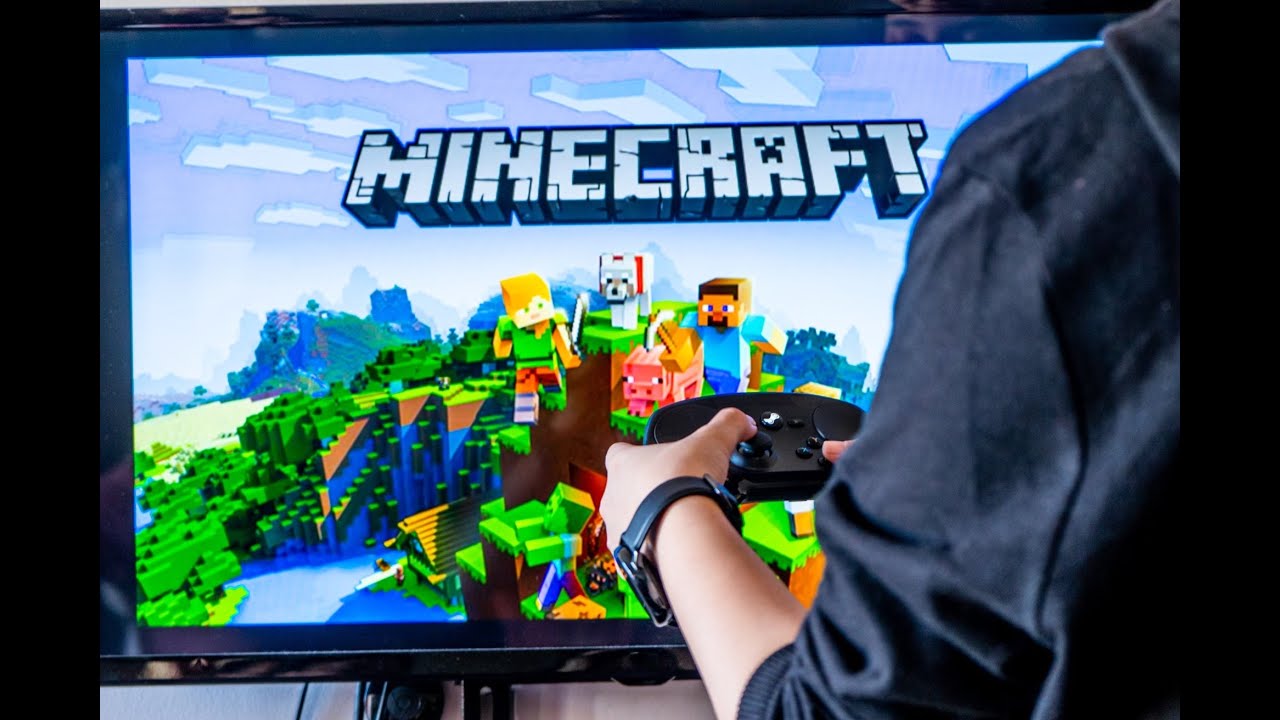
You see, in season one, over the three years from where we were now, we just coped with Stadia, with this Church Digital podcast. We've been doing this podcast for almost three years now. That's crazy. And over that season, man, we've talked about crazy stuff. We've talked a lot about practical things too, about helping churches be more effective in small groups, learning how to discover who people are that are watching the services, what analytics to look at, how to manage shadows. Like, there's been so much practical application because of the mass amount of churches that were trying to understand how to do digital ministry. And yeah, Stadia, we're still doing that, by the way. The Church Digital, man, there is some awesome stuff coming out here really soon that I'm excited about. So stay tuned about how we are gonna help churches like yours be more practical in understanding this digital ministry. But that being said, we really wanted to take a turn with this podcast specifically with season two. We wanna, honestly, we just wanna talk crazy. We wanna start getting more on that bleeding edge, on that cutting edge, on innovation, on thinking outside of the box, and highlighting churches that are doing these things. Not to brag about what they're doing, but to show you churches out there opportunities to think differently, to hear the stories, to see how God is moving in and amongst these churches that are being innovative by thinking outside of the box. And really asking you, church out there, questions like: now that you see how God is moving, pray about joining Him in His work. Let's highlight some opportunities to do radical concepts, to do experimental things, and to see where God's moving, and maybe you would join them in doing that. So that's where we're going with season two. We are embracing the crazy because, honestly, I don't know anybody else who is. We're going to be doing that here with the Church Digital podcast. Right off the bat here, episode one eighty-one. I love this conversation. Theo Davis from Restore Church in Kansas City. Now, Theo is a former student pastor. He gets into the digital ministry. He's the digital pastor now with Restore Church. He's one of the teaching pastors. Great guy, cool guy, kind of relaxed attitude. I kind of loved this conversation, man. He is doing some ridiculous online Bible studies right now. Now, online Bible studies is nothing new. So many churches in this COVID season have pivoted towards doing online Bible studies. But specifically with Theo, he's doing these in Minecraft. That's right. The video game kind of looks like Roblox, kind of looks like Lego minifigs. It's a software that's owned by Microsoft. And I want you to know that's pretty much all I know about Minecraft. Like, my kids, specifically my middle school-aged children, are not into Roblox. Early elementary, not as much, but up beyond that, high school and beyond, it becomes a powerful platform, a powerful community. And Theo is starting to scratch the edge of doing Bible studies in Minecraft. Not just aimed at high school kids or college kids, aimed at adults too. Seems crazy. Seems radical. He's running an experiment. I wanted to talk to him to learn what he's learning. So here for the conversation, we're bringing in Theo Davis, digital pastor, Restore Church, myself, Jeff, with the Church Digital and Stadia Church Planting, in a conversation that I'm simply calling Minecraft Bible Studies.
All right, everybody, here you go.
So explain to me what exactly is Minecraft. I'm new to this world. I admittedly don't understand it. What is Minecraft?
Minecraft, it's this super unique game that came out back in like the mid-2000s, was in beta mode, and then just really blew up and took over the internet, took over YouTube. So many let's-play videos. The basics of Minecraft is that it is this massive world of like pixelated blocks, and the whole thing that you're trying to do inside of Minecraft is you're literally mining down into the earth, getting resources, going back to the top, and then you can craft stuff. You can build houses, you can build boats, you can build actual functioning—like, someone in Minecraft was able to build a functioning computer because all of those resources are in the game. But most people, they just build little houses, they just explore the world, they fight monsters. And there's a couple of different modes with Minecraft. There's survival mode, so like there's monsters and you're trying to just survive essentially. Then there's creative mode where it gives you all the resources and you can just build whatever you want to your heart's content. And so that's kind of the two big camps of Minecraft. It's a computer game, but it's on every platform: PlayStation, Xbox, mobile devices, computers, et cetera, et cetera. So it's just a really creative little world that everyone—I won't say everyone, but just about everyone—can jump into and have a good time.
I mean, I've got two kids we've talked about a lot on the show. Ten and twelve. Actually, when this is broadcasting, it'll be eleven and thirteen. They both have birthdays coming up. But you saw my daughter's a teenager. I don't know how to handle that. We can—you can pray for me. We'll talk about that on Facebook or Instagram or something. But, you know, they're more in the Roblox crowd than the Minecraft necessarily. And so I don't want to put like platform the platform, and we've had Daniel Herron on here as well talking about it, but like, what are the key differences? Maybe so I know one world but not necessarily the other. Like, what's your audience? Who are you seeing in Minecraft? What does this look like?
Yeah, that's a great question. So like, from Minecraft, I really see it as like middle school and up. I was surprised, actually. So through this process, I discovered that some of the incoming ninth graders of our church knew about Minecraft. And I was asking them some questions because, again, it's been around for a long time and they've done a bunch of updates. And I knew it back when it first came out. And so they were like, "Hey, we can help you build. We can help you, you know, go into the world and build a little bit." I was like, "Yeah, sure." And they're doing all this stuff I had no idea you could do in the game because they're that entrenched in it. I had no idea that ninth graders, tenth graders, eleventh graders were still that into the game. And so, yeah, the audience I would say for the purposes of what I'm trying to do, it's two primary audiences. Number one, it's teenagers. It's young people because young people really know this platform. They know Minecraft. They love Minecraft. Some of them out there love Roblox and love Roblox. And I think that's also a great platform. The second group of people is a little more—it's a little harder to find them, but once I find them, oh man, it's magic. It's adults who are in their twenties, their thirties, their forties who have tried small groups before. They, you know, they've heard the announcements when they're sitting in a physical church, and it just kind of rubs them the wrong way. They're like, "I don't want to go to someone's home. That seems so, like, you know, trapping." Like, I'm one of those people who I've never really found an adult small group that I love, that I love everything about it. And so I wanted to find—I wanted to do something where people who were hesitant about small group felt a little more comfortable trying it out because, hey, if they don't like it, they could just disconnect at any point. But also, I just love the fun that you can have within the game.
So yeah, that's the audience. So I mean, but there's a lot of communities online that do this, right, or do something similar to that. Like, I don't want to start rattling off, but there's tons of games that have communities. There's—I mean, shoot, I used to be big in like Disney Infinity and building some of those.
Oh yeah. And so that was—well, I for some reason I like had that and then I would like stop. I didn't continue on when Disney Infinity when they cut the plug on that. And if you're watching on YouTube, I mean, all the Disney stuff that's on this wall behind me, you can see Disney. And if you know me, at any given point I'm wearing some Disney article of clothing. But what I really wanted to get to is this heart of why did you choose Minecraft? So what did you see to really focus on? Because you're not—unless they're looking at tools, you're looking more at where's community at? And of all the different options out there, you chose Minecraft. What's up?
Yeah, you know, it's an accident, really. So here's when I became the digital pastor at Restore, that community was the first thing I was starting to think about. How can I start to create community and find who our niche is? And my initial thought was like, "Oh, I know. Like, in Minecraft, you can create servers. You know, you can have like one hundred people on a server at a time. Maybe that is something where we could start to find some community and develop it." But as I was learning about the servers that I could create—which had a limit of ten people through Minecraft Realms, I can tell you more about that if necessary—but there was a limit of how many people could be on the server at a time. So I figured, "Oh man, that's really not going to do what I wanted it to do where it could be this hub where people could jump on and discover one another, build whatever it is." So then, because of that limitation, and Jeff, you know this, like sometimes it's limitations which pull out our best creativity. It was because of that limitation that I thought, "Well, maybe I could reuse this for another purpose. Maybe it could just be like a fun little game that we play in between small group or maybe it's like, you know, one activity as part of a Zoom small group or something like that." And so then as I was like exploring it and figuring it out, it just sort of dawned on me in the process: why should we just settle for doing the fun activity inside of Minecraft? What if we tried to do the whole small group inside of Minecraft? Oh man, I think like so many people would be down for something like that. So that's kind of where it came from. Just it not working out the way I wanted it to, and then it morphed into something else.
Talk a little bit here about the journey of that small group. So when, how, when did you start it? How many are you doing? How many people? Who like, what can you tell me about those people? How's the process going? Tell us the story of a Minecraft small group.
Yeah, so we did a beta group. It was just a couple weeks long. And really for this one, I was just reaching out to people I knew. People that, some of them were familiar with Minecraft, some of them had never played it before. So we ended up with six people total, and they were all couples. So it was me, my wife, it was this guy Chris and his girlfriend Alexis, along with a married couple Ryan and Becky. And so we just kind of put it out there and we were like, "Hey, we're trying to do this beta Minecraft small group. It's a total experiment. I don't know of anyone else doing something like this, so I'm just trying to see like, does this actually work? And if this feels good with some people that I know, I know I could make this work with people I don't know."
So yeah, we signed them all up. I made sure they had copies of the game because they needed Java edition, not the Bedrock edition, for reasons I won't go into. And so then I just started like brainstorming, and I started thinking, "How can I run a small group in this?" And so at first, Jeff, I was thinking really traditionally. I was like, "Okay, you know, we'll have like couches and we'll just, you know, sit in the chairs in the virtual world and then maybe we'll do some trivia or something." But the more I thought about it and the more I explored the world, I realized that the possibilities are endless. And so really I broke it up into like three sections. Each of our small groups kind of had just kind of three movements to it.
The first was an activity. So I had created these platforms in this world, and each person had a different platform. It was like twelve by twelve, and the opening activity was to create something that represented you, to create something to share with the rest of us a little bit about you. And you know, I created the Eiffel Tower. Someone created like a mushroom farm, some Pokémon stuff. Like their creativity really came out. Some of it was like really good, and some of it was like laughable. But regardless, it wasn't about your skill of building in the game. We were just having fun, having conversations as we built. That lasted for about fifteen to twenty minutes. And then we all went around to each other's builds, and we had like a quick little two-minute like show and tell, essentially, right?
So that's like the first section. We always had some sort of build challenge or some something to do within Minecraft, like hide and seek or whatever. The second movement of our Minecraft small group was something called Discovery Bible Studies. This is something I learned from Rob Wagner's Casey Underground group because they do these Discovery Bible Studies, really cool. Anyone listening, check out Casey Underground. They have this really cool church planting movement going on. But so we just went through a couple of passages of the Gospel of Matthew. We just read a short passage, maybe five or six verses, and then I just asked them five questions. You know, what did you notice people say? What did you notice people do? What did you notice Jesus said? What did you notice that Jesus did? And then what is God asking you to do, change, believe as a result of what we've talked about today?
And Jeff, it was a great conversation. Like none of these people knew each other previously. Like the connection was me. But we had a great small group discussion, and we prayed for one another at the end. And it didn't work out perfectly. Someone got disconnected, and then they jumped right back on. We were sitting around a fire. We built like this little canopy thing. And then the last movement of the small group, so we did an activity, we did Discovery Bible Study along with prayer, and then the last thing was just some build time. So they could leave at that point if they wanted to, or they could stick around and do some build time.
We actually sectioned off fifty by fifty plots of land and created a neighborhood for the people part of the small group. And I told them, "Hey, so by the end of the small group, between now and our end date, you have the ability just to create your home, your little fifty by fifty plot of plan. You can do anything you want, and we're going to do a contest at the end, and whoever has the best, you know, homestead will win a prize or something like that." And so they were logging on throughout the week building things out, and they actually created some really cool stuff. But that's kind of the movement. Three movements. So we have the activity, Discovery Bible Study, and then just some build time together.
And I was just really encouraged with how it went. So yeah, that's awesome. I, you know, it's funny as you mentioned Rob Wagner, I just flashed back. You and I met, I think at a restaurant in Austin, right, with Rob?
That's right, sitting at a table.
Yeah, like that may not have been the first time we talked, but it was first time we really talked.
Yeah, it was the first time we saw each other in person for sure.
Yeah, totally. Tell me, because and listen, and I know I'm actually curious. Did you tell Rob like, "Hey, yeah, I'm doing a church in Minecraft," and I'm curious what his response was?
You know, I haven't yet. You know, I'm friends with them on Facebook now. We found each other. In fact, I was like, "Rob Wagner," you know, a friend requested me. I made it, you know. But he's an awesome guy. I gotta let him know this because yeah, we're doing it. It's been fun. And Rob's been on the show quite a bit here, and so we'll link to some of his stuff in the show notes, talking micro, talking watch parties. And it's been fun in this COVID season. I don't consider Rob a digitally friendly guy. Like he's been immensely supportive, but by default, he's not thanking digital communities a community worthy of a church. That being said, in this COVID season, I have seen him take many strides towards recognizing the power and the influence of doing digital church and online, and how digital can complement that. And so I would be interested, you know, maybe two years ago I would have said Rob would have been like, "Yeah, not so much." But I really think he's coming around as he's seeing more and more stories that are happening. We did a podcast with him just recently talking about that. So that's awesome.
Well, let me ask this. Like, okay, so you're doing this thing in Minecraft. Like, what? How did the conversation with your leadership go? Like, where did they think you were crazy? Did they kick you out of the room? Like, did they even know what Minecraft was? What was that experience?
Yeah, no, that's a great question. So I remember I sat down with our community life person, Janet McMahon, and I was just sharing with her, "Hey, so I want to do some online small groups." And we've had we've had some online small groups, so that wasn't anything new. COVID, you know, everyone had. But I presented the idea of, "I want to do this all inside of Minecraft," and I explained like, "I hadn't really found a small, an adult small group that I was super pumped and super excited about, but I think like this Minecraft small group could be really cool. What do you think, Janet?"
And Janet, in her wisdom and all of that, was just like, "Theo, this sounds really, really creative. Why don't you find a group of people that you know and do like a little test group just to just to see how that goes? And then we could totally launch that full-blown in the fall." And I received that, and that's exactly what I did. So I was grateful that, you know, she definitely looked a little surprised, but she wasn't pushing back. She was embracing the creativity of it. And well, if this can help people find their way back to God, let's go. But why don't you test it first with some people that you know? So I'm super grateful for some leaders who are willing to take some risks in the digital world so that we can reach people in the physical world.
Yeah, I tell you that that's a missing thing right now in a lot of churches. The will, the part of them that wants to experiment, to try something different, to take a risk. And it's hard, you know? It's just even in some conversations today, you know, a couple churches were telling me that they're operating at a negative. And so there's fear in those risks. Which gets me to, and I was gonna ask this later, but how much money have you spent on Minecraft? Like two, three, five thousand dollars? Like, what's it cost right here to run this experiment?
Yeah, I, um, hang on, let me I'm gonna try and think of a total cost for you. I would say I haven't spent more than four hundred bucks, maybe five hundred bucks.
Really? What, what have you spent the money on?
Yeah, so I spent the most. I had to buy two copies of the Java edition for myself and my wife. I had to buy one copy for one of our other experimentees. And Minecraft is cheap. It cost twenty-five bucks, so not a big deal. I bought some headphones with a microphone because the ones I had were crap, and I just wanted a good quality one. So those alone were one hundred bucks each. Then the server. So in order to have a server where people can jump on at any point in the week, you know, I don't have to be logged on in order for people to, you know, build or enjoy the server that we've created, that costs ten bucks a month. So that's not much. I'm trying to think what else have I spent money on. I bought a keyboard because, and I bought a mouse too, because normally I'm just a trackpad guy, but with Minecraft you really need a mouse. So yeah, I would say I've really spent somewhere between three and five hundred dollars on a variety of little things. It's cheap. It is not an expensive thing. And I've been talking to a bunch of my youth ministry friends because I was a youth pastor for sixteen years before being a digital pastor. And I've been like ringing the bell like, "Guys, you got to try this out. It's cheap. It's affordable. The kids already know how to play this game, and you could have you would have a captive audience right now. And then imagine if you could teach some of these teenagers how to run the groups themselves because Discovery Bible Studies are so straightforward." So anyway, I'm getting ahead of myself. Overall, it was about three to five hundred bucks.
So yeah, that's awesome. We can follow that rabbit trail at some point. That's good. I mean, let me ask, well, will you just kind of set yourself up there? Um, why why are you doing this? What's the goal? What's the purpose behind doing Minecraft small groups? Where's this thing going?
Yeah, I want to reach people, Jeff, that otherwise would not come to church, a church building, even church online. When they hear this, the phrase like, "Oh, join my church online," that can also generate a bunch of thoughts or concepts. But if a friend were to invite me to, "Hey, I'm doing, I'm part of this Minecraft small group. We do lots of building and we talk about Jesus," that would pique my interest. I would be curious. And so this is really for people who just haven't been able to fit into the traditional way that we've done church, the traditional way that we've done small groups, even like, even a Zoom small group can be intimidating for some people, sitting in front of a screen looking at one another for an hour and a half, two hours. Like that, that can, for me even, that kind of raises my anxiety level. But to be in a game where you can kind of goof off and it, I don't know, it just it invites different kinds of people. So that's really who I'm trying to reach out to. And already some people are interested who've never been part of a small group before. So that's my hope for it.
For us, and that's my hope for other people as they even experiment with this, that they'll discover people that otherwise would not have joined their groups are open to it at least.
Okay, so let me ask this. You're doing a small group online, and your goal is you're doing a test beta group. The goal is to reach people maybe that are been burned by church or aren't comfortable with that. So you're reaching an unchurched church crowd. Like, is the goal to do the entirety of church, like more of a rich ecclesiologically functioning church in Minecraft? Are you doing a small group in Minecraft that's feeding into, you know, your church's restore churches online services where they're getting teaching? Or is it like, how is this thing structured? Where is this separate to the church online in the physical church or a front door? Like, what's your strategy where this fits?
Yeah, this is, um, right now our Minecraft small groups, my hope is that it's a front door to our digital church or our physical church. So we're playing in the fidget world. We have both physical locations as well as our digital online campus. And so my hope is that people will get plugged in to this and it'll pique their curiosity to check out one of our messages, to join our Discord, to become part of the larger digital community, or it might serve as a front door to have them head to one of our physical locations if they feel like that's a good way to go.
Now, my hope is that as we start doing these small groups, and already like I was planning just to do one, but I found another leader, so I'm going to do two of these. I'm going to do a high school one and an adult one. My hope is to be open-handed with how this progresses. So I really don't want to, I'm not heading into this with, "Okay, this is our small group structure. These are only gonna be for small groups." I'm totally open to the fact that, you know what, God might be doing something in the midst of this. Maybe I find a young teenager or a young person that knows the community of Minecraft significantly better than I do, can reach out to that community and start a disciple-making movement. And maybe it starts off as little micro churches in Minecraft, or maybe it becomes this full-blown faith community. I don't know. So I'm just like, I learned from the beginning of this, like, "Okay, Lord, I have this idea, but you know, do with it what you want," and I'm gonna be open to it in the process.
So to answer your question, our hope is that it's gonna feed into our digital and our physical locations, but we're totally open to the fact that if the right people come along and the right ingredients are there, that it could spin off into its own thing. But let's do a successful full season of a group before I get too far down the road.
Awesome. Crockpot, not microwave. Take the time, let it develop. That's beautiful. I'm totally going to clip the video section where you said micro church in Minecraft, and I'm going to send that to Rob Wagner. Just, I want a reaction video with Rob Ratner when he hears that. That's beautiful.
What's been the biggest surprise, like, in this? You've been running this test. You started with adults, like, are in, and you're doing, have you started with teens as well recruiting and developing the teens? So what's been the biggest surprise at all this?
Yeah, uh, and I think I mentioned this a little bit earlier, is that um I invited one of the teenagers to help me because he offered. He's like, "Yeah, I can help you build some stuff out," because you gotta do a little world building before you begin. And um, he invited a friend. He said, "Hey, I'm doing, uh, I'm helping Theo," and so that kid jumped on, and then we had another kid jump on. So I had three teenagers in this world. And here's what surprised me: they were excited about it, and they were picking out their plots of land. Okay, so when we do, when we do small group, it was just an assumption for them like, "This thing's happening. We're doing small group. Oh, I can already think of two friends I want to invite to this." So we're going to need eight plots of land for where we built. They were excited, and some of these kids I could never even, back when I was a youth pastor, I couldn't get them excited about just normal, uh, small group in person. But they were pumped about this.
So I think also they taught me a lot. So I learned a lot in the process of just Minecraft and different builds and what we could do and how we could build out the world. So I think sometimes as adults we have this tendency to just want to like do it all ourselves and set the whole thing up. But if there's anyone out there listening, invite some of the teenagers of your church. If you plan on trying this out, invite some of the teenagers to be part of the planning process, part of the building process, because that's going to give them ownership of the group, and they're going to want to invite people to something that they helped to build. So for me, that would be the biggest aha moment: that the teenagers surprisingly were the ones that were flocking to it, and I'm having to do a little more reaching out to find adults that want to flock to it.
That's interesting, and I love the idea: give them an opportunity to have influence, to be a part of it, to come up with the ideas, let them lead out in there. It's interesting, and like I said, Minecraft, I don't have a lot of experience in that necessarily. Within Roblox, uh, you know, I've got friends that are more, and Daniel Herron's been on here quite a bit, and he would champion in this too, you know. He started, you know, the Robloxian Christians when he was like, I don't know, ten or eleven, and now he's twenty-one. And so he's reached, you know, estimated thirty to fifty thousand people through a Robloxian church, um, you know, in through over the years, and it's still going. But you know, and he talks a lot about how it's student-led movements. Um, you know, and I've talked over the years with Daniel about, you know, what would it look like for a church to come alongside? And it's funny, like, and then just the way that he's wired, it's on the record, but he's so driven towards student-led and operated movements. Uh, he's actually kind of fearful about letting organized churches kind of come in into that space. And so as an organized church coming in there, you know, the wisdom that you're showing by letting, "Hey, students own this, students run with this, students make this bigger than I myself can be," um, I mean, listen, if I was a digital pastor, I know squat about Minecraft. But hey, I recognize the fact that it's a community and that there are people that know that community better than I do. And if I really wanted to reach that community, I'm not developing the strategy. I'm talking with others that are developing it. So you've got some great wisdom that's showing here, man.
What are some other takeaways? What are some lessons that you've learned, um, you know, recently as you're going through these experiments?
Yeah, I think, um, so one of the things is that what I found is that, like, whoever's leading the small group, they definitely still need to know how to lead a small group. So, um, you know, just, and I'm talking about, you know, working the room, helping people connect to one another. Because we've lost all the verbal, uh, all of the visual cues and some of the verbal cues because now we're in Minecraft. We're talking to one another through Discord, and all we can see are these little avatars that can't really express themselves very much. So as the small group leader, I had to make a lot more effort of just helping to connect people, helping to lead the discussion, helping to just say, "Okay, guys, we're going to do this, then we're going to do this, then we're going to do this. All right, let's start with our opening activity," and just doing a good job hosting. Um, so that's one of the things that as I'm getting apprentices to learn how to do this, that I'm going to be focusing a lot on: "Hey, you are a host. Like, don't even worry about your Minecraft abilities. Like, you might build great or you might suck at it, but you do need to be, um, you really need to practice how to be a good host." So that's one of, that's definitely one of the learnings.
Um, another learning: people sometimes cancel, and life happens. One of, uh, one of the couples, their car broke down. And so, uh, we, I had the choice like, "Do I cancel? Do I postpone?" I just postponed it. It's not a big deal, just like you would with an IRL group, right? Um, we just postponed and we finished our group another time.
Um, another man, another learning, yeah, yeah, ah, I don't know. It's just been fun, and I honestly just can't wait to start the group with the high schoolers and with the adults. Um, that's been, that's really been the biggest thing is just the eagerness that I have just to jump in with a whole other group of people. So those are, those are kind of the main learnings.
There's some technical stuff I will say, um, it was not the smoothest process starting off. So having to learn about Minecraft Realms, which is Microsoft's own little server that you can pay for, having to learn, um, some of like the server commands, so slash changing the time of day, slash, uh, you know, putting it in creative mode, having to learn how to connect everyone on the same Discord, and so there were some technical things for sure that took a little bit of a learning curve. More than happy to type up how to do all the different things if anyone out there wants to try this out with your youth group or your church or whatever, so that you don't have to. It probably took me about five hours to troubleshoot all the stuff. Ultimately, once I was like in the whole process, but now it runs perfectly smooth, no issues.
Inviting people to the server took, it was a little bit of a challenge because the invites apparently expire after a certain amount of time. So in our first group, they were logging on, but then they get kicked pretty quickly, and I'm like, "Well, wait a second. I, you got on. Why is it saying you're not invited?" So there's some technical stuff, just like with any digital thing. But once we ironed out all of those things, our other groups were great.
Hey, I'm going to put you on the spot right here because you just said it. Would you write a blog for the church digital? Yeah, sure, listing out some of those things, how to, how to do Minecraft ministry, the tips you need for Minecraft. We will offline and we'll figure it out, but yeah, we'll publish something and attach it in the show notes here. I love that. That's great.
Um, and once again, I feel like this is like Rob Wagner's like the guy over here that's not part of the conversation. You said the word, you said the word apprentice. Said I'm like, "Rob Wagner's shaking his head right now." I approve. I approve of this message. Well done with that.
Um, no, all that was beautiful. So hey, listen, there's a church out there who's crazy enough, and what I want to call out here, let's before I even get to that last question, you said that you're having fun. I want to draw attention to that because many of us in this 2020, 2021, mid-post-COVID, wherever you think we are in this thing, when's the last time we had fun in ministry? Like, it's been a minute for a lot of us because we're, we're trying to, honestly, part of me, and we talk about the show, I feel like we're trying to force something to happen by how we're, many of us are approaching digital ministry as the mirror image of physical, and it just doesn't work that way. And you're having fun by doing something different, by doing ministry not to replace what's happening physical, but you're recognizing that digital is a different crowd and you're trying to reach different people through it. So I don't want the word fun to get lost because I think that's important.
The most other than Rob Wagner for the 47th time mentioned, I think that's the most telling thing that's happening in this conversation here. So well done, and for Restore Man, way to be brave enough to like endorse some idea of, "Hey, I want to do a Bible study in a small group in Minecraft." Like I can tell you I've been on some church staffs that would have chased me out of the building at that. So way to be brave enough to suggest it and to run with it. But so let me, that'll segue nice into this last question. Hey, so some churches out there, some digital pastor, some guy listening to this podcast is crazy enough to think, "Hey, I want to do this at my church too." Give me some practical steps. How does somebody get started? Leadership may or may not be on board. What does it look like to start an experiment centered around Minecraft church, Minecraft Bible studies?
Great question. I would say the very first thing, I'll break it down. Very first thing you need to do: get a copy of Minecraft, start playing it yourself, just start exploring the game. It's not super intuitive. You'll have to watch a YouTube video or two, but once you get the concept, it's a lot of fun. The second reason it's important to get the game first and play it yourself is just to make sure it doesn't make you dizzy. Some of these 3D games where you're in a world and you're in tight spaces, it can make some people dizzy. It actually makes me dizzy. I have to eat Dramamine before I play each small group. And so if I don't, I'm sick as a dog afterwards. And so I would just highly recommend figure out if it makes you sick or not.
The second thing I would recommend is find a small group of people that you could test this out with, because it might be a really great idea in your head or you might have an idea of how it should work, but when you invite some other people into it and you actually try it out as a group, they can give you some honest feedback of, "Wow, that was really good. Yeah, that was great. Actually, that was kind of lame. Like, why do we have to just sit on these Minecraft couches? Why can't we go explore or why can't we jump around and play around?" So I would say get a small group of people, get the game, test it out, and then yeah, I would say another thing to do along with that. Because there's so many steps, there's so many steps in between. I'm trying to make it as simple as possible. If when you're testing it out, make it a short period of time. Make it three sessions. So you know, session one, session two, session three. That can happen all in a week or it can happen over three weeks. And that's going to give you a good rhythm and a good feeling for how many technical issues you might run into, how the games or whatever happen in game, how the small group time runs. You might want to change some stuff up. Yeah, and then after that, just get as much feedback from the participants as you can, because you know what works for me and my context may not work for you in your context.
So those three things: the activity, discovery, Bible study, and then build time. You might need five like movements, you might need six, you might just need two. I don't know. But it all depends on who you're ministering to. Is it teenagers? Is it adults? And just experiment. I highly recommend a beta group before you actually launch the full-blown thing, because we definitely had lots of technical issues that first one, but then it was smooth sailing thereafter. And part of that, having that small window to get feedback with that experiment, is in receiving that feedback. And if it's good, good. If it's bad, that doesn't mean you abandon the idea. It means you try again. And so often it was, "Man, we had bad feedback. We had a lot of tech issues. This was the stupidest idea we've ever thought of. Throw it away and go back to normal." Don't do that. Look for the gold in the situation, but don't be afraid to say, "This is a failure. Let me try something else. This is not the way to do it, but here's a better option." And continue to receive that feedback. And we use in Stadia, we use the word iterate. Experiment, iterate, try something different. Don't be afraid to go back to the drawing board within the same concept. Or to Theo's point, just because that's how he's operating and you're mimicking small groups to start, well maybe it's something different that's going to evolve out of that within Minecraft or maybe on another platform where you can get more community, you can more easily connect into it. But don't be afraid to call a failure a failure. The quicker you can get to that fail point is the quicker you can get on to that next thing where there could be success.
So that was well put there, sir. Hey, as we're landing the plane here, wrapping up, any closing thoughts on your side?
Yeah, I would say that whether it's Minecraft or Roblox or there's so many other platforms out there, I think some of the principles are transferable. You know, so find whatever platform it is, find an activity you can do together, maybe Discovery Bible study sandwiched with another activity. Because the digital world, the gaming world is constantly evolving. New things are coming out. And so you know, I don't even want to lock myself into Minecraft, although I love Minecraft and I feel like I'm starting to become like the Minecraft guy or whatever the way I've been like coaching some other people on this. But don't close your thoughts to, "Oh, this could only ever happen inside of Minecraft." No, there's so many ways that we can reach people. I feel like the way that the church is currently structured, sure, we're reaching lots and lots of people across the U.S. and throughout the world, but there's still billions of people that have not been reached. And it's going to take different strategies to reach those people. So maybe a couple thousand people, maybe a couple hundred thousand people, it's gonna be Minecraft. I don't know about the other five point whatever billion you know else that's out there. So just encourage people to experiment and figure out what principles are transferable.
Yeah, a podcast about the mission field of Minecraft. You know, I don't know that you hear this too many places other than the Church Digital, but I love the idea of this, of how you're utilizing a platform to reach people for Christ in a different way and discipling them through different techniques and what we would normally see in the physical building. You know, here at Stadia, I'm going to shift into commercial, but I'm here at Stadia like we championed this idea and try to help churches understand. We use the phrase multimodal, running multiple models, multiple modes of church. And even some of the experiments in the start of your crockpot experiment towards what a church could look like, what a disciple-making process and system can look like on Minecraft, is beautiful. And the experiments, the learnings from that, and how it's going to redefine what church is going to look like, not away from the Bible, actually maybe closer, modeling what the Bible is in the relational context, in that authentic community piece of it, is a beautiful, beautiful thing.
I've said beautiful 47. I'm not sure what I've said more on this podcast: Rob Wagner's name or beautiful's name. I will have to go back and maybe do a word count for that. I'm sure that'll never happen because I don't have that kind of time. But hey, listen, Theo, this has been an incredible conversation. Thank you for it. And Restore Church, man, thank you for being brave in doing what you're doing to reach maybe a different type of person utilizing some of these digital tools. But for Theo, I'm Jeff with the Church Digital and with Stadia. Thanks for jumping on the show here. We'll see you next time at the pod. You have a good day.