Discover how the mission to multiply disciples and churches remains vibrant today, drawing lessons from the early church's experiences and the role of the Holy Spirit. Our discussion will bring to light the cyclical nature of ministry, illustrated with examples from both…
There's a cause that Jesus came for, and you know, my understanding is it's multiplying disciples and churches to the glory of God from where we are to the ends of the earth, every people, every place.
Welcome to the Church Digital podcast. Through this podcast, we'll talk about the technological innovations within the church, but more than tech for tech's sake, we'll address deeper questions. Is disciplemaking possible digitally? How should we approach the digital mission field? Can a biblically grounded church operate in digital space? And where does the metaverse and artificial intelligence fit into all of this?
Whether you're a big or small church, the Church Digital's goal is to help churches like yours learn to be a multiplying church digitally and physically. And now here's your host, Jeff Reed.
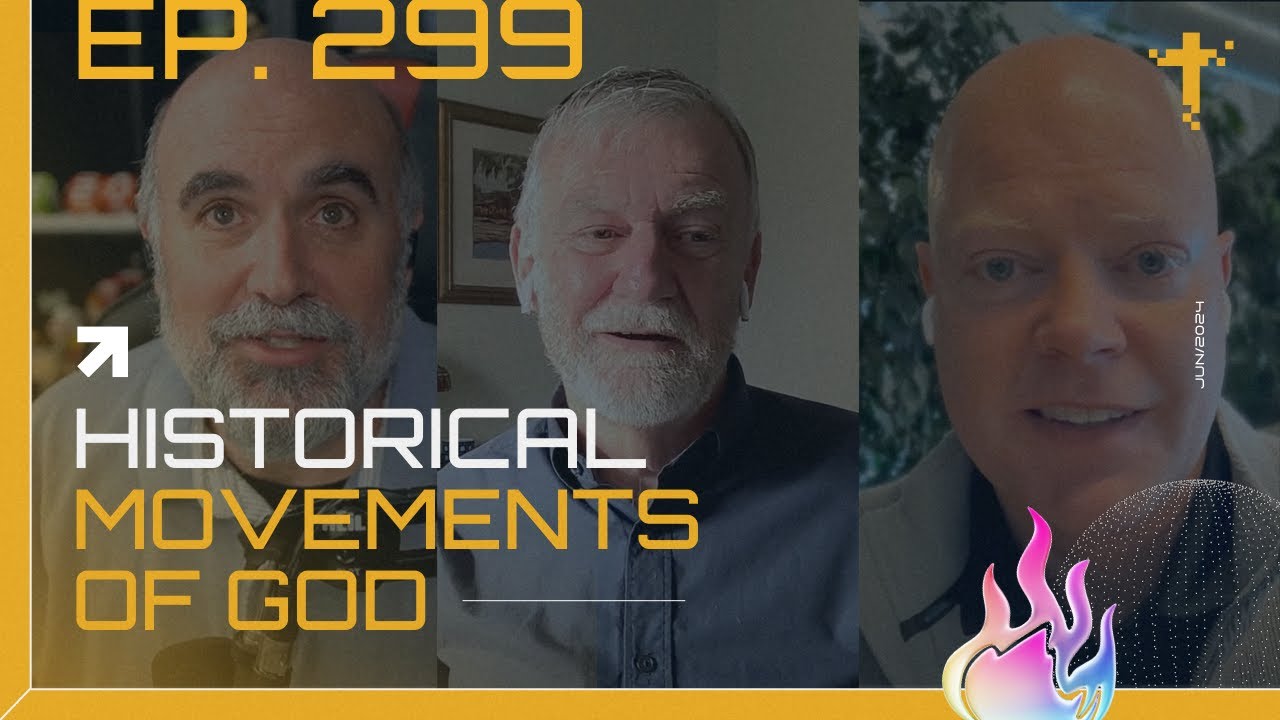
All right, hey everybody. Episode 299, 299 of the Church Digital podcast. We are one podcast away, one episode away from 300. And actually, special for 300, I have—and that's what I was about to say. Jason Morris is cutting me off like midstream. So it's six weeks until episode 300 actually airs, and as I sit in this chair, Steve Addison's coming on here in a second. I'm literally like, "Steve freaking Addison," you know, one of the modern architects of movement, is my guest for 299. What am I going to do for 300? Like, I kind of painted myself in the corner. What am I going to do to make 300 more epic than what 299 is going to be? Thank you very much, Jason, for calling attention to that in this moment.
So we're excited to have Steve Addison literally from another continent. Church Digital podcast brought to you by Riverside, once again, which, by the way, the beauty of Riverside—I am looking at Steve Addison in Australia and I'm getting 1080 video coming to me and recording the podcast, and like everything's going to be epic and it's going to be flawless, even though this dude's literally on another day. We're recording this on a Wednesday night, and it's what, Thursday morning, Steve Addison? What does Thursday morning look like for you right now?
It looks beautiful. We're coming into autumn in Australia, and I can tell you that the world has not ended. Thursday has come.
Awesome. That's good to know. You will make it to Thursday, and so Friday is not promised, people, but Thursday, Steve Addison Australia says that. That's why we're in Australia—we just want to be the first when the Lord comes back because he'll pass over, he'll pass over New Zealand for sure.
You'll be resurrected.
Awesome. Our friends in New Zealand, I want to publicly apologize. Any hate mail, go ahead and send it to Jason, J-O-N-T-H at church.digital. He can take care of that for you.
This is—no, I'm going to open confession hour here. So Steve's on, we're going to talk about movement, and he recently came out with a book, "Acts and the Movement of God." I just happened to have a copy right here, which happens to be signed by said Steve Addison. Very, very proud of this. Met Steve at an E3 No Place Left event here in Florida, West Palm, and happened to meet Steve there, and it was great. And we're just talking offline, both Jason and I reflecting back on like Steve's books and his writing on movement, and how that was very influential in our lives.
You know, for myself, really, it was reading "Pioneering Movements." That was the book. There were two or three that I was flipping through, but it was honestly like a decade ago and my memory's bad, but "Pioneering Movements" was the one that was just cover to cover, just ripping through it. And it's just so good. And honestly, for me, as I was—it caused me to question things, and it really started to validate some of the questions. Like, we had Leonard Sweet on to do the podcast a while back, and Leonard Sweet was the podcast that it was like, "Okay, Leonard Sweet thinks the way that I think." Like, Leonard Sweet validated all the craziness that was in my thoughts because he was doing it. The Church 2.0 guy—oh my gosh, I'm blanking on his name. Jason, Neil Cole. We had Neil Cole on, and Neil Cole and you, Steve, like both of you kind of shot for shot were so—your book, Steve, was handed to me by a pastor. Neil Cole's book was a book that I found on my own. But the two of those really started to get me down this road of questioning what I thought was correct, normal. You know, fifteen years church staffing—not apologetic on that. You know, I had been discipled in my life, and then I went, worked on a church staff, and threw everything out the window, forgot everything that I had learned in the years previous to that.
And so now, to be honest, you know, talking about movement and working with the Church Digital and pioneering these movements that we're working with, man, your book becomes more and more prevalent, more and more necessary. And I'm going to be honest, this is what I wanted to open up with. This is probably the most you're going to hear me talk in this podcast because we got Jason Morris in the conversation. Jason is very versed in this area, and even just some of the pre-conversation, I know he's excited to get into this, and I'm kind of poking, I'm making fun of them here a little bit. It's my podcast, I can do that. But the heart of this thing is we're really looking forward to this conversation and digging in.
And Jason, why don't you—man, why don't you want to share a little bit of maybe how Steve's influenced you, kind of historically?
Oh yeah, big time. You know, listening to the podcast and reading the book, the next one was "Rise of Movements," which I honestly, after reading that book, I thought that was going to be your magnum opus, by the way, the way it was structured. Because it gave such a wonderful overview of the life cycle that I feel like was so helpful for people to understand, "Oh, I'm in this certain phase of the life cycle, and if I just go business as usual, I will hit the decay and decline if I don't watch it." And then my favorite part of the book, though, because there's a lot of structural talk, was the appendix. Not very many books I could say that about, but the appendix was awesome. And we actually ended up using a lot of those ideas from the appendix in the church planting movements that we did all around the world and got me connected to the types of ideas you were talking about. So it was interesting how the book had very high-level view through the book and then a more nuts and bolts practical idea of how it could get expressed in the appendix. And I thought, "This is it. You know what else do you need to write?" But apparently there was something else, right? And I'm just curious, how did you get from "Rise and Fall of Movements" to "Acts"? What was the journey that got you there? Just out of curiosity, we can get to the other questions we have, but he's already taking over my podcast. We are not even on question one yet. That's awesome. I love it. Go ahead, please. How'd you get from "Rise and Fall" to "Acts"?
Well, "Rise and Fall" was written pretty much twenty-five years ago, but it was the second half of my first book. You know, we did the characteristics of dynamic movements, and then we said, "Well, let's show you the life cycle." And then I realized that this was actually two books, and so it sat there on my computer drive for about twenty years. And what it was waiting for was, you know, we can learn a lot from organizational life cycles, right? But this is the movement of God. It's not some organization. So it was the realization that what's driving the rise and fall is the degree to which we move towards or away from the life and ministry of Jesus, as especially as it's expressed in the gospel and in Acts.
Because Acts—so that automatically leads you to Acts. Because, and this was a big aha moment, was realizing that Luke wrote Acts because the story wasn't finished. So the story about Jesus continues. You know, this is not just some history of the early church. This is what Jesus continues to do once he's won his victory and he's ascended. Well, he sends the Spirit. He confronts Paul on the Damascus Road. You know, the Risen Lord is still leading the way. So the patterns in the book of Acts are not just, "Gee, didn't they—weren't these guys smart?" Well, they weren't. They were defeated. They were, you know, even ten years down the track, Peter is clueless at Cornelius's house. This is not some brainstorming thing from the apostles. The Lord's still in charge.
And so here we go. We look at the rise and fall throughout the scriptures and history and the principles, but, ah, well, that means we—this is the story of the rise of a movement here in the book of Acts. And the wonderful thing, once you've got the paradigm of the life cycle, is you realize even Peter is going through that. Even the Church of Jerusalem, which is like heaven on earth—it's ten years since the commission was given. They've gone off. They've filled Jerusalem with the knowledge of Jesus. There's movements throughout Galilee and Samaria and Judea and Jerusalem, but they still haven't intentionally gone after the Gentiles. You know, the mission is—they're in danger. You know, they're at the peak of their success, and now they're in danger of falling off the cliff, even in the midst of, "Hey, we have a megachurch or whatever." You know, and Peter—"I'll be the senior pastor of the mega"—well, no, he's out on the fringes. And where God gets ahold of him and says, "Hey, there's a whole new life cycle here." And it's bringing Peter and that church in Jerusalem back to the life and ministry of Jesus, and then it moves on again.
So seeing that, you know, these patterns—I mean, we can draw a life cycle that's just one way of communicating it. What we've got to go to is the actual story of the book of Acts. And the big aha moment is God—Father, Son, and Holy Spirit—is the main character in this book. Therefore, the patterns, the lessons—not the finer detail. It's not like, "Well, we better just walk around on foot. We can't use motorcars. And when we travel long distances, it's got to be ship." You know, that's silly stuff. You know, but the sort of patterns we see—this is what God does in history, and what he's still doing today. So we better not build a wall of separation between our life and ministry and that book of Acts and just say, "Well, that's them back there. Well, we know better now."
I tell you what, that's a really beautiful picture. Even backing up a little bit, getting to Peter describing, you know, Peter out there on the fringe. Because we're dealing with the Church Digital, we're dealing with a bunch of square pegs that don't fit in the round holes. You know, it's funny, and even Steve, I think I told you that the joke that we often call ourselves is basically the Island of Misfit Toys, because that's this weird oddball collection of who we are.
You know, I was funny—I was recently told a story, and this is new since I met you, Steve. But I was told a story recently of a guy in an Eastern European country. I'm not going to say what country. I don't want to out the guy without publicly knowing. I can share the story, but he came into our Discord community on the Church Digital Discord—discord.church.digital, by the way, open a web browser. But what he did was he started meeting us and ended up booking time with me, and I'm looking at him face to face, and he's telling me a story, and he has this passion to plant a—he loves—
Relational disciple making—he's got, I don't know that he's defined movement in him, but he's understanding some of the basic principles of movement. And what he wants to do, he has this crazy idea of doing a micro church model but digital. And so he's really wanting to start to explore this digital micro church.
Now, you know, in my world there's half a dozen people that are having that same exploration, but outside of the Island of Misfit Toys and the Fringe people—well, you know, he told that idea to his church, and his European church basically started laughing at him and mocking him and making fun of what it was. And dude went to Discord to find—or excuse me, went to Google to start to find resources and community for encouragement. And that's when he stumbled upon us, and we brought him in and started working with them and building relationships and helping them on the journey. That's one story. But to be honest, that's the paradigm. Like, that's the—I can tell that story to you twenty-five times. And so this idea of, hey, there's this guy that's on the fringe that should be doing the mega church thing, but he's disconcerted enough to not be in the building. And he's disenfranchised, walking around, he's dealing with the Fringe stuff. And in dealing with the Fringe is where God, like, slaps him on the head. Dang, like, that preaches to me. I haven't even got the question one yet, but man, I'm ready to wrap this thing up and call it done. That was beautiful.
All right, so hey, look, let me put some boundaries on this conversation. You know, Steve, I sat around with you and Scuba Steve—Steve Carswell here in Florida and some other guys in West Palm Beach—and we're talking like at master level, master class movement, like college master's degree, doctorate, like advanced level stuff. And where the people probably listening to this podcast are probably a little more 101, 201, intro level—we're new in this thing. And so, you know, for some of my questions, if you're listening, you're like, "Oh my gosh, Jeff got Steve Addison. What's that like? What's going to be the answer to life that Steve will share?" I don't know that that's going to come. Maybe, maybe it does. Maybe this is going to be a little rudimentary because my first question is, Steve, like, help us define here: what exactly is a movement? And you know, maybe your world will get rocked by this answer, but hold on, let's find out.
So Steve, question number one: what exactly is a movement? How do you define a movement?
Well, in its simplest form, a movement is a group of people committed to a common cause. So the fact that it's a movement doesn't say whether or not that cause is right or wrong, whether they're good or bad or mixed. But whenever—and when we say commitment, I don't mean they've signed up some membership—but they're pursuing that cause together. And so that's the engine room of history. You know, we can all think of the movements that have influenced us throughout our lives and development or shaped the world we're in. We can know how, sadly, you know, there's a couple of movements going hammer and tong head-to-head in the Middle East at the moment and other parts of the world, you know, around China and Taiwan. Their movements that are pursuing rightly or wrongly what they're committed to together.
When we think of, um, what did Jesus come to do? Because it's a neutral concept, a movement—you could be nuns or you could be fascists, you know. Um, but you're both a movement. There's a cause that Jesus came for, and, um, you know, my understanding is it's multiplying disciples and churches to the glory of God from where we are to the ends of the earth, every people, every place. That just in a short—um, sort of, we may not get into the detail of that, but we do need to. And that's why I wrote a whole book, "What Jesus Started," you know. So what did he come to do? And then what does the Risen Lord continue to do throughout the book of Acts and we've seen in the Epistles? So you've got to define what's our cause, what's the outcome, and then you're a movement if you're committed to that. If you've set up organizations to serve and facilitate that, but they're now living for themselves to perpetuate themselves rather than the cause, well, that's an institution. A movement that's become institutionalized. And the way you renew, if it's possible, that institution is you get back to the cause. You get back to the founding, you know, dream and vision. That's so you got to go back before you can go forward.
Wow, so good. Now, what you're describing in context of movement—like, I'm going to be honest, like, even the first story you're talking about, how Peter should be in the mega church and instead he's out on the Fringe—like, I know a lot of pastors that want their mega churches. And so honestly, what you're describing with movement, and oftentimes it does feel countercultural to what, at least in—I don't really know the Australian church—at least what I see in the United States. And so, like, specifically or generically, how are we going to answer this: what are movements different than the established church?
Well, even the established church are the fruit of movements. Um, this is why I think we got to get back before we can move forward. Get back to your history. I've read the history of the explosion of the Baptists and the Methodists. It's sort of a funny idea—exploding Baptist, Methodist—but there they are on the US frontier, and their movements. You know, the more established—the Episcopalians and for a long time the Presbyterians, Congregationalists—they've all got their multiple degrees, guaranteed salaries and congregations, and they're on the East Coast. But the reason why those movements of Methodists and Baptists just took off for, you know, decades until they settled down, was they got back to some of the basic practices that Jesus modeled and demonstrated. This is a grassroots movement. This is a people committed to a cause making progress. You know, and it went exponential for a couple of generations before they settled down.
But so it's good to remember that typically, you know, even the Pentecostal churches—it began in a barn in the USA. Street it had been a Methodist meeting place but had been used as horse stables. And there you've got the son of freed slaves, a one-eyed black preacher, William Seymour, with a vision for a movement of God. So great institutions—not just mega churches, but universities and hospitals and the like—all good stuff comes out of that. At the same time, it's what we call the institutional dilemma. You've got to build some structure around what God's doing in order to facilitate it. But eventually they suffer from the failure of success. And now we need to protect the institution because way back then we risked everything for a better future, and the vision that we had—now we've achieved it. So we better not mess this up. We better maintain our position in the culture. We better make sure our universities and hospitals are well run and our seminaries and the like. And meanwhile, God's doing something new on the Fringe.
And wherever we see multiplying movements today, they're not necessarily well-educated, wealthy people. Um, they're men and women of passionate faith and a biblical faith. And they're, you know, blazing a trail, whether it's in Africa or India, um, China—these places God is on the move.
To your point, um, where for whatever reason we used to see movement because I love the way that you're framing it—we used to see movement in the developed world, in the Western world, in ways that we don't see movement in the Western world today. But rather we're seeing it in other places like Africa, like Asia. Um, that's where the movement is happening internationally. Two questions on that: why do you think that is? Um, and secondly, what could the Western church that has been institutionalized from a previous movement—how, what's the easiest path to recapture that momentum? So that because today, as good as the institutions are from the movement that happened in years gone by, today we're not keeping up with our own population growth. So we're losing ground overall. While internationally we're losing our children and grandchildren. That's what we're doing. We're not even gaining. Um, you know, unless you're Amish—they're doing pretty well with that. But here's the wonderful thing: it is incredibly simple. It's as simple as saying, you know what, should I do? Well, go for a walk. Go for a walk, meet some people, pray as you go. "Lord, lead me to prepared hearts." Go for a walk around your neighborhood, down the street, three next-door neighbors. And it's as complicated as this: just ask someone, you know, or someone you've met for the first time, "Hey, I'm just out walking and praying. Is there anything I can pray for you?" And just see what happens.
You know what did Jesus do? You know, he does engage the institution. There's a tension there, but he's not trying to reinvent it structurally and institutionally and get inside this thing. So what does Jesus do? He calls historic Israel to join. Not—they don't. And they can still identify as where this is our background, but to join what he's doing. And how does he do that? Well, he finds a couple of young guys and also women at times travel in the group. And he just said, "I'll tell you what, here's the deal: come follow me." So everything that that entails, okay? Well, let's keep it simple. And what I'll do for you is I'll teach you how to fish for people. And that's what a movement does: follows Jesus and it fishes for people. We've forgotten. We've neglected that.
And you know, it really is—I mean, just looking outside my window right now, around the corner there's a great church, and I know the pastor. He got all stirred up, and he just said, "Steve, well, why don't we go out visiting the thousand homes around our church, offering to pray, sharing the gospel, inviting people to read the Bible?" So now that's—and people, "Oh, that's door knocking. That won't work." Well, you always know when something's about to come in—vote when everybody else says it doesn't work. It's because they haven't done it. Jason, we're weeks away, man. It's going to happen. But it's not just for that. And it is a minority of people who are ready to do that. There's more people than you realize. But you also train everybody in the life of the church who wants to learn. So next time you're talking to one of your kids who's far from God, and you know you can't preach—they've heard the gospel enough from you—and you ask them at a key moment in their life, you know, a new birth or a struggle or attention, and you just say to someone you've known your whole life, "Can I pray for that right now?" You watch what happens. You know, put aside all. But you've also got to train people not just to—we call that the early offer of prayer because it's always earlier than you think you should do it. Um, but also, well, what happens if I encounter someone who's responsive? Well, I'll do what Jesus did. What did he do? He tells him a story. He teaches him some content, and he calls for someone to learn to follow him and fish for others. So that's happening throughout the whole sort of ethos of any movement, you know.
And so there are movements on American soil. It's just you're going to have to go to prison to find them. Um, Texas prison system—there are hundreds of groups forming that function as churches. They can't officially be called a church. It's being led and spread by insiders.
It started in maximum security and all they do, you know, is they offer prayer, they share the gospel, they read the Bible, they learn together how to follow Jesus in the prison and God is doing marvelous things in that environment. So I wouldn't start—that's, I wouldn't say what are we going to do with the Western church or the American church? What is that? Where's headquarters? Who represents it? You know, it's not a person, it can't do anything. So it starts with Jesus tapping you on the shoulder and saying come follow me, I'll teach you how to fish. That's what movement is, and Jesus is building that and he's still living in a creative tension with the institution, but he's saying come and join me. You know, the whole parable of the Good Samaritan, the pinnacle of that is not the son coming home but the father outside with the pharisaic older son saying come and join, come and join the party. And so that's what he's doing the whole time, even with the Pharisees—come and join, come and join. And you look at the early chapters of Acts, they're saying the same thing. You know, when they get put on trial they're preaching the gospel and saying come and join what we're doing. Well, they didn't, and so judgment came in AD 70 and Jerusalem was destroyed.
So while the critiques are fine, it's not a movement. A movement is when you start following and fishing. For us, you know, part of what we're doing is this idea of creating movements, are helping people—mostly B occasional people, but people create movements digitally, you know, talking about fringe, but it's reimagining what a movement could look like in a prison system and doing that. You know, for us it's reimagining what church is in a digital ecclesiology. What is, you know, you're talking about hey go take a walk with your neighborhood. You know, we've got, I can tell you stories of guys that are witnessing and sharing Jesus while playing video games or on Discord together or in a Facebook group. On the community there's a guy that runs a church, his name's Andre. What's Andre's name? Andre Anderson. Barbecue Church, dude. Like, shares Jesus barbecue, Assemblies of God. I don't think it's a real Assemblies of God church, but he calls it Barbecue Assemblies of God. And it's everything's barbecue and everything's Jesus and he's just constantly—he's got thousands of people like tracking because he's a barbecue nut and he's a hardcore Jesus follower and is creating disciples utilizing this niche target.
But the challenging thing for us is really, and this is something that I wear as a badge of honor, is hey, we can't go so explosive with innovation and ideation. We can't reimagine the church so far that we forget what we're supposed to be, that we lose, you know, what the early church was. And it's constantly challenging us to go back to the book of Acts, you know, to talk about Acts 2:36-47. What do you see? What do you see the church functioning? What are the eleven functions that the church is doing in this context? How are we doing that digitally? What is worship? What is prayer? What is teaching? You know, and just rolling through all of that. Yeah, communion is going to look different, baptism may be challenging, but that doesn't mean that you don't do it. It means that you innovate in that space.
You know, the anchor point—you're right, the anchor point has to be, you know, for us Acts 2:36-47. This, and the church is the fruit of the outpouring of the Spirit and the proclamation of the word. So word and spirit is driving this mission, and the fruit we see at the end of that first day of the life of the church—that this is what church is in any age. And so if we're going to sort of contextualize and experiment, we first of all we got to build it off Acts 2:36-47 and everything else in the New Testament, the Gospels, that supports that. And that gives us the freedom to say well, is that church?
You know, so I mean, this is years ago we trained Joy Mang and she had family on the far northeast of China and up near the border with Korea, I think North Korea or something. They didn't have internet but they had telephone. So we're training her how to share the gospel, how to read the Bible for discipleship and all of that, giving her those skills. And without telling me, she's on the phone to her family in this isolated frozen village in northern China and she turned up to the training and said, "Uh, Steve, did I do the right thing?" I said, "Oh, what have you done, Joy?" She said, "I baptized my brother." And I said, "Yeah, how'd you do that?" Because I knew he was way up and she's in Melbourne, you know. And she said, "Well, I got my mom to—because she's already, the mom's already believe—a big bucket of water. And then I said over the phone, 'I baptize you in the name of the Father, Son, and Holy Spirit,' and Mom poured the water over him, Mom dunked him." That's awesome. Now some people are going to be horrified. Was that immersion? You know, all of this sort of stuff. I'm thinking a lost person got saved and baptized and is now meeting for discipleship, you know, learning how to read the scriptures together. Joy trained them and they're the first family in that village who are believers.
So I'm saying, well, Joy, you don't need to do the next baptism. As long as they're a baptized disciple, they can do the next one and the next one. So you keep fueling that work of God. So we're trying to work out what it is, but it's still what we see in the book of Acts. You know, Joy doesn't have to get on a plane and fly home in order to do the baptism, but the next one it would be good if it was person to person, preferably, but it doesn't have to be if it's a—let's, um, I mean I don't want to get lost on this, but we, I'm going to speak for my friend DJ Soto. VR Pastor. Virtual reality pastor. Actually was the first virtual pastor in virtual reality. He did a virtual reality baptism. This was maybe a decade ago. Wired Magazine did a story on it. He was on Fox News, he was on Comedy Central. He was ripped publicly by a lot of the talk shows. And so like, he knows the good and the bad centered around that. We've all experienced experiment, experienced that at some level with some of the different ecclesiology bets.
But let's do this. Let's dig in because I mean we've been talking about Acts. You wrote a book about Acts. You know, let's actually talk about this. I love, I love, I love the book. It's, it's I feel like it's half biblical commentary, I feel like it's half explanation of movement, and then it's actually half of modern movements. And you're paralleling what we see in Scripture to, you know, some things that are happening globally. Not even just you—you're in Australia—but there's, you know, India and a lot of other nations in representation in there. So, you know, maybe talk to us a little bit. What's your take on this book and the power behind it?
Well, I think the might have mentioned the big shift for me was to realize it's a movement of God. Nothing—there would be no Christian faith, there would be no movement unless Jesus had risen from the dead. Tau is just grounded them in the purpose of God throughout Scripture and then sent the Spirit and set them loose. And all of a sudden a great weight should lift off our shoulders. This is a movement of God. So let's study this book and see what are the recurring patterns. You know, we probably don't select leaders by casting lots anymore. Well, that was a one-off because they're replacing one of the original twelve apostles and they want to make sure this is a God thing. We've got two candidates, they're both equally qualified. So that's not a repeated pattern, so we don't have to do it. Although John Wesley gave it a go. He would select just for a while—see how does that go for our group leaders? We'll just select them by lot, you know. But it's not a biblical mandate. But is it, you know, the other things—you know, this is the life of discipleship, this is what it produces. And then you think, well, it's just getting humming in Jerusalem, but already this is flowing back to the Jewish diaspora. Already, you know, we don't even know who started the church in Rome. It would have been ordinary believers from Pentecost most likely who've traveled back home after coming to Jerusalem for pilgrimage. So already this thing's overflowing.
So we should be looking in that and first of all despairing because it's not happening, you know? We're waiting for the Holy Spirit to tell us we should be involved. It's in the Great Commission. Someone told me, you know, it's just a logos word at the moment. We want it to become a rhema word. Before say, well, um, do you love your wife? You're waiting for a logos, a rhema word for that? A word from the spirit to love your wife or not beat your children or not? You know, it's there in Scripture. It's all Scripture. So that drives us to despair because like the first disciples, we're way off the mark. And despair drives us to dependence on God. Remake me.
I mean, the are one of the worst moments in a man's life is when God speaks through his wife. And that happened for me with Michelle. I'd written my first book and it was very successful. It still is very successful. She said, "This is a great book. I'm expecting praise." The next thing out of her mouth was, "But when are you going to do something?" And the worst thing about that is it was a word from God, you know? How unfair to go through my wife. She led me back into the harvest field. And all of a sudden, you know, God's bringing people across our path—people are coming to, mostly internationals, Iranians, Chinese, Koreans, or whatever—and into discipleship and into church formation.
I had to feel the gap between my experience and the book of Acts and feel uncomfortable. But then I had to take a step of obedience with some simple training with somebody else. And now we know what true north is. True north is the end of that first day of Pentecost—disciples and churches because it's overflowing from Jerusalem to the glory of God. And so what happens is some of us camp on the first part of Pentecost. The Spirit comes in power. So we've got the upper room and some have Upper Room Ministries. It never ends. We're always in the upper room 24/7. Well, how long between the Spirit falling on them in the upper room and the word hitting the streets? Was it five minutes or was it fifty minutes? So you've got the live video feed of the upper room. The only trouble is the Holy Spirit's left the room and is out there inspiring all of God's people.
Peter got up. But the Spirit comes to set everybody free to proclaim the goodness of God so every believer is a witness. They may not be an evangelist, but everybody can proclaim the goodness of God in through Christ. And then so some are camping there and not realizing the Spirit comes to bring glory to the Lord Jesus throughout the whole world. You don't need a rhema for that. That's the living word of God speaking. Some people camp with the word. So Peter, just let's have a convention, just preach all week, man, and it's all about the word to the believer in the service or the seminary. Well, there's not a single recorded message in the book of Acts in a church service. There's one message to the elders, and all the other messages are in evangelistic situations. So this is a dangerous word. It's not a word you contain. It's a word that is on the road from Jerusalem to the ends of the earth. And the whole time you want to know what's causing the multiplication? It's the word that multiplies and grows.
and spreads well how do we know that's happening because the fruit of the word and the spirit are disciples and churches to the glory of God in in ever growing circles from Jerusalem to the ends of the Earth so this is a a God thing but it's it's going to unsettle us it's and you you think the word is always triumphing in Acts it never takes a backward step it's never overcome it's total Victory and think well that's just triumphalism yes it is because it's God but the flip side is The Messengers are harried harassed lacking finances beaten up they're in prison I mean you think of Paul you know here is Paul you you you've been in prison a couple of years you're going for more prison you'll be on trial and in the middle you get this nice Mediterranean cruise and the greatest Apostle since ever apart from Jesus is in a hurricane and he's about to drop into the Mediterranean he probably can't swim and there's no lifeboat now he's got assurances from God he'll get but how is this a good use of his time you know how is this so here you are this he's and you think why Lord you know Stephen one of the greatest leaders in the early church he gets murdered and you know why well because we follow Jesus the Triumph of God the power of God and yet earn vessels um and he's glorified through Paul's surrender in the Mediterranean Sea and then there's a snake waiting for him on the beach you know but he gets to run he gets to run the good news is we're asking people to create digital movements uh not to get on boats or um oh don't worry trouble will find them I promise exact trouble will find them if they're doing this stuff and yeah there's snakes everywhere waiting and how how does Stephen Triumph in death because Jesus is with him not not because he's courageous or tough you know how does Paul Triumph because in his weakness he finds the Lord Jesus and for sure if you're pursuing this on the Digital World um yeah you you trouble will find you if if you're making disciples and forming them into churches to the glory of God and in the midst of the trouble you will find him well I I know it's true because I've lived it you know it's it's this weird intersection where I feel like um it's almost a cycle where there is that desperation that you describe of the uh it's it's like the Delta between what I'm living and what I see in the book of Acts that's what gets that motion started but as obedience occurs and God is with you and things happen there's another kind of desperation that occurs and it's from all the dangerous scenarios that Jesus is calling you into and all of the fear of rejection or the fear of of um reprisal that comes with that and sometimes it happens I've got a crooked nose to prove it and you know that's just one of those things that happens but it keeps you in the mode of desperation and dependence on the one who is with you and the only one that matters so I mean let me ask this because you know we we as within the Church digital you know I talk a lot about movement about uh multiplication you know I don't know that and the movement of a digital church is very new we've never seen a digital Church multiply at this point at least I'm if it's happening it's happening not to my awareness J Mo I think you would agree with that like it's not it's not happening yet but we're we're teaching it we're reinforcing it we're we're casting Vision apprenticing contextualization we're praying in faith so that it will happen it is going to happen yes so like we're we're always multiplication multiplication multiplication um and and now we're we're we're you know at the in the same breath now I'm hearing um oh yeah like you know um the Satan's roaring lion and uh tragedy is is coming and and and hardship and and that how do you balance like hey like you know you're opening yourself up and at the same time now you're trying to apprentice and bring someone in to that same uh vulnerable position hey yeah I do need to be dependent on God and sometimes being dependent on God means I'm sacrificing my safety um or I'm sacrificing some things around me and and in 2024 that's a harder pill to swallow than in in the past or at least it's harder to get people to see that what's that what's that dependence on on releasing control and even like multiplying through some of this is that making sense well yeah one is to remember but this is a movement of God he's already at work um and I I'm just thinking uh of Robert in he's in Kenya he's online and he's he's looking with a lot of other Kenyans for for help with the ministry and all of that um but he's God's had him on this journey he was like in a Pentecostal movement he was a bishop with a lot of responsibility and God called him out just to go do Pioneer Mission work in south southern Sudan with a lot of refugees so that's already a he's he's been tested and he's proved faithful and when he goes by the way he has seven kids and and a wife um now he's online he's on Facebook and there's some guy H Austin or Yan or something in in England he's on Facebook and he's saying oh okay here's three or four Kenyans who were looking for training and coaching and input I know Joey in Nairobi and so he flips him to Joey and Joey's a made of mind I've just done an interview with him um and he filters who's God working in are these guys and they're not dishonest guys but some of them are looking for a salary they're looking for Fin and so he filters I I don't have money to give you I don't this is a deal we'll be brothers go the journey but you know I'll train you and you'll you'll do it um and and Robert's the only one who turns up um and and Joey and and his M Justin train Robert and again you know Robert's selling secondhand clothes to provide for his family and he was a denominational supervisor with a income and all of that but God shaped this man and and so when Joey and Justin come along it's not just guys what can you do to Robert to make him motivated and godly and you know they can train him they can give him skills but no they've actually already filtered out we're looking for somebody who God has his hand on and who we can trust well it's only it's early days but there's 60 churches planted you know just simple reproducing churches but what Robert's done in this more isolated place of the country he can help and is already now training and and helping others multiply well a lot of their relationship Justin and Joey with with Robert is online but this is I think a principle if you find a Robert cuz I've got others you know I've got New Zealanders that have found a Filipino and they're filtered and he's the real deal and he's doing this stuff well they just hopped on an airplane you know after working with him for a year or so seeing his faithfulness and fruit and they've they've gone on the ground they've got people in South Africa people in Thailand so Joey and Justin have gone the five hour journey it's not that far it's just Kenyan roads they've gone the five hour journey they've hung out with Robert for a week training going out into the Harvest training the workers he so the principle is technology should be in it shouldn't be a substitute it should be a supplement so if you're looking to see movements and you you start finding the Roberts out there because you're looking for a certain type of person I mean you can train anyone online but this these are people people you're investing in you do what Jesus is and and choose them carefully well you may have to get on a plane or get in the car and drive across the country or whatever so that there is it's not just all digital but the two are serving one another and what so you know someone's got digital Church okay can you get a can you get a face to face Church started in your neighborhood or with your family so it's not always just a substitute yeah and and that's and interesting that's actually what we uh we encourage and we are seeing that where a digital does spur up a micro model a digital micro where now uh you know churches are happening in homes and in orphanages and after school uh daycare centers and prisons and um and you know other missional areas and people are are are following their their calling and they're utilizing digital uh to complement that one of the things that that we're actually doing and this is this is kind of this happened or I was telling our leadership this morning like this this happened organically and I didn't realize oh my gosh this is what God's doing until it was like done um where we started engaging with um we've got what we call our movement leaders and these are the people that are you know actively aggressively trying to do movements we had got three in our system and I was like Hey for this new season I want on board some others and I just started randomly writing down names and started asking other people hey what are some names and and and trying to figure out who we're going to recruit this next season and it's you know the guy in Germany that's that's doing a digital planting Network and and oh my gosh now I've got a guy in Finland that's looking for somebody hey Germany guy could you could you connect with the Finland guy and I've got the guy in Nigeria and now there's another guy in Nigeria that wants wants some some coaching on on digital evangelism hey Nigerian guy could you talk to yeah why don't you guys like figure it out on on your own and um you know a lot what we're seeing you know is a lot of the contextualization of where it's it's not this face in this person trying to travel the world but it's more of hey let me connect you with somebody in in your area even if it's another country at least maybe it's it's on the same continent to understand some of the contextualizations I I I tell the story um there was a there was a woman she may be listening to this podcast and so I I I I told this story multiple times and and she knows I'm telling it uh but she was uh she wanted to start a South African virtual reality church planting Network like they wanted to to plant a serious number of churches in virtual reality in South Africa and uh and so she approached me i' read written a book on this I'd spoken publicly on it like whatever and uh and she she approached me though and she said hey Jeff uh my whatever the religious leader was it was a word I didn't recognize um but the religious leader and I would like you to to be the the the face and the leader of this virtual reality church planting Network in South Africa and I I had a good chuckle and and honestly I remember looking at her I'm like that is the stupidest idea I've ever heard in my life I don't I am not the face of for virtual reality like even in Avatar form I'm I don't know anything contextually about South Africa I've never even been on your continent and now why don't we equip you to be the the the the face in the voice why don't we Empower you with some of the knowledge and so that you can supply your passion to to Really spearhead this and so so the the nuancing and contextualization is very um for for digital it's very important for us um even to the context of like I can tell you virtual reality churches that meet in physical space once a year like they met in in San Francisco in 23 and in 24 they're planning on meeting in London um and and so like as as a team um we're even trying to figure out how to to meet physically together when when Jason and I am in this like we're in two different time zones at this point um and so like when we actually get together even though we're digital guys like it's awesome to be able to sit down and talk face to face and to share and the dialogue honestly I feel like we're more productive physically than we are digitally that kind of goes countercultural with what you hear but like we just we just nail through stuff um in in in in physical um but I don't know that it cheapens
What we can do digitally, either because there are people that we're engaging with and people that are having conversation. I can tell you the story of a guy that hadn't been in church in ten years but accepted Christ on a platform called Twitch because he was going to what he, what was actually a video game church. And the reality was, is this guy that hadn't been in a physical church building in ten years because of abuse issues. He didn't even know that video game church was weird. He thought it was normal. And so, you know, from a missional implication and arguably even from a discipleship standpoint, man, we're just really excited to be on the cusp and the curve of this. And not everybody understands it. You know, I jokingly tell people that one day I'll stand before God and I'll be like, "Okay, God, where did I get it wrong?" Because I know we're flying so countercultural to what the established norm is. I'm sure there's something that, you know, the angels are going to happen to all of us though.
Yeah, yeah, yeah. I fully expect that. But it's like there's so much radicalness in this. But I'm trying, in the midst, I don't know if it's so radical, dude. I mean, granted, all you got to do is go to the New Testament and replace letter with online chat. Yeah, that's all you got to do. And what is interesting though, and I think Steve is touching on this, is the tension that a movement leader feels with remote ministry. And that tension is, um, we, you can find it in First John, verse twelve, where John's saying, "You know, I'm writing you pen and ink. I long to be with you face to face so that our joy can be full." But that didn't stop him from writing the letter.
Yeah, yeah. And I don't think John had a concept of the reach and the longevity that that letter would take when he thought he was just talking with his friends. And you find that same basic paradigm of people, the Apostle Paul, doing remote church planting, remote leadership development with Titus, with Timothy. And then he's sending people from one country to another to help and resource and do all of these things, making these connections using letters while he is stuck in prison. Yeah. And so he figured out a way to have that impulse of, "Well, am I just gonna be here depressed because I'm stuck in prison, or am I gonna do what I can with what I have?" And the reality is we have more resources at our disposal. We can do so much more with the abundance of what we have. We just need to start using it to make the same connections and remotely spark movements all around the world. I don't know why we're not. I honestly don't.
Because it's not, it is happening. Yeah, you know, Kenyon goes to England, Facebook, back to Joey. It is, you're right. It is. And their training, a lot of it is on, you know, on online like this, but they're also going to get down and hang out with him. Yes, yes. An awful lot is happening. Sometimes we can't say. I even just through WhatsApp or Signal. Um, I got a great story mentioned in the book on Acts, a case study in Rajasthan. You know, there were many factors that led to the breakthrough. I think there's like a quarter of a million people have come to the Lord over fifteen years. So it's a solid movement. But one of the key breakthroughs is an SD card with the audio Bible on it. Because they can't read, but they've got a phone. And it's a real basic thing, real basic phone. And now we're going to listen to the Bible. We're going to answer the questions. And we're going to learn how to take this to our neighbors. So they don't, they can't afford internet, but they can afford a real basic phone with a little, and so it's an SD card. But now they have the Bible in their language. You know, great text for those who can read or audio for those who can't. And then a pattern of, you know, this is how disciples live. So, and you know, let's look at Acts two, thirty-six through forty-seven. Now can you begin doing that in your community with your household? And so hundreds of thousands of people have turned to the Lord. Not just praying a prayer, okay? Not just putting a hand up. These are disciples, overwhelmingly, in an unreached place. Hundreds of thousands. And a key to it, it's not the cause, but it's a key, just like those letters were a key, is just a bit of plastic.
Let me ask this. Probably the biggest, or let me say this, I don't know if it's the biggest, the most consistent problem that we see across all digital churches is the idea of funding. Like, even within just transparency, I had this conversation with leadership at the Church Digital today. Hey, hey, y'all. Um, we are a bivocational ministry. You know, Jason Morris here on the webinar, excuse me, on the podcast, weird, um, is on leadership and his contract. And we pay him a stipend. We pay him not what he's worth and not what he contributes. We pay far less than that. Um, and there are, you know, contracts that we have. And we typically, confession hour, like we typically pay our leadership for the Church Digital. Um, I've said this publicly, I have not taken a penny from the Church Digital, especially since we've pivoted towards this new movement model. You know, some of the work that I've done previously and some of the contracts, you know, I ran through that. Um, but that was more of like a business transaction, not donor money. Um, so Steve, really what we're wrestling with is this idea of bivocational. Now, you mentioned earlier, "Hey, like we're training some people. They needed to get vetted. There were three people that were interesting. Two of them wanted money. One of them, you know, stuck around to actually do it without." Um, I'm actually curious, like, how do you fund a movement? You know, we're talking bivocational. You know, there's operational and minimal level of payment for leaders. But if I got to pay every movement leader, if I got to pay every group leader, like, I'm, it's money kills movement. And it's just, I said that to my leadership meeting today. And I said that in other contexts. Like, and so I don't want to, I don't want to kill this thing. Um, I've seen it kill movements in Cuba, in other South American countries, okay? But I don't want to fund this thing so little that it doesn't get anywhere and we can't even, you know, pay the rent. Or I've got some guy that can contribute forty hours a week and is doing incredible work. But now he's doing five hours a week and his movement dies because we weren't able to get him the funding that he needed. And he's freaking out because he can't pay his mortgage. Like, how do you balance managing a business, starting a movement? Like, I just, this is the thing that I lose sleep on at night, is really the financial aspects of what we're trying to do. Any, like, is there a biblical grounding, coaching advice, thought? Like, I would love insight from you on this.
Yeah, there's some certainly biblical principles. First principle is no one should be paid to do what an ordinary believer should be doing. So typically, in movements, someone starting a new church, um, you're not going to pay that. That's what an ordinary believer should be doing. It should be structured that, you know, it's a commitment, but it can be done. Um, then the next principle is, um, if you're going to fund, you fund multiplication. So in the sense of someone's just maintaining a local church, well, we're not taking responsibility to fund that. Um, the local church should, if there needs to be funding, or it should be a role that can be done vocationally. Um, but if someone's, you know, a Robert's emerging and he's already showing faithfulness, effectiveness as a disciplemaker, church planter, and helping others do the same, um, well, funding becomes a bit of an issue and it probably already is. He's still selling secondhand clothes to support his family. Um, so what do we see? Well, we see in the scriptures Paul. He will work at times, you know, in tent making. But in those years of imprisonment, he couldn't work. They're not going to give him a sharp tool. He's chained to a soldier. You know, "Here's this tool so you can do your trade." And people come and go. Um, it was expensive. Paul paid for his accommodation for two years in Rome, and it was the most expensive accommodation, I mean, Rome was in the whole world. So um, he had access to funds that he didn't earn by tent making somehow. It says he paid it out of his own pocket. We don't know where from. We know that funding can come, you know, say from the Philippian church. So churches, Paul's, where there are strings attached, he's not taking money. Or where he's doing pioneer evangelism, he's not taking money. But he's got a partnership with the Philippians and they're supporting him. So there are a whole range of options. But it means, but let's focus on the multiplier, on a Robert who's stepping up, a man of character and a man of effectiveness in mobilizing and multiplying disciples and churches. Let's have a conversation about that. Now it's still early days, but interestingly, um, Joey and Justin connected in with some of their contacts in Nepal. And over the internet, you know, digitally, he's, these Nepal, because there's a movement of God in Nepal, you know, over a million new believers. It's wonderful. And he's speaking into that because he's living in a more rural village sort of situation. And they invite him to come. Well, he's poor. And somehow, I'm sure Joey probably helped Justin, but somehow, you know, it was local believers and local churches that gave and he got himself to Nepal. And God used him marvelously. So it's an ongoing now. But you know, there's a long-term solution for him. I shouldn't sort of personalize just about Robert, but it is a dilemma. Um, and it just means you've got to be very careful. Um, and because mixed motives and all, well, let's just link them to some American churches. Well, now you got to come and do a tour of America to raise that money. And some guys like Robert can handle that and not get corrupted. But not everyone can, because now you're elevating them out of their culture and their economic level. And it's ruining them to go back and be in there. Not, but some multipliers like Robert have been able to do, you know, Western funding, and it's served them well. So there's no type. Find some major donors. That's the other thing. Um, who understand how strategic the work is.
I'm curious how much are you or a movement leader fundraising for the people within the movement, um, or connecting a network, working them to money outside of, like, how much are you?
Yeah, I don't do a lot of that. There are other, like, the guys I work with in North India and Nepal, they're weighing that all the time. And they have contacts. And they, I would bow to their wisdom. Um, there's no, there's some principles, you know. Um, but I don't really handle that direct supervision of those sorts of guys. Um, and I raise, I'm funded by a team of supporters. Um, the anything I do towards the books or getting translations out to the developing world, that comes out of the proceeds of sales. So that's my fighting fund. So I've had to sort of juggle. And I'd never call it fundraising. These are people who have, some of them have committed to me now for twenty, more than twenty years. Um, so it's a wonderful experience, you know, that there are people who believe in me and believe in the work I do.
Harder in a field like Roberts, but then again he's working amongst people who are at that level. But what happens when God starts using him in other parts of Africa, which he will do? That's when you've got to step in and just weigh it carefully. But at least you're doing it with a man of character, proven character and effectiveness. I appreciate that.
If you don't call it fundraising, what do you call it? What's your term? Partnership development. Partnership development. Okay, they're partners. Just that coiner, the Philippian word. This is my ministry and I'm inviting you to partner with me. This is God. I'm helping them make a stewardship decision, which means the answer might be no and that's fine. But this might be what God. There are people out there who are motivated to give to this sphere of work that you're doing. You might say, well, a lot of people don't understand it. Well, some do. So part of that is to find those people and to draw them in as partners.
Yeah, that's good. Thank you. I appreciate that. We're that's a pain point for Church Digital honestly. That's a pain point. I've had that conversation. I would every now and again, and this has happened on my when, especially costs, you know, we had to do a major rebuild of everything a few years and people gave thousands of dollars because they believe in the podcast, the website, the books. So none of that came to me personally, but it's the fighting fund. So we're doing another rebuild at the moment and so find, let people know. Not just the major potential major donors, but even just people listening to us today. Every, you know, at least every year you ought to have a campaign and say, and I always feel like the first protocol of these expenses, you know, I'm happy to volunteer. I just don't want this. I don't want to lose money if I can. Would you help me? And this will be the outcome, you know, we'll rebuild the thing or we'll take it to the next level. And there are a lot of people out there that we've never met personally that have then supported.
Okay, wise words, man. I have loved the time here. We went a little longer than I was thinking, but this has just been a great podcast and a great conversation. Jason's shaking us at giddy and so so good. Thank you for that. You know, we're going to land the plane here and wrap up, but just briefly Jason, on your end, any closing thoughts?
No, I'd love the return to, and I love this refrain that I kept on hearing from Steve, was that it's God's movement. And I feel like the pressure that we feel, we're putting it on ourselves because Jesus said that he would build his church. Yeah, we get to join him, not the other way around. Yeah. Matthew 6:33, 34. Seek first God and then the hearts of things of your hearts shall be given to you. Don't worry about tomorrow, you know. It's so good. And even in my own life trying to figure out the even the finances of this thing, and that was echoed in some of the conversations from the meeting this morning. It's like, that's, you know, this is the stuff you should be worrying about. This is it's God's problem. Let God figure it out. You just got to get in the position where you trust God towards it. So so good.
Steve, as we're wrapping up on your side, any closing thoughts from Australia?
Well, just probably take it back to that. Come, follow Jesus and let him teach you how to fish. It's as simple as that. It's happening all around the world in some pretty tough spots. And if that's his promise to us, no social trends can stop us. And you know, tomorrow we could have a major war and the whole internet gets collapses in on itself and the movement of God would continue. Or not, we still pursue it using these tools he's given us. But come, follow Jesus, let him teach you how to fish.
I love that. Awesome, Steve. Thank you for the conversation. Acts and the Movement of God, we'll put a link in the show notes. You can grab that if you're interested, and we'll link to some of these other works as well. J mentioned the one that he, Fall Movement, Risen Fall, right? Right. And the one that I had as well. Steve, this is so good. Thank you so much for being part of the conversation. But we're going to land on the plane, so for Steve, for J Mo, this is with the Church Digital. Thanks for jumping here on the podcast. See you next time on the show. You have a good one.
Three hundred coming up next. I have no idea. And so stay tuned next week because I'll be like, hey, this is what I'm doing for three hundred, because as of now I have no clue. But three hundred coming up around the corner. See you then.