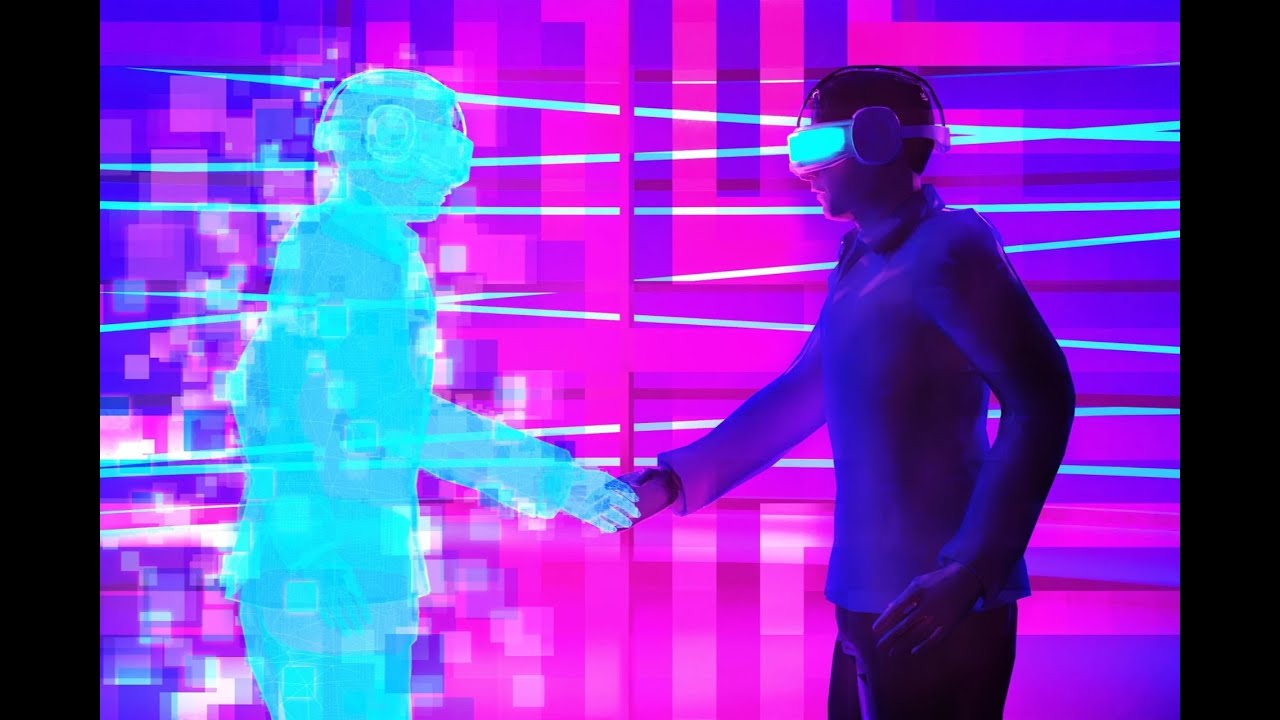
As a Church Futurist it’s not often when I talk with someone that is ahead of me, and my conversations with Todd Wilson historically have blown my mind. Todd, CEO of Exponential, is an incredible designer of strategy. The few opportunities I’ve had to talk with him about…
Episode 198 of the Church Digital Podcast. Hey, it's Jeff here. Can you believe 198 of these? Like, that's a big number. I, I, I can't believe I've had 198 conversations with you all and doing this podcast. I didn't even think I could get to five.
I want to tell you right off the bat, I'm gonna give you a sneak peek of the next three. There's some major moments coming out here in these next three podcasts leading up to episode 200. We're going to be talking a lot about what's coming in 2022 and beyond, the future, the digital church network. There's so much new things that are happening. You want to stay tuned for the next three episodes, and that's starting here with episode 198.
I'm going to be honest, I am super excited to hear this guest and to have this conversation. I'm bringing in Todd Wilson, CEO of Exponential. Now, if you've not had much exposure to Todd, I have found him to be one of the most, if not the most, strategic future-minded person I have ever had a conversation with. Blessed to have a conversation with, and Todd, I have been very thankful for the time that I've been able to have with him. But I got to tell you, this man looks at church in a completely different way than the majority of church leaders out there. And the ability to kind of just spend time with him and understand his view has been phenomenal. It has been so exciting and refreshing. And I, Jeff, the Church Digital Podcast, I wanted to share this conversation with you so that you can get a vantage point and get excited about what's coming down the road. There's some huge moments here in this podcast.
Now I'm gonna let the cat out of the bag here a little bit. Exponential, Todd Wilson, CEO, has acquired Leadership Network. Now, LN has been an organization, very influential organization here in U.S. and Western church culture over the years. In many ways was responsible or a big part in establishing the megachurch movement back in the nineties, establishing the multisite movement within the 2000s, working with churches that were moving in that way. And, and so honestly, like the Leadership Network has been influential in my life over the past decade or so. And it took a pause for a while, kind of got it, fell off the radar. And Exponential, Todd, is acquiring it and building it back up.
We talk a lot about Leadership Network here within the conversation and where that organization is wanting to go in the future intent. It's kind of cool. So we're going to be talking about Leadership Network. Can we talk about Exponential? We're going to be talking about metachurch. But I don't know of a more controversial subject in the church world today, at least here in America, of metachurch. Can a church operate in the metaverse? Should a church operate in the metaverse? Some really controversial ideas, and we talk about it here with the podcast, and you are going to love it.
So here for the conversation, we're bringing in Todd Wilson, CEO of Exponential and newly acquired Leadership Network, and myself, Jeff, with the Church Digital, digital church network, and a plethora of other things in a conversation that I'm simply calling "The Challenge of Today's Metachurch."
Okay, everybody, here you go.
Hey, Todd, thanks for jumping on here with the podcast with us. Um, I'm really looking forward to this conversation. This is gonna probably be one of my favorite podcasts. I've been really looking forward to this one coming up.
Hey, talk to us a little bit here. I know, Jeff, Jeff, first off, Jeff, do you say that to everybody? This is gonna be one of your favorite podcasts?
Maybe. Uh, public record may show that I do say that it's one of my favorite podcasts a lot. I typically will say I am really excited about this podcast, man. This is an awesome podcast. But to say favorite, you know, I may put you, Jay Kranda, Rob Wagner, you guys are like, like my favorites here. And so I'm, I'm really, I'm just I'm excited about this topic and some of the things that we're going to announce here on the podcast.
So listen, from my looking from the outside, it looks like Exponential has acquired Leadership Network. Now, Leadership Network has been influential in my life going back a decade plus to the early multisite movement stuff. And it's exciting to me to see Exponential breathing new life into this thing and running with it. Do you want to maybe tell us a little bit here? What's the big picture? What's happening here with Leadership Network?
As you said, Leadership Network has an amazing history over 35 years, founded by Bob Buford, impacted significantly by the father of modern management, Peter Drucker. And it has just impacted thousands of church leaders. Um, I think one way, you know, just why the acquiring Leadership Network, why a future, and why the connection to Exponential, here's the simple phrase I want to use, Jeff: from mega to multi to micro and now I would add and meta.
So from mega to multi to micro and meta. If you just look over the last 30 to 35 years, Leadership Network was one of the key catalysts of what many would call the megachurch movement with the large church, a large attractional impactful church. Twenty years ago, when we had, you know, a few hundred multisite churches in America, Leadership Network waded in in a big way around 2000. You know, we've now got over 7,500 multisite churches. And so we saw a move from mega to multi. What we've been seeing for the last handful of years is a real move toward micro. What happens after you go from mega to multi and you've got multiple locations? The next natural thing to think about is the micro expressions of church. And we've seen that happening. Well, now I would say in an even more accelerated way, we're seeing this move, not so much yet with churches, but for sure in culture, the move to meta. And I think the huge question is: is the church going to get in front of that, behind that, in the way of that?
And so, enter the acquisition of Leadership Network. Leadership Network has always been about pursuing next, what's next for the church, just like multisite twenty years ago. And so Exponential were crazy about healthy church reproduction. And just in a nutshell, not all growth in church is capable of reproducing. Only some forms of growth are healthy for that you would even want to reproduce. And so the link with Leadership Network is we absolutely want to see Leadership Network be about healthy growth, the kind of growth that has the ability to reproduce and multiply.
And so the relationship that we've kicked off here between Exponential and Leadership Network is going to be this wonderful balancing act between healthy growth and healthy reproduction and multiplication.
Love it. Love seeing the brand come back. Love the innovative ideas that are coming out of that. And love that Exponential is stepping in and helping get this organization back and running after a couple hard years.
Now, what's intriguing to me is this idea, and you even hinted like meta is a thing that should be, that a lot, that it feels like the world, it feels like the culture is running with, but we, the church, often struggle with it. We were, Todd, we were talking off air, and like a lot of the meta type content, the metaverse content that I've created through the Church Digital and posted on YouTube, to be honest, it's been some of the most hated content that I've posted on YouTube. I would say probably the negative feedback that I get is some ten to one.
Now, what's fascinating is that, well, I don't know that they're all theologically solid arguments that I'm seeing. You know, like probably my favorite one, if you go back and listen to past episodes, I talk about them all the time, but probably my favorite podcast comment here on the metaverse was, uh, well, Jeff, everybody knows that all technological advancements come from fallen angels, so therefore the metaverse is of the devil.
Um, and to be honest, I don't really know how to like answer that one other than, can you show me some like biblical argument, some theological challenge? Like, so when Leadership Network is stepping into the space and saying, hey, like we really want to champion the idea of metachurch, um, are you ready for that battle? Did you feel that tension even going back historically, looking at some of the megachurch movements and the multisite church movements? Was there that animosity even back then in those days towards church innovation?
I think, Jeff, there's, I mean, we've got to unpack a couple dimensions of what you just said. Let me for just a second push the innovation part aside for a second. I think we've really got to start with the mission field part of the conversation, not the technology part of it. And I think we've got to ask that, you know, I'm joking a little bit, but you know, the comment about it's from fallen angels, kind of thing. I think we could go back in history at every secular, heathen, sinful mission field out there and call it bad things. The mission field part of it. The question is: what are we going to do about mission field opportunities?
And I think what we've got to be sensitive to is, and we've got to be careful not to get too hung up in the debate on this early on of, you know, is doing church work in the meta space church or not? Like the definition of church and what do you call a church and are you starting a church? Let's also just push that aside a second. I think we're going to serve ourselves better if we start with: is the metaspace a mission field? And how big of a mission field is it? Whether it's sinful or not sinful or technology, is it a mission field? And how big is it? And is it going to be a growing mission field? What kind of opportunity does it present?
And if it is a mission field, then the next natural question is: are we going to need missionaries to that mission field? And I'm ready to fight the battle on that one. Yes, it's a huge mission field, and yes, we need missionaries to that mission field. And if the church doesn't embrace that part of it and get out ahead of it, we are going to miss what's going on all around us right now. The speed at which the gap is closing on virtual and reality and the significance of what's going to happen in meta, we're just going to miss out on things if we don't get ourselves in it.
And I think rightfully so, I'll speak for me. Okay, this past year you've actually helped get me exposed into some of the things where I was probably pretty cynical. And I would say for me personally on the journey I've been on, what I see in meta is simultaneously frightening and unbelievably opportunistic, like at the same time. Like, it's if you want to say frightening and encouraging or frightening and something we better not miss, kind of thing. And I think it's that dichotomy that can scare people. The dark side of it, yeah, there's things we've got to be scared about, but at the same time, it's those dark areas that give us the opportunity, mission field part of it.
So, uh, you know, your question was: is Leadership Network prepared for it? Well, I boil it down for this. If we're going to talk about meta as a mission field, absolutely ready to die on that hill right now. If we want to get into battles about, well, ecclesiologically, can you have a church in the metasphere? Is it church or not church? Is it whatever? I'm actually gonna maybe we'll just help moderate some of those fights that people want to have on that part of it.
Yeah, I had a friend of mine, a pastor mentor, said, hey, Jeff, the ecclesiology of a meta, of a digital church, he said that's probably gonna take like thirty plus years. That's not something that you fix overnight, which is which is funny, even even...
In some of my own language, I've shifted towards more of a mission field conversation because I think that's one that is much, um, it's I think it's the necessary step before we can really nail down some of those larger conversations. Jeff, let me make a clarification on that. Like we've had a little bit of a benefited exponential, um, going back a couple of years, maybe three years right now. We were wading into the micro conversation in a significant way, you know, the from mega to multi to micro. The future micro church expressions. And we've never been prescriptive at Exponential. Like we don't say here's the right way to do it or here's the model to use. We like to platform multiple different ways to do things. And so something like what you just referred to, minimum ecclesiology, like what's the definition of a church? What's the formula for what makes it a church or not a church? That is not the kind of thing that we've ever been prescriptive on or even want to be prescriptive on. But if you go back three or four years, we saw it come, not so much with meta at the time, but with micro. We saw it coming that what was happening is we were working with different leaders and you might have a leader who, oh, the shuttle bus that I drive from the rental car place to the airport, that's my church. I'm the pastor of the rental car shuttle bus. Oh really? So like the sum total interaction you're gonna have with somebody in their life is like five minutes on a shuttle bus and that's your church? Like, you know, and again, I'm not wanting to draw a judgment on minimum ecclesiology here, but we could see that where the microchurch things were going, minimum ecclesiology was going to become a big deal moving into the future. And I think the same thing with meta. Micro and meta, the conversation about what is the minimum ecclesiology. And I would just encourage people to be careful about the legalistic part of imposing on someone else your definition. I think having a set of principles, what we did at Exponential was come up with seven or eight areas of focus that if you're gonna call something a church, it's questions to ponder. How do you address these seven or eight things if you're gonna call it a church? Not to prescribe how to do those things, but are you doing those things? Sort of thing. And I think that's going to equally be a conversation with meta at this point. I think the sort of the interaction between micro and meta, there's so many overlap things there. Many of the people who are going to be very uncomfortable with meta are equally uncomfortable with micro. And many of the micro things happening because it's not that large gathering, it's not physical, you get around and give the hug to somebody when they come in the front door and it's Sunday morning and you know all of the traditional ways we think a church. So through Leadership Network, you're championing this idea of different models of church, maybe looking at some micro strategies and some meta strategies with that, and really trying to help innovation happen within that. And I got to tell you, I'm excited anytime the word church and innovation comes together, and an organization like Leadership Network doing what they're doing here is crazy exciting. Which is one of the reasons why, and I'll go ahead and say it, like we, Jeff, I'm taking a contract role with Leadership Network. And I love my job title. Uh, and I think Todd came up with it. I was like, no, no, no, we're keeping that exactly the way that it is. Uh, so my title with Leadership Network is Director of Meta. And so I am looking forward to coming on board and starting to create new content, blogs, live shows, podcasts, and really championing the idea of the mission field of the meta church and how thinking different can help us reach a different type of person. So Todd, man, thanks for inviting me in to be part of this and being part of the Leadership Network team.
Well, Jeff, we are thrilled to have you. You're the right person at the right time. Um, your heart for innovation, your heart for digital, your heart for meta, it's just the right convergence at the right time. I would say, um, on the innovation side of it, we're sort of trying to walk a line. I'm going to say with five different priorities on innovation right now. And this is sort of the as we're coming out of COVID and all the churn of COVID and this from mega to multi to micro and meta. And so the five areas of innovation that we're focused on, and you are going to be our key director of one of the five. We've got the micro area with micro churches, micro networks, and the future of that. So there's a director for that. That's up here to you, meta. Then how the meta future integrates in. If you just take those two and pause there, what does the integration of micro meta look like as we move forward out into the future? I'm just excited that you're going to be our champion, our activist for what that looks like out into the future. And hopefully, you know, on one end of the spectrum is to help educate church leaders and leaders on what's it even mean to say meta right now? If we had a hundred people that are listening, write down their definition of meta, I think we'd end up with at least ninety different definitions written down on a piece of paper, probably. So, you know, one aspect of this is just to help bring the education and language together for church leaders. And then on the other end of the spectrum is really to highlight and platform what I love about this, Jeff, is that this isn't theoretical right now. We're not talking about some space age thing thirty years into the future that somebody's dreaming about. We're talking about things that there's practitioners in the trenches engaging in things right now. I mean, we're talking about technology that different churches are already leveraging as a mission field with, you know, engagement in our third area. Then is next generation leadership. How do we do the above but do it as we're mobilizing Gen Z, Gen Alpha behind them? But it's really starting to look within a church context, not just how do we reach the younger generation, but here's the significant thing for Leadership Network. How do we help the next generation see a value in church leadership? Like not to see it cynically as something to be avoided, but something to be drawn into. And that's where I think the importance of this innovation side of it, Jeff, is especially digital and innovation. You know, if you quickly want to turn off the next generation to church things, then yeah, let's go figure out how to promote that meadows from Satan kind of thing. And when you know that, that's a good way of cutting off the next generation. So, and then fourth, what we're calling healthy church growth and a healthy operating system for the church. This is probably a whole other podcast episode, but just suffice it to say, the question we've got to increasingly wrestle with is does the prevailing operating system of the church in the West get us where we need to go? And so the fourth priority we're going to be looking at is what's the new wineskin? What's the new forms of operating system of the church in the West look like out into the future? You can see how even in these first four things, micro, meta, next gen, and healthy operating systems of the future, they all integrate together. And then our fifth and final area is the healthy leader themselves. That, you know, one of the things we're seeing through COVID is just such a crisis of anxiety and depression and mental health things. And you know, the great resignation cycle of so many people leaving ministry. And so we really want to balance all the innovation parts of this with just the reality of people need to be healthy.
Yeah, I'm so glad I that number five was new to me. I didn't know that one, and that is such a large need in church today. We've had Mindy Caliguire on here countless times talking through soul care and staff health and things. And so I love that that's one of the fifth values. I was on a call recently. We had the four you were aware of, and I was on a call recently with Pete Gazero. And every time Pete and I are on, he's fussing at me about where's the healthy leader part of what you're doing? Where's the healthy leader part of what you're doing? And I finally said to him this time, you know what, Pete? We ought to split that healthy church, healthy growth and operating system thing into the church piece and the leader piece. And we can do that as long as you'll jump in and help us with it. So hey, let's put some meat on this. So you, it's funny, you crack the joke about meta. Ask a hundred pastors, you get ninety different answers. A hundred people get ninety different answers. I usually crack that joke around what the word discipleship means, but we can evolve it for meta here. I think it fits there as well. So tell me, like I'm just curious, we can dialogue this together. What's your definition of meta? Okay, yeah, more than just the Facebook parent company. When you look at the metaverse, you're a futurist kind of guy. Where are we going? What is this going to encapsulate? Let me first give the disclaimer. This is an opinion question. You ask me my opinion of what meta is. So there's nothing authoritative about what I'm getting ready to say, and it could be completely off base. I think you and I this past year participated in what was called Exponential Ventures, where we would bring in innovative projects for different churches to look at. And many of those projects were ones you recommended in what you would call the metaspace. So I'll tell you, part of my definition and part of my formulation comes from the practical things that you've put in front of me to see. So let me start with, if I'm drawing a picture, um, I draw a big circle on my page and that big circle is labeled digital. And just to keep it simple for me, if it involves ones and zeroes electronically in circuits, then it's inside that big circle of digital, which ranges from digital video to live streaming to podcasting the way people are gonna hear it here. If the way people are seeing it and getting exposed to it is through electronic ones and zeros in a circuit that get turned into audio and video, I'm calling that digital. Within that bigger circle, for me there's a lot of circles inside of it, but there's a smaller circle. And that's where I would put virtual reality as a circle within the digital circle. And I think the aha that I've had this past year on the things you've put in front of me are the word virtual and the word reality. If you just go back over the last, take whatever time period you want, a hundred years, then go to seventy-five and fifty and twenty-five and the last five years, what we can all absolutely agree on is that over whatever period of time you want to pick, the gap between virtual, virtual meaning the ones and zeros part of the digital, and reality, the physical reality world, that gap is closing. And there's a, and the words virtual and reality are getting closer and closer together. Um, we're seeing, you want to go invest in the very best possible portfolio of stock investments you can invest in right now? Go find the top five stocks. They're working on closing the gap between virtual and reality with things like special gloves and aroma machines and sound machines and vests and the different technologies that are completely focused on how you close that gap between virtual and reality. That's where you want to go invest your money. But here's the more important thing. The speed at which that gap is closing. A hundred years ago, there wasn't much difference between a hundred years and ninety-nine years ago. There wasn't even a lot of difference between a hundred years ago and ninety years ago. But now, go to
25 years ago, every year in the last 25 years you can discernably see the gap closing, and now every year for the last five years much more rapidly than what it was any time in the previous 95. And now if you project it into the future, the next five years are gonna—I don't even know how we wrap our brain around how the gap is closing over the next five years. And that's the part that the church has either got to figure out it needs to get in front of it or be part of it or ride it, but not try to throw itself in front of it and get in the way of it, kind of thing.
I'm maybe a little more—it's all crapshoot, right? But I'm a little more, I think, towards this angle of—I actually, I think the larger bubble is meta and digital is a smaller piece within because I just think the lines are going to be so blurred between physical and meta, between virtual and real. I just maybe lean a little more extreme on that, at least where we're going. And everything's a pendulum, it's going to get there eventually. But I love that perspective. I think the thing that excites me the most about churches that are taking advantage of the metaverse right now—and I'm talking DJ Soto, VR Church, Jason Polling, Cornerstone, both those guys have been on the podcast. Stuart up at Lakeland—this has, we've had him on the podcast too, within the past months. They all tell me they reach a different type of person through their metaverse. Call it missions, call it church, whatever you need to—they're reaching a different type of person through the metaverse than is in that attends their physical campuses.
Well, DJ doesn't have a physical campus, but DJ would say 80 to 85 percent of the people that attend VR Church are agnostics, atheists. Jason Polling has told me 75 to 80 of the people that attend Cornerstone VR, his church's virtual reality campus, are de-churched, burned by the church, and the first step back to the bride of Christ is through the goggles.
I literally just this morning I was on with the leadership up at Lakeland VR, talking to Stewart and the lead pastor Josh Asmuth, and they told me they said, "Jeff, we had a hundred and ten people, maybe it was 115, somewhere in there—110, 115, 110, 110 people attend Christmas services in virtual reality. 108 of them do not even live in Minnesota. The majority of the crowd isn't coming to the building where their church's physical campus is." And so we're seeing that these churches are really effectively connecting with and beginning the process of discipling a different type of person than what they're doing in the physical ministry space. So I just love these stories of how churches are starting to explore and experiment here.
So Todd, let me ask you this question here. And this is opinion, this is hypothetical, this is futurist, this is, you know, I don't—there's nobody saying this is concrete. Does—if you look into the future, does metaverse replace what's happening physical? Does this complement what's happening physical? We're talking healthy relationships earlier. What are maybe some of these healthy relationships between the physical church and maybe some of these meta church experiments? What are you thinking here?
Well, you said it, but once again it's opinion, so let's just be clear we're talking opinions here. I can't help but thank Jeff. Like, if I take, you know, what does Todd Wilson think is going to happen over the next several years? Let you know, what do I think is going to happen? I go back to—I'm losing track of timeline, but let's say 20, 30 years ago, when, at whatever point, traditional music was the predominant music on Sunday morning, you know, maybe it's the choir, it's, you know, out of the hymn book, but a very traditional kind of music service. And as contemporary music came into the mainstay, it didn't just flip the switch overnight. We didn't go from, you know, 100 churches are traditional to 100 contemporary. There was a transition period where you'd show up on Sunday morning to an 8 o'clock service that was traditional and then the 9:30 service was contemporary. There was a segregation that happened, and I just can't imagine most people that are listening might be thinking, "Oh, VR means I'm staying home drinking my coffee doing it from home, wherever I am in the world." But that's not the case.
What if the transitional part of what helps VR become more mainstay is people show up on Sunday morning, they grab their coffee, they hug people, they have the conversation in the lobby, and now they walk down the hall to go to the auditorium? Some people make a left-hand turn into the auditorium where there's a live preacher and, you know, they preach about the parting of the Red Sea and the walking through the Red Sea, and it's a traditional service as we know it right now, and people are thrilled with it. And other people make a right-hand turn, and as they go into the auditorium to the right, they've either got their VR headsets with them or they pick up headsets as they go in, and just like going to a 3D movie, they go into the auditorium and guess what? They're there physically. They get the same sermon, the parting of the Red Sea, but instead of somebody just reading out of the Bible, they're actually experiencing and walking through the parting of the Red Sea as part of a VR experience that's live.
I just can't imagine that that's not going to be the first—I mean, I think we're going to have the all-VR where people don't physically go somewhere, obviously that's happening. But when you're really talking about the current brick-and-mortar churches, most of them aren't going to just go from brick and mortar to boom, 100 percent, you know, VR-only expression. They're going to see VR venues as a mission post, outpost. And so we've got to, you know, fill in the blank—we've got to do this to reach the next generation, we've got to do this as an option because other churches are doing it. You know, for all the different reasons, the VR option's gonna become an option. It's hard. I could see us getting to a point in the future where, you know, the majority of the expression is VR. It's hard for it—it is hard for me to get my head around completely eliminating the physical option, even if it's a physical option that you get there and you do VR when you get there. But you know, that doesn't mean it's not possible.
It's interesting to see how—I think, you know, even looking forward into the future, I think there's just more options on the table. You've got a lot of physical churches, obviously, that's been the mainstay for decades if not centuries here in the West. And you're seeing a growth in microchurch and some of the things that Rob Wagner and others like him, Brian Sanders, Tampa Underground, have really brought in this movement of microchurch, which is offering a different option that's reaching a different type of person. Digital, meta, reaching a different type of person. And we've told so many of those digital-embedded stories here on the podcast. It's like for us to be really effective in connecting with people, it's all about creating multiple options, going multimodal, and challenging churches to do like what Cornerstone VR, Jason Polling, or like Stuart and Josh up in Lakeland, where they're just offering multiple options, realizing it's reaching different people.
Were you a Star Trek: Next Generation person?
I was not. It's funny, I was just reading an article about Riker earlier today, but go ahead, give me the analogy.
Next Generation, the hologram option that was at Star Trek: The Next Generation—it's present day. Microchurch meeting meta. Like, what would happen on the ship? As three or four of the crew would come together at the hologram, physically come together at the hologram and enter into the virtual reality space together. Well, what if that's the future of a microchurch? Three or more people come together into their community and they enter into the virtual reality space.
It's Star Trek: The Next Generation was just ahead of their time there.
You go. Thank you very much. I'm trying to think of the creator's name. Gene Roddenberry was the original, right?
He's actually got family down here in Miami. My wife's friends and friends are somebody other than that, but anyway, very, very, very cool. And it was the holodeck. Some Star Trek geek's probably freaking out right now. It's holodeck. We got you, we understand. We can move on with that.
Let me ask this question, and this may pivot back because I know you know one of your values is staff health and emotionally healthy is a thing. Let me ask, like, if a pastor has concerns—I get this a lot—"Well, Jeff, how are we addressing like the mental health concerns? Like, do we—people doing church, existing in the metaverse and embracing that lifestyle, that community in that space—like, is that emotionally healthy for it to do that? Are we sure on that? Are you comfortable, Todd? Like, what, how would you respond or how have you responded into those types of conversations?"
Well, I think it's an important question, and I don't know that there's necessarily an easy answer. I mean, if we think about what the elements of an emotionally healthy set of relationships are, I mean, on one part of it is the peer-to-peer fellowship part, friendship relationships, people in your life who are engaging your life, who know what's going on with you and are there to support you in whatever you're going through. And we'll come back to that in a second. I think on the other end of the spectrum would be even the like the professional help if somebody needs professional help on something, getting them plugged into account, you know, where a lot of brick-and-mortar churches might have a resident counselor or resident help or a process for getting people plugged in to help. And so what does that look like in a virtual space? Let's say you had a very strong network of relationships and that set of relationships concludes, "You know, Jeff, you really need some professional help on something." How does that process work? Is it, you know, in a virtual thing versus in brick and mortar? And I think those are fair and important questions.
I think the good news is that pioneers like DJ Soto—you referred, I think it was DJ—you said 115 people at a Christmas. That was actually Lakeland Church, Stewart, in just like Lakeland, right? So I think we've got enough churches that are engaging in this now that I think those pioneers are going to have to be the ones that are really helping us answer that question. What's it look like to get people plugged in?
I think there is a little bit of a misnomer. If you know, let's learn from the gaming community a little bit, like the community of gamers that are out there. I think you could make an argument that the relational network of the way gamers get plugged in relationally to a network, in some ways you could argue, is a deeper set of friendships and relationships and intimacy than what happens in a physical small group in a church a lot of times. Like, there's actually an intimacy that's there. Now, because you're not physically in the same space, you're not able to go over coffee, that issue of how do you plug somebody into professional help if they need it—I mean, I think those are things that are going to have to—we can't let those get lost in the conversation here.
Yeah, I, there's certainly there's no clear answer right now. Let's we can say it that way. You know, and that's one of the reasons why I've been enjoying working with Mindy Caliguire with Soul Care and some of those others, really just trying to find out the answer to that. And I would even challenge us as the church, maybe we shouldn't run away because there's no answer. Maybe we should be part of finding it.
The answer to that, which is why I'm really excited working through leadership network, LN, some of the stuff we're doing with Digital Church Network and the Church Digital, really trying to dive into the mental health conversation, trying to discover what actually happens if there was a digital only or a meta only church. People like DJ Soto, DJ's been doing this six plus years. Like if anybody's got clarity on that answer today in 2022, it's DJ Soto. And so starting to, who ironically I've got a call within thirty minutes, and so, but it's starting to really examine some of the stories and some of the findings that these early adopters are finding and digging into it. It's kind of weird to think about, but you think through the pandemic, one of the things that's happened is many of us for a period of time got used to the telehealth appointments where you get on Zoom and do your doctor's appointment on Zoom. You've got to wonder when we're talking about virtual reality churches. I mean, and just to be clear, in virtual reality where someone can create their own city with their own businesses with their own, I mean, where things are headed where you can create sort of the village, if you will, and one of the elements of that is a church. So are we actually going to see a market with doctors? I mean, how fascinating is it if we jumped out of the church space for a minute and if you and I were consultants to doctors, what does it look like to be consulting the medical industry right now in virtual reality? Are we going to end up with mental health providers that have VR practices, like literally VR practices that can be plugged into virtual reality space that are, you know, and now just let your brain go, and then are there franchises of that in meta space? Or how does it, how does that whole thing work when you just start thinking about how the medical industry works right now as, you know, hospitals with collections of doctors and now what does that look like in virtual reality?
Yeah, I don't know that HIPAA is ready for that yet. Maybe it is. I haven't heard. I mean, I'm on board of directors for a telemedicine organization, so obviously I know telemedicine's been going like crazy gangbusters, but I don't know meta. That's a really interesting thought. Let's get practical here. Um, so there's a staff person or, you know, a high-level volunteer, low-level volunteer, there's a person that's excited about doing meta, about exploring, about experimenting, about trying to do church in meta as a mission field. They want to go. The lead pastor of the church, maybe somebody on the board of directors, elder, whatever, not excited about it, not one to do it. Maybe they're one of these where the leadership thinks that all new technologies come from Satan. I don't know, but the point is that the question I want to ask is, how would you advise this person? Somebody's wanting to explore this space, leadership's not on board. Um, what advice would you give to them?
You know, there's a couple of things that jumped to mind for me. I mean, I think one element is, you know, obviously we've got to be respectful of leadership, so I don't think the right thing to do is just violate what you're being directed or to go against what the leadership is saying. I think you've got to figure out how to work within it. Now, to that end, it seems like the first issue is understanding what the resistance is about. Is it a little bit different? I mean, we've joked about it a couple of times, but if there's literally a serious position of, you know, this VR stuff is of Satan, it's satanic, okay, that's different than if it's running into resistance because it's just, you know, yeah, we've got a lot on our plate and this is an unknown and it's not, you know, there's the unknown factor and people are busy and this doesn't fit the priority list. Those are two different scenarios. So I think this leader you're talking about has got to understand what the real motive of their boss, you know, being resistant is at the time. And let's say if it's this, if it's the satanic end of the spectrum, like there is absolutely a strong conviction of leadership, but I think you've got to absolutely be even more careful about how you're maneuvering it. And ultimately, if you were feeling called enough to it, at some point you've got to think about, are you going to have to leave or go somewhere else to be able to do it? But I don't know that I would suggest getting into a lot of fights in that environment over it. I think the issue is you've either got to skip it or find another place to do your work.
Now, on the end of the spectrum though, where you're just running into normal resistance to change, I mean, I think you've got a whole lot more options there. I mean, on one end of the spectrum, you can take a proposal to the leadership, and I think it's always better to actually take a proposal, an actionable proposal that somebody can say yes to, and instead of it being a complete change everything, I would take a few baby steps on that proposal. Like, how do we just experiment with a one-time project with these goals? And I'll run it, and here's what it'll cost, and you know, it's how do you make it hard to say no, I guess is what I'm saying. Like, it's such a concrete, specific step that it would be hard to be saying no. And here's what I would do in designing that. If you do get a no, I would have designed it in a way that option B is I could in fact just go do this on my own, separate from the meaning. I do it in my spare time. Like, it's a project that I'm going to implement as my own thing, not under the banner of the church. I'm not going to call it the church. I'm going to go do it as my own thing separately.
That's interesting. I've actually had a couple friends that have done that approach. That had a calling towards meta. They were on staff at a church. One in particular down here in South Florida was on staff at a church, and the leadership just wasn't seeing it. And so he broke off and just started doing the experiment outside of the church where he was on staff, working. Within a year, he actually got hired by another church, and he's now operating as one of the few meta church pastors in America today. And it's a really fascinating story, but it comes around, you know, at least in context of my friend. He followed his heart and where he felt like God was leading, even though at some point he's like, it doesn't keep me where I am, but I still feel like God's calling me to do this, so I'm going to go, even if it means that I lose something along the way. And God took him along the path and guided his steps. And so fascinating. It's some great advice. And you know, I've literally seen that work in real time.
I think, Jeff, we hit on this earlier, but the power of words and the specific language that you use on something. That's the other thing I would encourage this person that you're referring to to be careful about. If I go back and play off of something you said earlier, you said that the Lakeland church did a Christmas Eve church, your words were a church service that had 110, maybe 115 people at it, many of whom don't normally go to church without another, okay. If I take all those words and I say now what are the words and all that that can create friction, can create tension, can create concern. I hate to say it, but it's the word church is what ends up creating the tension. If I took everything you said and I turned it into a proposal of, man, we want to do a Christmas outreach event that we're going to experiment in the virtual space, trying to connect with over a hundred people, and it's not going to cost us more than a few hundred dollars to do, and we believe that at this outreach event we can attract over a hundred people into what we're doing, that that opens the door to a whole lot more people when it's an outreach event than when it's a competition church thing that people don't understand. So again, I'm not wanting to water anything down. I just think we have to face the reality that the words we use in all of this are what end up creating the quick barriers for people on things.
Yeah, I need that. Even gets back to that ecclesiology, that you know, the mission field is so much more of a welcoming and easier conversation, a starting point maybe.
Well, and then you push the mission field to the point of its limits where you discover what people's barriers are. If you start with the mission field, because the mission field part of it you should be able to draw a wider audience of people into the mission field part of it, and then you just figure out. And likewise, the words outreach events or outreach activities are even safer than mission field. So I mean, that's the irony of this is that many of the things we're talking about we could put any of the labels on. We could put outreach event, we could put mission field, we could put digital opportunity. It's not until we start calling it church that all of a sudden a lot of times the red flags go up.
Um, even today, I think it was today, at least I got it today, Outreach Magazine published an article by Phil Cook, "The Changing Face of Missions in the Digital Age," and so even Outreach Magazine's publicly acknowledging here the opportunities in digital and in their contacts, but meta as well with that. So hey, I've, we'll put that link in the show notes. But Todd, hey, this has been awesome, man. I've loved hanging out with you in the midst of roofers banging and all sorts of fun stuff, but I have loved this conversation. Hey, any closing thoughts as we're landing the plane here?
Just grateful for what you're doing, Jeff. Grateful to have you joining us at Leadership Network and really excited. I can't wait to maybe have a follow-up conversation, a one-year anniversary from this conversation for us to talk about and celebrate what's happened in the past year and how things are actually different than what we would have thought they would be. But thank you for being on the journey with us.
Love it. Looking forward to it. And between now and this time in 2023, I'm sure things will change two or three times as per current norm. So hey, but we're going to land the plane here. Todd, sir, thank you for jumping on this podcast with us. This is Jeff with the Church Digital, wrapping up, and now Leadership Network, and Lord knows what else is coming up. But I'm excited about where the Lord is leading and the doors that are opening and championing, being the evangelist for meta for Leadership Network and the many other things to come. But we're going to wrap. Hey, this is Jeff. Thanks for joining us here on the pod. We'll see you next time on the show. Y'all have a good day.